In zeal of year end celebrations, it’s the piquancy of winter season that makes the last leg of the year very commemorative. We live in a country that swears by warm, sunny weather through most part the year, so when December welcomes you with gusty cold winds you yearn for, you can’t ask for something better! Apt for the season, it’s cold these days and the days are shorter. A bit of lethargy sneaks in as we snuggle deeper into the comfort of our quilt, unwilling to wake up to the bite of cold. As the alarm clock ticks itself to the wakeup call, I indolently push it to snooze only to catch up with couple of more minutes of my siesta. Not that my deep slumber holds on to me, but my head is dizzy to wake and I am half woken by the clock’s ring. On the fore, if sleep hovers itself, in the background, my mind is at unrest fighting away fears of waking up late and missing my office bus. Sleepy mind at unrest, that’s what cold winters can do to you.

Pulling off myself on the 2nd or 3rd ring of alarm, the floor is pitch cold as I hastily search for my slippers in the muffled rays of dawn that penetrates my room. Outside its cold and dark and as the first rays of amber sunshine begin to warm the sky, I drag my feet to the main door in sleepy eyes to reach out to the pack of milk that is door delivered by the milk man, as early as 4 in the morning. A splash of cold water on my face freshens me out of my slumber like a refreshing mint in a foul mouth. Before my man and my baby wake up, the milk is boiled, tea is made, while priorities race through my mind as I gear to organize for the day ahead. A quick round of discussion over a cup of tea with my hubby helps clear my thought process. But then that’s a daily facet.
There are some things other than the mundane that perk up our lives. If cold rainy winters can be dull and gloomy, I like to see the blessed part of it too. December brings about several comforting thoughts to my mind, about winter, the nip in air, waking up to be caressed by misty chill mornings, vibrancy of bounty fresh produce our markets will boast of, Christmas holiday baking, New year partying, which gives me good enough reasons to feel peppy about. Like the sight of first seasonal peas in the market or the Christmas tree in its glittery décor that has been put up in the nearby mall, year-end sales catching up at fast pace, obvious that we are chasing the last lap of the year that will soon be gone.

True to December, our markets are flooding with fresh produce of green leafy vegetables, cauliflowers, assortment of apples, juicy Nagpur oranges and bright pink strawberries. We are seeing first signs of fresh peas in the pod and I’m eagerly looking forward for more of litchis and figs. We are bringing apples, melons and pears in bulk. With Christmas which is hardly couple of weeks to go, I am pinning hopes to make use of all that bulk my refrigerator is currently stocked with, make time for some bakes that will keep my kitchen warm and cosy, roiling out dishes from the freshest of produce my markets have to offer. Food can be emotive in many ways!

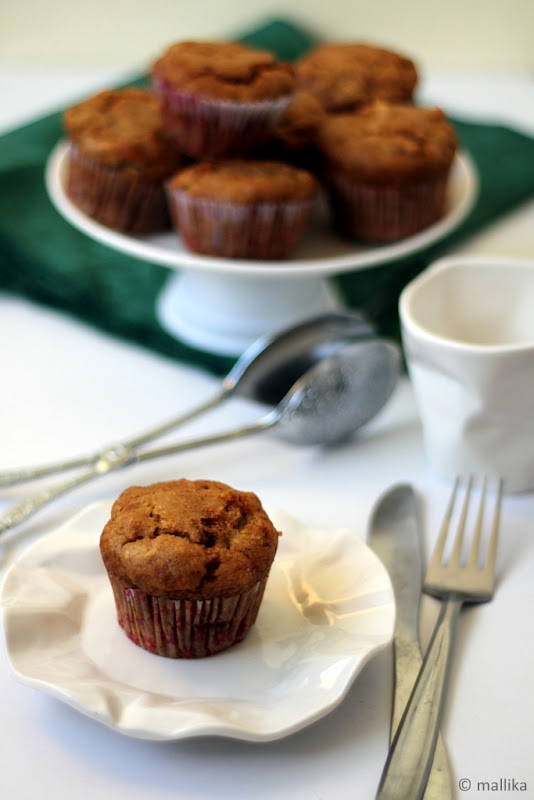
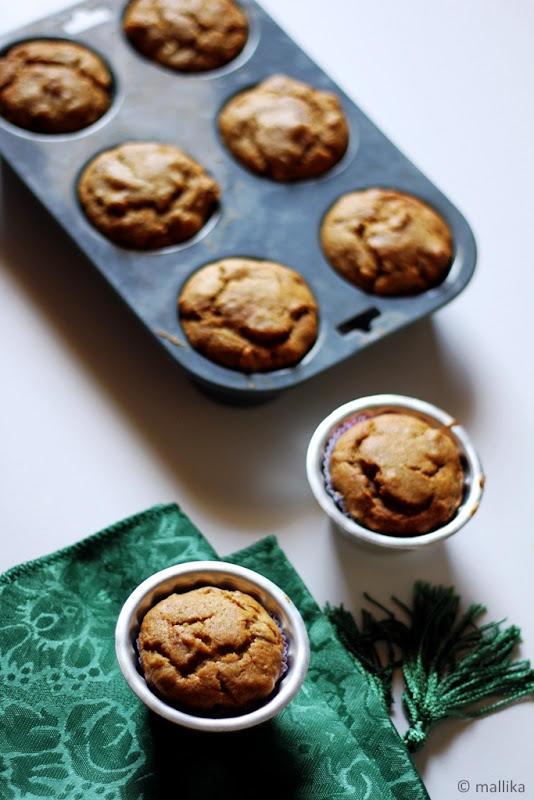
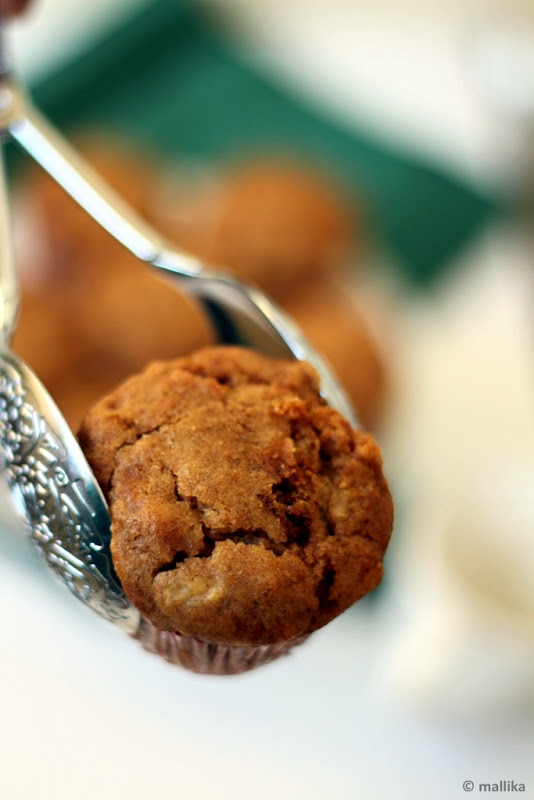
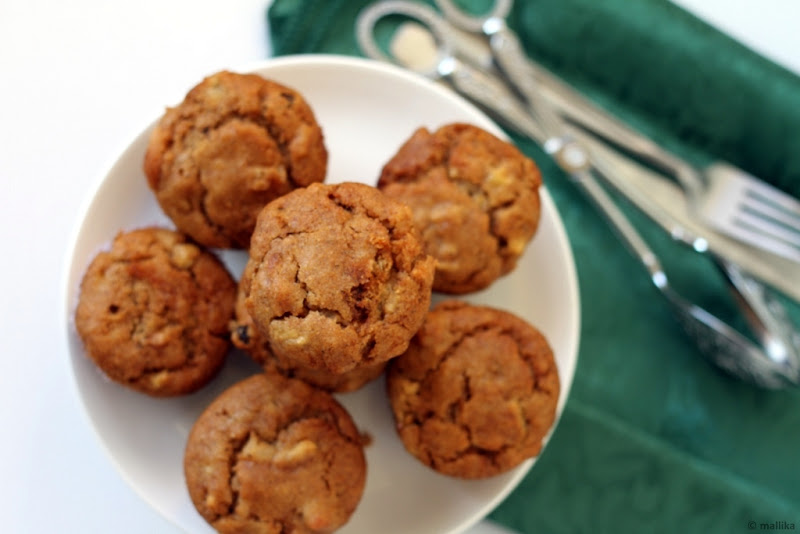
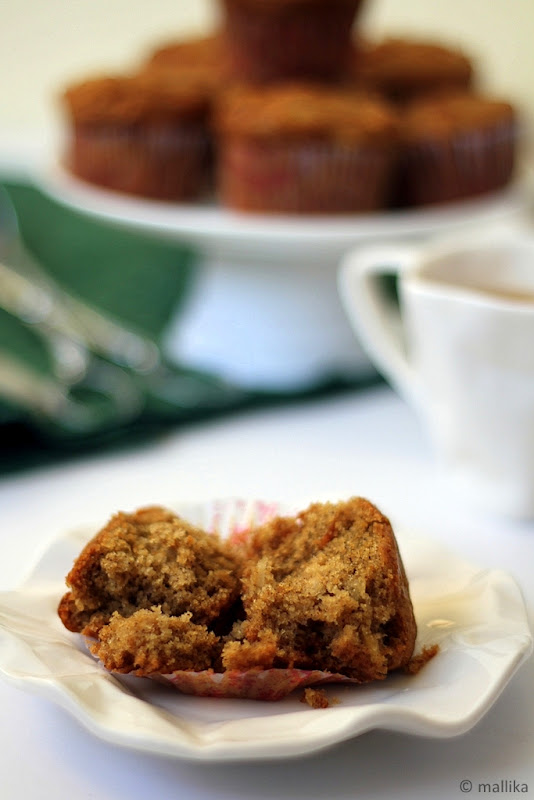
I have already made a start with these breakfast muffins that make it perfect for the season. Healthy, flavoursome and quite festive too. Packed with health from fresh fruits, goodness from wheat, bran and cornmeal, crunch from nuts and eggless to boast, these will make a perfect beginning to my year end baking marathon.
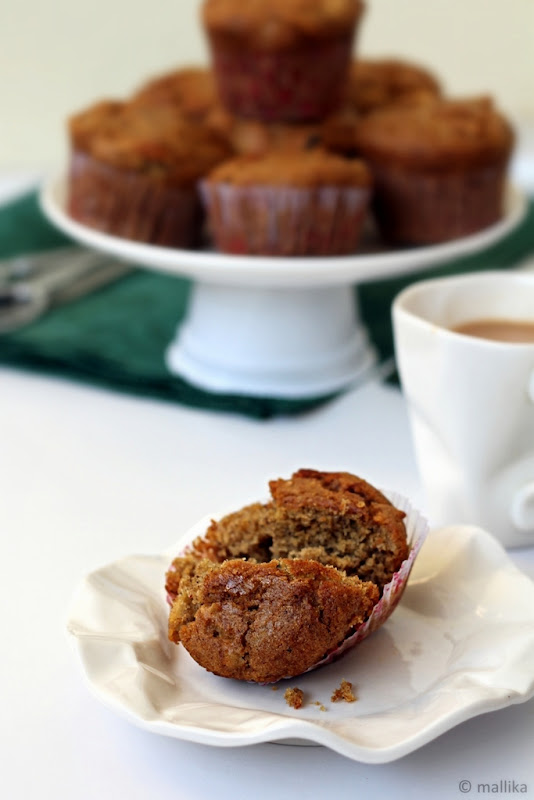

Breakfast Muffins

INGREDIENTS

3/4 cup all purpose flour
1/4 cup wheat flour
2 tbsp. cornmeal
1 tbsp. rolled oats, powdered
1 tsbp. coconut flakes (I've used frozen one here)
1 tbsp. wheat bran
3/4 cup dark brown sugar, packed
1/2 cup oil
2 tsp. baking powder
2 bananas (I've used yelakki bananas here)
1/2 cup milk
1/4 cup apple, cored and finely chopped
1/4 cup pears, peeled and finely chopped
1 tsp. cinnamon powder
1 tsp. vanilla extract
1 tbsp. chopped cashews
1 tbsp. raisins

DIRECTIONS

Pre-heat the oven to 180 deg C. Line the muffin tins with paper cups and set aside.

Blend the bananas along with milk, vanilla and dark brown sugar. Add the oil and vanilla extract and pulse again. Transfer to a bowl and set this aside. This becomes the base of our wet ingredients.

In a separate mixing bowl, mix all the dry flours, like all purpose flour, wheat flour, cornmeal, rolled oats, coconut flakes, wheat bran together along with baking powder and cinnamon powder. Add in the chopped fresh fruits, cashews and the raisins and toss well. Make a well briefly and add in the wet ingredients to these dry ingredients. Fold the dry ingredients just until incorporated. Spoon into muffin tins, almost to the tops of the rims.

Bake for 35 to 45 minutes or until light golden brown. Cool in pans for 10 minutes then remove to wire rack to cool completely.

Note:

The cup measurements mentioned here are standard Indian tea cups.

Cornmeal does have quite a distinctive flavour which may not be in favour of everyone's palate. So skip it, instead substitute with equal amount of wheat flour or all purpose flour. The batter will be slightly thicker than the regular cake batter.
I believe one’s childhood has several influences on one's life, including food. Memories associated with home cooked meals and family gatherings often make up most part of these influences. I have grave recollections of those meals I have relished at my friend’s home or even in a temple, that which have left lasting impression on my taste buds, the ones you want to solemnly go back and relish more, but you know you can never. Then there are other associations that influence the thought process, like reading books.

As a child, I loved reading Noddy and the tales of him getting into trouble woven around his food chronicles. Books written by Enid Blyton kept me hooked to the edges. At that time the only Brownies I had known was Noddy’s friend, Big Ears Goblin. Then came stories of Hanzel and Gretel that introduced to me to the Gingerbread house for the first time ever. The Famous Five & Secret Seven unleashed the simple joys of adventure travels to far beaches, winding islands, mountain biking, camping, the English cottages and beautiful Welsh countryside. Woven with adventures and picnics, the stories carried tales of how these teens fondly loved their homemade sandwiches, the ubiquitous ginger beer and lemonade, paired with loaves of crusty breads, classic cherry cakes and buns. Blyton’s caravan often painted copious spreads of raspberry pops, shortbreads, jam tarts which must have been every kid’s delight.


Its nostalgic when I come to think of it today. I relate to these now as they are in easy reach to us, but back then if I count these recollections, many of those indulgences remained unknown to me. The only cakes I probably knew were butter-cream sponges we got at our bakeries. Raspberry pops, shortbreads and scones never existed in our world. The pictures depicted in these books sprinted succulent thoughts in our petite minds painting a dainty picture of these scrumptious treats.

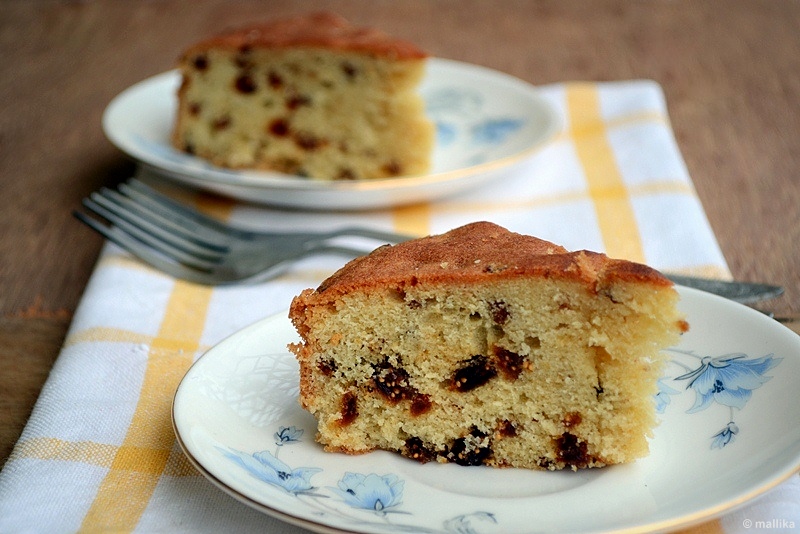
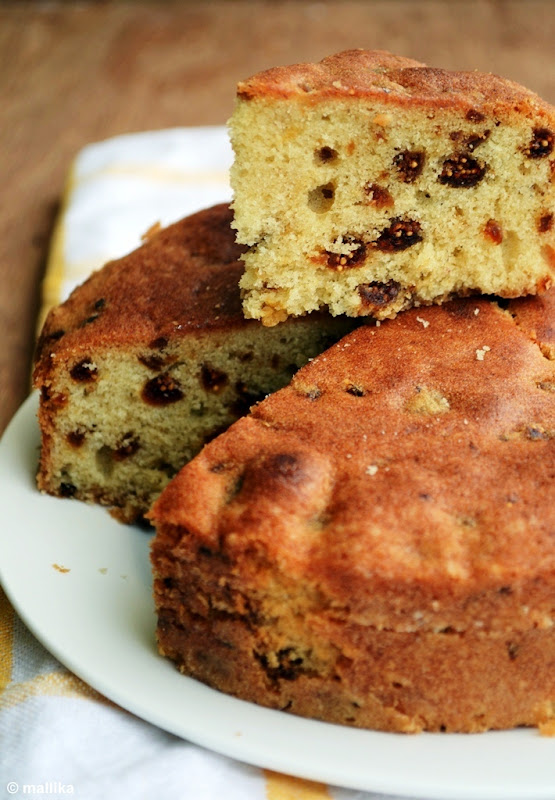
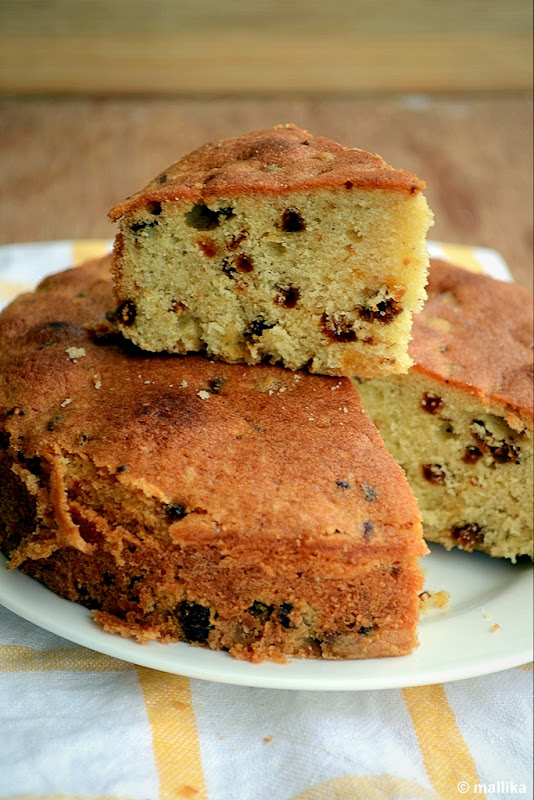
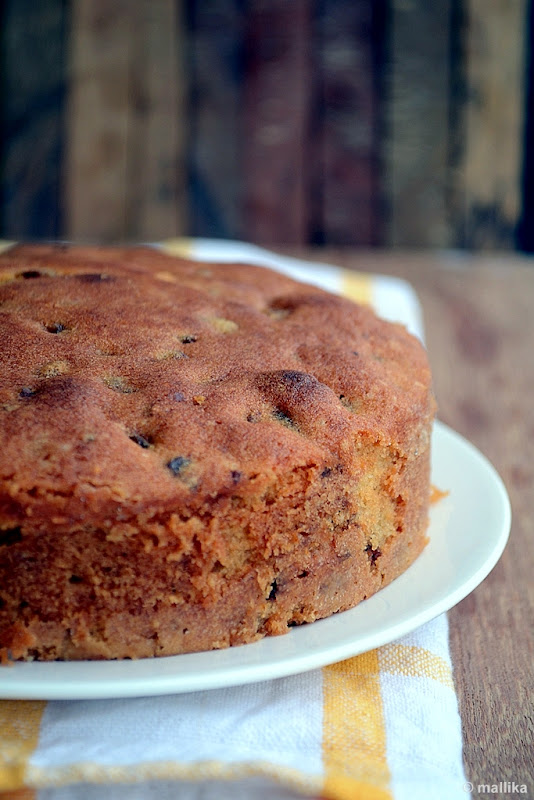
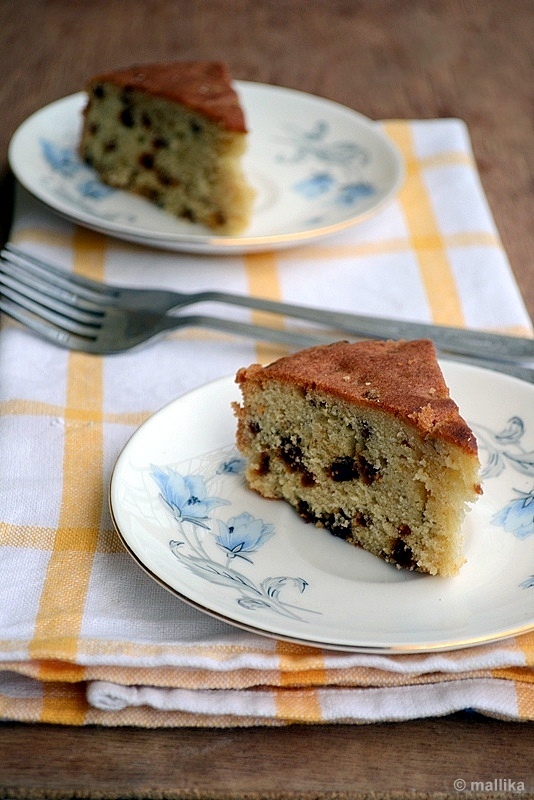
That explains why I remained prejudiced towards Classic English Cakes, something which associates myself with my childhood and the adventure in books I read. So again, I banked on my trusted book, The Big Book Baking to recreate the recipe for Classic Cherry Cake with figs replacing the cherries, my thoughts swiftly racing back to the fond memories of my childhood spent revelling in lovely descriptions of meals and picnics treats I had read. This is indeed a classic, one of those plain cakes that’s unpretentious, until you start slicing and eating it. A tea cake with a characteristic speckled beauty and crunch in every bite that makes a good buddy at any hour of the day.


Classic Fig Cake

INGREDIENTS

200 g plain flour
200 g soft butter
200 g caster sugar
3 large eggs
250 g dry figs, quartered
85 g ground almonds
½ tsp. vanilla extract
½ tsp. baking powder
2 level tbsp. demerara sugar
1 tbsp. warm milk

DIRECTIONS

Pre-heat oven to 180 deg C. Grease a 8 inch cake tin and set aside.

Roughly chop the dry figs and soak them in hot milk for 15-20 mins till they soften and become mushy. Cream together the butter and sugar until light in color, pale and fluffy. Gradually add the eggs, beating hard after each addition. Add the flours and baking powder together, and carefully fold this into the creamed mixture using a metal spoon. Toss the quartered figs in together with the ground almonds, and carefully fold these into the cake, adding one or two drops of vanilla essence. Spoon the cake mix into the prepared tin, levelling the top evenly with the back of a spoon, then sprinkle the demerara sugar.

Bake the cake in the centre of the oven for 1 hour, or until the cake has shrunk away from the side of the tin and the centre is springy to touch. Cool the cake in the tin for 15 minutes before turning it out on to a wire rack to cool. Store in a tin.


Hope you had a fabulous Diwali! We did and continue to do so over a couple of days. We came together, lit up the evening, met up family and friends, shared wishes, had fun the eco-friendly way, celebrated minus the crackers, snacked well (of course should I even mention that???) and had a great evening in all. Food becomes an integral part of our celebrations and is rooted to our traditions, so this Diwali wasn't any different for us in terms of feasting.

You do remember I spoke about making sweets and savouries like, Kala Jamuns and Boondi on my previous post for this Diwali? Oh I forgot to mention using boondi in Chiwda and frying up some delicious crisp, thin Jalebis to make our evening warm and memorable.


Making Jalebis have always been on my mind. I had my inhibitions, probably the process of making sugar syrup and frying them made me nervous. However, with my little one around and in an attempt to satisfy her food cravings, I am tempted these days to experiment with dishes that I hesitated in the past. My tiny tot is an average eater, but she enjoys a good deal of variety on her plate. She takes me to surprise with her food habits and likings, her uniqueness with tastes, which can get quite unpredictable!

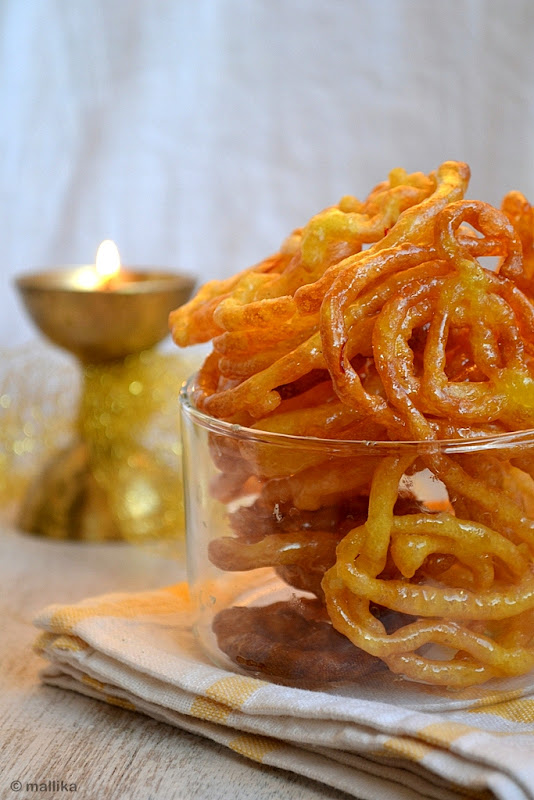
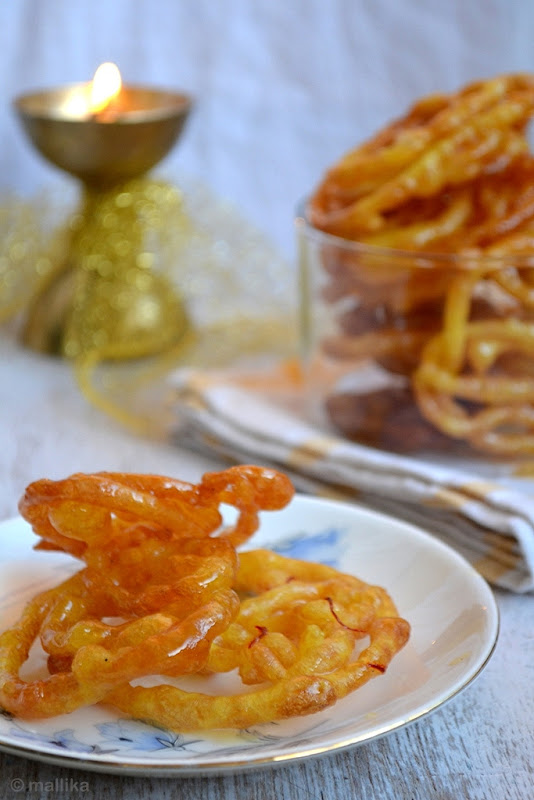
I pulled my sleeves up well with the art of making jalebis which aren't as difficult as they sound or seem like. The video by Manjula's kitchen did boost my confidence quite a bit and I set out to fry a small batch (measured half the quantity of tea cups), yet they seemed like a lot. Easily made up close to 20 odd jalebis. I chose an instant recipe using yeast, trust me it works beautifully. My grandma is an expert in making these the traditional way by soaking flours in curd and leaving them to ferment overnight. Every Diwali, way back in her kitchen, she would slave for hours, to carefully break open the eye of an empty coconut shell to pipe out perfectly round jalebi batter over a large wok filled with oil, fry them gently and dunk them into delicately flavoured sugar syrup, an appealing dessert that could easily serve a huge crowd and satisfy many taste buds. She was quite surprised knowing the fact that I hardly slaved over these. I replaced the besan to equal amount of rice flour as per my grandma's suggestion and the resulting jalebis were very crisp and sinful.

To be honest, I wasn't sure if the photographs here were good enough to post. So I apologize since the eve was hectic and with all that I had at hand I shot them in a hurry. But then its Diwali season and jalebis should be here hence.


Crisp Jalebis

INGREDIENTS

Batter:

1/2 cup All Purpose flour
1 teaspoon rice flour
1/2 teaspoon yeast
1/2 teaspoon oil
1/2 teaspoon sugar
A pinch of turmeric for color (optional)
About 1/3 cup of lukewarm water (as needed)

Oil to fry

Syrup:

1 cup sugar
1/2 cup water
Pinch of cardamom powder
Few strands of saffron
1 teaspoon of lemon juice

DIRECTIONS

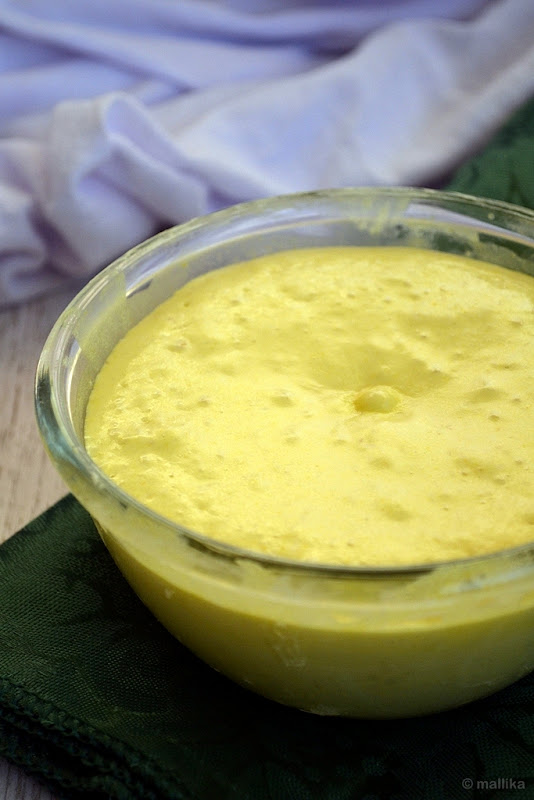
Dissolve the yeast in warm water and allow it to sit for about five minutes. Mix the flour, rice flour, turmeric, oil and sugar together. Add the yeast solution and mix well, making sure that there are no lumps and the batter is smooth. Set the batter aside and let it sit in a warm place for one hour. Make sure the batter is fermented. After fermenting batter will rise high and look frothy like the above picture.

Boil the sugar and water together. Add the lemon juice and saffron and close the heat.

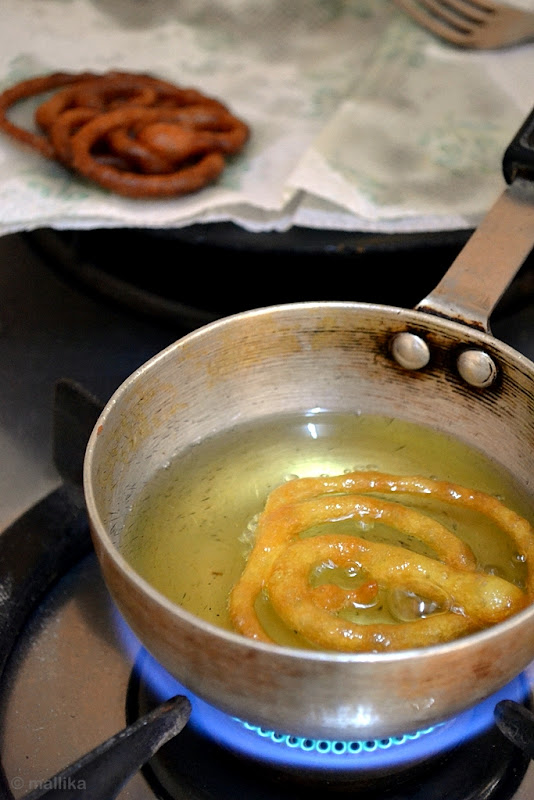
Heat the oil in a kadhai or a frying pan. Check if the oil is ready by dropping dots of batter in the oil. If batter sizzles and comes up without changing color its ready. Fill the Jalebi batter into a piping bag with a plain round nozzle. Squeeze the Jalebi batter out in the hot oil in a pretzel shapes and fry them until golden-brown on both sides. Transfer into the warm syrup. Let jalebi soak in the hot syrup for a few seconds and take out. Serve hot.

Note: Having the oil at right temperature is the key to good jalebis. Fry jalebis on a low flame till they are golden in colour. I got a hang of this after my first 2 jalebis turned brown. Switch off the flame if the oil is too hot and the jalebi burn.


Iss diwali pe hamari dua hai ki, Apka har sapnna pura ho, Duniya ke unche mukam apke ho, Shoharat ki bulandiyon par naam apka ho! Deepawali ki dher saari shubh kamanayen!

On this Diwali we wish, May every dream of yours come true, Hope you achieve success in all endeavours, Hope your name shines on the pinnacle of fame and success. Wishing you a Happy Diwali!


As a kid or an adult, I have always loved the sight that Diwali brings to my eyes. It’s cheerful and welcoming, bright and seasonal in all vivid colors boasting the festivity. And beyond everything it makes time for us to remember our family and friends; take a while out of our busy schedules to unite with our pals, wish them and celebrate as one.


October-November is the blissful of all months as they are packed with festivities, feat and buzz. True, it’s not even weeks since Dusherra got over and we’ve already begun waking up to sounds of crackers; that reminds me Diwali is here. The makeshift tents that sold clay dolls of Gowri and Ganesha have now replaced themselves with mounds of clay diyas in all varieties. As I cross the market in my vicinity on my walk back home, the usual scenes of the day have changed to being busier and more crowded than any other day of the year. Street vendors have made their presence felt, occupying their spaces on either sides of the pavement, frisking their business with piles of Diwali goodies; diyas in all sizes and shapes, variety of colourful kandeels hanging high in the air, heaps of flowers making their way out of the wicker basket, neatly stacked mounds of rangolis in bright, bold colours being scraped out to be wrapped in newspaper pouches; make shift tents selling crackers of all kinds, with the crowd hovering over them in lure of obsessive shopping and celebrations. It’s a sight I love to watch, cheerful and happy people all around, carrying huge smiles as they walk back, their hands full, weighed down by the bulk of items they've shopped for the season. Almost every shop in the town is decorated with rice bulbs, tinsels and festoons, very glamorous and festive, calling out for attention, and their massive discounts are inviting enough to loot your money on all that’s on sale. It’s seriously tempting and I have been a part of that bargain, doing away with my old clothes and revamping my wardrobe with new clothes, sandals and accessories!


We’ll wake up to the dawn of Deepawali tomorrow morning. Since a week, I have been busy mopping our home clean, the cobwebs dusted, the kandeel has been put up to light the evening, oil lamps have been washed and the kitchen has been a busy bee. We’ll have the ritualistic oil bath tomorrow before sunrise, followed by donning new clothes and then the pooja, trailed by busy activities in kitchen for an elaborate feast. Our families will come together in the evening when sweetmeats will be out, the diyas will glow, the rice bulbs will sparkle, the kandeels will light our balconies, swaying high in the air, the sound of crackers will fill the atmosphere, and neighbours and friends will pitch by to pour in wishes.

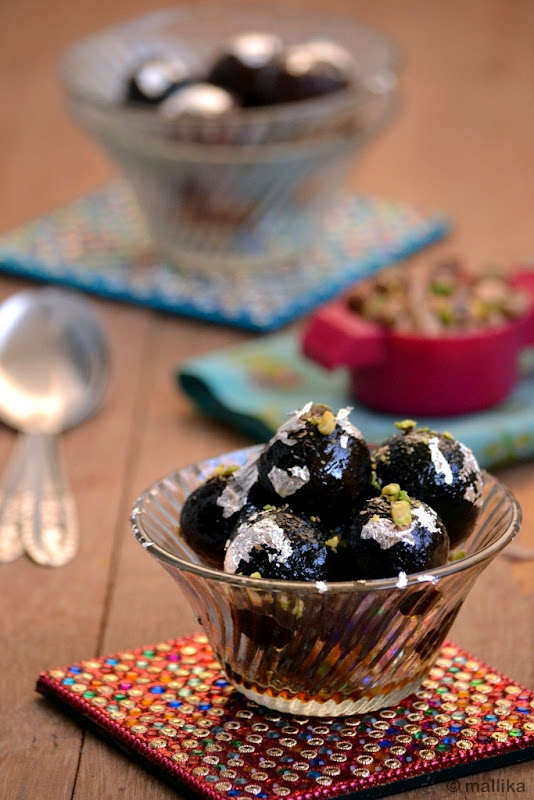
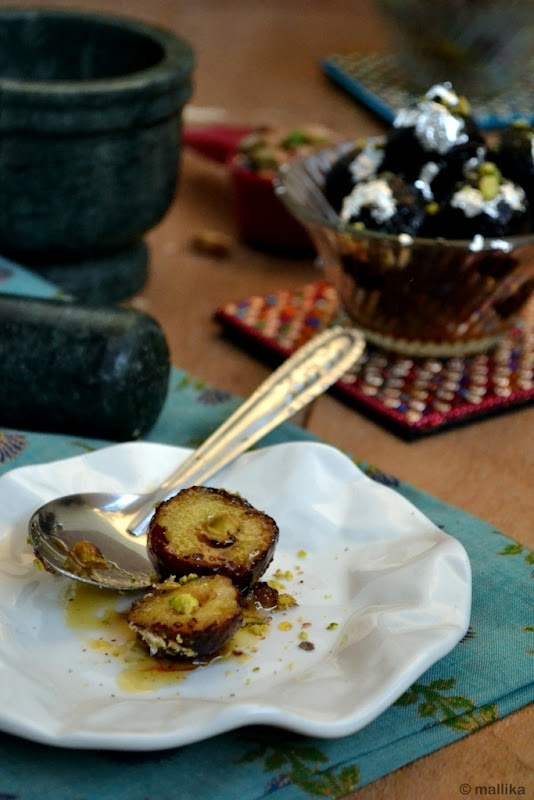
With all this I realized that my post for Diwali is not published yet! Panic attacks me. Wasn't I prepared yet??? I pause, scan my drafts, but don’t find any that fits the occasion for traditional sweets and savouries. But then, I know my kitchen has been busy this entire week because I had promised myself I will cook them all in my kitchen, this Diwali. The Khara boondi has been made and stored in steel dabbas and they’ll be brought out tomorrow. The Kala Jamuns I prepared yesterday are soaking in their saffron syrup, absorbing all the succulent juices and they shall be ready to be served to all who’ll visit us. We’ll have some more sweets and savouries coming out of our kitchen, so I am pressed on time, which is little at hand, and have nudged myself to steal some time out to photograph a couple of decadent jamuns and post them here so that all of you can enjoy as much as we will.


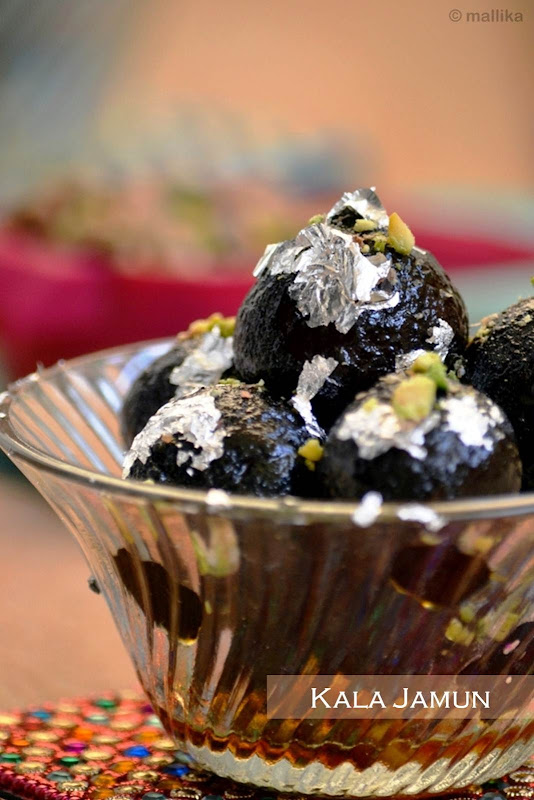
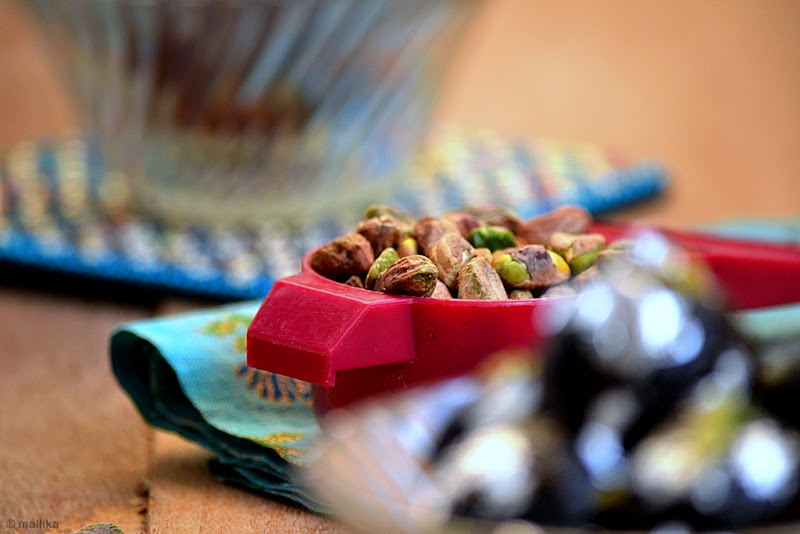
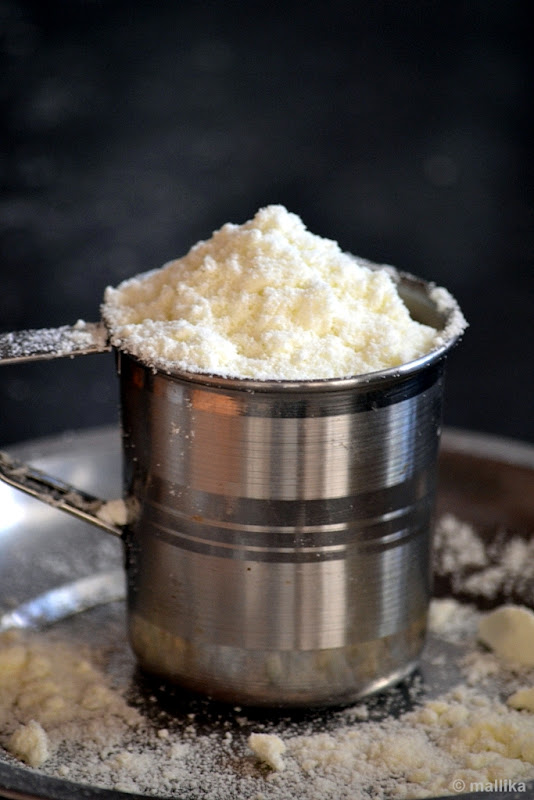
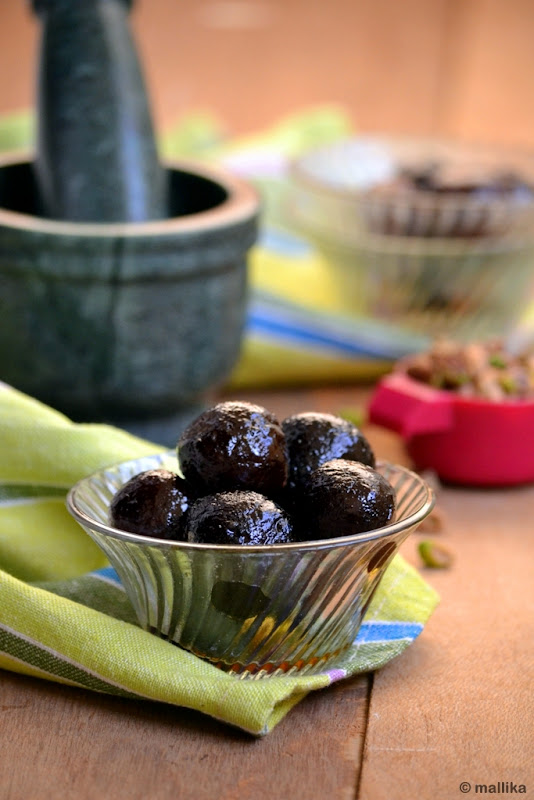
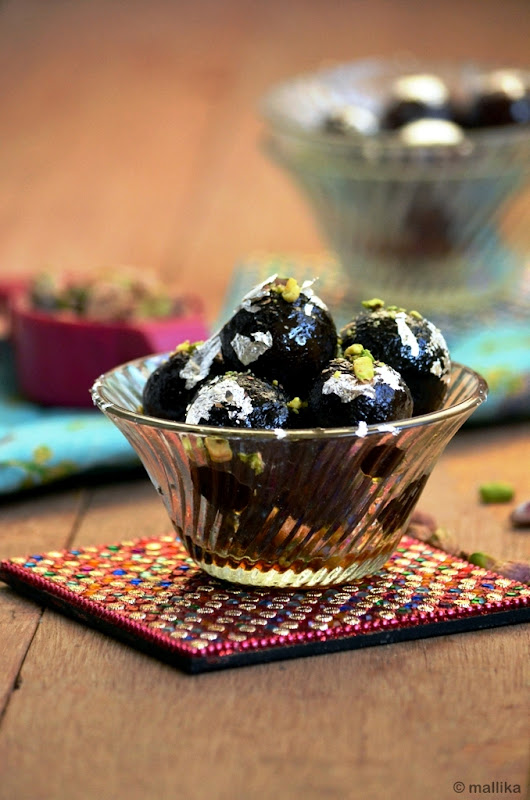
Kala Jamun, as the name signifies is black in color, a color that comes from caramelization of sugar or re-frying of the jamuns. I’ve been an ardent lover of Gulab jamuns, but stayed much away from Kala jamuns till a couple of years ago when I first tasted them at Hotel Majorda in Goa. I mean how appealing can a sweet that’s black in color be to our eyes? I believe I was a convert because of the presentation. The silver wark topping the jamuns, lusciously absorbed in saffron syrup and pistachios dotting them did all the justice to these little treats as much as they deserved. In my attempt to make these kala jamuns from basis, I've used skimmed milk powder instead of Khoya (milk solids), an easier option and equally delicious. The nonfat milk powder we get in India is sweetened, hence frying the jamuns will inevitably lead to darker coloured jamuns than the store bought mixes, hence making kala jamuns is a breeze. Hope you’ll love them and will not fail to leave a lasting impression on your taste buds.


Kala Jamun

Inspired by Manjula’s kitchen

INGREDIENTS

For the Syrup:

1 3/4 cup sugar
1 1/2 cup water
4 coarsely grounded cardamom seeds
Couple of saffron strands
1 tablespoon sliced almonds and pistachio
Silver wark, optional

For the Jamuns:

2 cups nonfat milk powder
1/2 cup plain flour
3 tablespoons soft unsalted butter
1/4 cup whole milk
Pinch of baking soda
Oil for deep-frying

DIRECTIONS

Syrup:

In a large pan, add water, sugar and saffron strands and bring it to a rolling boil. Let the syrup boil for a minute then remove it from the heat. Ensure the sugar is dissolved. Add the ground cardamom seeds. Set the syrup aside.

In a bowl, mix milk powder, flour and baking soda. Add the butter and mix well. Now add milk to make soft, sticky dough. Allow the dough sit for a few minutes. Milk powder will absorb the extra milk. If the dough is dry, add more milk, as the dough should be soft. Knead the dough lightly. Divide the dough into about 20 equal portions and roll them into round balls. Stick a pistachio in the center of each jamun and roll well to round balls. Heat the oil in a frying pan on medium heat. Fry the jamuns till they turn brown. Continue frying till they turn darker in shade. Transfer the fried jamuns to the hot sugar syrup. Allow them to soak in the syrup for at least 30 minutes prior to serving. Top each jamun with silver wark and sliced almonds and pistachio and serve warm or at room temperature.


Like every year, this year too we shall look forward to the dawn of Diwali to celebrate the festival of lights in full life and spirits. Wishing you all a Happy, safe Diwali and a Prosperous New Year!

Last week I almost felt like the awesomeness of December winter was in the air. That’s when the bizarre North East cyclonic storms gave us an iconic threat with gusts of wind blowing hard and our toes went curling numb. It had been long time since Bangalore saw such rains, winds and chillness, a much desired respite from battling water problems in our city. Rain Gods heard our prayers, loud and clear. Misty Bangalore sky cried all day long and so through the night, bringing along with it biting cold, good drizzle and much shower we needed earnestly. We rushed home from work drenched in rain to stay indoors, sipped on piping hot adrakwali chai, snacked on spicy corn nuggets, enjoyed the melody of raindrops dripping onto our balcony shades, relished simple warm dinner and enveloped ourselves in the coziness of duvets pouncing on us, doing all that pleases one’s senses to stay cosy on a lovely rainy day like this one.


The splendid weather reminded me how much I love rains and winters. Though these rains really irk the hell out of me and have never done much good to my health or my sinuses, inhaling the aroma of the wet soil and indulging in some sizzling, spicy food can ignite happy mood and evoke nice feelings. It’s a perfect time you sit on the porch observing dark gloomy skies, while relishing some fresh hot pakodas, or sip hot, spicy masala chai and enjoy the showers outside in disposition to elevate the blissful moments.

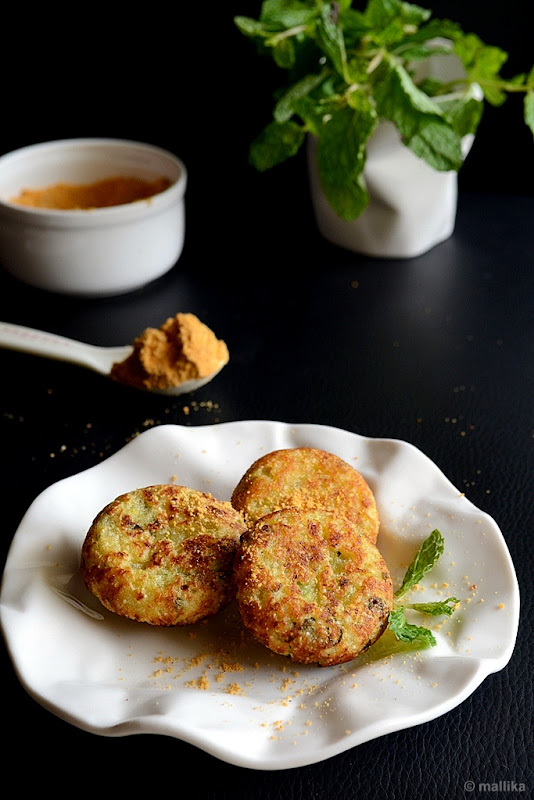
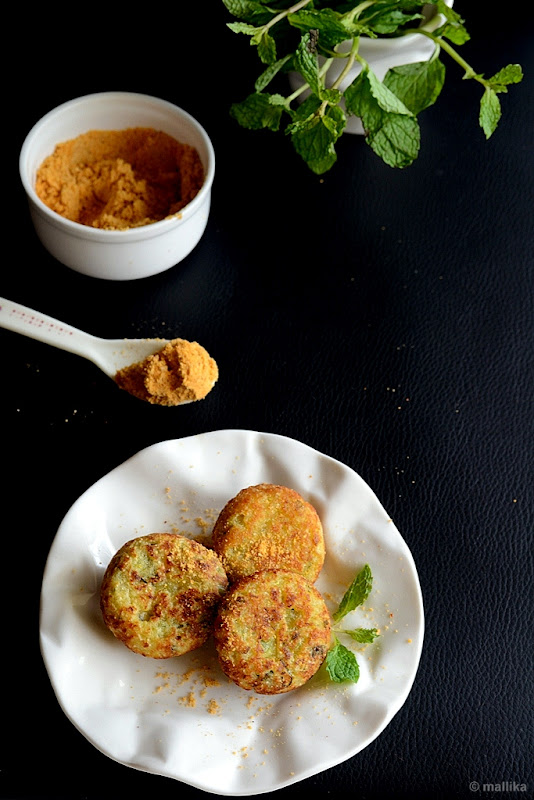
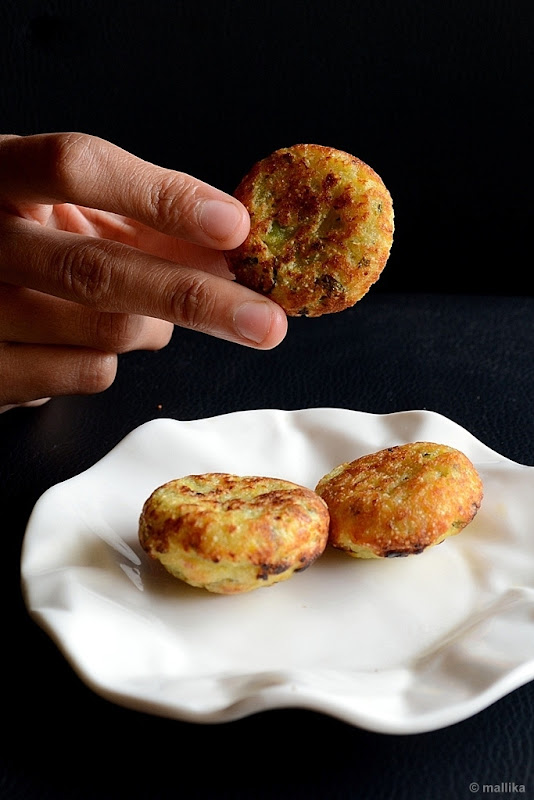
But then to break the traditional monotony of snacking on pakodas and bajjis, to keep it healthy in lure of my health and to deem it ideal for my little toddler too, I whipped up these quick guLiappams, flavoured them with grated sweet corn, freshly chopped mint and seasoned them with green chillies. GuLiappams are traditionally South Indian breakfast dish made using fermented lentil batter, often spiced mildly, authentically made in cast iron appam mould (a slotted pan where the batter is filled) and cooked on a gas top. The ones I made are quick, instant and spicy too, making them ideal for breakfast. I paired them with some spicy peanut chutney powder I made in the day and they made up for an excellent evening snack we craved for the rainy day.


Corn and Mint Appams

INGREDIENTS

1/2 cup semolina (sooji rava)
1/2 cup rice flour
1 sweet corn, grated
Couple of mint leaves, chopped
1/2 cup regular yogurt or more (not the Greek/thick yogurt kinds)
1-2 green chillies, chopped to fine pieces
1 tsp. baking soda
Salt to taste

DIRECTIONS

Grate the sweet corn and mix in semolina and rice flour to it. Add in regular yogurt little by little till it comes to thick batter consistency. Sweet corn as some water content in it, so judge the amount of yogurt required to make a batter as thick as cake batter or dropping consistency. Add the chopped mint leaves and green chillies and adjust salt to taste. Whisk well. Finally add in the baking soda, give the entire batter a quick, good whisk.

Oil the appam pan well and bring it to heat. Using a spoon, scoop out the batter and drop into each appam mould. Fill all the moulds with the batter and allow to cook on medium low heat. Carefully flip the appams upside down and allow them to crisp well on both the sides. Serve hot with some fresh coconut chutney or chutney powder like I did.


Pick up one, take a bite, its savoury, spicy and bold. The Peanut chutney powder I made earlier in the day added further to the spice, making it delightfully right for that evening. I shall share the recipe for Peanut chutney powder in my forthcoming posts. Till then, make merry, enjoy life and celebrate Diwali in full fun and masti!


I love October for being a fantastic season in all aspects. Its that time of the year when weather is pleasantly nice and the festivities add an alluring charm to wrap the year in good spirits. The rains have washed down all the dust away and the trees allay us with their new blanket in all shades of soothing green. Nip in the air may have to wait a little longer as misty mornings and chill evenings aren't here yet, yet the changing season reminds me that December is nearing and winter is close to beckoning, something we so much look forward to. Between these changing seasons, October beautifully envelops itself with festivities that makes it the best time for bonding with our family and friends. Indian festivals like Chaturthi, Dusshera, Diwali remind you that it's time you push aside all your worries, bury down your pressures, wrap up your tensions and move ahead to celebrate life with your loved ones, the time when festivals bring in joy and celebration and contentment to our lives.


And with all those festivals gone by and the ones we look forward to, I've have been on my toes all this month. I've been living out of my suitcase with lots of travel packed over weekends, spilling over festivals and the celebrations that have kept me busy through and through. A weekend getaway to Mysore, then to Hyderabad for work related meet, then to Mangalore for Dusshera, it's been one hell of a calender blocked month with me cruising places.

With all this up, my kitchen hasn't been the busiest place for me, unlike most of my weekends. I do hope I can throw my hands at cooking some sweet and savouries for this Diwali, while I have been fairly depending on my mom for her delectable festive goodies. With no elaborate cooking done by me this Dusshera , some Besan Laddu and the quick snacks I made for our Ganesha this Chaturthi, I hope I'll be get some time out to meddle in my kitchen this Diwali.


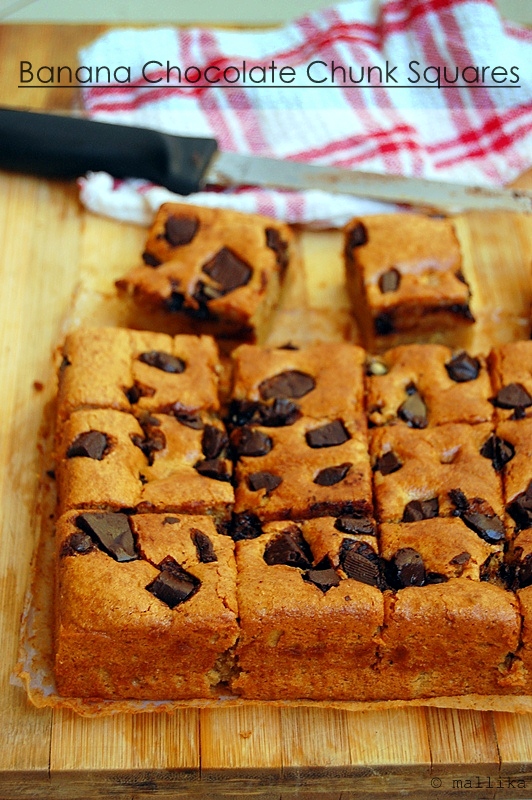
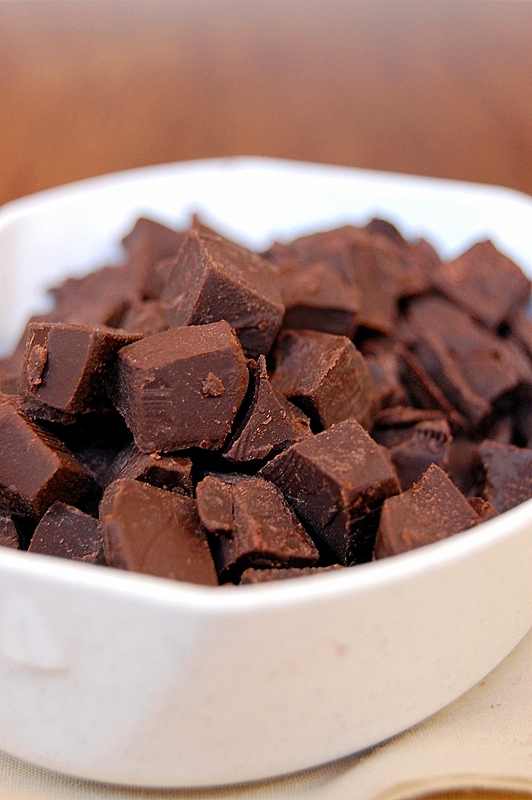
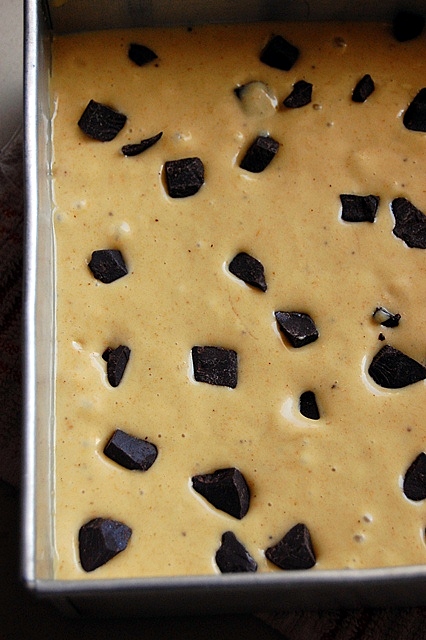
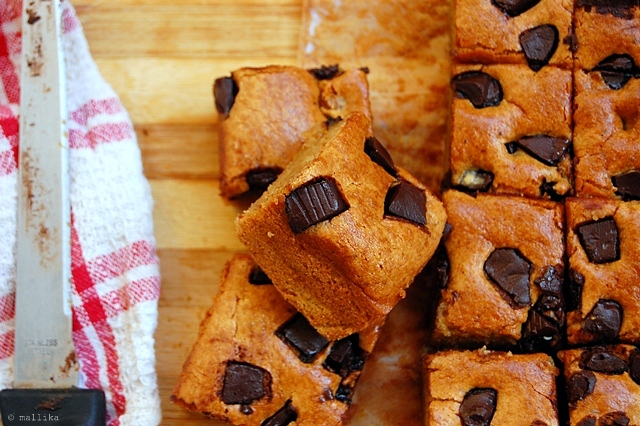
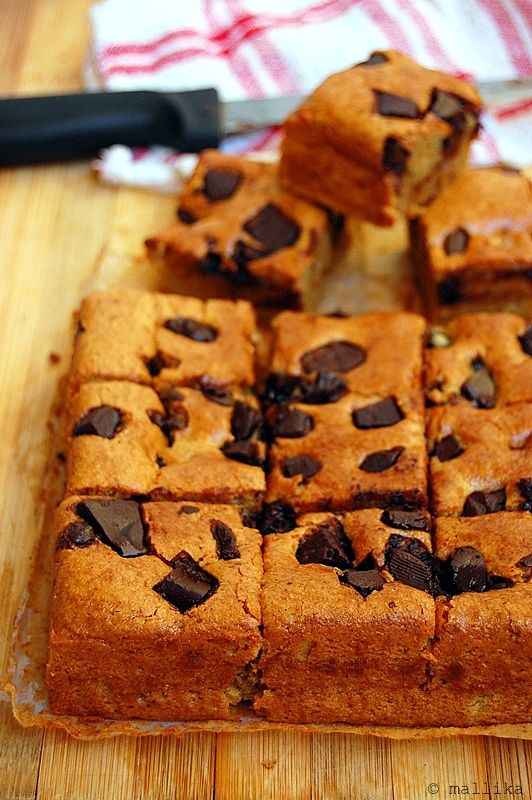
Yet, I can't seem to stay long away from my beloved oven. So I hopped over to bake another banana cake in quick desperation to baking, something which I did not intend posting here. If you take a peep into my drafts you'll be a little amazed to see the number of banana breads/cakes I have lined up, that I've had to forgo some. Infact, I've been planning to do a step-by-step for sometime now, yet haven't been able make time for that. The increasing number of requests for step-by-step have been pouring in. Keeping in mind it's eggless I am sure many would love to re-create them at home. Hope you like this one with big bites into nice chunks of chocolate chips. Delicious!

Banana Chocolate Chunk Squares

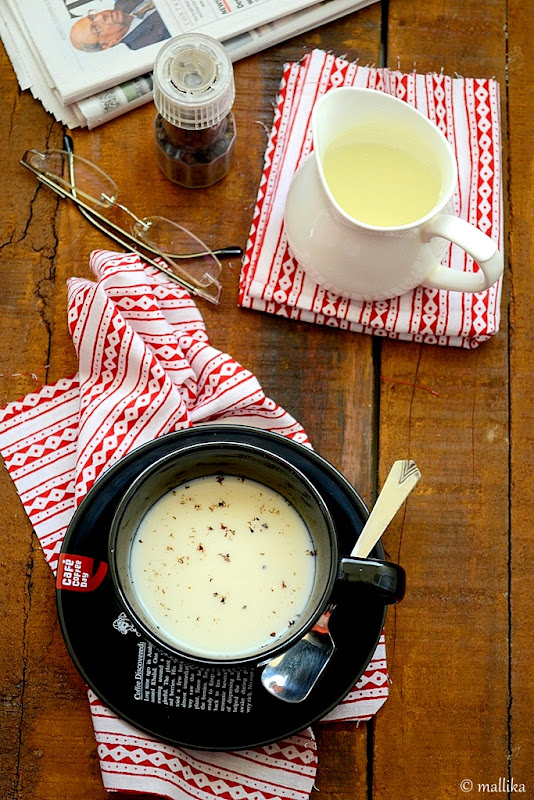
How to make Kashaya, Kashaya recipe
Yesterday marked the beginning of Navratri, a festival celebrated over nine nights and ten days, each day signifying the form of Devi or Shakti, followed by Vijayadashami or "Dussehra" celebrated on the 10th day. For many it may mean fasting, for others like me, it calls for feasting. Almost every year I look forward to this festival, for the delicacies my mom makes in bounty at home. Devi happens to be our moola mane devaru (ancestral home Goddess), so our ancestral Goddess is also offered with Pooja, flowers and variety of delicacies over all 10 days. Guests flood home, glass bangles offered to young girls and traditional food in varieties is home cooked by ladies and offered to the Goddess during the Pooja and then served on leaf to all the guests for lunch.


Despite settling in a metro city like Mumbai, the rituals were followed religiously at my paternal ancestral home, and they still continue to do so. While my mother's side were put up in a more rustic village home, where the village temple offered live tableau, cultural activities, traditional Poojas during Navratri time. During the time when the village went out of power, the light from mashaals and aarati brightened up the streets and the bhajans sung by devotees rang music to our ears. It was a common sight to watch tattiraayas (humans dressed in 7ft. puppets) and huLivesha (men dressed in tiger costumes) dance to the rhythms of dhols that brought life to the otherwise silent streets. When the lights from the aarati lit up the far end of the streets and faint hearing of dhols and bhajans pecked our ears we would run out on streets to be a part of that ceremony and dance along till it reached our home. By then the elders and ladies wait outside their house, holding a thali, often decorated with flowers, coconut, kumkum and diya for the Pooja. The poojari would patiently collect each thali, offer to the Goddess, break the coconuts and return them back to the ladies. Everyone on street flocked around the returned thali to take their quota of blessings. We never felt the need for any other form of entertainment as the vibrant culture and the simple pomp of village life kept us occupied.

Both the sides of my family were different in many ways. Never the less, the joy of celebrating the festival was the same in both my maternal and paternal ancestral homes and I surely miss them now.


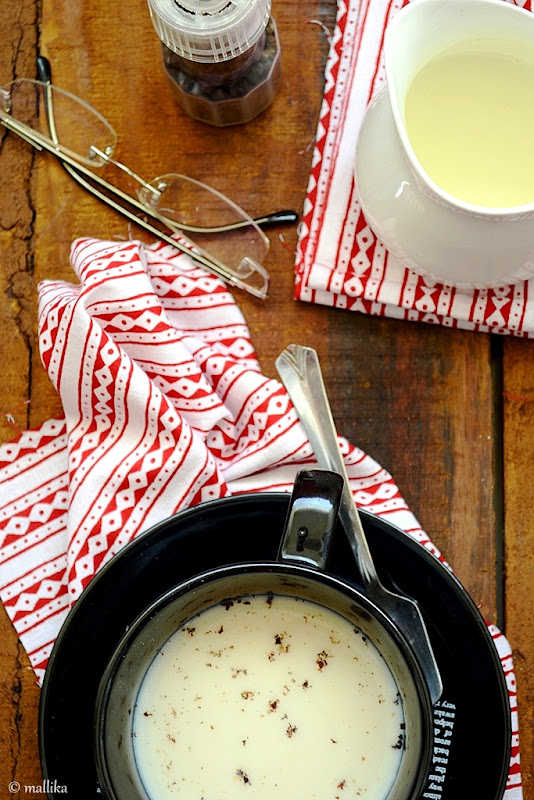
One thing that almost seemed similar on both the sides of my family was this Kashaya, a herbal drink usually served instead of tea or coffee. Kashaya is a very popular drink in the South and considered a coolant in summer heat. I remember clearly the only time we had Kashaya was when we visited our relatives in villages or grandparent's home. Because it was healthy, soothing and loved by all. It had characteristic sweet and spicy flavors from jaggery and pepper. At times when we had bouts of cold or cough, my ammamma would spice it up with loads of ginger that could soothe the scratching throat. Not that kids liked it much, but yet we gulped it down with less choice as elders relished it. When we visited our relatives or they flocked home, Kashaya made it's warm presence felt. In between talks and summer heat, minus the fans or electricity, Kashaya gave a warm soothing relief which most elders enjoyed.

I do hope you will try the recipe I share and enjoy at home. Bring back your old memories and live them.


Kashaaya: Indian Herbal Brew

INGREDIENTS

For the powder:

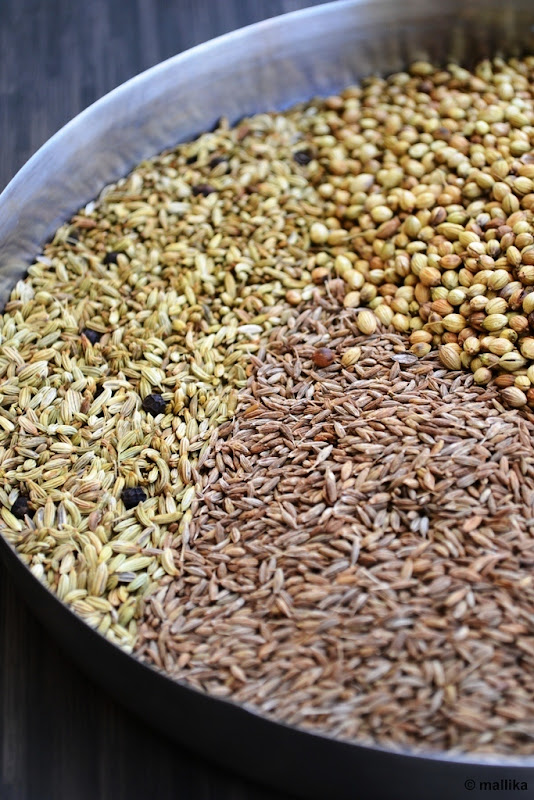
2 cups coriander seeds
1 cup cumin seeds
1/2 cup fennel seeds
2 tbsp. black pepper

For kashaya:

1/2 cup water
1/2 cup milk
1 tbsp. jaggery
1 tsp. fresh grated ginger or ginger powder (optional)
1 tsp kashaya powder

DIRECTIONS

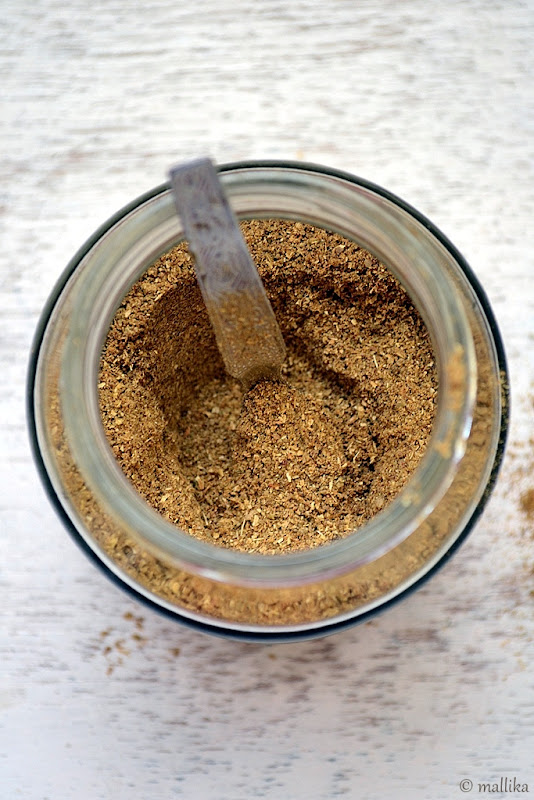
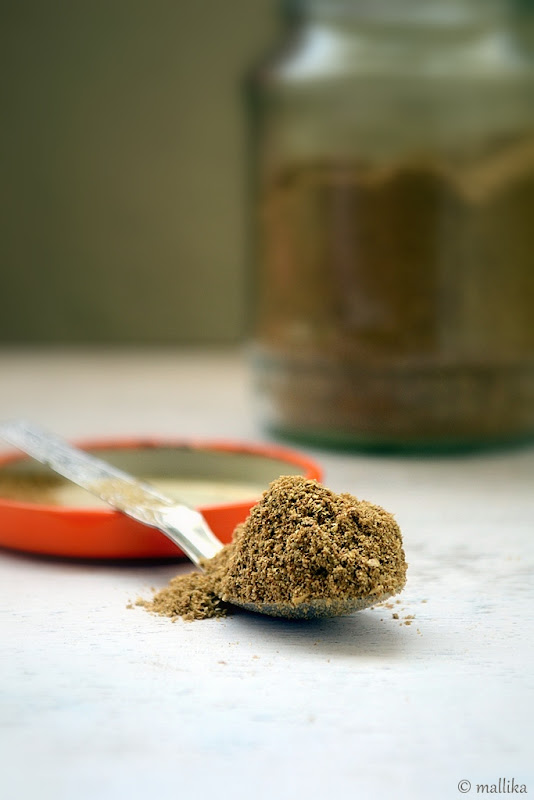
Dry roast all the ingredients in low flame till mildly fragrant. Allow it to cool completely. Grind it into a fine powder. Store in an airtight container.

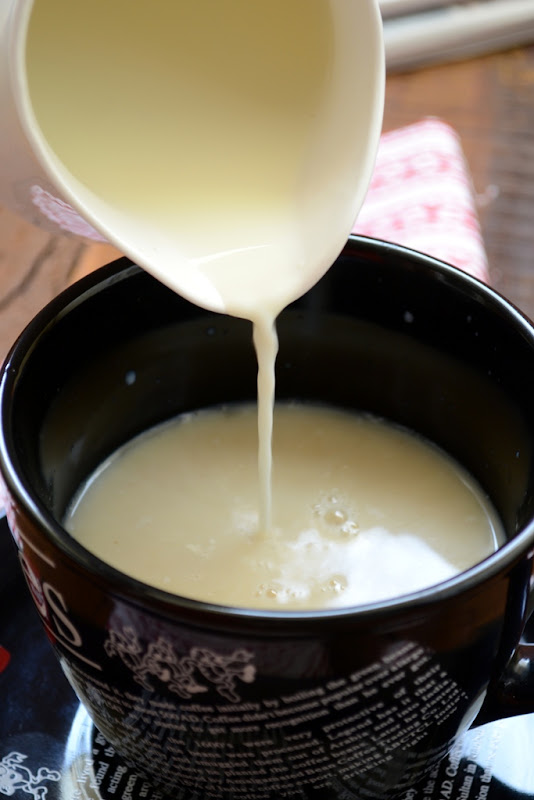
To prepare Kashaya, heat water along with the Kashaya powder, jaggery and ginger (optional) till it comes to a rolling boil. Allow it to boil for 2 minutes. Turn off the flame and add hot milk. Stir well. Strain through a muslin cloth and serve hot.


Blogging, in its beautiful entity has opened its doors to multi cultures and cuisines across world. It paves avenues to several dishes and new recipes that one had unheard of in the past, though using common day to day ingredients in various ways. Diverse flavors, myriad tastes, yet that homely touch of basic ingredients go into making of this stupendous cake belonging to another cuisine. Like, I had never known or heard of cornbread before, only until I discovered the joys of culinary blogging and blog-hopping. Makki ka atta or Cornmeal / Maize flour is quite commonly used in our Indian kitchens, especially in the North. You simply can’t miss Makki ki roti with sarson ka saag at a dhaba if you were in Punjab. Yet the same cornmeal used in our very own Makki ki roti is completely renovated to this cornbread, a native to American cuisine, one that most of us here have probably not tasted or heard of. That’s amazing since it gives me yet another healthy breakfast dish to add on to my list of ever hunting recipes for our mornings!

Thanks to the Native Americans, for we’ve got corn bread. But then history has it that its humble beginnings can be traced back to the Indians. We’ve used corn ground into meal and flour for years in our cooking and that became a part of our tradition. Owing to the benefits of corn, Westerners too adopted the practice of making corn bread and is said to have become popular around Civil War time as corn was plentiful and cheap.

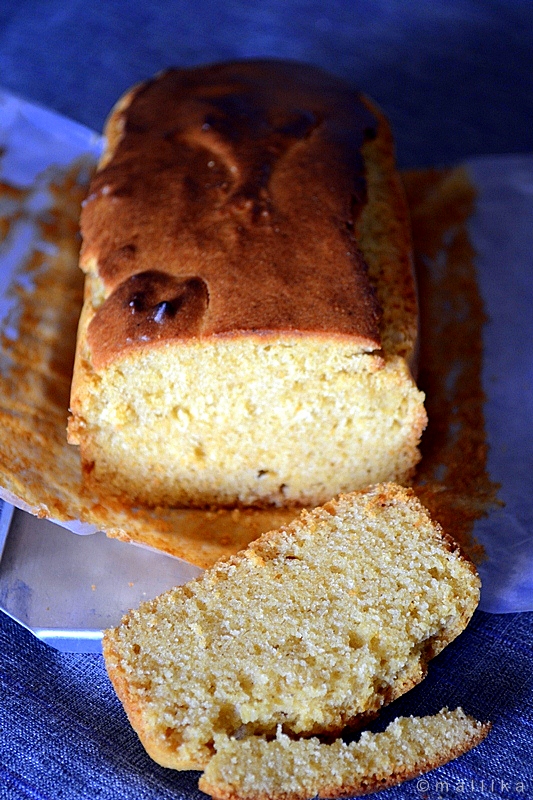
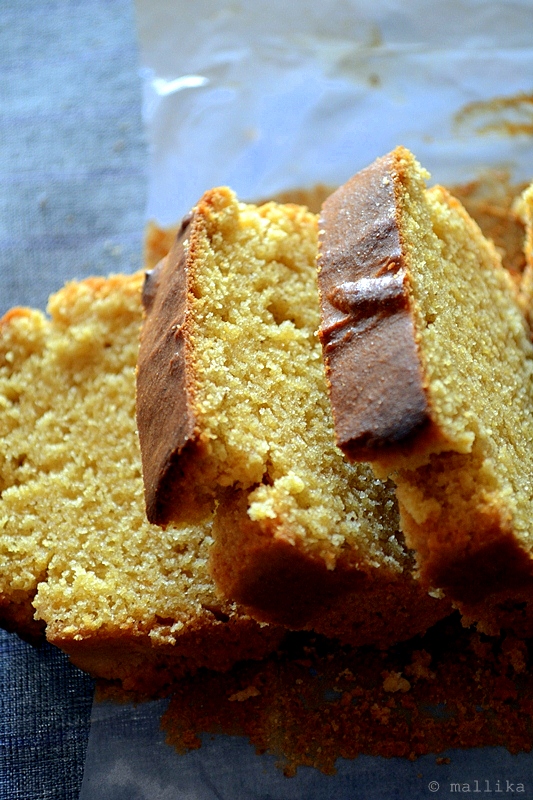
Today’s recipe for Cornbread is inspired from a couple of recipes I hunted online. I pinned down a few recipes, tweaked some, attempted to miss out on eggs, aiming at a Cornbread that would result in a light and fluffy eggless Cornbread. The first time I made these, they hung between flavors of sweet and salt, also with a pronounced taste of baking powder. I knew instantly I messed up somewhere. On another attempt I tweaked a few more changes and it came out absolutely delicious. I used only whole wheat flour to keep it healthy. The bread is quite nice and nutty with a heady cornmeal aroma which we loved. And if you have a cast iron skillet, use them… it can’t get better!


Eggless Cornbread

INGREDIENTS

1 cup cornmeal (a little coarser grind if possible)
1 cup whole wheat pastry flour
2 tsp. baking powder
1/3 cup honey (replace with maple syrup / sugar for vegan option)
1 cup milk, room temperature (replace with soy milk for vegan option)
1/4 cup olive oil
1 tsp. salt

DIRECTIONS

Preheat your oven to 180 degrees C. Paint the bottom and sides of your cast iron pan with butter or oil. Set aside. In a large bowl, measure out all of the dry ingredients (flours, baking powder, salt), and in another smaller bowl, measure out all of the wet ones (honey, milk, oil). Pour the wet ingredients into the dry ingredients and stir them together till just combined. Now pour the whole mixture into your cast iron pan. Bake your cornbread for 30-45 minutes or until a toothpick stuck into the center comes out clean.

To make it vegan, replace honey with maple syrup or regular / brown sugar and milk with a vegan milk of your choice. Hope you make this one and enjoy the benefits of corn in your breakfast.


Ganpati Bappa Moriya!!!! Pudhchya varshi laukar ya!!!
Happy Ganeshotsav to everyone!!!!

Ganesh Chaturthi, the birthday of Lord Ganesh (Ganesha), the god of wisdom and prosperity was celebrated with full pomp and splendour across the country yesterday. As I walked down the street to our market place to pick up flowers and fruits for our Ganesha, the elaborate arrangements with lot of glamour, lighting, decoration made for Ganesha statues installed in street corners and the sight of people flocking in huge numbers to pay due love and respect to the Lord invoked that feeling of unity and revived spirit and faith in Ganesha.

History has it that that Ganesha loved sweets and had his weakness for modaks that he simply could not stop himself from eating them. Undoubtedly, on this day most homes make variety of sweets including the coveted modaks and laddus to please Ganesha. Unlike some of the other Indian festivals, Ganesha’s birthday is indeed an occasion for feasting and not for fasting.

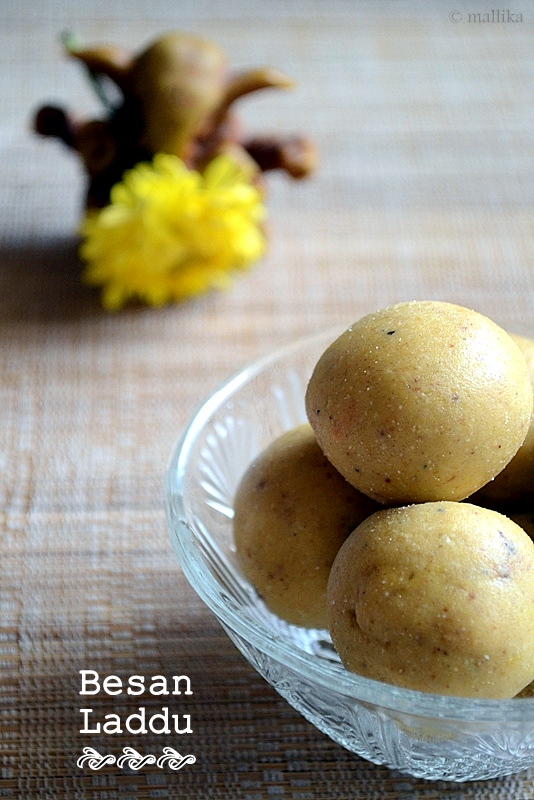
I have been busy on my toes a week ahead of the festival to make sweets and savouries for my Ganesha too. Apart from the regulars of Modak, Nippattus, this year saw me making some delicious Besan Laddu and Kai Holige. While the tedious and daring first attempt at Kai Holige for me was not so easy, making the Besan Laddu was a breeze.

I would probably have this recipe posted yesterday, but then I badly wanted to stay away from being hooked to the system, internet and blogging. It's the quality time to be spent with my family and friends that mattered the most. Blogging can wait yet another day.


Besan Laddu

INGREDIENTS

1 cup besan (Bengal gram flour)
1 tsp. rava / semolina (optional)
3/4 cup powdered sugar
1/3 cup ghee
1/4 tsp cardamom (elaichi) powder
Fistful of chopped cashewnuts and raisins

DIRECTIONS

Melt the ghee in a kadhai, add the gram flour, semolina along with chopped cashewnuts and cook over a low flame stirring continuously till it is golden brown in colour. Turn off the flame and add the sugar, the cardamom powder and raisins to the roasted gram flour and mix well. Allow to cool slightly. While still warm, divide the mixture to roughly equal portions and shape into laddus. Allow to cool completely and store in air-tight containers. These stay well for couple of weeks, but I can't promise if your family will let you keep them so long!

Ganesh Chaturthi is a special occasion and so should be Ganesh Chaturthi recipes. Bring good luck and prosperity home this festival and celebrate the occasion with your family and friends. May ganesh bring you and your family tots of good luck and happiness.


Before being a mother, I was a carefree, outgoing and extrovert. You could tag me as bindass, tomboy kinds who did not let too much of emotional upheaval disturb my life. When friends and colleagues discussed on how motherhood changed their lives emotionally and practically, I chuckled on the sly. I said to myself, probably they didn’t know how to handle their emotions or maybe they were too excited about hype over motherhood. May be our movies and snobbish soap operas influenced them a lot. Little had I known I too would be trapped into this mesh someday.

I never believed I was one of those kinds who would cling to my baby or blurt out tears at the drop of hat. Before being a mother myself, I did not see myself connecting well with kids. Naughty kids at supermarkets irritated me to the core. I wondered why parents did not teach them how to behave well. (I was a naughty one myself and got enough punishment for that). I hated cranky babies. I wondered how difficult it should be to make a snobbish baby shut up. I blamed their parents latently… till I had my own, who cried till her throat wouldn’t give up. Unbelievable!

And then I despised beggars who carried their crying babies around and went begging for money in cue of sympathy. I never encouraged begging and mercilessly believed that one should earn the hard way rather than beg easy way out.


A strange thing happened last evening. I was at my tailor’s shop getting my jeans altered. Right next to this shop is a small mosque where the evening prayers were being offered. A mother sat at the entrance pavement to the mosque begging for alms. Perfecting the timing and a wailing baby in hand, I could figure out she seemed to be a regular there. She tried her best to pacify him by rocking the baby in one hand while the other reached out for alms. As I waited for my job to finish, I stood there observing. The baby wouldn’t keep quiet.

Had it not been the maternal instincts in me, I wouldn’t have moved an inch by this sight. As I stood waiting, a couple of thoughts raced my empty mind. Why would any mother hurt her baby only to earn a few bucks? Though the mother looked shabby, she seemed healthy and hefty (reasonably, if I had to judge by a beggar’s standard), while the baby undernourished. May be the baby was unfed and hungry. May be it had a stomach ache. My heart went out for the yelping baby as it cried incessantly. With pitiful thoughts, I reached out for a change and handed it over to her with a hope she would buy some food for her starving baby. She accepted it monotonously.

I walked back home, my mind unrest, wondering what led to this deed of mine. I was never the one who was stirred by these actions in the past. Beggars never took my first glance, forget a second one. Then why was I moved? Was it the wailing baby? Or was it the baby’s hunger? Was it hurt to cry for driving sympathy? Was it unwell and not cared for properly? Was it borrowed from someone else for begging? Or maybe it was just sleepy. Was I assuming? Was it my own maternal instinct that led me to worry for it? I don’t know. I thought of my own baby and cringed to her. I don’t know where these emotions come from, I had never known them before, but they have taken over me now… Motherhood is such a warm, embracing feeling, but it makes you act stupid at times. Forgive me if I say this, but it does.


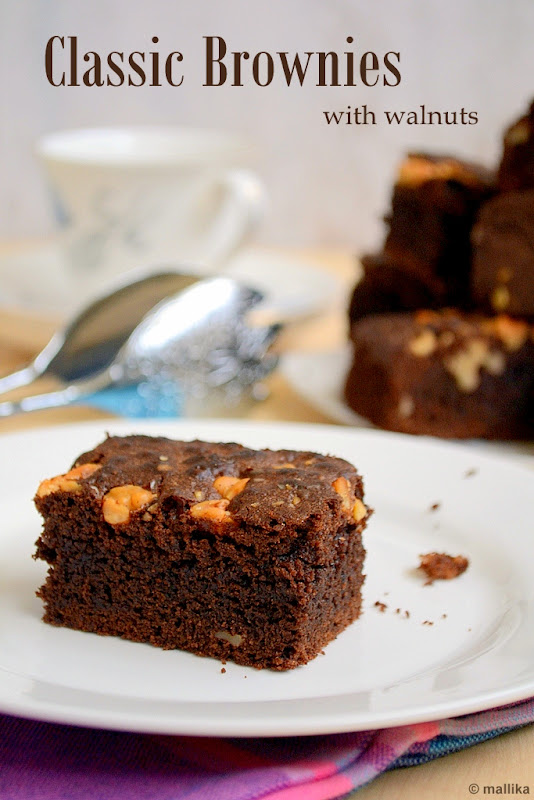
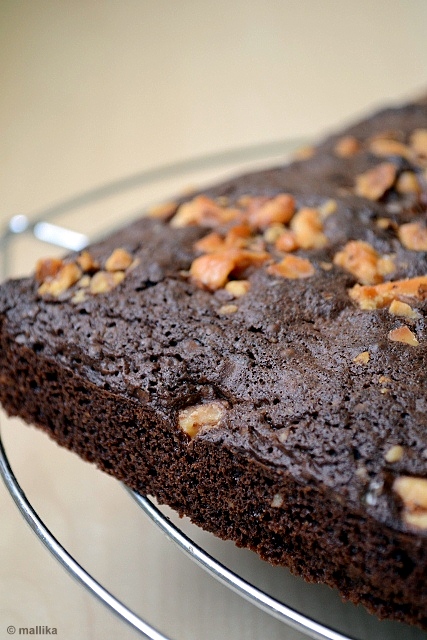
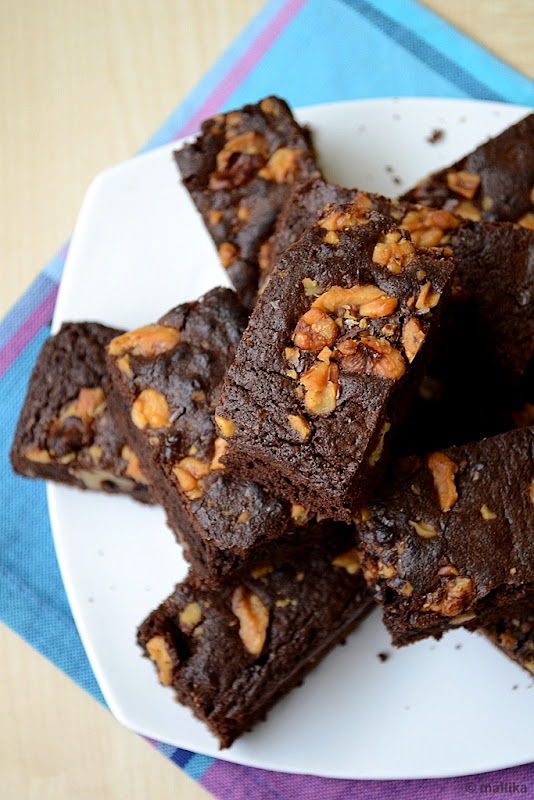
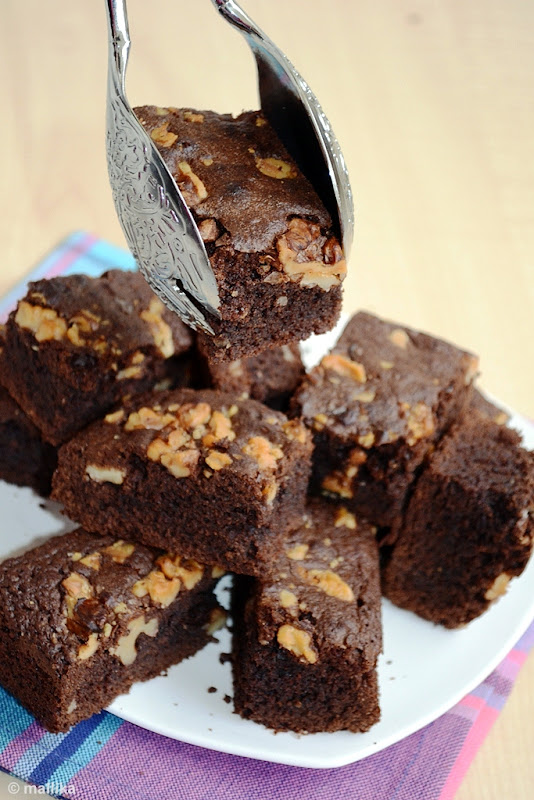
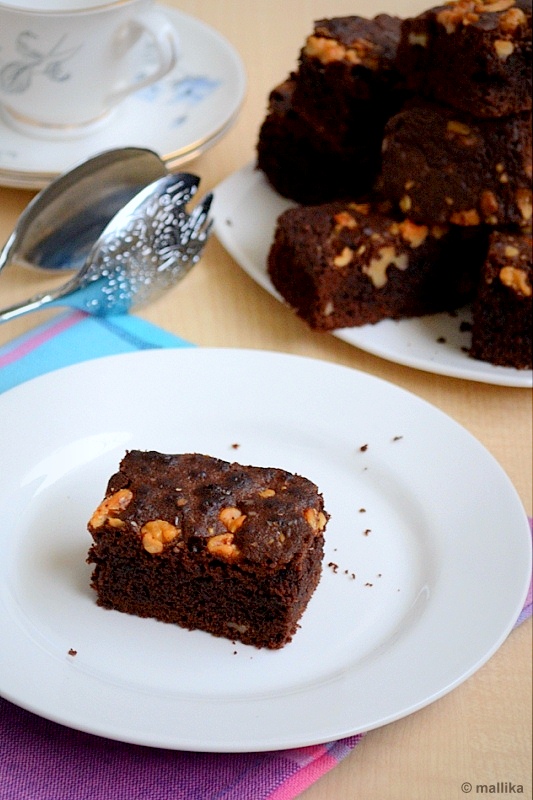
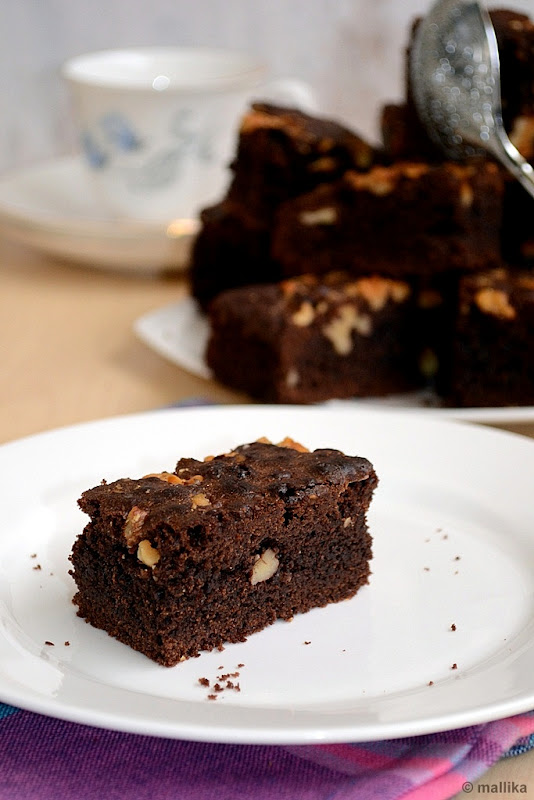
I sought an instant rescue from these cluttering thoughts in these Classic Dark Chocolate Brownies, adapted from the cookbook Chocolate: Food & Music. It’s a one pot recipe and takes hardly any effort apart from microwaving the chocolate and butter, now if you call that an effort! The original recipe has it made from white chocolate, but then these cakey brownies are wicked, filled with love from butter, sugar and decadence from dark chocolate and can be even better. How about some walnuts for some nutty bites? Sinful!
Classic Brownies

Adapted from Chocolate: Food & Music

INGREDIENTS

115g unsalted butter
225g best dark chocolate
115g plain flour
75g chopped walnuts
2 large eggs
115g soft brown sugar

DIRECTIONS

Pre-heat the oven to 180 deg C. Lightly grease a square baking tin.
Roughly chop the dark chocolate into small pieces and microwave about 175g of it along with the said amount of butter till molten, approx. 2 mins. When melted stir together and then set aside to cool slightly. Next whisk the eggs and sugar well and beat into the chocolate mixture. Tip the flour and chopped chocolate and walnuts, then gently fold together with a spatula. Pour the mixture into the prepared tin and bake at 180 deg C for 25 minutes or till the brownies are just down. Take out of the oven and allow to cool, cut into rectangles and serve warm.