Showing posts with label Diwali Recipes. Show all posts

Kodubale

How to make Kodubale | Easy Kodubale Recipe
It's eve of Diwali today, that time of the year I look forward to the most with great yearning and excitement. Its around this time I hit my best stride. I'm the happiest, consumed by thoughts only positive, blurring out all negativity and pessimism, guzzled with happiness, reflection, joy and celebration, irrespective of how high or low the year may have been. I hope yours was a fantastic one and continues to be so in the year ahead. I wish you a wonderful Diwali, and a year filled with good luck, health and prosperity. Wish you all a Happy Diwali and a prosperous New Year!

Kodubale_02


Right now as I write this, I sit on my dining table overlooking our balcony lit with tiny serial bulbs, running end to end, hung over the balcony parapet like wet jeans on cloth liners, its warm LEDs creating a bokeh effect on the hindsight in a very soothing way. Our little girl has been running around the home in sheer excitement of the festive hoopla. I miss the sounds of zameen chakras, rockets and phooljhadi (flower-pots) bursting in the vicinity, that reminds me of home back in India; but in a few minutes from now we'll head out to the local temple about 5 miles from home, where sounds of bursting crackers and rings of temple bells will chime alongside families wishing each other Happy Diwali. There's community get together - with prayer, celebrations, food and musicals to round off the night. Also, with parents around, our home is smelling of kodubales and shankarpalis and that's nothing short of what Diwali has been for us - food and celebration, both in plenty.

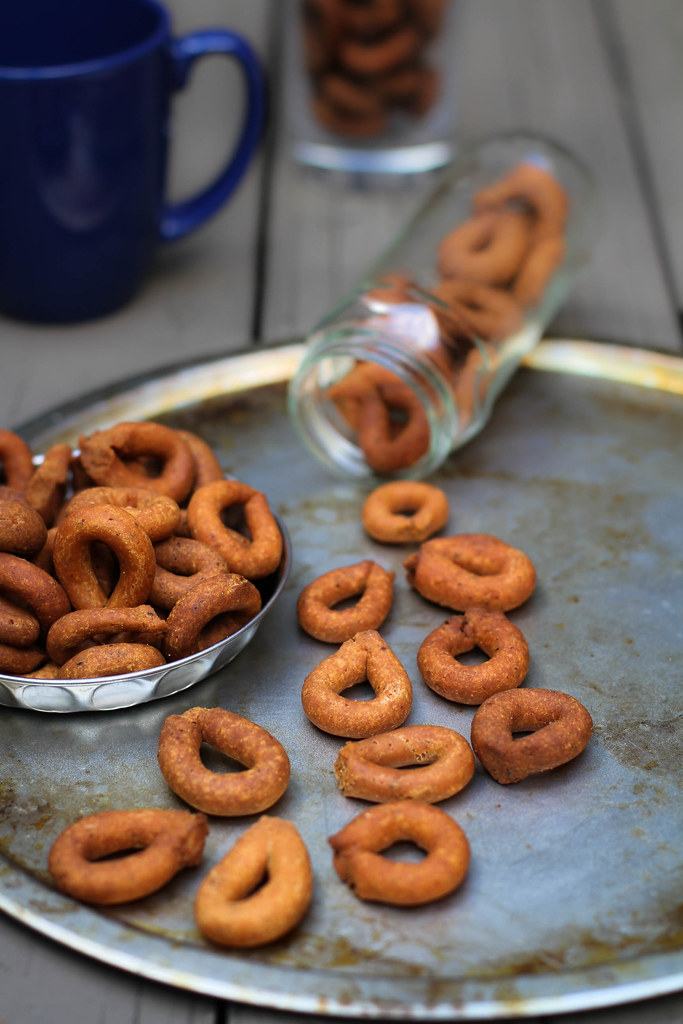
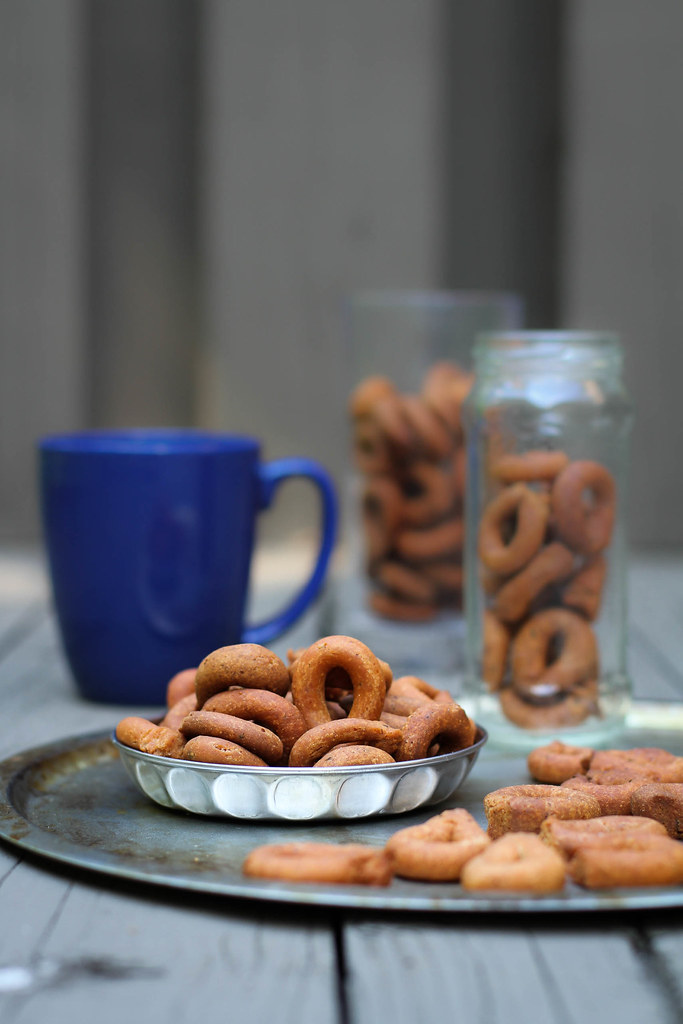
Before I head out, I'll leave you with this recipe for Kodubale, a traditional Indian savory snack that we grew up eating way too often, that there came a point when I hated it by heart. After I moved to Bangalore, I did not eat them for years. And then slowly, there came a time when I went back to eating them on my occasional trips to Mangalore, where they are made in plenty. It wasn't with much fervor though, but I know why so. Kodubales are made plenty in Mangalore - every bakery stocks them, every house stocks them, they are gifted too. They stay fresh for long, so most homes will serve you with a plate of these alongside tea. Women in most households have a recipe of their own, so they either whip up batches and stock by larders or they rush out to the nearest bakery to buy them the moment they hear a guest is about to arrive. My relatives even brought them along to gift whenever they visited us. Eventually it was overdosed and I saw aversion to it.

Of what I remember, these require no occasion to treat upon really. You make them on whim, serve your guests, feast them on festivals, snack on them in evenings with your tea, or simply carry them on your bus rides to munch on when odd hunger pangs strike. They are fried ofcourse, but they won't do much harm as a lot of the rice flour in the recipe is immune to absorbing oil. So you'll have a delicious savory that you can eat guilt free. I highly advise not experimenting these with baking, as they can obviously end disastrous. But if you have courageous nerves that I don't have, and you are successful at baking these, please share your tips with me. I will be overwhelmed to hear from you. On another note, you can control the amount of heat to your liking. I love these spicy, but if you like them low on spice, use a milder chilli powder for the heat. They are delicious I bet!
Kodubale_03


Kodubale

Prep: 30 mins | Cook: 20 min | Makes: 3 dozens

INGREDIENTS

Dry Ingredients:

2 cup rice flour
3/4 cup roasted split bengal gram (huri kadale)
1/2 cup desiccated dry coconut (powdered copra)
1/4 cup maida / plain flour
1 sprig finely chopped curry leaves
1 tsp. red chilli powder (I use a spicier one, such as Guntur chilli powder)
2 tbsp. sesame seeds
1/2 tsp. good quality asafeotida
Salt to taste

Other Ingredients:

2 tbsp. hot ghee
Oil for deep frying

DIRECTIONS

In a mixie, pulse the roasted gram into fine powder and keep it aside. Mix all ingredients mentioned under dry ingredients list along with roasted gram flour and make a well in the center. Add hot ghee and mix into the flour. Add just enough water to knead it into a firm dough.

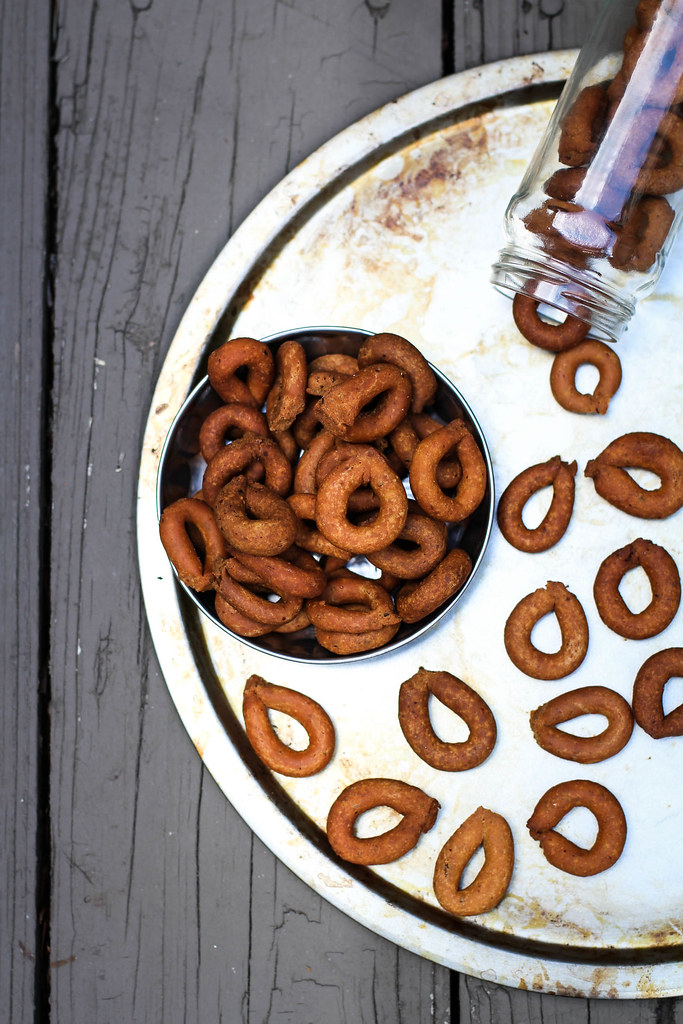
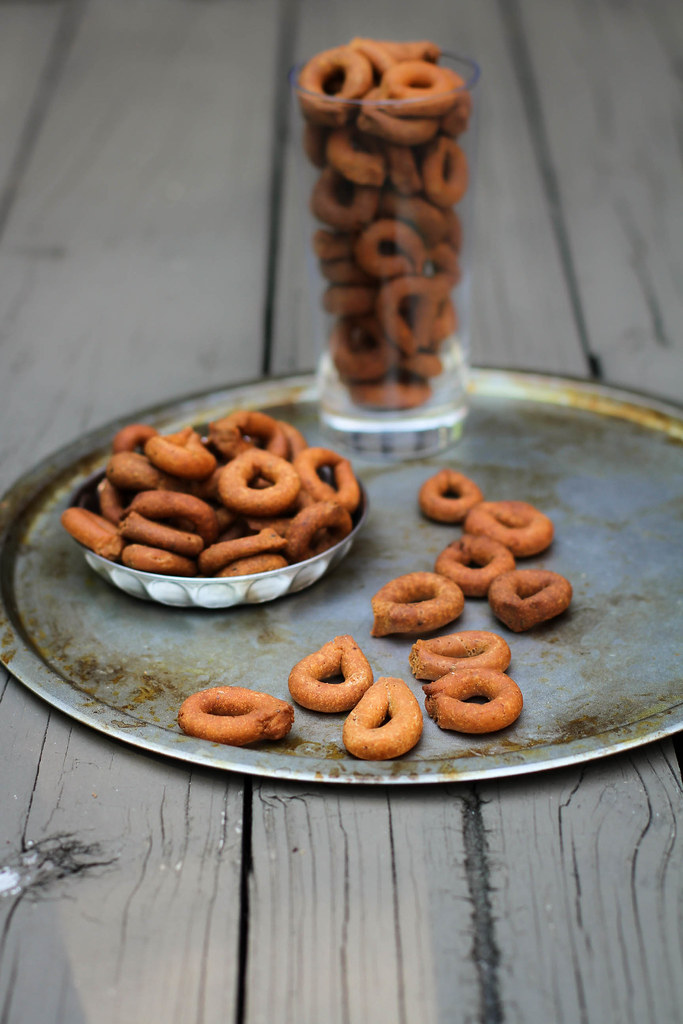
Pinch out lemon sized balls of the dough and roll them using your palms into a long, 1 cm thick rope. Cut the rope into 7-8 cms long strips. Bring the 2 ends of the strip together and pinch its ends to form a tear drop shape. Alternatively, you can bring the either ends together and pinch them to seal, thus forming a round bangle shaped ring. Prep all of the dough and keep it ready for frying.

Meanwhile, as you prep the dough, heat up oil in a kadhai / wok to medium low heat. Test by dropping a small ball of dough. It should sink first and raise up to the surface. Once heated to this stage, drop the prepared kodubales into the hot oil and fry them in batches on medium low heat till they are golden brown in color. Do not clutter many in each batch as they need to be cooked through well. The temperature of the oil is key in making good kodubales as hotter oil will tend to crisp the kodubales faster, while the centers may still be uncooked. Remove from oil and drain on a kitchen paper. Allow them to cool completely and store them in dry airtight containers. They can be stored and stay fresh for about 2 weeks.
Kodubale_04

Kaju Katli

How to make Kaju Katli | Cashew Burfi | Cashew Fudge Recipe
Sometime in October last year, just ahead of Diwali, we bumped into my husband's close family friend at a mall one evening. After a brief chat, Mr. S and his wife headed to shop in the mall, while his mom and young daughter hung around us, continuing the talk. My mother and I spent nearly an hour chatting with aunty while the kids were engrossed playing in the ball pit. We spoke at length about the upcoming Diwali preparations, the new dress that aunty had sewn on occasion of Diwali for her grand-daughter, the small disparities in our cultures and the celebrations (they being Tamilans), sharing our favorite family recipes that made the festive celebrations more special.

One of the recipes that aunty shared with us that evening was the recipe for this Kaju Katli, a popular cashew based sweet that's a popular family favorite in many homes, especially in the North, where gifting boxes of sweets is customary to their traditions. Although we are past Diwali now, I don't think this requires any occasion for celebration. You can make them at home, at your convenience anytime and feel pleased with this indulgence. If you have a weakness for Kaju Katlis, then I am afraid you may not be able to resist eating just one.

Kaju Katli_1


Making these burfis at home may sound intimidating, but it isn't. This was the first time I attempted making them at home and they came out delicious. I started off nervously even as I measured the amounts suggested by aunty, but she had assured that the recipe would work even for the most novice, immature cook, and that assurance itself wanted me to try this recipe in the first place. The end result ofcourse was smooth, melt-in-mouth goodness of cashew fudges.

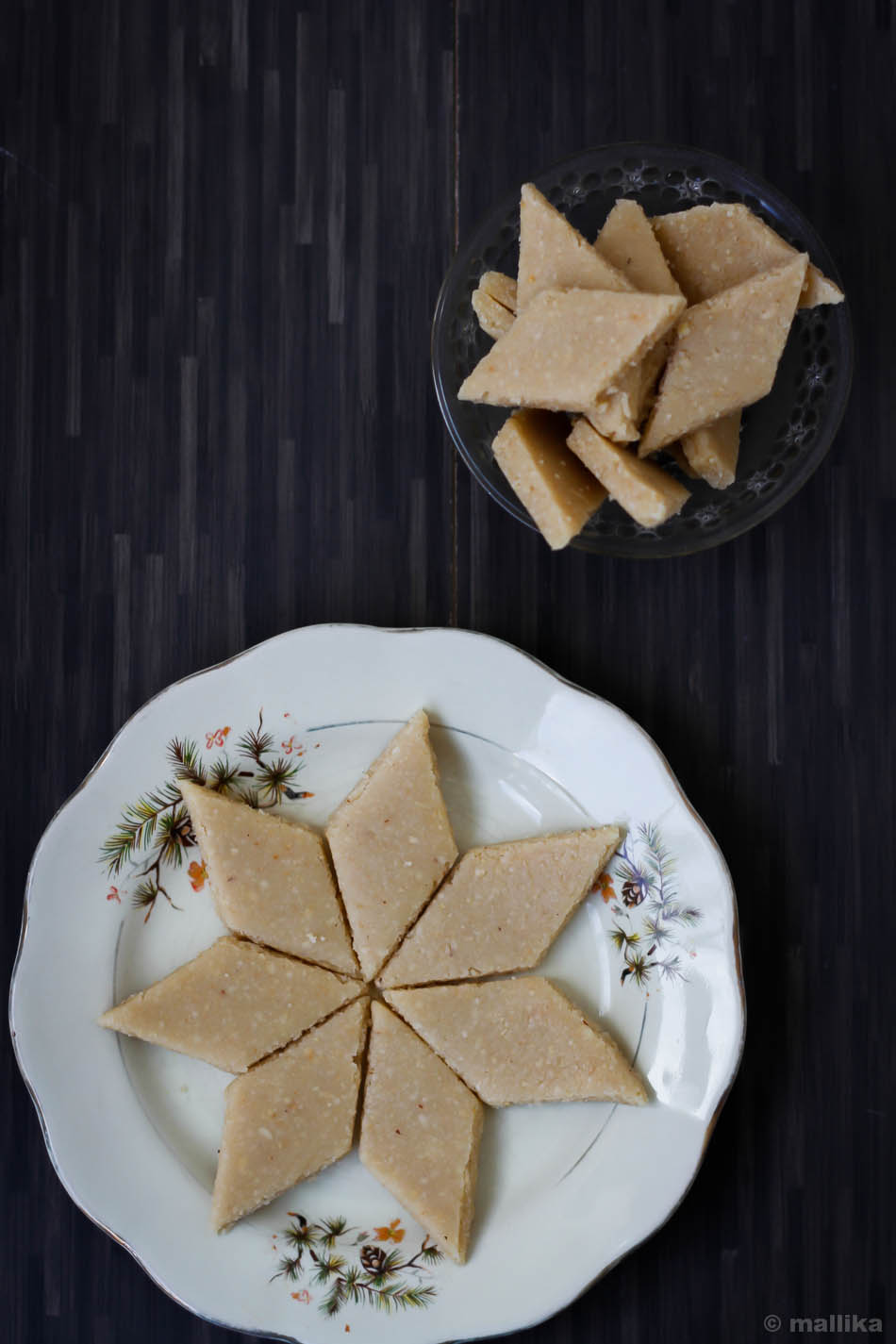
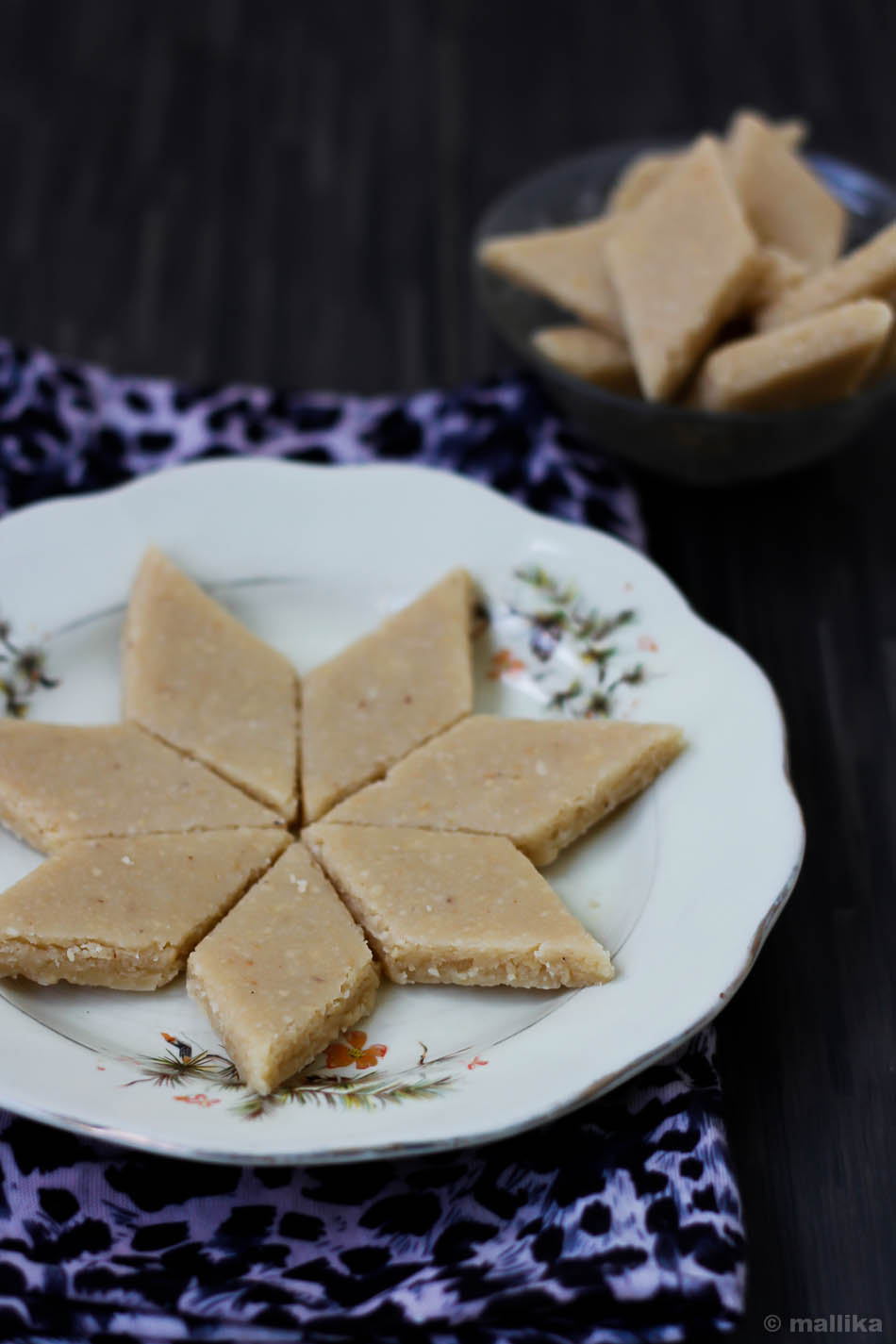
There are many ways to prepare this dessert. A common one being where the cashew nuts are soaked in water overnight and ground the next day, then cooked in single-strand sugar syrup till it comes together to form a dough. As an alternate, easier method, you can grind the cashews to a fine powder and mix with sugar syrup, cooking it on a low flame to form a soft dough. The dough is then spread and flattened on a plate and cut into thin diamonds. Commercially sold katlis have a layer to silver wark on them, however, for a home version you can skip them totally. This version of kaju katli is an easier where you do not have to worry about sugar syrup or its accurate consistency. Hence, time saving and easier which gives you the burfis of same quality as bought at a store.

Kaju Katli_2


Kaju Katli | Cashew Fudge

INGREDIENTS

2 cups cashewnuts, heaped
1 cup sugar
1/2 cup water
1 tbsp. ghee (approx. 3 tsp.)

DIRECTIONS

Grind the cashews to a fine powder in a mixie. I used the chutney jar as the whiz option on my mixie helps me control how fine I want the cashews to be powdered. Ensure that the cashews are not powdered to an extent that they begin to leave oils.

Heat the sugar and water in a thick bottomed pan and stir well till all of the sugar is dissolved in the water. Just as it comes to a rolling boil, add the cashew powder and stir well on a low flame.

The cashew mixture will soon come together and begin to thicken. Once it thickens enough to form a mass / sticky dough / lump, add a teaspoon of ghee. Remove the whole of the mixture from the pan.

Transfer the prepared mixture on to an upturned greased plate or a butter paper. I used a marble chakla. Allow it cool a little. When its cool enough to be handled, knead it gently to form a smooth dough. If the dough is too stiff and find it hard to knead, add another teaspoon of ghee. This is optional though.

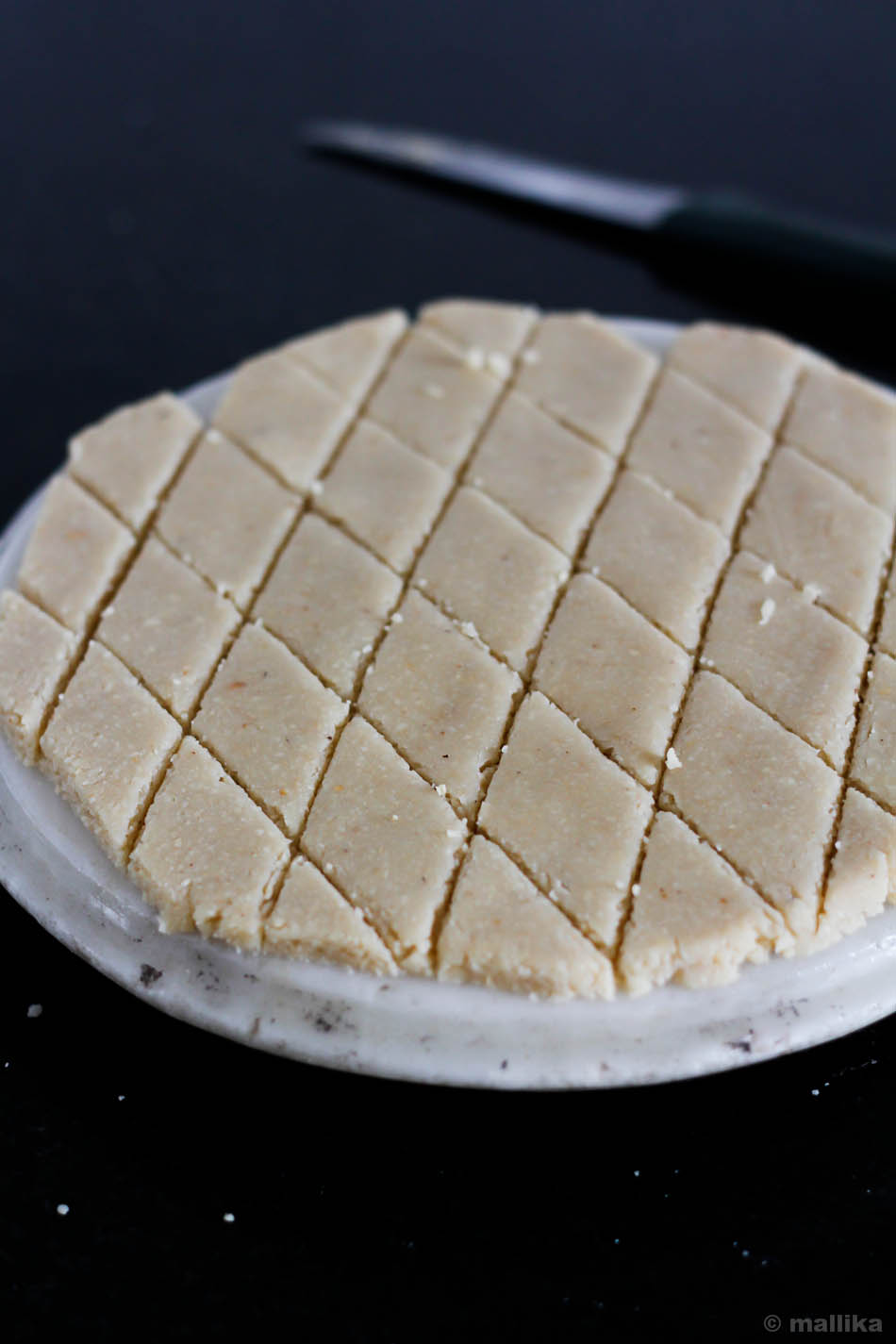
Using a greased rolling pin, roll the dough gently and evenly till its about 4-5 mm thick in height. Allow to cool. When cooled completely, use a sharp knife to cut the cashew fudge into diamond shapes. Gently transfer the kaju katli to serving plate or store in an air tight container.


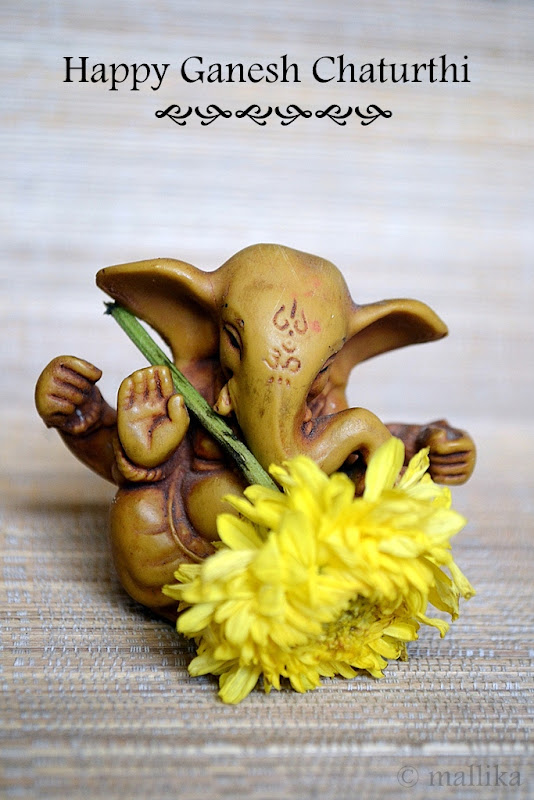
Ganpati Bappa Moriya!!!! Pudhchya varshi laukar ya!!!
Happy Ganeshotsav to everyone!!!!

Ganesh Chaturthi, the birthday of Lord Ganesh (Ganesha), the god of wisdom and prosperity was celebrated with full pomp and splendour across the country yesterday. As I walked down the street to our market place to pick up flowers and fruits for our Ganesha, the elaborate arrangements with lot of glamour, lighting, decoration made for Ganesha statues installed in street corners and the sight of people flocking in huge numbers to pay due love and respect to the Lord invoked that feeling of unity and revived spirit and faith in Ganesha.

History has it that that Ganesha loved sweets and had his weakness for modaks that he simply could not stop himself from eating them. Undoubtedly, on this day most homes make variety of sweets including the coveted modaks and laddus to please Ganesha. Unlike some of the other Indian festivals, Ganesha’s birthday is indeed an occasion for feasting and not for fasting.

I have been busy on my toes a week ahead of the festival to make sweets and savouries for my Ganesha too. Apart from the regulars of Modak, Nippattus, this year saw me making some delicious Besan Laddu and Kai Holige. While the tedious and daring first attempt at Kai Holige for me was not so easy, making the Besan Laddu was a breeze.

I would probably have this recipe posted yesterday, but then I badly wanted to stay away from being hooked to the system, internet and blogging. It's the quality time to be spent with my family and friends that mattered the most. Blogging can wait yet another day.


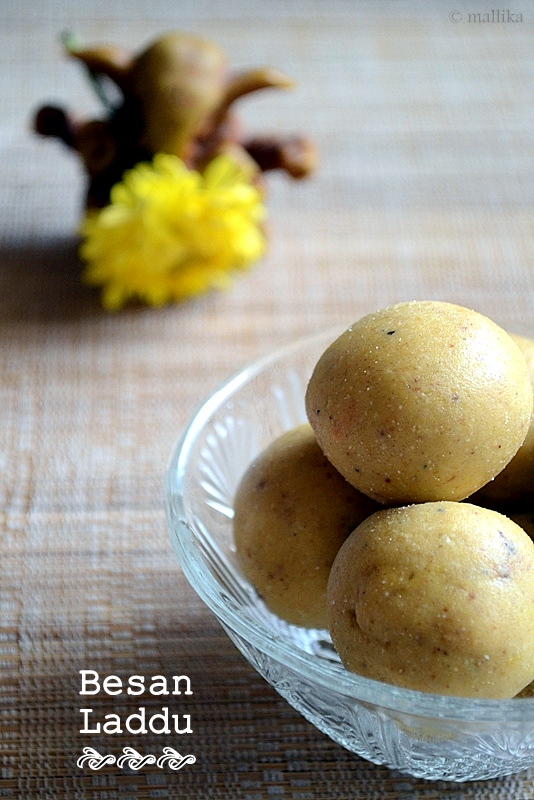
Besan Laddu

INGREDIENTS

1 cup besan (Bengal gram flour)
1 tsp. rava / semolina (optional)
3/4 cup powdered sugar
1/3 cup ghee
1/4 tsp cardamom (elaichi) powder
Fistful of chopped cashewnuts and raisins

DIRECTIONS

Melt the ghee in a kadhai, add the gram flour, semolina along with chopped cashewnuts and cook over a low flame stirring continuously till it is golden brown in colour. Turn off the flame and add the sugar, the cardamom powder and raisins to the roasted gram flour and mix well. Allow to cool slightly. While still warm, divide the mixture to roughly equal portions and shape into laddus. Allow to cool completely and store in air-tight containers. These stay well for couple of weeks, but I can't promise if your family will let you keep them so long!

Ganesh Chaturthi is a special occasion and so should be Ganesh Chaturthi recipes. Bring good luck and prosperity home this festival and celebrate the occasion with your family and friends. May ganesh bring you and your family tots of good luck and happiness.

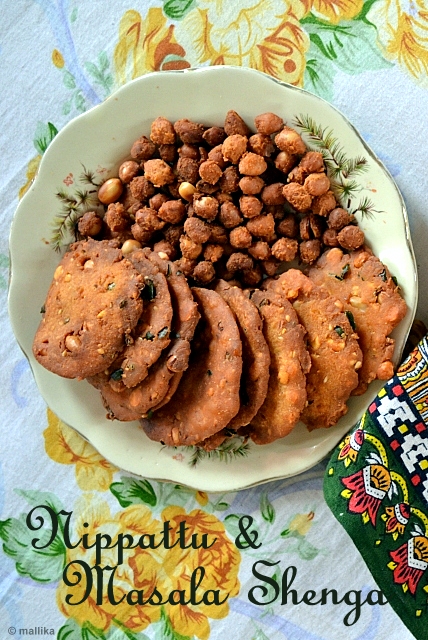
Nippattu & Masala Shenga

Easy Nippattu Recipe | Easy Masala Shenga Recipe
I am very fond of Ganesha, the God of wisdom and prosperity and invoke him everyday. I believe in God, the strength prayers bring and the rituals performed for well being of our family and society. They bestow peace to my mind, an orientation in life which is of utmost importance for a healthy life.

This year Ganesha brought bounty happiness to our home and family. This Chaturthi had to be special for all of us. I fondly love to call my little one as Bal Ganesh and of course with due respect to my Lord, she has been named after him. She's prosperity for us, just as her name suggests. For the festival, our entire family came together for prayers and offerings, followed by a good spread of lunch and we felt pretty well soaked in the festive disposition.

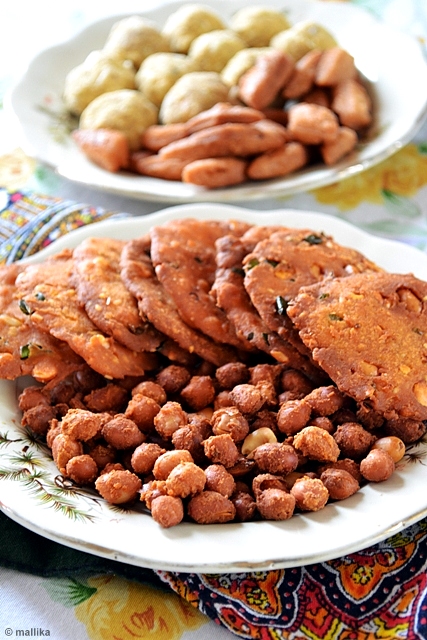
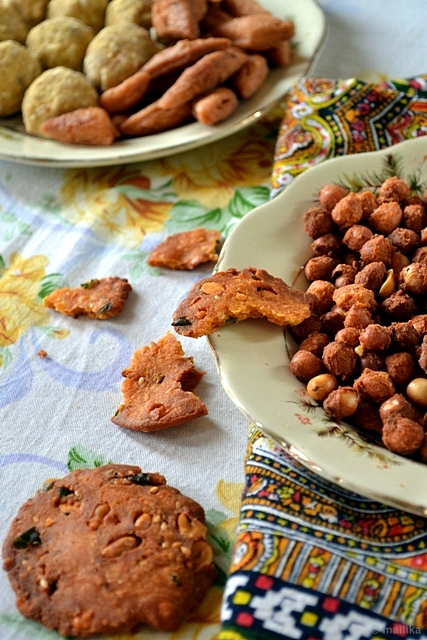
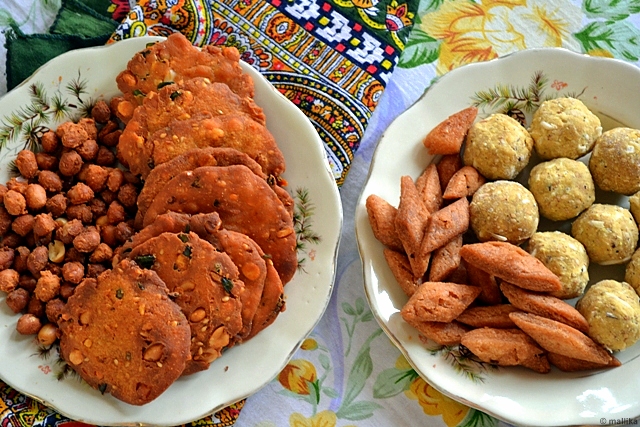
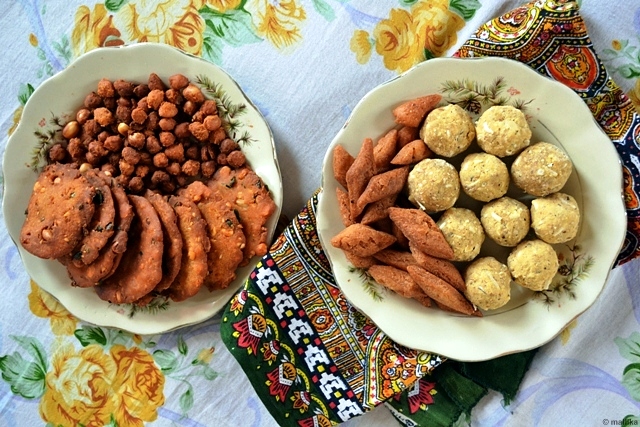
A day before the festival, my mom and I came together to make both sweets and savories for the festival. While Modaka, Shankarpali and Tambittu were sweets made to offer our Ganesha, for savories we had Nippattus and Masala Shenga. Masala Shenga/Peanuts were not exactly for the offerings, but surely to serve the guests who came over to greet us.

Nippattu


Nippattu

INGREDIENTS

2 cups rice flour
1 cup maida (all purpose flour)
1/2 cup besan (chickpea flour)
1 tsp hing (asafoetida powder)
2 green chillies
3 strings chopped curry leaves
2 tbsp coarsely ground peanuts
2 tbsp hurigadale (roasted bengal gram)
2 tbsp chilli powder
2 tsp white sesame seeds
Salt to taste
2 tbsp cooking oil
Water to knead
Oil for deep frying

Nippattu & Masala Shenga_1


DIRECTIONS

Mix in all the flours, i.e. the rice flour, maida and besan. Add the hing, green chillies, finely chopped curry leaves, coarsely ground peanuts, roasted bengal gram, chilli powder, sesame seeds and salt to taste. Drizzle about 2 tbsp of oil. Using water little by little, knead gently into a soft dough.

Pinch lemon sized balls from the dough and roll out on an oiled surface. You can either use a granite stone or use a butter paper to pat the nippattu. An inverted and oiled steel plate will also do.

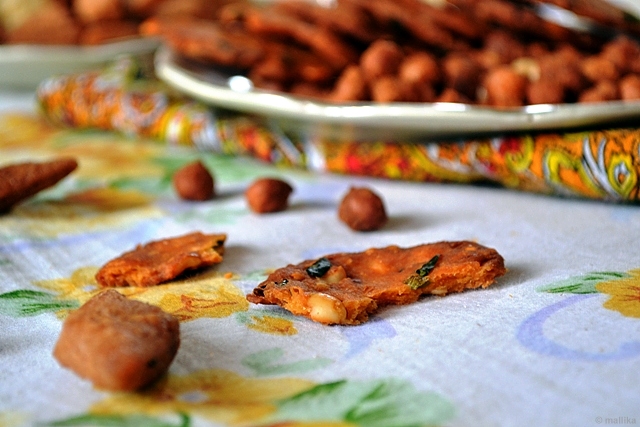
Heat oil in a fry pan. Gently drop the rolled nippattu and fry them on a medium low flame till they turn golden brown. Remove them and drain on a kitchen paper. Store them in air tight containers and they are good to go for a month long, well if you can resist not eating them so long!

Nippattu & Masala Shenga_2


Masala Shenga (Spiced Peanuts)

INGREDIENTS

For the Spice mix

1 cup gram flour (besan)
1/2 cup rice flour
1/2 tsp turmeric
1 tsp red chilli powder
Salt to taste

Other Ingredients:

3 cups roasted peanuts
Water as needed to bind the spices and flour
Oil to fry

DIRECTIONS

Mix all the spice mix ingredients mentioned above together in a large bowl. Add water in small quantities to the spices and flour. The quantity should be sufficient to ensure the spices coat the peanuts uniformly.

Heat the oil in a kadhai or fry pan on medium heat. Oil your hands a little as it will help in dropping the peanuts into the oil. Drop the peanuts in batches ensuring they are separated while frying. Fry the peanuts till they cook evenly and turn golden brown in color. Drain the peanuts on a kitchen paper to absorb the extra oil. Spread them out and allow them to cool down to room temperature.

Nippattu & Masala Shenga_3


Store the Masala Peanuts in an air-tight container and these are good for a month long. Again, these go very well as tea-time snack. Pack it up for travel treats or picnic munch-ons.

Both these spicy treats make great travel accompaniments and are excellent tea time snacks. Nipattu is another traditional dish from Karnataka cuisine and is commonly served as a snack in many Karnataka households. So the next time you have guests at home, greet them with these spicy Nippattus and Masala peanuts. Be promised, these spicy treats are sure to let their taste-buds lingering with it's spices.

Shankarpali and Tambittu

How to make Shankarpali | Tambittu Recipe
Wishing all my readers a very Happy Ganesh Chaturthi. Even before I have recovered from the heavy feasting we had on Krishna Janmasthami, we already have Ganesh Chaturthi here. More festivals to follow and I am looking forward to them eagerly. Festive season is here again and with good things happening in our life this year, I am all the more determined to celebrate our festivals with grandeur.

Ganesh Chaturthi is the festival I never miss to celebrate. The festival marks the birth of Lord Ganesha. Just like many, Ganesha happens to be my favorite God too. Our childhood did revolve around listening to mythological stories woven beautifully by my paternal grandma during our bed-time.

Larger than life-like clay models of Lord Ganesha have been making rounds in market, weeks before the festival. That's good enough an hint that the festival is just round the corner. Public celebrations of the festival, tableau and processions are hugely popular with streets laced with rice bulbs, music and heavily decorated pandals that host the God for 10 odd days.

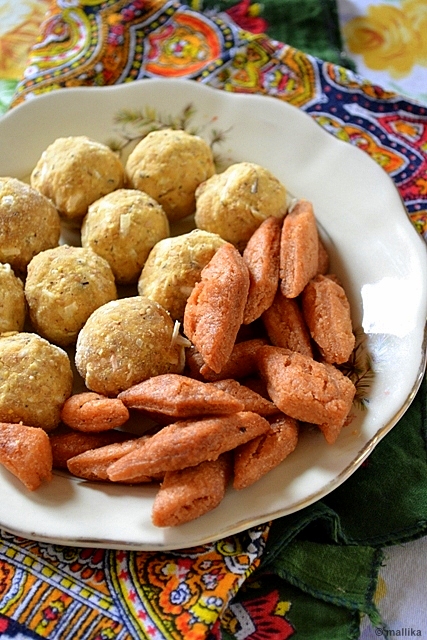
Lord Ganesh is often associated with food and is known for his fondness for sweets like modaks, laddus, karjikai and savories like chakklis, kadabu and kodbale. Every Chaturthi, we have a ritual at home of waking up early for the bath, followed by puja. An array of dishes, both sweet and savory made at home by my mom a day before the festival are offered to Lord Ganesha on this day. The celebration goes on for 11 days, hence the sweets and savories are made in large quantities so that can last long. Like every year, Modaks will be made to offer the Lord this year too. Apart from this, we have Shankarpali, Nippattu, Huri Shenga, Tambittu and Panchakajjaya to offer our Ganesha this year. Fortunately, I have my mom close by, so it's been a combined effort. I shall share the recipes for Shankarpali and Tambittu today. Nippattu shall be on another post.

Shankarpali and Tambittu


Shankarpali

INGREDIENTS

3 cups all-purpose flour
1 cup sugar
1/2 cup milk
1/4 cup ghee
Pinch of salt
Oil or Ghee for deep-frying

DIRECTIONS

Mix the milk, sugar and ghee in a kadhai and heat to a boil. When it is warm enough to touch add the salt followed by flour and stir well. Add the flour till it comes to a kneading consistency, good enough to form a soft dough.

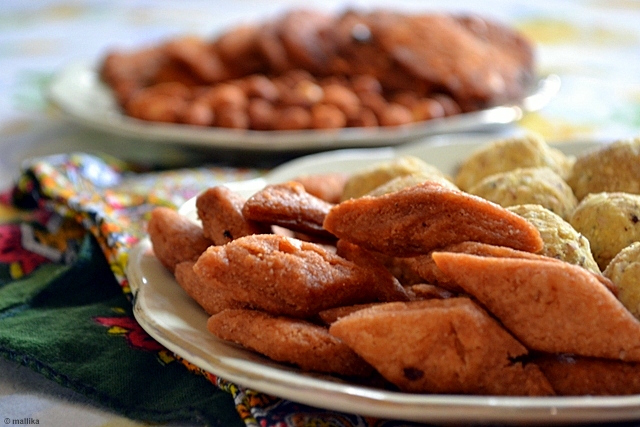
Using a rolling pin, roll out the dough flat to a centimeter thick. Using a pizza-cutter cut into diamond shapes. Deep fry them in hot oil/ghee till they turn golden brown. Fry on medium low heat. High heat will result in dark brown crust on the outsides and under cooked beneath. Remove and drain on a kitchen paper.

Shankarpali and Tambittu


The amount of sugar mentioned above is the right amount of sweetness we like. If you prefer it more sweeter, you may increase the amount of sugar as per your taste. The amount of flour mentioned above is an approximate number. While preparing the Shankarpalis, add in flour till it comes together to form a soft dough.

Spicy version of Shankarpali can also be made by replacing sugar with 2-3 teaspoons of chilli powder and omitting the cardamom powder. Shankarpali is a popular sweet all across the country. It's called Shakkarpare in the north while it's Shankarpali in the south. The names may differ, but the recipe is almost similar. It's pretty popular in Maharashtra and Karnataka and is often made on festivals in large quantities to offer the Lord and distribute among family and friends.

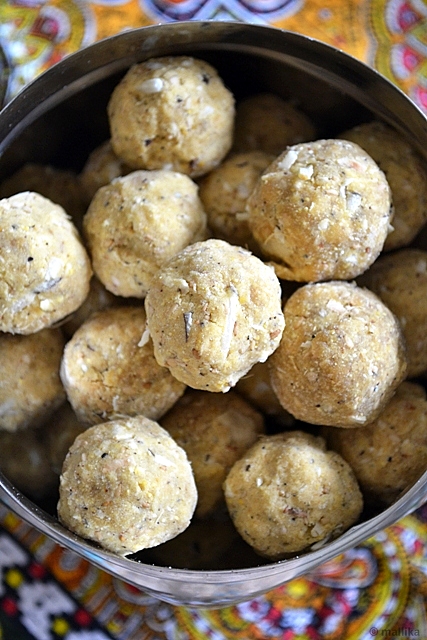
Tambittu

INGREDIENTS

1 cup rice flour
1/4 cup hurigadale hittu (roasted bengal gram powder)
1/4 cup coarsely ground roasted peanuts
1 1/2 cup grated dry coconut
1 cup grated jaggery
1/4 cup ghee (clarified butter)
2 tsp sesame seeds

Shankarpali and Tambittu


DIRECTIONS

Dry roast rice in a hot pan till it turns golden. Allow it cool. Grind it with roasted chickpeas to a fine powder.

Dry roast the grated dry coconut and sesame seeds till brown and set aside.

Take ghee in a fry pan/kadai and heat it till it's hot (not smoking). Dissolve the grated jaggery in hot ghee and stir well till the jaggery melts completely and the liquid just comes to a boil.

Mix together the coarsely powdered peanuts, sesame seeds and grated coconut. Add this to the boiling jaggery ghee mixture. Add the rice and roasted chickpea powder and keep stirring till the mixture becomes like a dough to make balls. Mix well to prevent the formation of lumps. Switch off the stove. Close and keep till it cools down. Grease your hands and roll balls to make tambittu.

Shankarpali and Tambittu


A little tedious it may sound, but isn't that effort required to impress your God? Tambittu is a traditional sweet dish commonly made in Karnataka household, often made to offer God during festivals. Again, these laddus stay well for a couple of weeks, so store them well in air-tight containers and they are good to go for your evening chai. You can see above we made a big batch to go for a few days.

As everyone celebrates Ganesh Chaturthi today with religious fervor, here's me wishing our Ganapati a very Happy Birthday. May Lord Ganesha shower you with success in all your endeavours. Hope this Ganesh Chaturthi brings home all the happiness, prosperity & fortune.

Jai Shri Siddhi Vinayaka

Shankarpali and Tambittu