Showing posts with label Indian Snack. Show all posts

Kodubale

How to make Kodubale | Easy Kodubale Recipe
It's eve of Diwali today, that time of the year I look forward to the most with great yearning and excitement. Its around this time I hit my best stride. I'm the happiest, consumed by thoughts only positive, blurring out all negativity and pessimism, guzzled with happiness, reflection, joy and celebration, irrespective of how high or low the year may have been. I hope yours was a fantastic one and continues to be so in the year ahead. I wish you a wonderful Diwali, and a year filled with good luck, health and prosperity. Wish you all a Happy Diwali and a prosperous New Year!

Kodubale_02


Right now as I write this, I sit on my dining table overlooking our balcony lit with tiny serial bulbs, running end to end, hung over the balcony parapet like wet jeans on cloth liners, its warm LEDs creating a bokeh effect on the hindsight in a very soothing way. Our little girl has been running around the home in sheer excitement of the festive hoopla. I miss the sounds of zameen chakras, rockets and phooljhadi (flower-pots) bursting in the vicinity, that reminds me of home back in India; but in a few minutes from now we'll head out to the local temple about 5 miles from home, where sounds of bursting crackers and rings of temple bells will chime alongside families wishing each other Happy Diwali. There's community get together - with prayer, celebrations, food and musicals to round off the night. Also, with parents around, our home is smelling of kodubales and shankarpalis and that's nothing short of what Diwali has been for us - food and celebration, both in plenty.

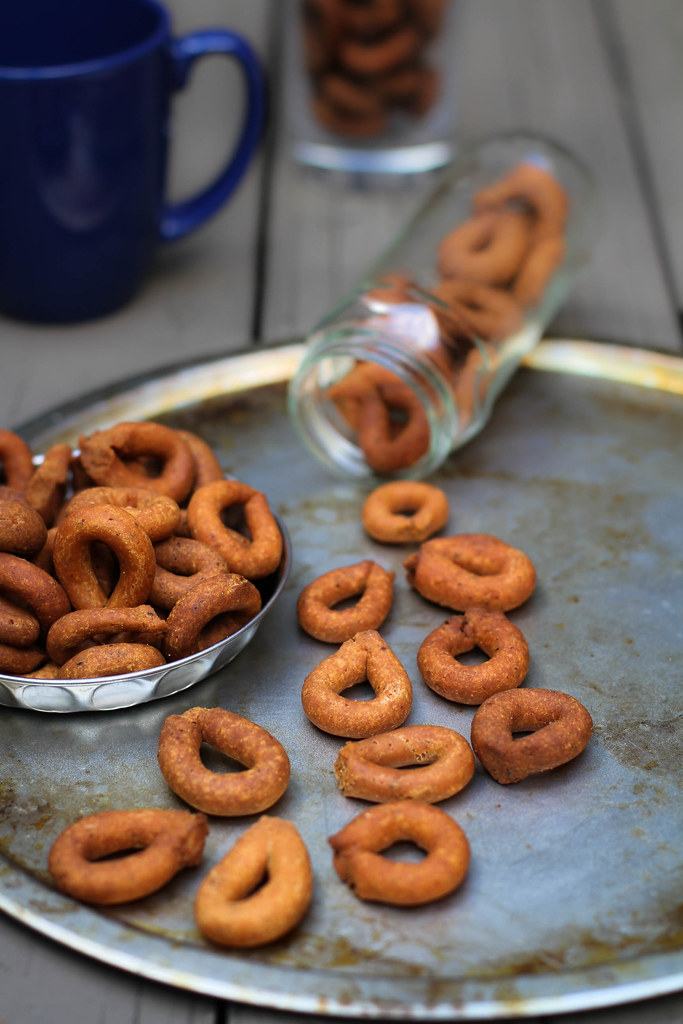
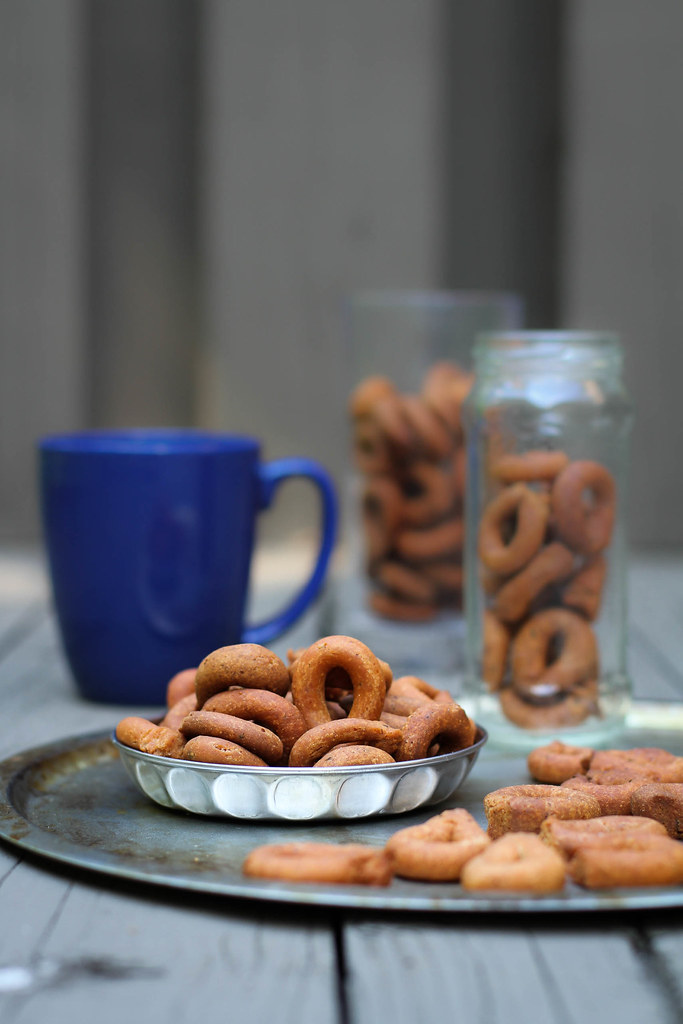
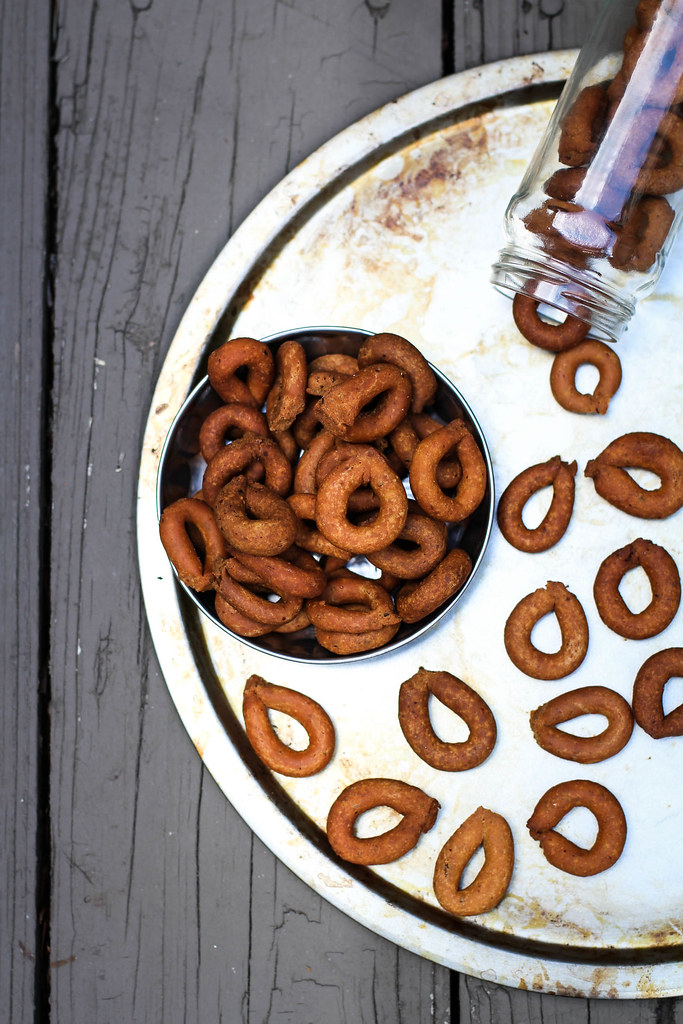
Before I head out, I'll leave you with this recipe for Kodubale, a traditional Indian savory snack that we grew up eating way too often, that there came a point when I hated it by heart. After I moved to Bangalore, I did not eat them for years. And then slowly, there came a time when I went back to eating them on my occasional trips to Mangalore, where they are made in plenty. It wasn't with much fervor though, but I know why so. Kodubales are made plenty in Mangalore - every bakery stocks them, every house stocks them, they are gifted too. They stay fresh for long, so most homes will serve you with a plate of these alongside tea. Women in most households have a recipe of their own, so they either whip up batches and stock by larders or they rush out to the nearest bakery to buy them the moment they hear a guest is about to arrive. My relatives even brought them along to gift whenever they visited us. Eventually it was overdosed and I saw aversion to it.

Of what I remember, these require no occasion to treat upon really. You make them on whim, serve your guests, feast them on festivals, snack on them in evenings with your tea, or simply carry them on your bus rides to munch on when odd hunger pangs strike. They are fried ofcourse, but they won't do much harm as a lot of the rice flour in the recipe is immune to absorbing oil. So you'll have a delicious savory that you can eat guilt free. I highly advise not experimenting these with baking, as they can obviously end disastrous. But if you have courageous nerves that I don't have, and you are successful at baking these, please share your tips with me. I will be overwhelmed to hear from you. On another note, you can control the amount of heat to your liking. I love these spicy, but if you like them low on spice, use a milder chilli powder for the heat. They are delicious I bet!
Kodubale_03


Kodubale

Prep: 30 mins | Cook: 20 min | Makes: 3 dozens

INGREDIENTS

Dry Ingredients:

2 cup rice flour
3/4 cup roasted split bengal gram (huri kadale)
1/2 cup desiccated dry coconut (powdered copra)
1/4 cup maida / plain flour
1 sprig finely chopped curry leaves
1 tsp. red chilli powder (I use a spicier one, such as Guntur chilli powder)
2 tbsp. sesame seeds
1/2 tsp. good quality asafeotida
Salt to taste

Other Ingredients:

2 tbsp. hot ghee
Oil for deep frying

DIRECTIONS

In a mixie, pulse the roasted gram into fine powder and keep it aside. Mix all ingredients mentioned under dry ingredients list along with roasted gram flour and make a well in the center. Add hot ghee and mix into the flour. Add just enough water to knead it into a firm dough.

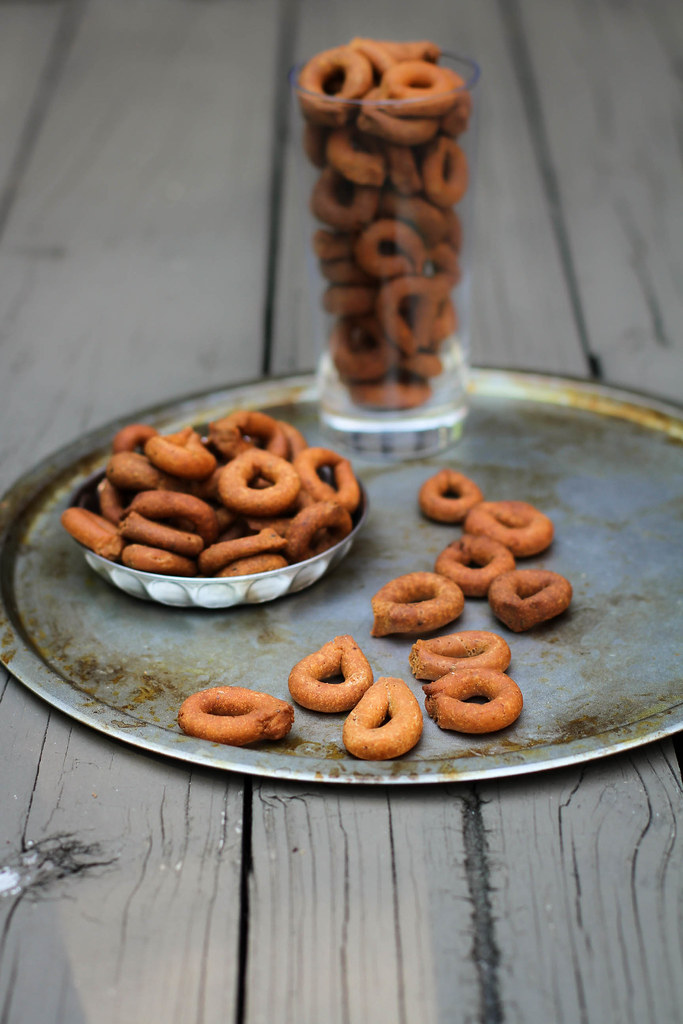
Pinch out lemon sized balls of the dough and roll them using your palms into a long, 1 cm thick rope. Cut the rope into 7-8 cms long strips. Bring the 2 ends of the strip together and pinch its ends to form a tear drop shape. Alternatively, you can bring the either ends together and pinch them to seal, thus forming a round bangle shaped ring. Prep all of the dough and keep it ready for frying.

Meanwhile, as you prep the dough, heat up oil in a kadhai / wok to medium low heat. Test by dropping a small ball of dough. It should sink first and raise up to the surface. Once heated to this stage, drop the prepared kodubales into the hot oil and fry them in batches on medium low heat till they are golden brown in color. Do not clutter many in each batch as they need to be cooked through well. The temperature of the oil is key in making good kodubales as hotter oil will tend to crisp the kodubales faster, while the centers may still be uncooked. Remove from oil and drain on a kitchen paper. Allow them to cool completely and store them in dry airtight containers. They can be stored and stay fresh for about 2 weeks.
Kodubale_04

How to make Sabudana Vada | Easy Sabudana Vada Recipe
I spent a fairly large part of December living out of my suitcase traveling to Pune for work. Being my first visit ever to Pune as an adult I was looking forward to it. I’m told this is not my first time there. We lived for many years in Maharashtra and had crossed Pune en route on multiple occasions. The last time I was there, I don’t even remember. That must have been moons ago when I was a kid, most of which I can barely recall. And even if I did, it would do no good. Over decades, Pune is known to have seen oceanic wave of change the way Bangalore did. Nevertheless, it was a trip I lived and loved like I owned it.

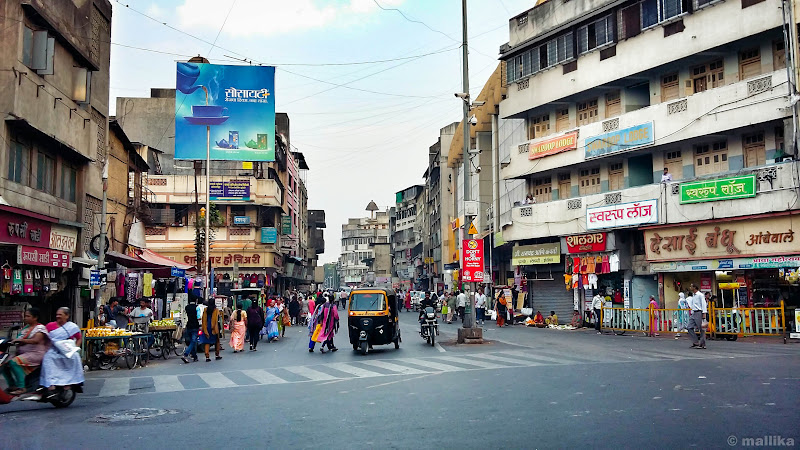
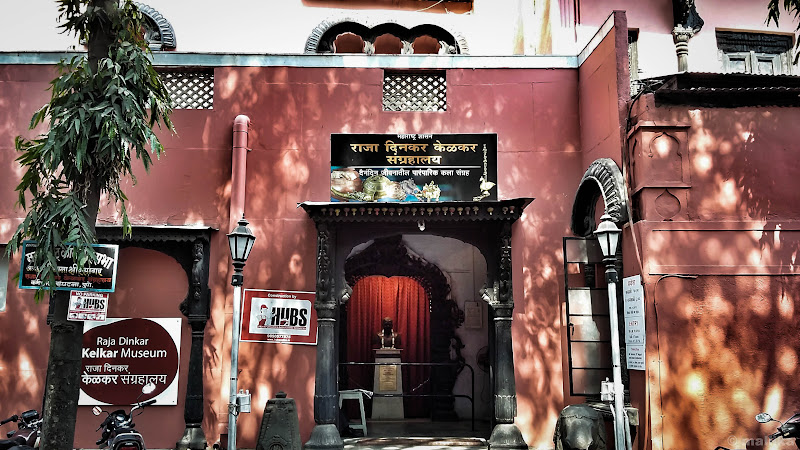
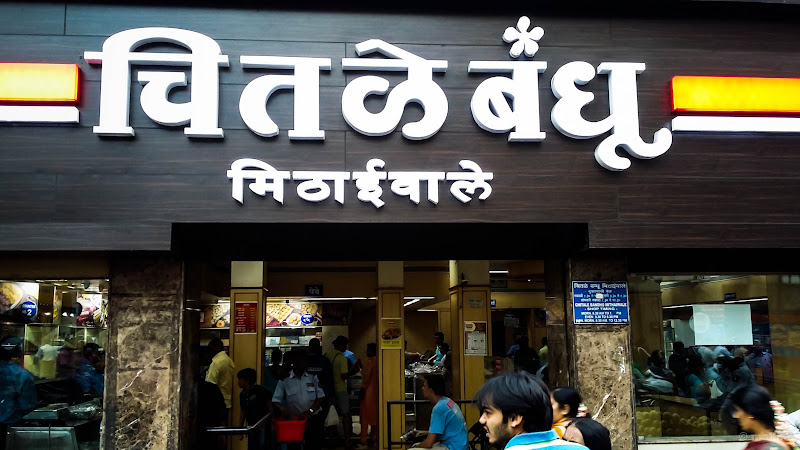
I am taking you on a short walk to Pune through my eyes. Bear with me, these photos do no justice as I was without my real camera. All these captures were shot on my cell phone.


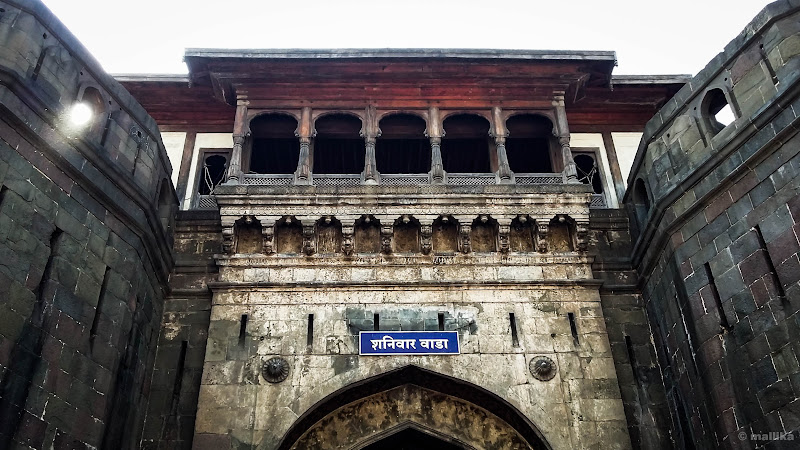
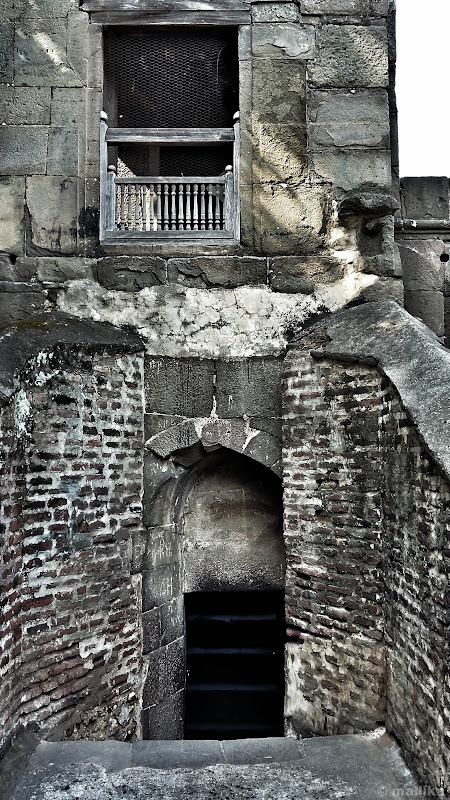
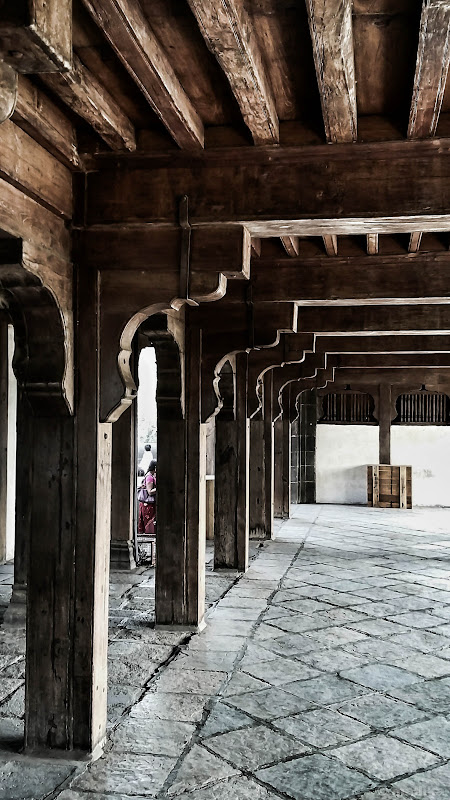
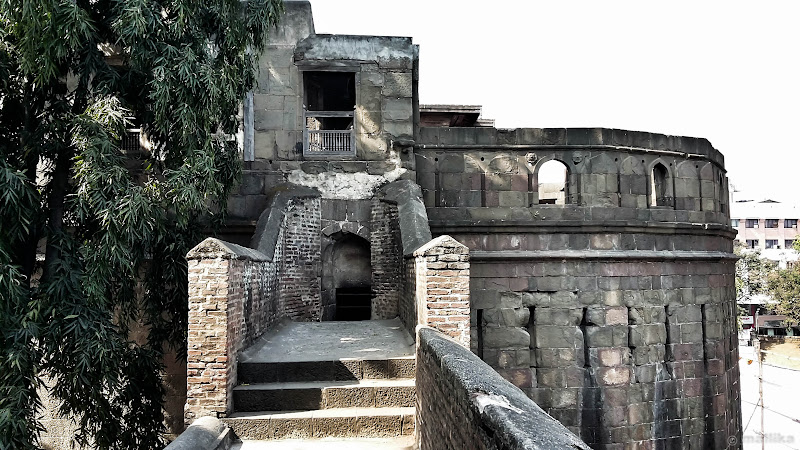
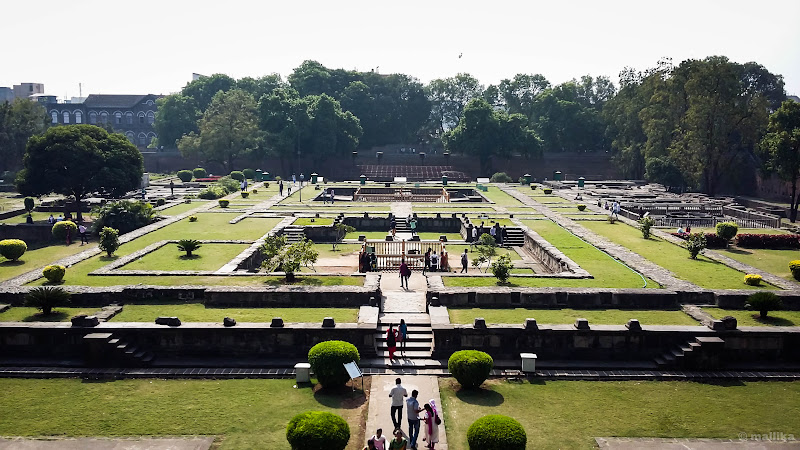
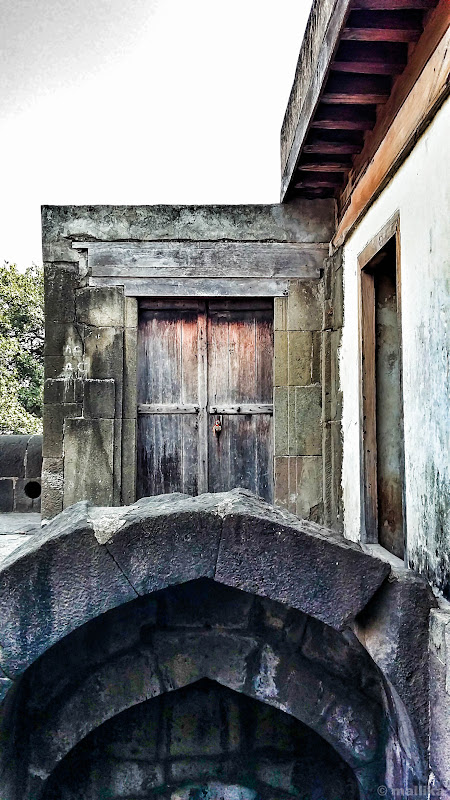
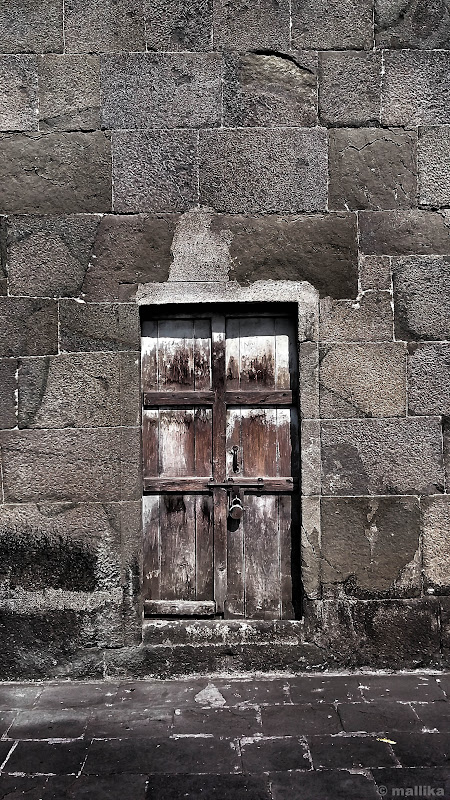
Vivacious and live. Modern, yet heirloom. It’s a city where warriors whisper their manifestation through their wadas in every nook. Where the stony edifices call out in solitude and their empty staircases in splashes of grey monotones make you weep. They take you back to school, to those history classes of 6th standard, leaving you in terrible guilt by reminding you how much you dreaded mugging Shivaji and Bajirao’s valor. Why I ask? Instead why didn’t our schools profess visiting these iconic citadels with their near-collapsing rustic wooden panes and ornate windows, that speak of their crumbling legacy and history entangled in this contemporary city. Echoes of bygones are heard in these architectural splendors. You wonder what lives have lived behind those warped doors. Their ruins and textures speak to you peeking from their pasts - from those granite slabs at the entrance of Shaniwar wada that etch their account, from their colossal wooden doors that weathered the centuries gone by; they once stood as epitome to the bygone Peshwa and Maratha reigns. You hear them whisper through cracks as they frail.

Pune is a sprawling city where urbanization is vastly seen in every spectacle that your eyes go. There are pockets of lanes and by-lanes that speak of their heritage caving their ways into modernization. There are wadas, forts and caves in the heart of city. Women draped in nauvaris haul carts heaped with fruits, weighing their daily sales. Men with kind eyes line the pavements, ride bicycles, and crowd the bazaars in their faded dhotis and topis, heavily dusty and pale from whites to browns. There are beautiful images of the daily Pune life that can't escape your eyes. Like markets crammed with fruit and vegetable vendors calling out to you. Kirana stores dotting the city all over. Wada-pav and sabudana wada bringing bliss to the common man’s appetite. Chitalebandhu and Kayani lending soul to early evenings. Marathi interspersed in sweet high tones; chalā chalā, puḍhē jā, kai jhālē. Sounds and smells of Marathi culture in everything, everywhere. It draws you into their culture, ties you with theirs.


Yet, if you tour the city as a tourist you’ll see a wave of urbanization. Buildings over buildings, like matchboxes stacked over each other, glued together. From a bird’s eye view, they look like cardboard cutouts in varying heights placed randomly. That’s how cities look like, right? Like blueprints in real time? Construction in every area. Flyovers at every stretch. Tall, wide ad banners in every sight, at every turn. You read in Hindi, it sounds like Marathi. A melodious rhythm that leaves you thinking their meanings. There are buildings called IT factories shaped in form of an egg, globe, geometrical structures of triangles, hexagons and pentagons, some lopsided and shapeless too, that seem like the architects’ messed up work. There’s keenness everywhere to cover them with tinted glass panes to hide the lives behind. They see you, you don’t. Instead, they reflect the bustling streets, the women behind carts, the men in faded dhotis, the bike riders, the car goers, the kirana dukaan, the traffic signals, the floating clouds, and the flying sparrows, like holding mirrors to the city. Its visible there for you to see. Like a slap you can’t turn your face away to. People and cultures merge, dissolving like water colors on paper blotched over each other. Some pockets murky, some clear, some overlapping into one another, each color varying in their depth and degrees. Overall it’s a beautiful blend of tradition and modernity, a beautiful picture you can’t ignore.

Pune, you are beautiful, no doubt. But I long to go back in time. To time when it spun back into history. Where the wadas came alive in their full splendor and their now dark staircases were filled with giggles and laughter from women of those times. Where modernity did not nudge the traditions and replace with this blend so quickly. Where the frail walls that stood strong to weather and time, spoke of valor. Where the cracks in cultures merged, the history disentangled itself and the heavens called for legacy to rule again.


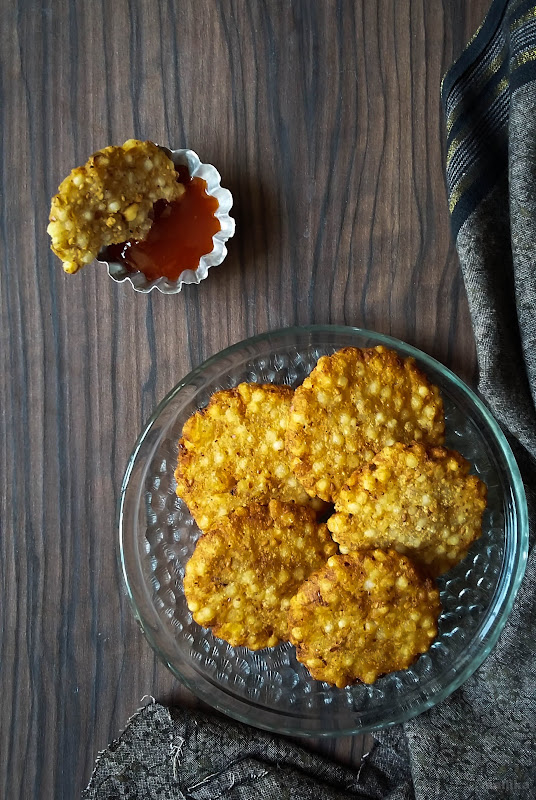
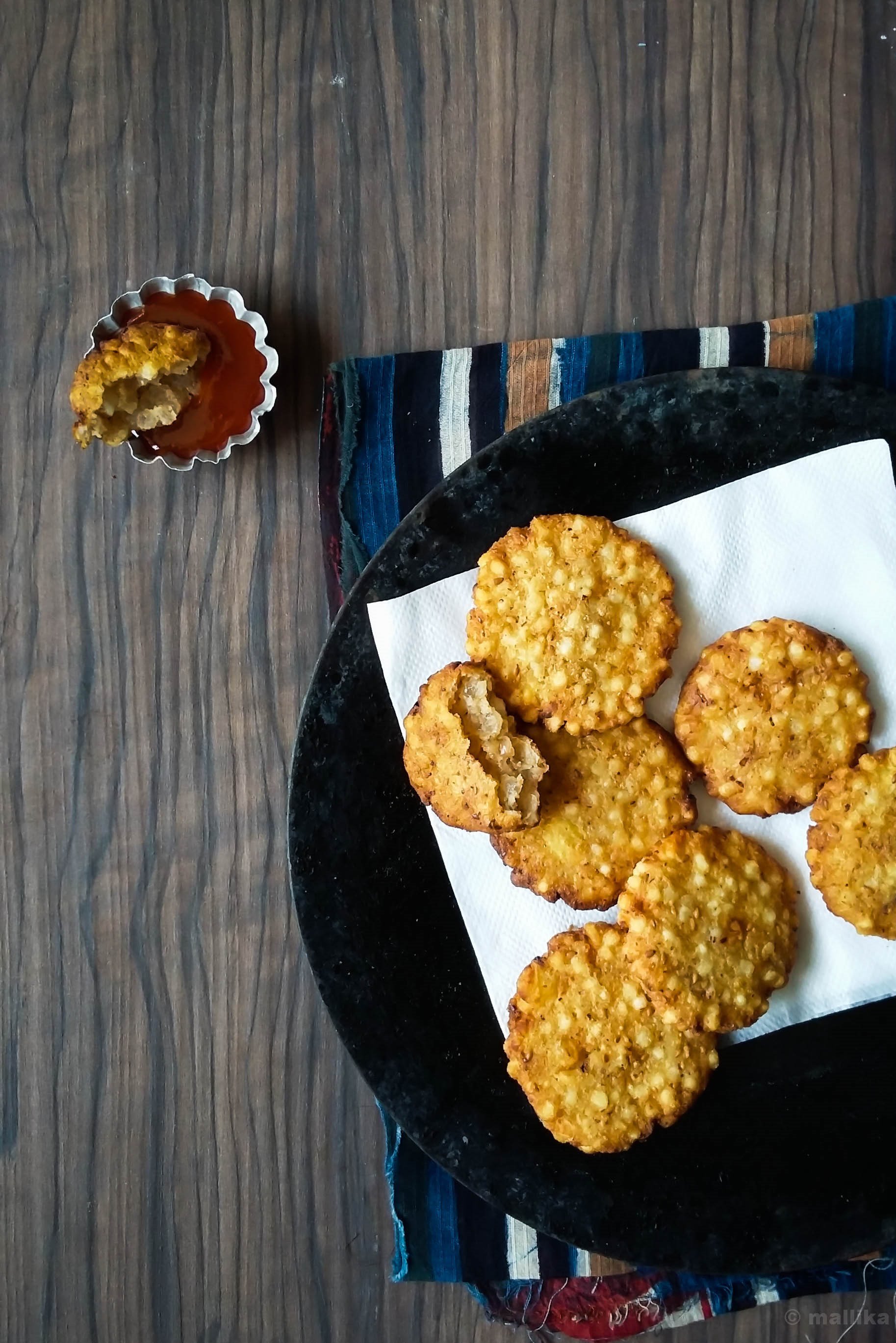
In my ode to Pune, I bring this delicious Sabudana Vada from my kitchen to yours; a classical, traditional Maharastrian dish that I have loved for several years now. I made this in the fond yearning of the time spent there savoring local delicacies, sabudana khichdi, misal pav, vada pav and this sabudana vada. Its flavors sing to you in simplicity, bursting from the golden crisp pops of sago pearls, punctuated with potatoes, peanuts and chillies in each bite, each subtle and well blended. It's a thing you should try, incase you haven't.


Sabudana Vada

INGREDIENTS

1 cup sabudana / sago pearls
2 medium potatoes, boiled and mashed
1/2 cup roasted peanuts, coarsely ground
1 tsp cumin seeds
2-3 green chillies, chopped
2 tbsp. finely chopped coriander leaves
1 tsp. lemon juice
1 tsp. sugar
Salt to taste

DIRECTIONS

Wash the sago and soak it in just enough water to cover the pearls. Soak it for 4-5 hours or preferably overnight. In the morning, the pearls will be plump and doubled in size. For 1 cup of soaked sago, I used 1/3 cup of raw sago, washed and then soaked them in 1/2 cup of water for nearly 5 hours.

Combine all the ingredients in a bowl and mix well. Pinch a lemon sized portion out of the prepared vada mixture and shape it into ball. Gently flatten it with fingers. Prepare all the vadas to fry and keep them aside. Meanwhile, heat the oil in a thick bottom vessel and deep-fry the vadas on a medium flame till they are golden brown in color on either sides. Drain on kitchen paper. Serve hot with green chutney or tomato sauce.

Poha Chiwda

How to make Poha Chiwda | Avalakki Chiwda | Namkeen | Indian Snacks
With a vacation gone by, now that I am back in India, kind of jostled into a routine, placed our daughter in school and have resumed work full time, you would probably expect this to be sort of a travelogue post walking you though dozens of photographs from places far known and unknown, painting a picturesque comprehension for each. Let me put all guesses to rest. I may have been back here, but my mind is still in the roving. It wanders back and forth to the good time we spent with D. I would love to do a short walk through of the places we visited, which was in plenty. We spent good moments doing things together in threesome, but I feel simply unwilling to dig into those photographs and bring those moments into words here. Some things are best left that way. Imprinted in memories. When mere words cannot do justice.

Poha Chiwda


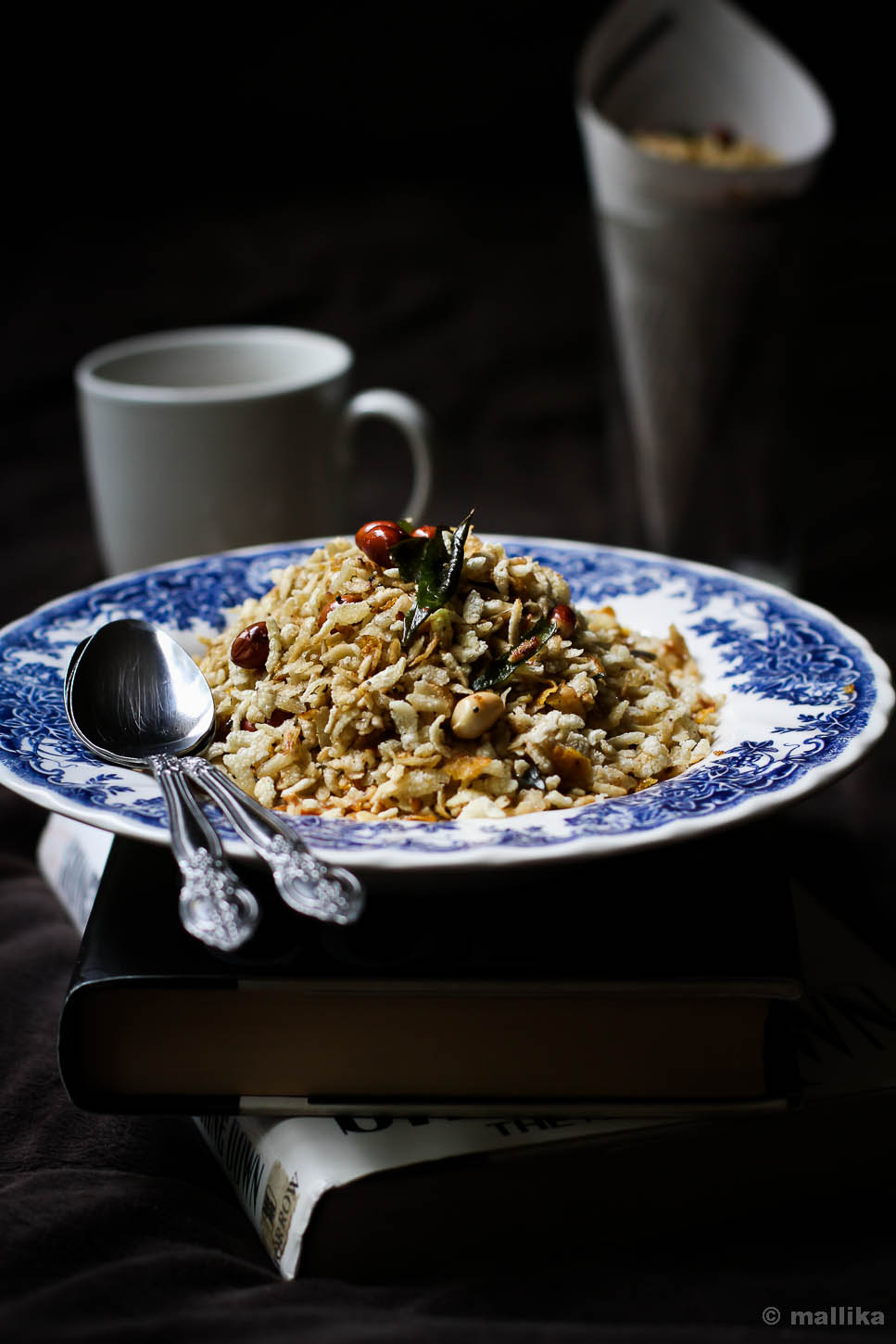
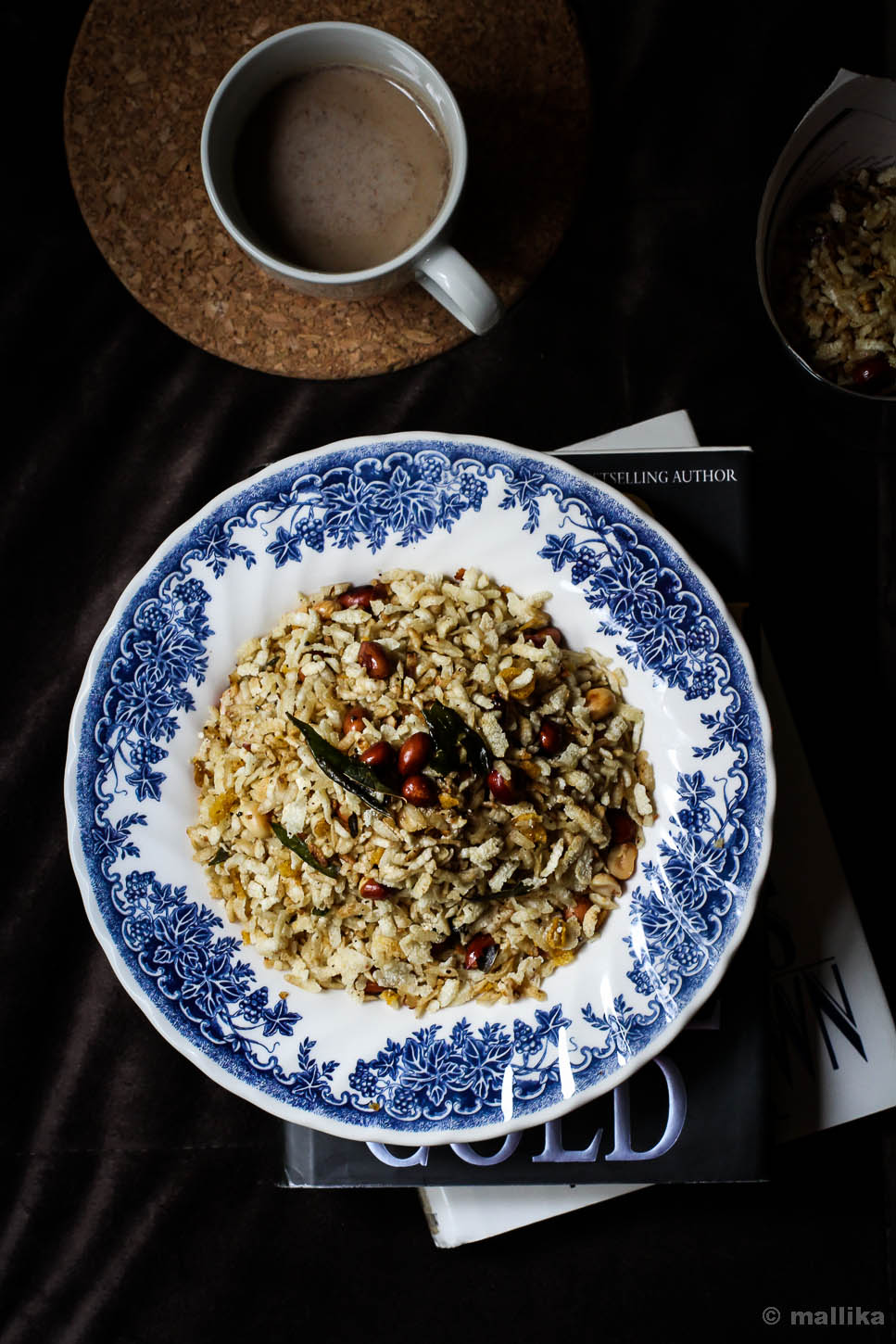
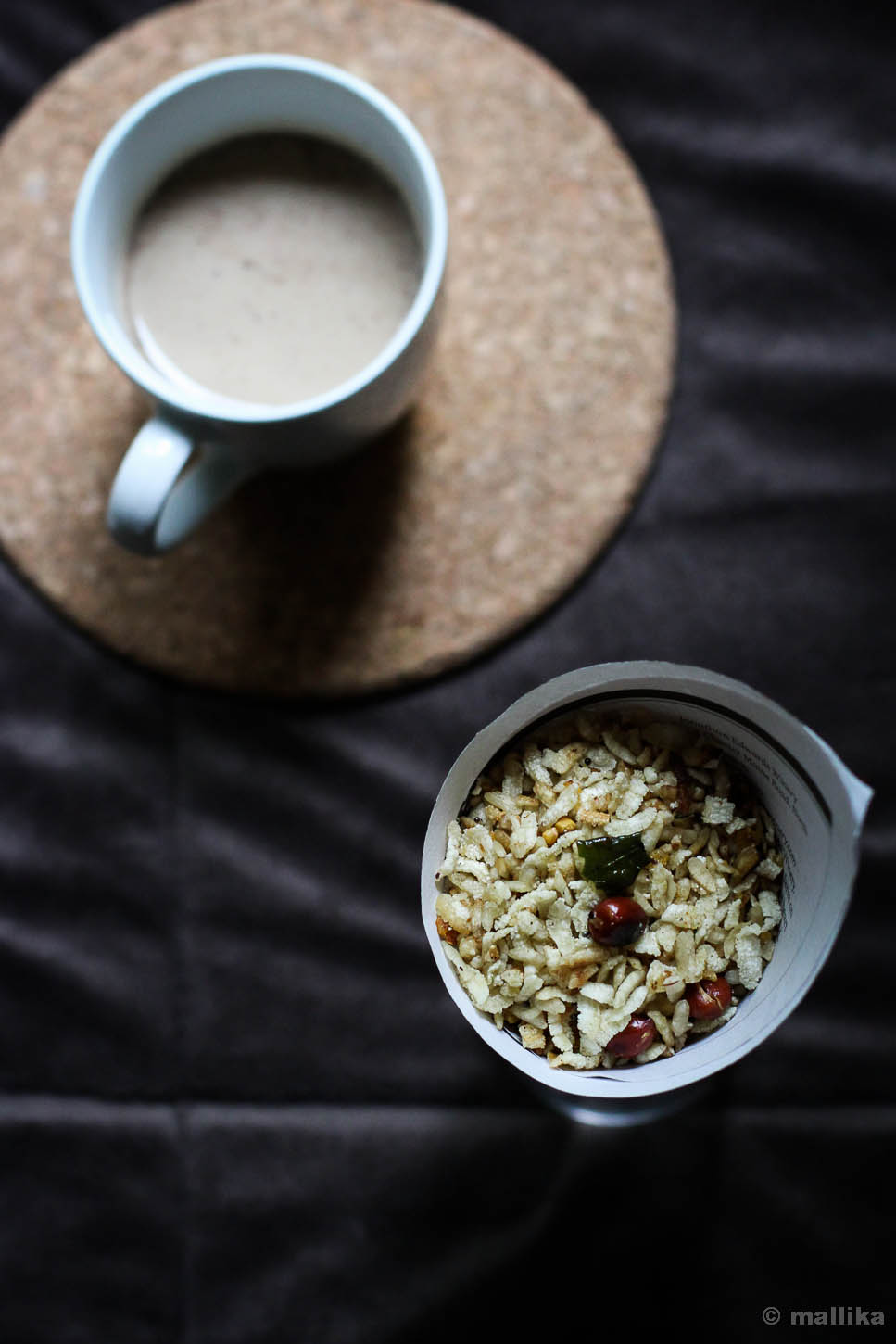
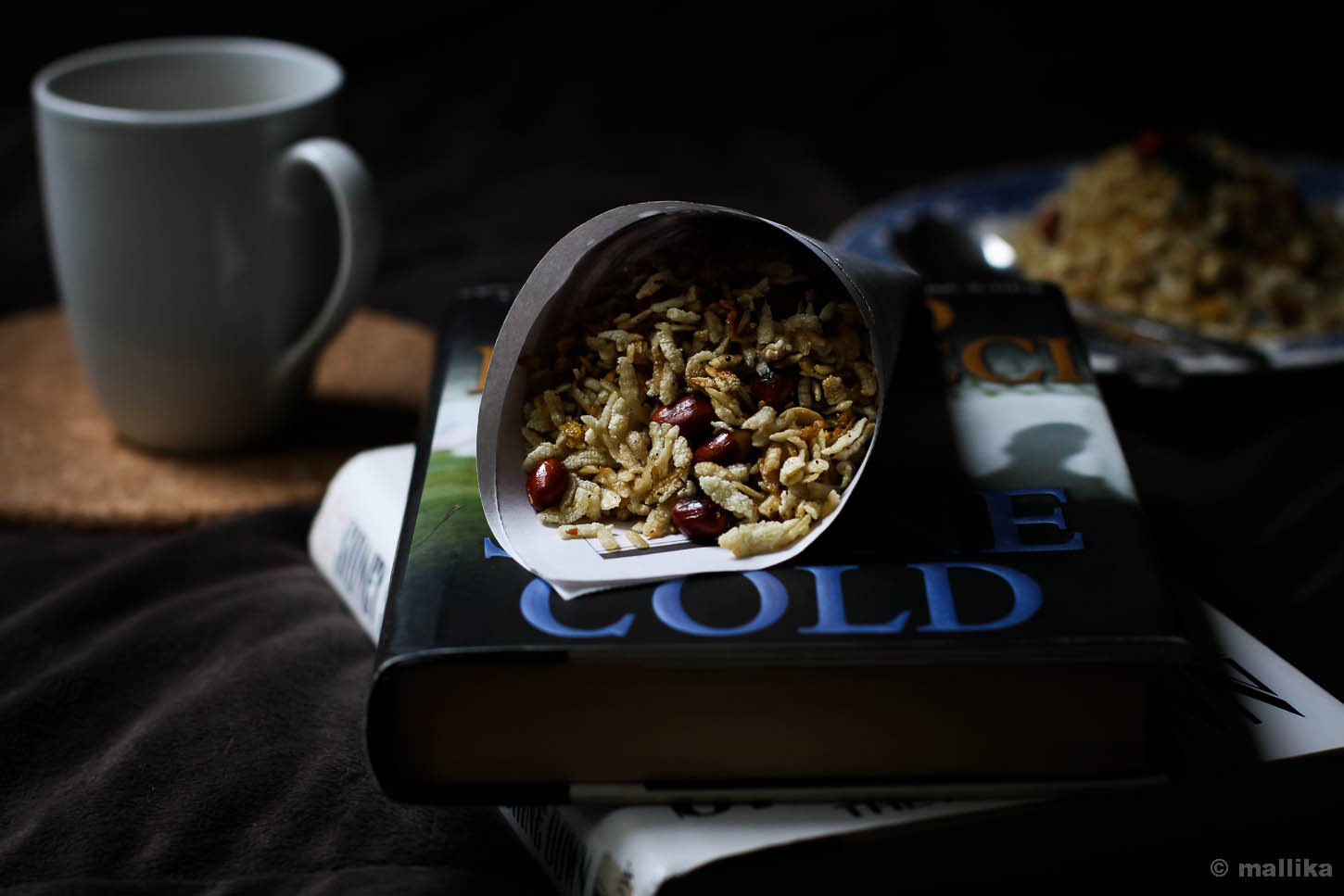
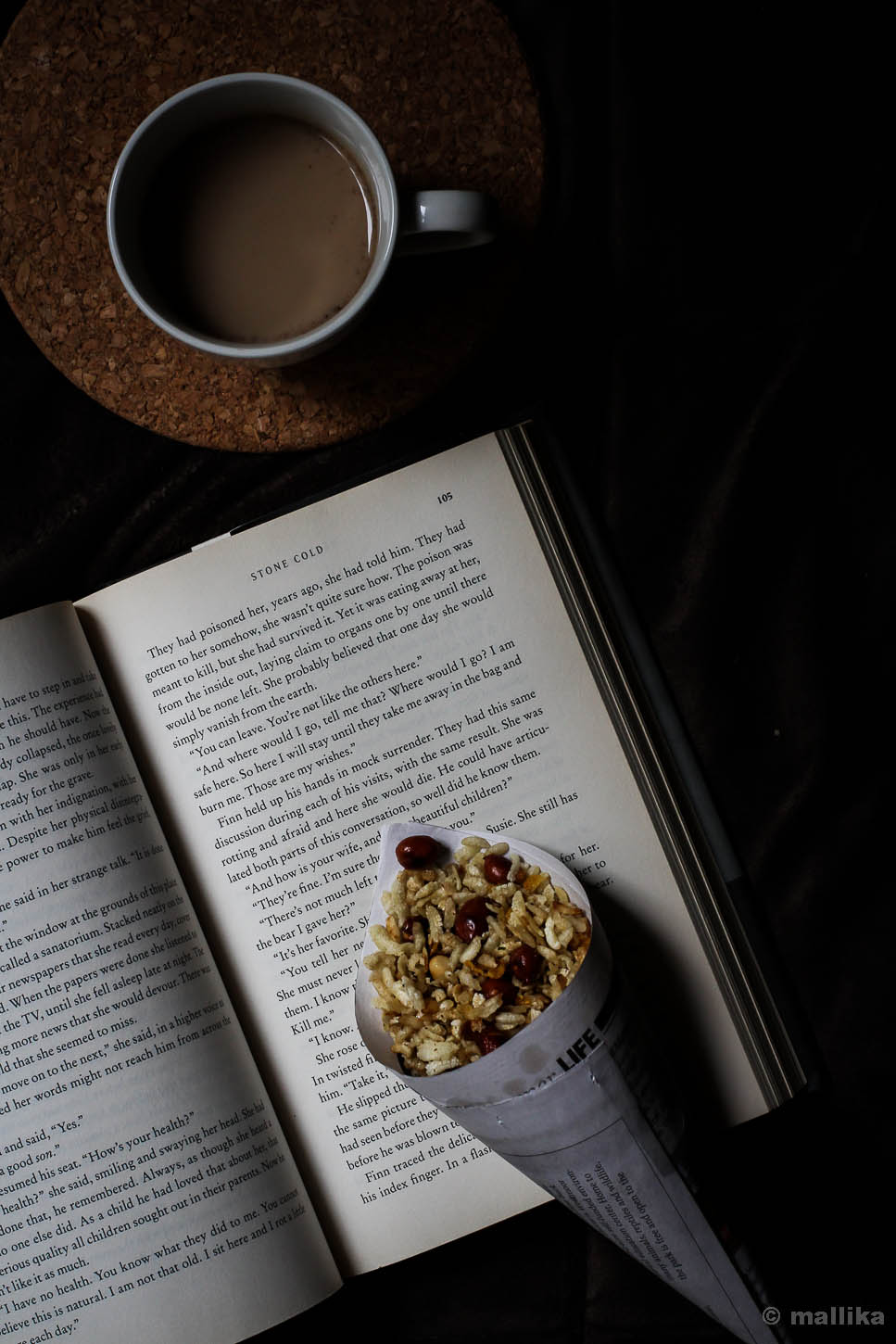
So as it goes, this is no travelogue kind-a post, but a recipe for an Indian savory snack I made in huge batches during our time in the US. We savored it by bowls on several evenings sitting by the wooden porch that overlooked the thick woods in our backyard. The moments slipped away without notice as we sipped into hot chocolate and tea, scooping spoonfuls of chivda into our palms, slowly savoring its crunch, while we tended to the young tomato plants that bloomed tender yellow buds in our garden.

On weekdays when D was away at work, the chivda became my sole savior as I flipped through light reads under the wraps of summer and streaks of golden sunlight. As the afternoons tranced into early evenings, there were days when our little girl kept herself busy dressing up her dolls, setting up the table and putting up a pretend birthday party for them. I would briefly give her company in the initial part of the play, pretending to be her helper, then, slowly whisk away to make time for myself, to play with real pots and pans in my kitchen that belonged to me.

Then, there were other days when she would get busy soaking up her fingers and clothes in spectrum of colors as Elsa and Sofia got painted in colorful attire in a way only she would fantasize. Their frills and veils were painted in reds, greens, blues, browns and whatnot, smudged in uneven tones and stressed outside the lines meant to define these beautiful damsels. That's the time I borrowed for myself in the kitchen, to dish out some delectable savory snacks that made us through those evenings till we waited for D to return from work.

Poha Chiwda


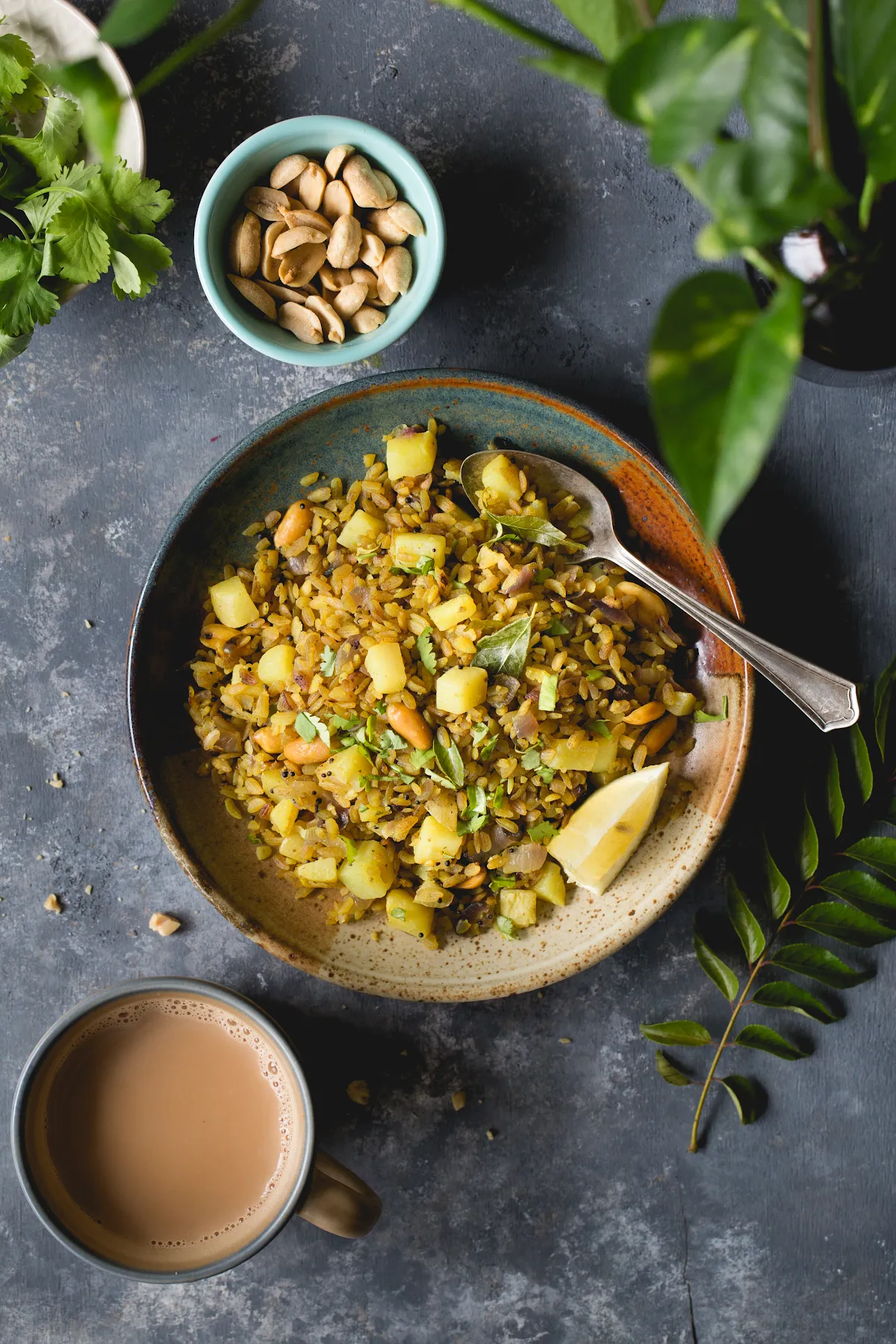
This Poha Chivda may remind you of your childhood spent visiting your relatives or friends, or of festivals like Diwali and Navrathri, when aunts brought in bowls of savory snacks served along with piping hot tea. Poha Chivda was and probably is still a common tea time savory dish in many Indian homes, served mid-noon along with tea or coffee, often store-bought and rampantly available in transparent polythene packets in every bakery and grocery store possible. Almost every house probably has had some version of it. At home, we call them all just 'chivda', which simply means an assortment of fried and seasoned ingredients usually with a base of flattened rice or cornflakes. Chivdas come in varieties, but there is no hard and fast rule on how you wish to make and what you wish to season them with. The store-bought ones are usually heavily seasoned and spicy, but I like to break rules and keep it simple, light and flavorsome.

My version here is quick with minimal ingredients. Its quite common to use fried cashews, raisins and sesame seeds for a more assorted rich taste. It takes about 15-20 minutes to put all of this together from start to finish. You could use fried whole red chillies instead of red chilli powder to reduce heat further. If you wish to try a low fat version and bake the poha, let me know how it works for you. For once, when I tried a baking attempt at this, it failed miserably. Try this and let me know how you like it.

Poha Chiwda


Poha Chivda | Namkeen Chivda | Avalakki Chiwda | Seasoned Flattened Rice

INGREDIENTS

3 cups poha / flattened rice (use thick variety)
1/2 cup peanuts
1/2 cup roasted gram bengal dal / channa dal / huri kadale
2 sprig curry leaves
1 tsp. oil for tempering
1 tsp mustard seeds
1/4 tsp red chili powder
1 tbsp. sugar or as required
Salt to taste
Oil for deep frying

DIRECTIONS

Heat enough oil for deep frying in a wide mouth pan or kadai or wok. Using a wide mouth strainer or a slotted spoon, deep fry the poha in hot oil. Do this in batches so that you fry them evenly till they swell up and become crisp. Remove and drain over a plate lined with kitchen paper. Fry all of the poha and set aside. Into the same oil, fry the roasted bengal gram dal till its golden brown. Remove and drain again on a kitchen paper. Next, fry the peanuts in this oil till reddish brown in color and drain on a kitchen paper. Fry the curry leaves till they crisp up. Drain and set aside.

Heat a teaspoon of oil in a separate pan. Fry mustard seeds till they pop. Add the red chili powder and mix in all the fried ingredients. Sprinkle sugar and salt to taste. Roast this for 2-3 minutes on a low flame to ensure all the spice, salt and sugar is well combined into the poha mixture. Adjust the spice according to your taste by adding more red chili powder if required.

Allow the chivda mixture cool completely. You can store this in an air-tight container at room temperature for couple of weeks.

Poha Chiwda