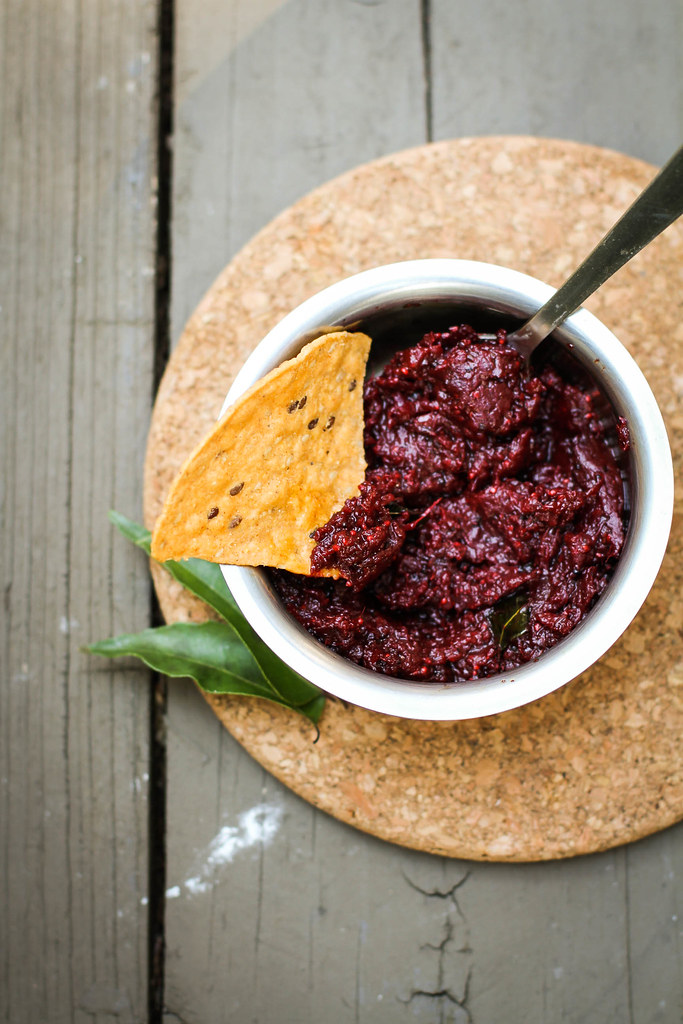
I started blogging in a time when the internet world had taken to blogs burgeoning everywhere like little mushrooms enticed by rains. There was an unfaltering gush of novel, unexplored cuisines, recipes, ingredients and more, all brimming on various sites with their evocative photographs and stories, each compelling and competing by themselves to make a mark on the space. I'd viciously eye those berries and stone fruits that would pop up randomly every now and then, in seasons and festivities, their crimson reds, navy blues and sunlit ambers marrying blissfully into butter, sugar and flour to settle into marvelous looking desserts - desserts that could trigger hunger at odd hours of the day and post hefty meals; leaving me much in envy of being unable to get my hands on them back in time, while the world around rejoiced in celebration with such food.
That said, what did not make much of an appearance on the web space were fresh, glossy, scarlet red cranberries. There were several recipes out there that had them in scones, breads and cakes, mostly used in dried form, the kind of ones that are drowned in sugar and shriveled to douse the tart flavor. For a while, now that these are easily accessible in India, I too made my convenience with using the dried varieties in our favorite mincemeat recipe that sat bathing, cramped up with other dry fruits and weighed down by nuts in a heady spiced rum concoction for months before being brought out to be baked into Christmas Fruit Cake.
I had never seen fresh cranberries in the past till I came to the US. With dried cranberries available on ease, it was what it was known to me. For several years till lately, I was tricked into assuming that cranberries were akin to karonda, or karvanda (as known in Kannada), the tart-sweet Indian berries commonly used erstwhile in Indian pickles. I was excited about cranberries being karvanda, for two reasons.
One, I had never seen a karvanda bush, nor tasted its fruit in ripe, however I grew up hearing my dad often commend his love for these extinct pickling fruits, reminiscing how he missed watching his mother and grandmother collect the tart green berries off the bushes that grew in their backyard while the summer set in, of how they let them mature in brine for weeks, hand pounded the fresh spices and amalgamated them for months in sun to be pickled. Those were his memories, far and few, raved and deemed. For me, in rare times that I met a marinated young karvanda berry eye to eye, it was always camouflaged, heavily absorbed in red spices, and tart from being infused with bite sized mangoes pieces, served as delicious pickles alongside other dishes in odd occasions of weddings or family gatherings. Hardly an acquaintance to delineate something about.
Yet, those who grew up in the North of India may spin you tales of their childhood spent twiddling around the karonda (as they call it) bushes in the backyard of their aunt's, grandma's or friend's home, plucking them and popping it to their mouths with puckered face; karonda being more popular in the North of India than in the South where I grew up.
For second, Karavanda wasn't popular in generation of our times by any means; at least, it wasn't regarded high as the imported peers were. No one told us how good they were, no magazines or food channels professed it high, nor did our Sunday markets run its produce, probably because a lot of our Indian population was either disinterested to honor it or the ones like me, had hardly known it by trait. For a long time I did not know what it was called in English, or if it did exist in the lexicons of English circles. On the other hand, we had newspapers and magazines that constantly spoke of how fab cranberries were in beating the beast out of cancers and UTIs, tipping off cranberries to be our very Indian karavanda, and how our long forgotten fruit had captured attention in the West and that it may be touted as a superfood, pronto. Internet added to that fad with burst of knowledge.
My assumptions may have been misleading me, but thankfully I know today that karonda is karonda and cranberry is cranberry. Both live in separate worlds, with different identities, in their own identities that can't be swapped. It took me a trip to Nantucket in summer to realize this. That's where I saw the process of cranberries being grown and harvested, much unlike the trees that my grandmother harvested from, but bog flooded and cragged from vines. I came back home with a bag full of organic cranberries to turn them into a desi relish!
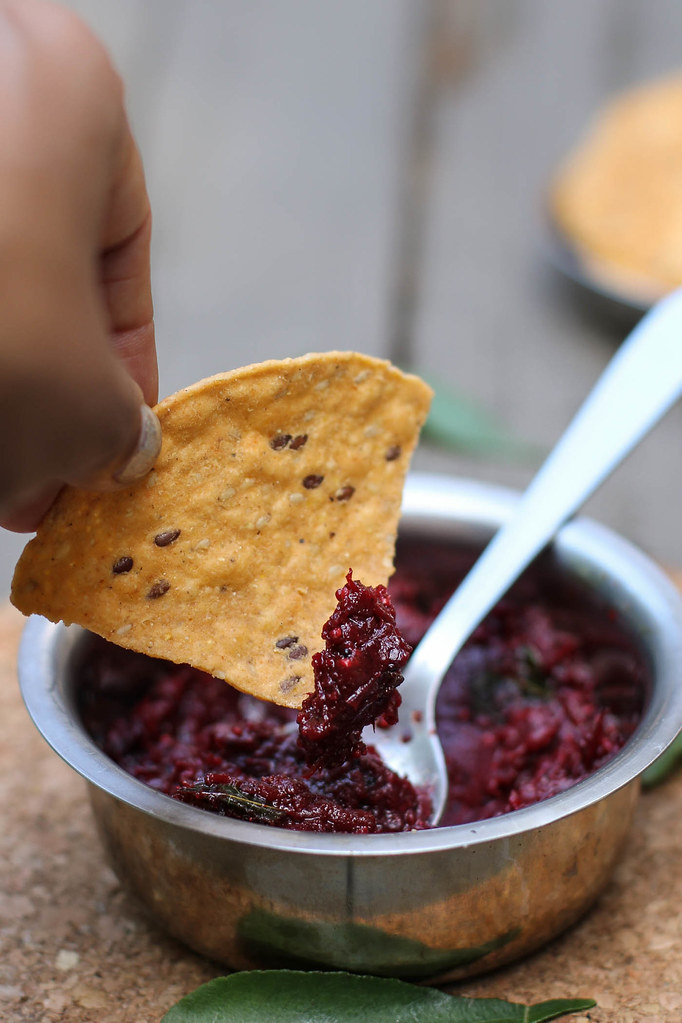
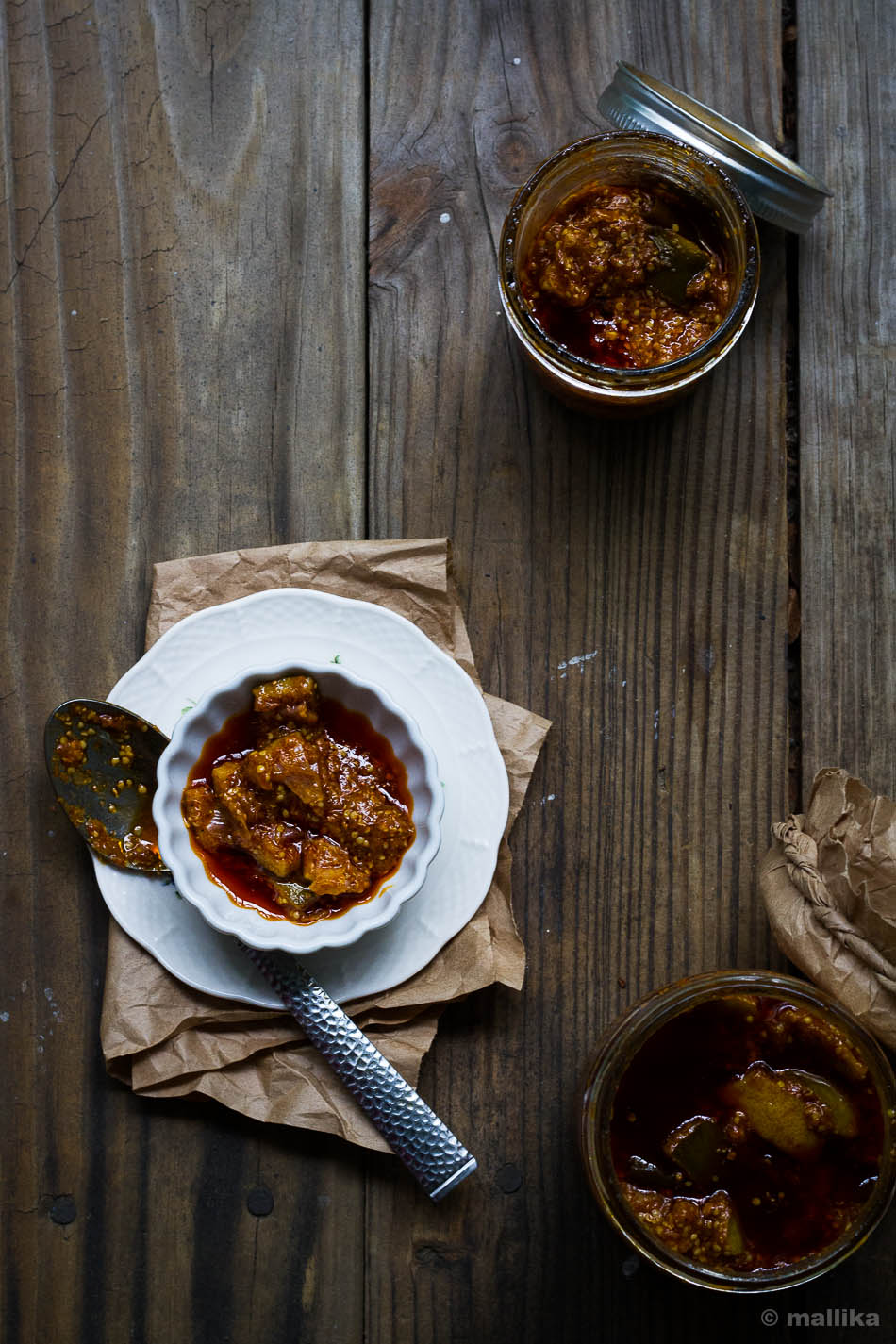
That brings me to this interesting recipe I have to share with you today. A mod-western ingredient with a traditional twist. The east meets west kinds. An old wine in a new bottle. This cranberry chutney, a dip, or more traditionally a thokku. Its very Indian at heart, its spices and the flavor - piquant, tart and delicious in a tiny blob on the side to any dish. You drag a lump of it with your fingers and mix along with steaming hot rice or simply scoop a small portion with your roti or dosa and relish it. Its makes a kicking dip to tortilla chips or even khakras, and that's exactly how I've zinged up over the past couple of evenings alongside my tea.
That said, what did not make much of an appearance on the web space were fresh, glossy, scarlet red cranberries. There were several recipes out there that had them in scones, breads and cakes, mostly used in dried form, the kind of ones that are drowned in sugar and shriveled to douse the tart flavor. For a while, now that these are easily accessible in India, I too made my convenience with using the dried varieties in our favorite mincemeat recipe that sat bathing, cramped up with other dry fruits and weighed down by nuts in a heady spiced rum concoction for months before being brought out to be baked into Christmas Fruit Cake.
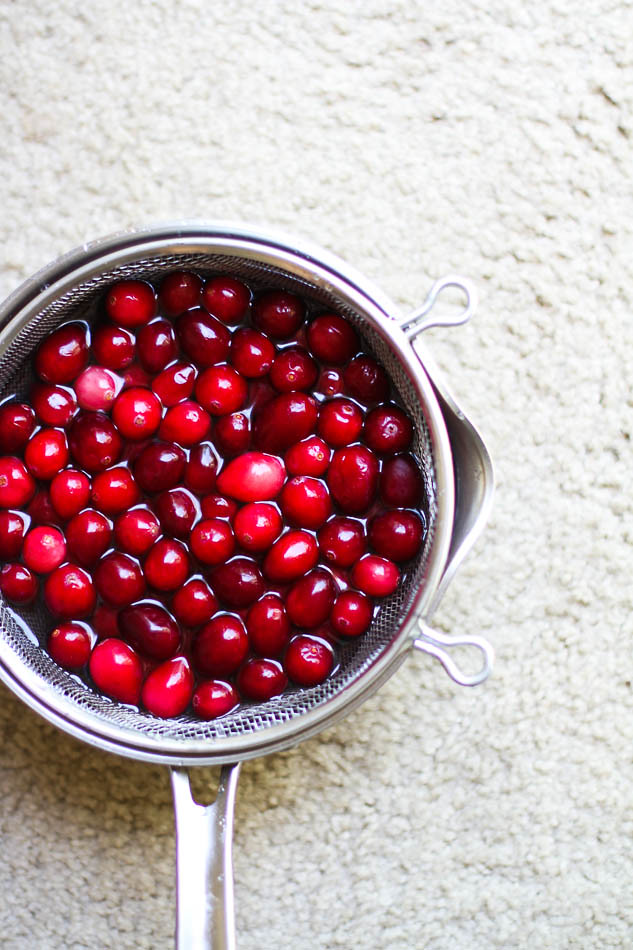
I had never seen fresh cranberries in the past till I came to the US. With dried cranberries available on ease, it was what it was known to me. For several years till lately, I was tricked into assuming that cranberries were akin to karonda, or karvanda (as known in Kannada), the tart-sweet Indian berries commonly used erstwhile in Indian pickles. I was excited about cranberries being karvanda, for two reasons.
One, I had never seen a karvanda bush, nor tasted its fruit in ripe, however I grew up hearing my dad often commend his love for these extinct pickling fruits, reminiscing how he missed watching his mother and grandmother collect the tart green berries off the bushes that grew in their backyard while the summer set in, of how they let them mature in brine for weeks, hand pounded the fresh spices and amalgamated them for months in sun to be pickled. Those were his memories, far and few, raved and deemed. For me, in rare times that I met a marinated young karvanda berry eye to eye, it was always camouflaged, heavily absorbed in red spices, and tart from being infused with bite sized mangoes pieces, served as delicious pickles alongside other dishes in odd occasions of weddings or family gatherings. Hardly an acquaintance to delineate something about.
Yet, those who grew up in the North of India may spin you tales of their childhood spent twiddling around the karonda (as they call it) bushes in the backyard of their aunt's, grandma's or friend's home, plucking them and popping it to their mouths with puckered face; karonda being more popular in the North of India than in the South where I grew up.
For second, Karavanda wasn't popular in generation of our times by any means; at least, it wasn't regarded high as the imported peers were. No one told us how good they were, no magazines or food channels professed it high, nor did our Sunday markets run its produce, probably because a lot of our Indian population was either disinterested to honor it or the ones like me, had hardly known it by trait. For a long time I did not know what it was called in English, or if it did exist in the lexicons of English circles. On the other hand, we had newspapers and magazines that constantly spoke of how fab cranberries were in beating the beast out of cancers and UTIs, tipping off cranberries to be our very Indian karavanda, and how our long forgotten fruit had captured attention in the West and that it may be touted as a superfood, pronto. Internet added to that fad with burst of knowledge.
My assumptions may have been misleading me, but thankfully I know today that karonda is karonda and cranberry is cranberry. Both live in separate worlds, with different identities, in their own identities that can't be swapped. It took me a trip to Nantucket in summer to realize this. That's where I saw the process of cranberries being grown and harvested, much unlike the trees that my grandmother harvested from, but bog flooded and cragged from vines. I came back home with a bag full of organic cranberries to turn them into a desi relish!
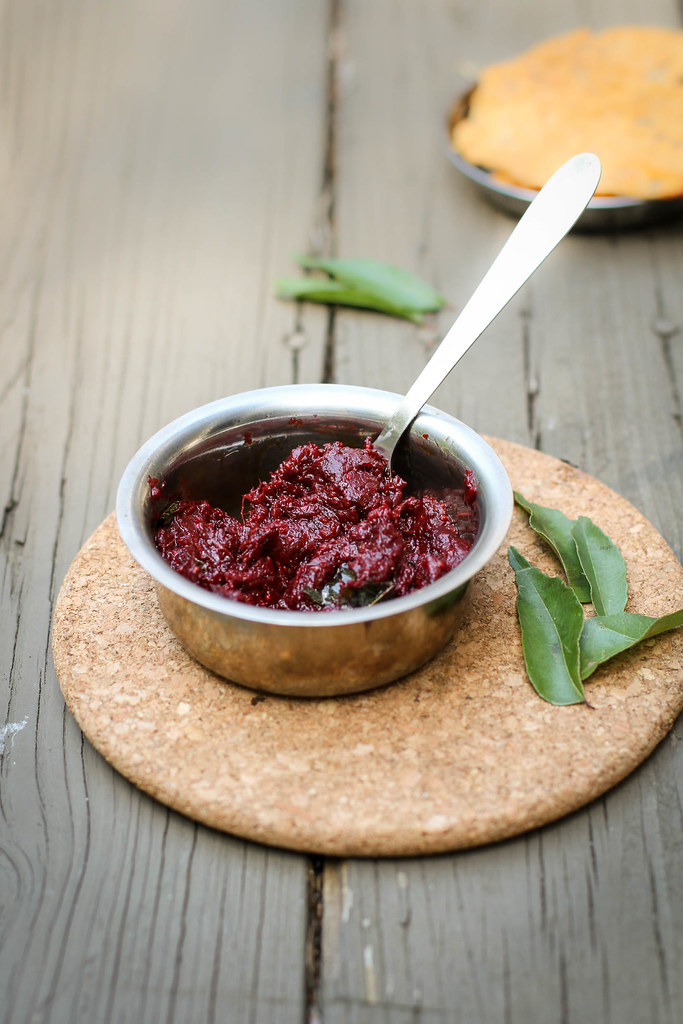
That brings me to this interesting recipe I have to share with you today. A mod-western ingredient with a traditional twist. The east meets west kinds. An old wine in a new bottle. This cranberry chutney, a dip, or more traditionally a thokku. Its very Indian at heart, its spices and the flavor - piquant, tart and delicious in a tiny blob on the side to any dish. You drag a lump of it with your fingers and mix along with steaming hot rice or simply scoop a small portion with your roti or dosa and relish it. Its makes a kicking dip to tortilla chips or even khakras, and that's exactly how I've zinged up over the past couple of evenings alongside my tea.
Cranberry Tokku
INGREDIENTS
2 cups fresh cranberries
5 tbsp. vegetable oil
2 tsp. red chilli powder
1 tsp. fenugreek seeds powder
1 tsp. asafoetida (hing)
1 sprig curry leaves
Salt to taste
DIRECTIONS
Heat vegetable oil in a kadai/ wok. Add mustard seeds and fry till it begins to splutter.
Next add the red chilli powder, fenugreek powder and the asafoetida into the oil and fry for 5 seconds. Do not allow spices to burn.
Add the torn curry leaves and fry for few seconds till they turn crisp.
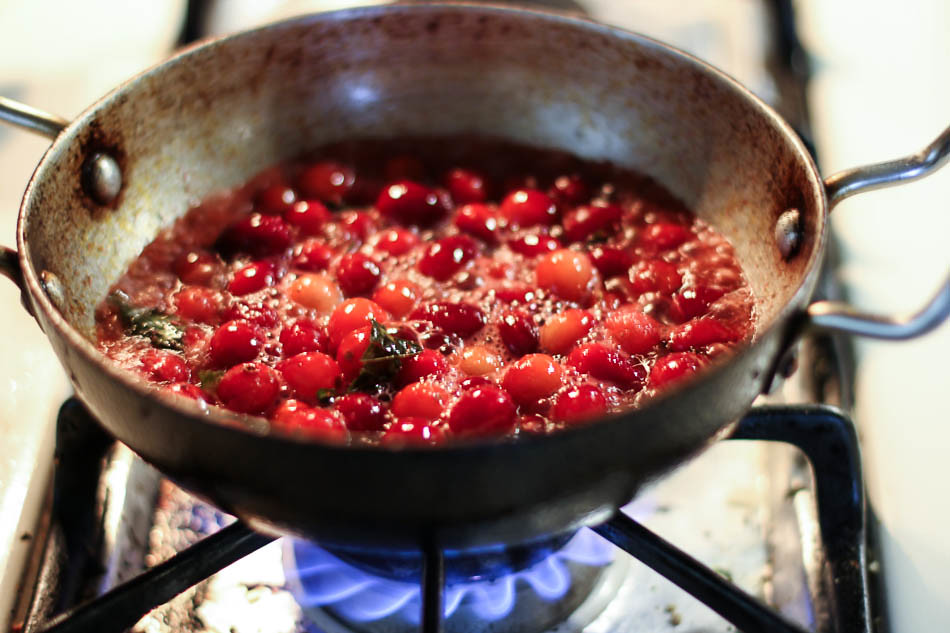
Reduce the flame and add the fresh cranberries. Stir them in to coat all the spices. Cook till they pop and begin to reduce in volume. Using the back of spatula, gently mash them. Add in salt to taste and stir continuously until the cranberries soften, reduce in volume, and begin to lump, and the oil begins to separate.
Remove from heat and allow to cool completely. Store in air tight ceramic or glass containers.
Notes:
* You can add a tablespoon of jaggery to balance the tart incase you do not like the sour taste of the thokku.
* Fenugreek powder is bitter on its own, however when fried in oil it imparts a lovely flavor to the dish. It's the heart of this thokku and hence do not skip this ingredient.
* If you plan to store this over the counter for couple of days, its important you do not skip the amount of oil suggested. However, incase you plan to make a smaller quantity that will be consumed in a day or two, you can reduce the oil content. Oil helps in longer shelf life of any pickle.
* If you don't like heat, reduce the amount of chilli powder. We love our pickles spicy, so you may find the red chilli powder on slightly higher side. The heat of the chillies is also dependent on the kind of chilli powder you use. Hence use it judiciously.