Showing posts with label Rasam/ Saar/ Sambhar. Show all posts

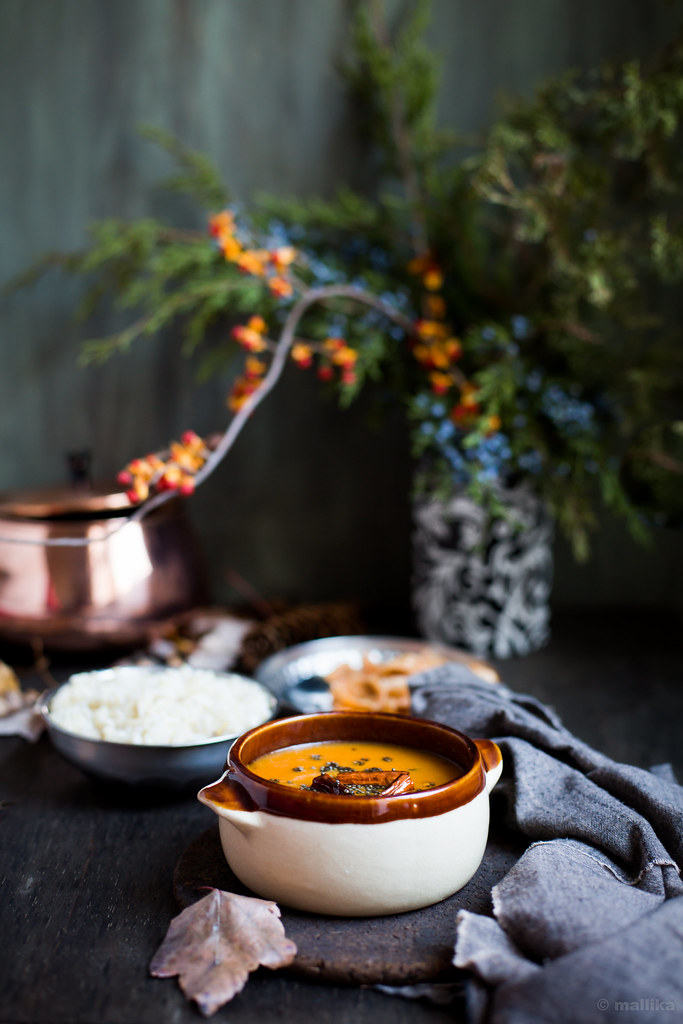
Carrot Soup

How to make Easy Carrot Saaru, Easy Carrot Soup
All through the fall, I stocked pumpkins at home in sheer keenness to make a good pumpkin soup that I could share with you all. I was amused, delighted beyond words to watch pumpkins everywhere, on market stands and home fronts, in malls and on window sills, on blog feeds and in ad mailers. Our favorite grocery stores smelled warm from pumpkin spices and its produce. Our office had spice infused fresheners in the lobby to welcome guests. The coffee was not spared either, flavored with pumpkin spice in it too! Tell me, who wouldn't be lured? So each time we stepped out grocery shopping, along came a pumpkin or its sibling in form a squash, that made its way into our shopping cart, judiciously sized to suit two meals for us as a family.

On a seasonal high note, I did make soups and stews, and plenty at that, laboriously skinning the peels, slicing and dicing them, and boiling them to pulp over pot of stock. I choose not to bake, rather simmer over a pot on stove, as that's a task I like to leave for days far less busier than weekdays, when I don't have the time to worry about our over-sensitive fire alarm screeching off at the slightest variation of warm air emanating from the oven. That's another story to say. The soups though did turn out creamy, and deliciously vegan, not necessarily warranting any fat or cream in regard to heighten the flavors or their sumptuousness. But they got gulped down faster than I expected, hot and steaming, ladles after ladles, cold fingers wrapped around the warm bowl for comfort, either dunked by toasted garlic bread or tossed along with piping hot rice, savored snugly in our warm dining area while the leaves were busy shedding under the seasonal transition.
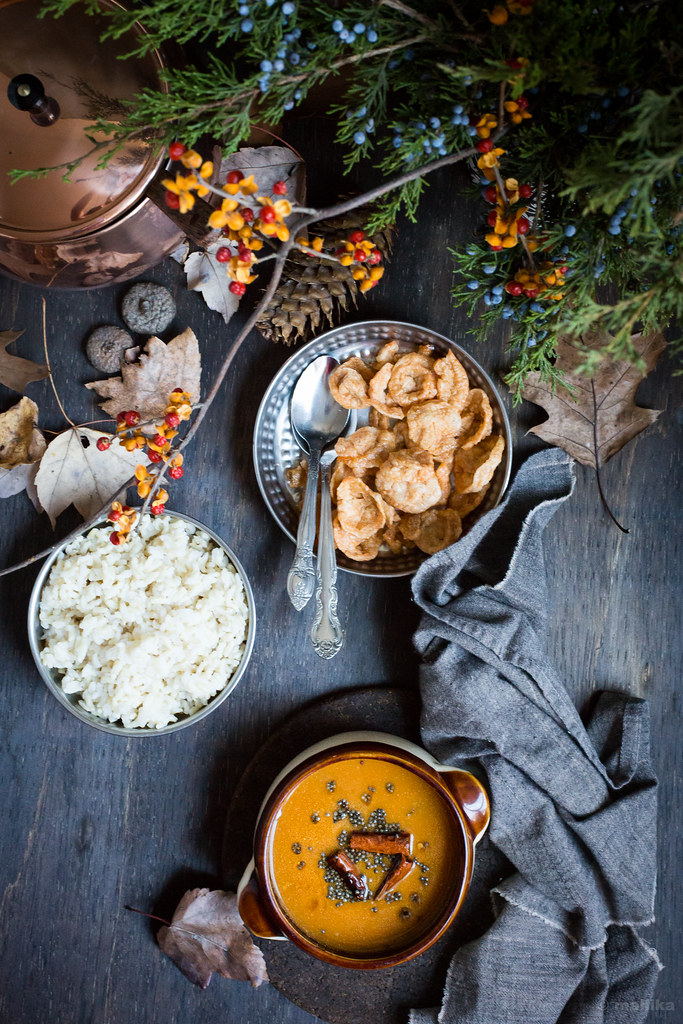
Carrot Saaru


It happened so, that each time I planned a soup, I was swooned by the dire beauty of the squash and pumpkins, that I shot several preps of them much ahead of sunset in the noon. By the time the squash was sliced and diced, cooked, pureed and boiled to perfection, finally seasoned to be served, it was time sun called his day and the darkness overcast the late noons in its thick black bile. I finally gave up on presenting my super-creamy-vegan-butternut-squash-soup here, instead, the year end holiday baking mania took over the house bringing more cheer to otherwise gloomy noons.

We've step foot into the new year, and I've welcomed it with my arms wide open. I have no resolutions that pound my mind hard, so there's none really to make. But I realize this blog is devoid of soups and I want to fill that space. I need to make a beginning, and here's one that fills the bill so well. Apt in time, a recipe for a good Indian soup in the beginning of a new year. It can't get better than this.

I pray this year croons high hopes, brings truck loads of good luck, fab health and immense happiness, and heaps of enthusiasm to live the year ahead positively. I should have been rolling in trays of sweets or brought a dessert along here, commemorating the new year and reminiscing 'oh whatta year 2016 was for me!', because it was gratifying in good sense, and worthily etched into our memory with a fair balance of highs and lows, but instead, I have come along with bowls of warm and comforting homemade carrot soup that clamors itself so South Indian. This is what makes me the happiest - simplicity in a bowl. It defines what I would love my year to look like - simple, clean, uncluttered and subtle in my living and approach.
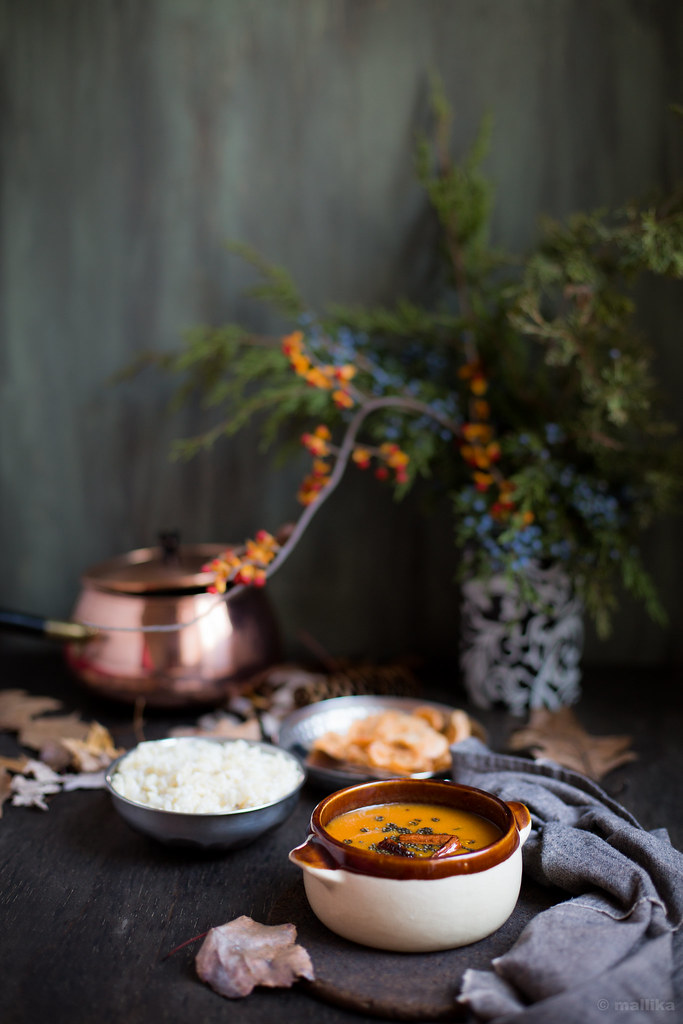
Carrot Rasam


Carrot Saaru | Carrot Rasam | Indian Carrot Soup

Prep Time: 15 mins | Cooking Time: 15 mins | Serves 4

INGREDIENTS

2 carrots, chopped
2 cups water
1 tbsp. tamarind paste
1 tsp. sambhar powder
1/2 tsp. turmeric powder
Salt to taste

For Tempering:

2 tsp. oil
1 tsp. mustard seeds
1/2 tsp. asafoetida powder
1 sprig of curry leaf
1-2 whole red chillies torn

DIRECTIONS

Boil the chopped carrots along with 2 cups of water and turmeric powder until they are fork tender. I pressure cook them on 2 whistles as its quicker to do so. You can pan boil it if you do not have a pressure cooker. Once done, allow it to cool and blend it to a puree in a mixer.

Transfer the carrot puree into a thick bottom pan. Stir in the tamarind paste, salt and sambhar powder. Add additional water to adjust the consistency of the saaru / soup. I like to have this saaru slightly thicker than our traditional rasams as it brings out the texture and flavor of carrots well. Bring the saaru to a rolling boil and then simmer for about 2-3 minutes. Turn off the flame and set aside to temper.

To temper, heat oil in a small pan. Add mustard seeds and allow it to splutter. Add the asafoetida powder, torn red chillies and curry leaves and fry briefly for few seconds. Turn off the flame and add this to the prepared saaru. Serve hot with steamed rice or drink them steaming hot right out of soup bowls.
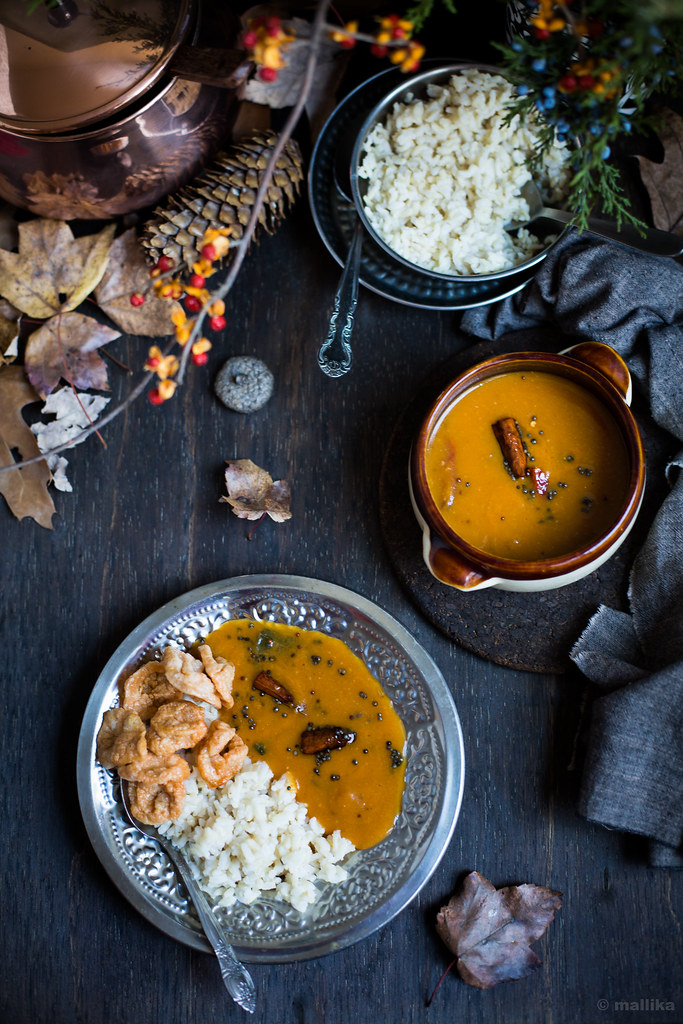
Carrot Soup


BasaLe Soppu HuLi

How to make BasaLe Soppu HuLi| BasaLe Soppu Kodhel | BasaLe Soppu Sambhar
Homely, rustic and vastly organic. This is the kind of comfort food we grew up eating, often made from easily available farm grown wilds and greens fetched from aunt's estate, grandma's gardens and at times home-grown. I made this dish to bring back fond memories of a part of my childhood spent in the serene small town where convenience to such wild greens was in sheer abundance and was often subjected to lack of appreciation. And so much more to apologize myself for hating this dish through my growing up years. I remember disliking these greens in particular, eating them with puckered brows every time they made an appearance on the table, because my mom never spared cooking even those thick stalks of these creepers every time she lay her hands on them. I have seen dad relish them with relentless penchant. They were probably their favourites, rest assured they were not mine.

But now, it seems like ages since I had a chance to taste BasaLe Soppu or commonly called Malabar Spinach. The Malabar Spinach, also known as Red Vine Spinach grows abundantly in humid weather conditions. It has wide heart shaped leaves with soft-stems that grow into creepers. Despite my dislike for them through my growing up years, I missed them ever since I moved to Bangalore. I have never seen them around here where we live. If someone offered me this dish now, I would probably tag them 'exotic'. As kids, we were told these are healthy and have a great source of nutrition. But it's only now that I have learnt to appreciate those thick stalk-y chews of these wild creepers.

Homegrown BasaLe Soppu

(Pictured above, a lone creeper of Kempu BasaLe Soppu in midst of home-grown mint leaves)

A while ago, I grabbed a budding Malabar Spinach plant from a nursery on our trip back home. A handful of budding leaves on a stalk is all it stood with. Before I could let them grow and spread their wings, my impatience to revive my childhood memories with this dish took control over me and I went on a chopping spree. What remains now is a single barren short stalk that is making its way to climbing, twining, and creeping along another stem. As I patiently watch it grow to nurture new leaves, which will probably take a couple of months, I have a strong sense of excitement of using these home grown leaves in this home styled traditional recipe today. I hope you enjoy them as much as we did.

BasaLe Soppu Kodhel_1


Basale HuLi

INGREDIENTS:

1/2 cup Basale soppu (Malabar spinach / Red Vine Spinach)
1/2 cup togaribeLe / tuvar dal (pigeon peas)
1/2 tsp. turmeric powder
3 tbsp. kottambari beeja (coriander seeds)
10 + 2 Byadagi red chillies
1 tsp. hing (asafoetida)
1 tsp. jeerige (cumin seeds)
1 tbsp. kadale bele (split bengal gram)
1/2 tsp. menthya (fenugreek seeds)
1/2 cup grated raw coconut
Lemon sized tamarind
1 tsp. coconut oil
1 tsp. jaggery
1 tsp. mustard seeds
A sprig of curry leaves
Salt to taste

DIRECTIONS:

Wash and cook the togaribeLe/pigeon peas in pressure cooker along with turmeric till they are soft and mushy.

In a thick bottomed pan, dry-roast the coriander seeds, cumin seeds, methi seeds, split bengal gram, hing with about 7-10 red chillies till they are fragrant. Remove from heat and allow them to cool. Grind them to a fine paste with a handful of grated fresh coconut and tamarind. Set aside.

Wash the Basale leaves, along with their tender stalks. Chop them into small pieces. In a wide mouthed pan, cook the leaves and stalk in some water. As the leaves wilt and the stalks are cooked, add the cooked dal to this along with the freshly ground paste, a cup of water and bring to a rolling boil. Add a tsp. of grated jaggery along with salt to taste. Adjust the consistency of this huLi by adding more water to your taste and preference.

For the seasoning, heat a tsp of coconut oil in a wok. Fry the mustard seeds till they splutter. Add in torn curry leaves, hing and 2 broken red chillies. Fry for 30 sec and turn off the flame. Add this seasoning to the prepared huLi. Serve hot with steaming hot rice.

BasaLe Soppu HuLi_1


I have almost recovered from my flu and weakness and I am in much better health today. I was a weak child, in sense of catching cold and flu virus since childhood. Running nose was so common with me, almost all the time. That followed with fever, blocked nose and continuous sneezes that would make me look no better than a circus clown with a naturally inflamed red nose! It was a nightmare that always made me feel guilty.

If someone sneezed meters away, I would have probably caught the virus within minutes. No joke! At a point, even my high school teachers, college lectures and friends had a tough tough time with me. One of my college lectures found it so disturbing in his classes, that my mother was summoned for complaints regarding my condition and proper introspection. Poor mom of mine had been dealing with all this for long. Blood tests said nothing, just high eosinophil count, a condition of allergy. And that allergy meant negativity towards almost everything. Changing weather, summers or winters, humidity, dust, rains, loud noise, headlights, sleep, food, etc, etc, etc. Allopathic medicines only gave temporary relief. In my opinion, no relief at all, just a suppression. Amphetamines, antihistamines yielded no solution. How much could one deal with it?

For times when I would often fall sick with common cold or fever, my mom would patiently extend herself to make treatments at home. She opinionated that conditions with common cold or fever could be dealt at home with care and did not require extensive allopathic medications. She always jokes "Allopathy medicines would take just a week to cure, while home remedy would take 7 long days to cure." We hardly went to doctors for such conditions. She would prepare different types of Kashayas, Fire roasted ginger roots, Jeshtmaddu roots and several other home remedies for cure. She took immense care on food too. Food on those days were light, focussed on easily digestible ones. Rasam, Saar, Tambli were very common with over cooked mushy rice, again to aid for ease in digestion.

Even today, she continues to follow the same principles and it works wonders. You bet, I can't be as efficient as her when it comes to remedies, but I make a sincere attempt to follow her during my bouts of common colds, flu and fever. Even as I am recovering now, I have been careful with food I am cooking. This TiLi Saar is one of my favorites and it makes presence on my dining table very often. Not just when I am sick and low, but for those days when simple home food can be the most comforting.


TiLi Saar

INGREDIENTS

1/2 cup pigeon lentil/toor dal, well cooked and mushy
2 cups water
1 tbsp tamarind pulp
1 tbsp sambar/rasam powder
1/2 tsp compounded asafeotida
1 tsp turmeric powder
Salt to taste

Tempering:

1 tsp clarified butter/pure ghee (replace it for coconut oil for a vegan version)
1 tsp mustard seeds
A sprig of curry leaves
2 red chillies

Garnish:

Chopped coriander leaves

DIRECTIONS

Pressure cook the toor dal with water and turmeric powder for 15 min. Ensure the pigeon lentil/toor dal is over cooked so that it can be mashed well. Once cooked, mash the lentils, add the tamarind paste, sambar/rasam powder, 2 cups of water and the compounded asafeotida (hing). Bring this to a gentle boil. Add more water to make it thin.

Heat some clarified butter / oil in a pan. Add a tsp of mustard seeds, a sprig of curry leaves and 2 red chillies. Fry till the mustard begins to splutter. Remove from heat and temper the prepared TiLi saar. Serve hot over steaming rice.


TiLi means light or runny, in sense watery. TiLi saar is basically similar to rasam and is popular in coastal parts of Karnataka. You can substitute half the tamarind to tomato puree and make Tomato saar. Tempering can be changed to add garlic flavors with pepper and cumin. Eaten commonly with a generous dollop of homemade ghee (clarified butter) over ganji, over cooked mushy rice, they can be the most comforting home food I can ask for.


Welcome summer, welcome mangoes. Is there anyone among you who dislikes mangoes, the king of fruits? I doubt. Indian summers can get so hot at times, that you wouldn't be able to bear the heat even for minutes. You can feel the heat and sweat running through every part of your body. Back in Mangalore, summers are terrible. Infact, we often say that Mangalore has just 2 seasons, one Monsoon and second Summer. There is no winter in this part of the country! The moment sun shines on the city, it gets sweaty, hot and humid. Traditional tiled roofs do beat the heat to certain extent. Surprisingly, this part of the country is still green and healthy, thanks to the humidity. And with March-April coming through you are sure to find branched trees bearing fruits.


This takes me back to my nostalgic moments spent in Byndoor, a small coastal village in Karnataka, where we would go to maternal grandparent's place for summer vacations. A lovely small village with a palatial old tiled-roof bunglow in the centre of an acred green area, an old well at one end, a nice huge dung laid courtyard, the house surrounded by green vegetation with all kinds of trees including mango, chikku, pineapple, brahmi, tomatoes, loads of coconut trees and many others. I still recall the time when grandparents would scare us from going to the backyard of the house fearing cobra snakes and other animals residing there. Summers meant treating ourselves with lots and lots of mangoes, all from our very own backyard garden. Breakfasts with dosa and maavina rasayana (mango kheer), lunch and dinners had other mango variations like rice with appe huLi, mavinkai gojju, mavinkai sasime, amTi, etc. And no matter how many times mangoes were used on a daily basis we would never tire eating them in any form. That was the magic of mangoes.

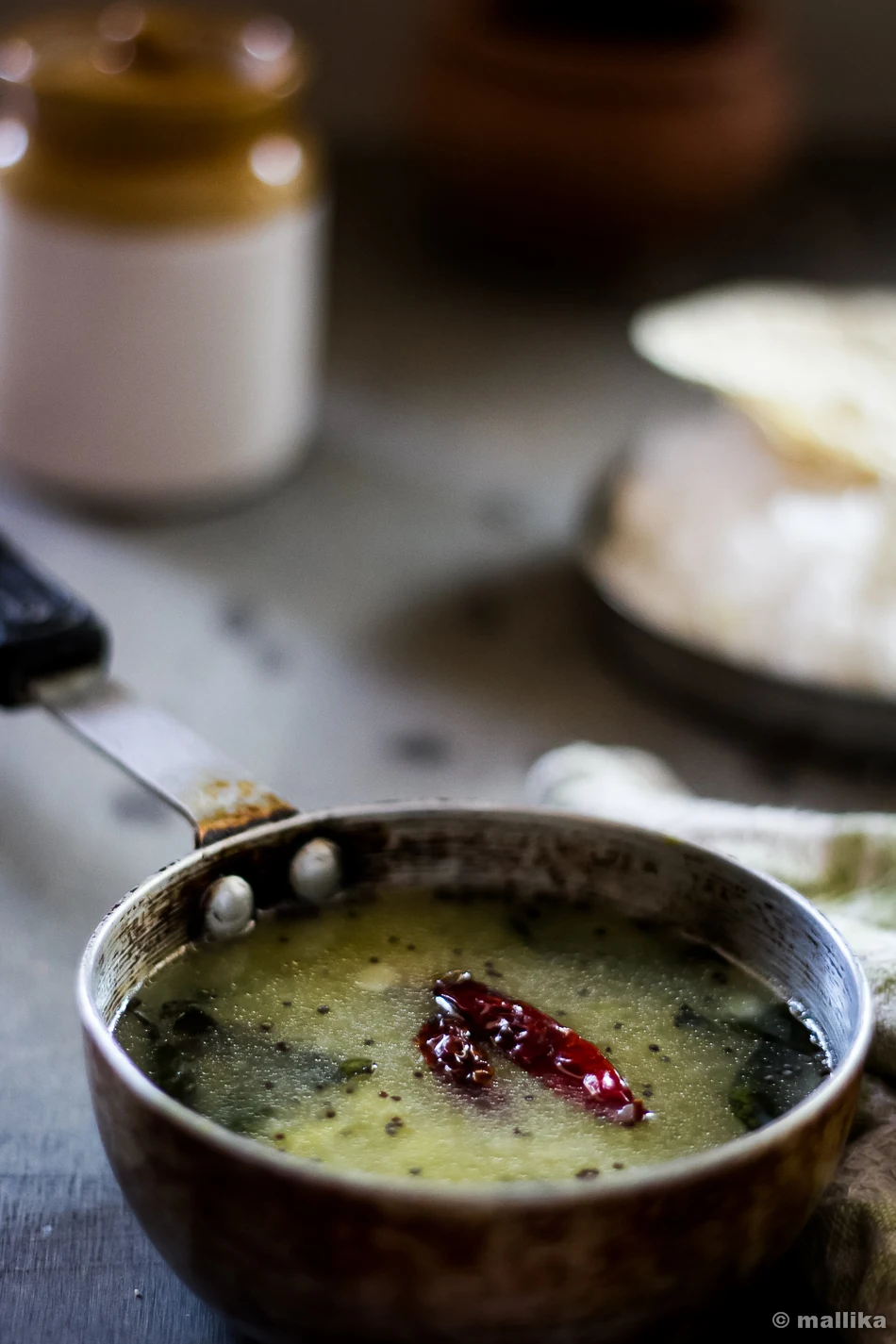
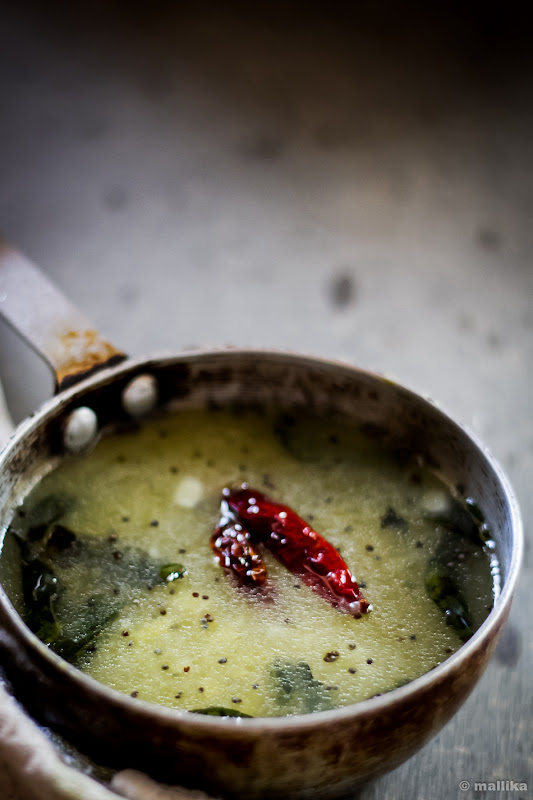
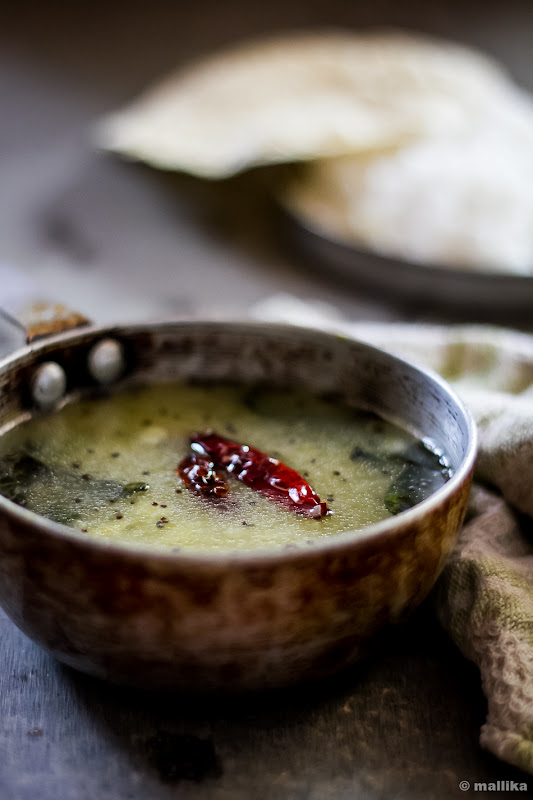
In this heat, what can be a better way of soothing yourself other than mango. Welcome summer and you are sure to be greeted with Appe HuLi in most Havyaka homes. This is one of the A Havyaka delicacies and is very common in most of our kitchens. Here, I share with you the recipe for Appe HuLi as made by my amma.


Appe HuLi | Appe Saaru

INGREDIENTS

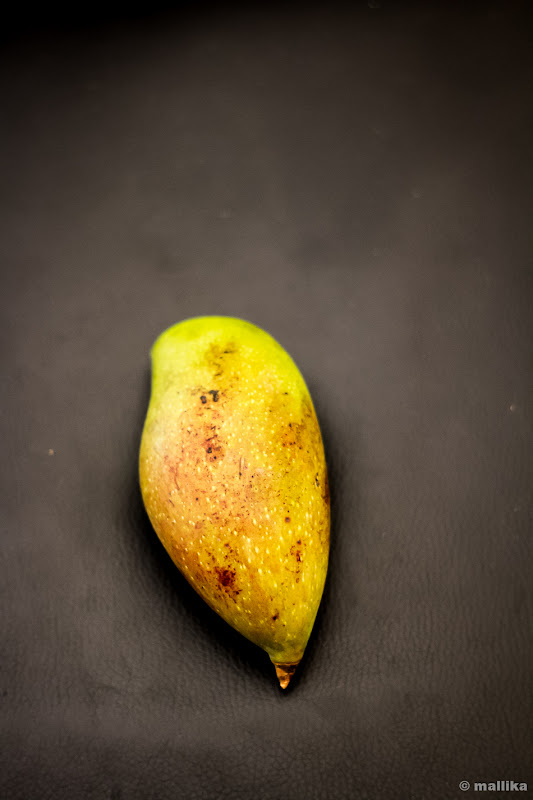
2 raw mangoes
1 tsp jaggery (or as per your taste)
Salt
1 tbsp Oil
3-4 dry red chillies
1 tsp Mustard seeds
4-5 Curry leaves
A generous pinch of Hing/ asafoetida

DIRECTIONS

Cut the mangoes roughly and cook them in boiling water. Once cooked, squeeze the pulp off the peels and seeds and mash them. Bring this pulp to a boil and add water if you prefer it thinner. Add salt and jaggery as per your taste. This depends on how sour or sweet the mango is. Prepare the tempering. Heat oil, add mustard seeds, curry leaves and a generous pinch of hing. Add to the boiled broth and switch off the heat. Serve with rice or as it is.

This sweet, sour and spicy raw mango soup will leave your taste buds tongue tickling for more.

Photographs updated dated 3rd June 2013

Summers in Mangalore get pretty hot and humid. What can be a more simpler meal than having steaming rice with hot rasam, papad, mango pickle ending with curd! We often get pineapples at home. At times, the pineapples may not be as sweet as enjoying them as is and just bland by taste. This saar, as called in Kannada or rasam is a great way of using these pineapples. It's simple, quick and easy... sweet, sour, spicy... a great way to beat the heat!

INGREDIENTS

1 medium pineapple, chopped/cubed
1 tsp Rasam/sambhar powder
1 tsp tamarind pulp
1/2 cup water Jaggery
Salt
1 tbsp Oil
1 tsp mustard seeds
A pinch of hing (asafeotida)
A sprig of curry leaves

DIRECTIONS

Boil chopped pineapple with 1/2 cup water for sometime till it turns soft. Add tamarind, jaggery, salt, rasam powder. Ajust the ingredients as per your taste. Add more tamarind/jaggery if the pineapple is too bland. Add a tempering of mustard, hing and curry leaves. I love mine with a stronger dash of hing. Wasn't this quick and simple!