Showing posts with label Chutney. Show all posts

Cranberry Tokku

How to make Cranberry Tokku, Easy Cranberry Pickle, Cranberry Relish
I started blogging in a time when the internet world had taken to blogs burgeoning everywhere like little mushrooms enticed by rains. There was an unfaltering gush of novel, unexplored cuisines, recipes, ingredients and more, all brimming on various sites with their evocative photographs and stories, each compelling and competing by themselves to make a mark on the space. I'd viciously eye those berries and stone fruits that would pop up randomly every now and then, in seasons and festivities, their crimson reds, navy blues and sunlit ambers marrying blissfully into butter, sugar and flour to settle into marvelous looking desserts - desserts that could trigger hunger at odd hours of the day and post hefty meals; leaving me much in envy of being unable to get my hands on them back in time, while the world around rejoiced in celebration with such food.

That said, what did not make much of an appearance on the web space were fresh, glossy, scarlet red cranberries. There were several recipes out there that had them in scones, breads and cakes, mostly used in dried form, the kind of ones that are drowned in sugar and shriveled to douse the tart flavor. For a while, now that these are easily accessible in India, I too made my convenience with using the dried varieties in our favorite mincemeat recipe that sat bathing, cramped up with other dry fruits and weighed down by nuts in a heady spiced rum concoction for months before being brought out to be baked into Christmas Fruit Cake.
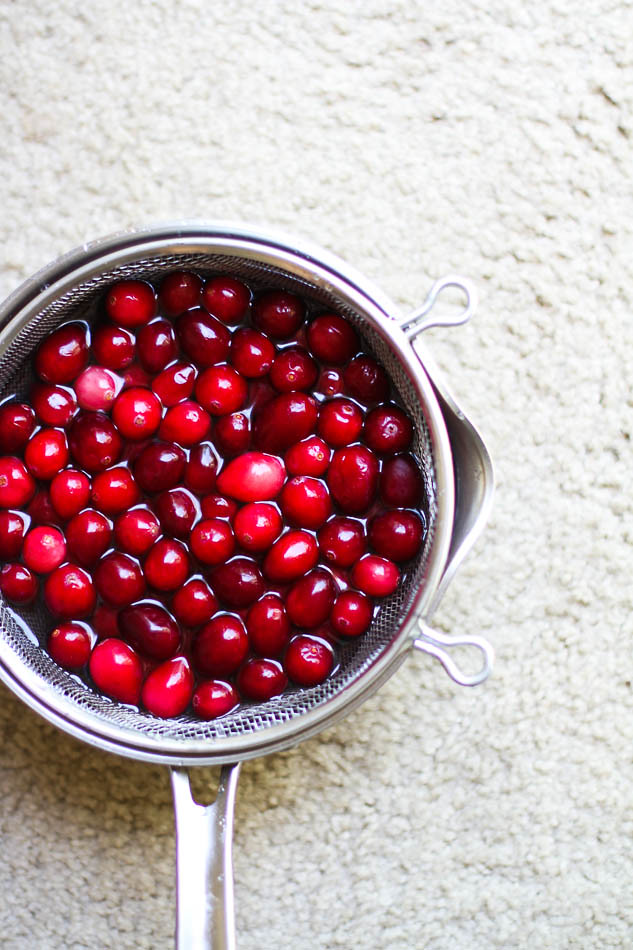

I had never seen fresh cranberries in the past till I came to the US. With dried cranberries available on ease, it was what it was known to me. For several years till lately, I was tricked into assuming that cranberries were akin to karonda, or karvanda (as known in Kannada), the tart-sweet Indian berries commonly used erstwhile in Indian pickles. I was excited about cranberries being karvanda, for two reasons.

One, I had never seen a karvanda bush, nor tasted its fruit in ripe, however I grew up hearing my dad often commend his love for these extinct pickling fruits, reminiscing how he missed watching his mother and grandmother collect the tart green berries off the bushes that grew in their backyard while the summer set in, of how they let them mature in brine for weeks, hand pounded the fresh spices and amalgamated them for months in sun to be pickled. Those were his memories, far and few, raved and deemed. For me, in rare times that I met a marinated young karvanda berry eye to eye, it was always camouflaged, heavily absorbed in red spices, and tart from being infused with bite sized mangoes pieces, served as delicious pickles alongside other dishes in odd occasions of weddings or family gatherings. Hardly an acquaintance to delineate something about.

Yet, those who grew up in the North of India may spin you tales of their childhood spent twiddling around the karonda (as they call it) bushes in the backyard of their aunt's, grandma's or friend's home, plucking them and popping it to their mouths with puckered face; karonda being more popular in the North of India than in the South where I grew up.

For second, Karavanda wasn't popular in generation of our times by any means; at least, it wasn't regarded high as the imported peers were. No one told us how good they were, no magazines or food channels professed it high, nor did our Sunday markets run its produce, probably because a lot of our Indian population was either disinterested to honor it or the ones like me, had hardly known it by trait. For a long time I did not know what it was called in English, or if it did exist in the lexicons of English circles. On the other hand, we had newspapers and magazines that constantly spoke of how fab cranberries were in beating the beast out of cancers and UTIs, tipping off cranberries to be our very Indian karavanda, and how our long forgotten fruit had captured attention in the West and that it may be touted as a superfood, pronto. Internet added to that fad with burst of knowledge.

My assumptions may have been misleading me, but thankfully I know today that karonda is karonda and cranberry is cranberry. Both live in separate worlds, with different identities, in their own identities that can't be swapped. It took me a trip to Nantucket in summer to realize this. That's where I saw the process of cranberries being grown and harvested, much unlike the trees that my grandmother harvested from, but bog flooded and cragged from vines. I came back home with a bag full of organic cranberries to turn them into a desi relish!
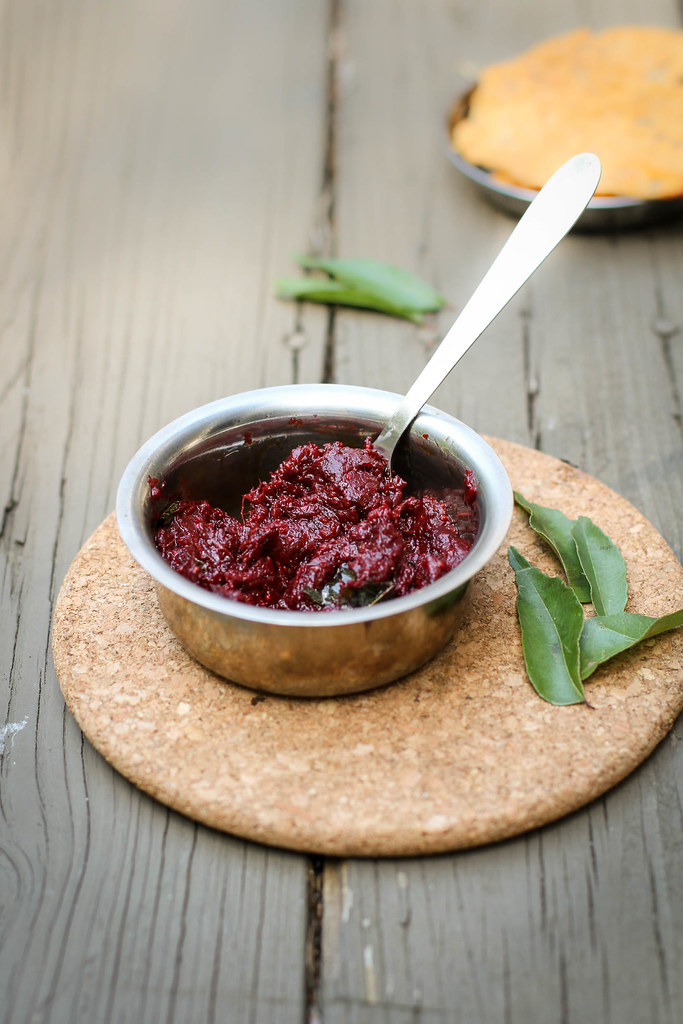

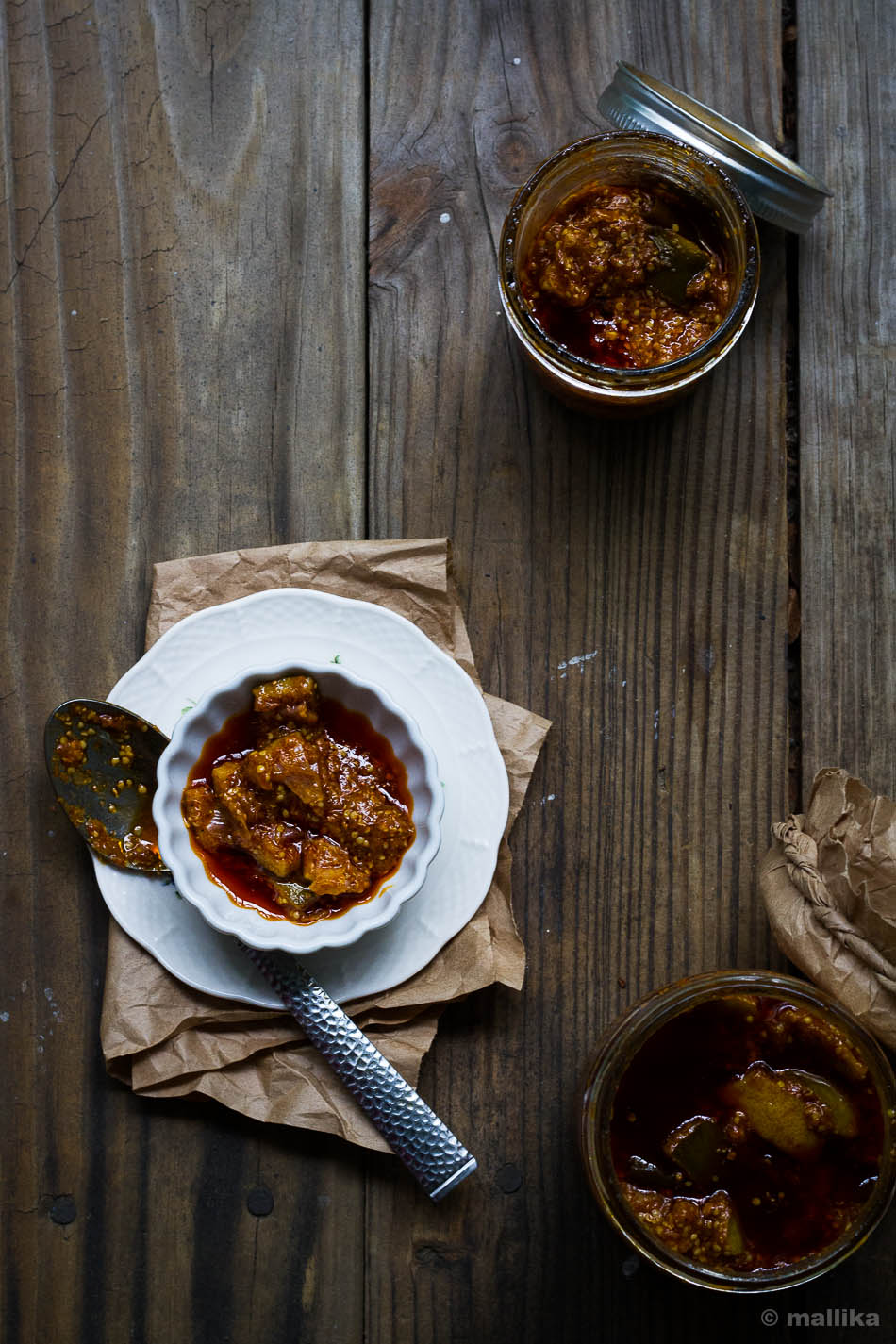
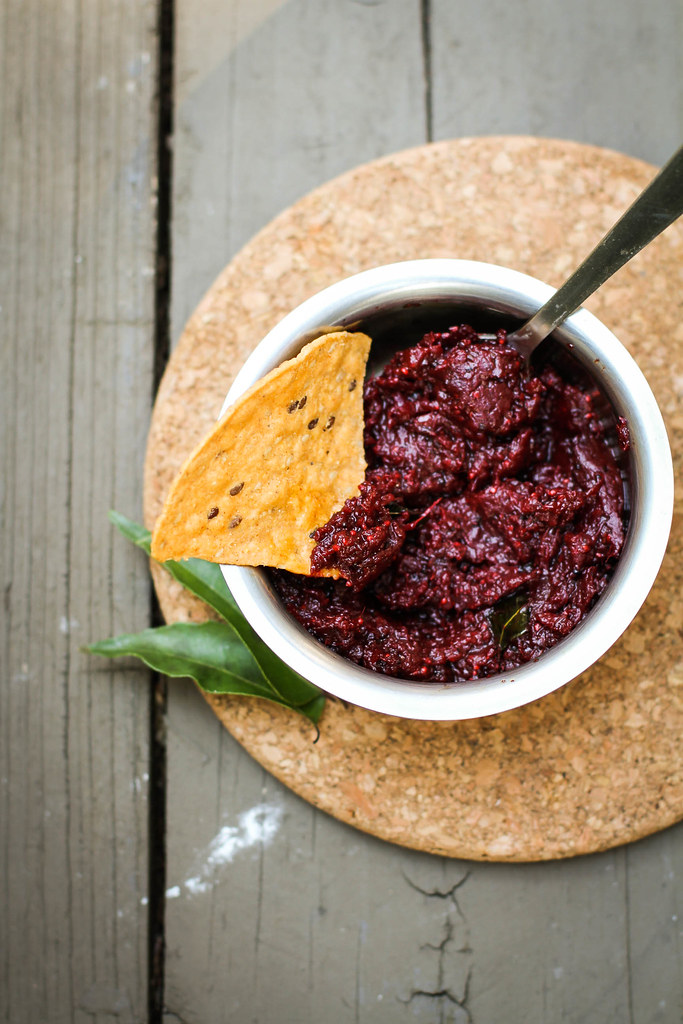
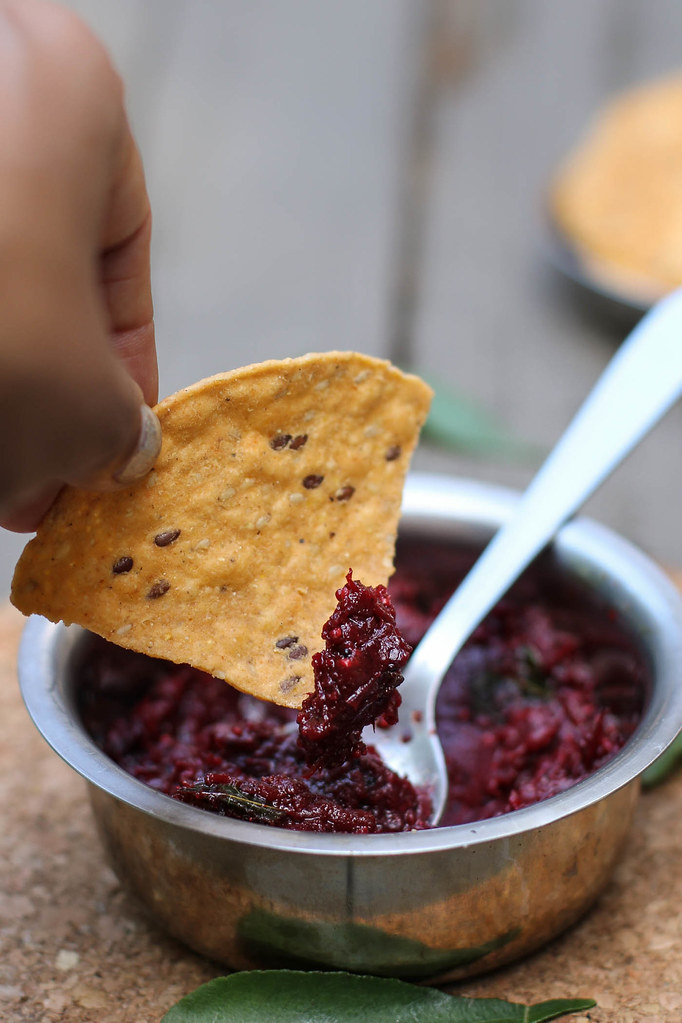
That brings me to this interesting recipe I have to share with you today. A mod-western ingredient with a traditional twist. The east meets west kinds. An old wine in a new bottle. This cranberry chutney, a dip, or more traditionally a thokku. Its very Indian at heart, its spices and the flavor - piquant, tart and delicious in a tiny blob on the side to any dish. You drag a lump of it with your fingers and mix along with steaming hot rice or simply scoop a small portion with your roti or dosa and relish it. Its makes a kicking dip to tortilla chips or even khakras, and that's exactly how I've zinged up over the past couple of evenings alongside my tea.

Cranberry Tokku

INGREDIENTS

2 cups fresh cranberries
5 tbsp. vegetable oil
2 tsp. red chilli powder
1 tsp. fenugreek seeds powder
1 tsp. asafoetida (hing)
1 sprig curry leaves
Salt to taste

DIRECTIONS

Heat vegetable oil in a kadai/ wok. Add mustard seeds and fry till it begins to splutter.

Next add the red chilli powder, fenugreek powder and the asafoetida into the oil and fry for 5 seconds. Do not allow spices to burn.

Add the torn curry leaves and fry for few seconds till they turn crisp.

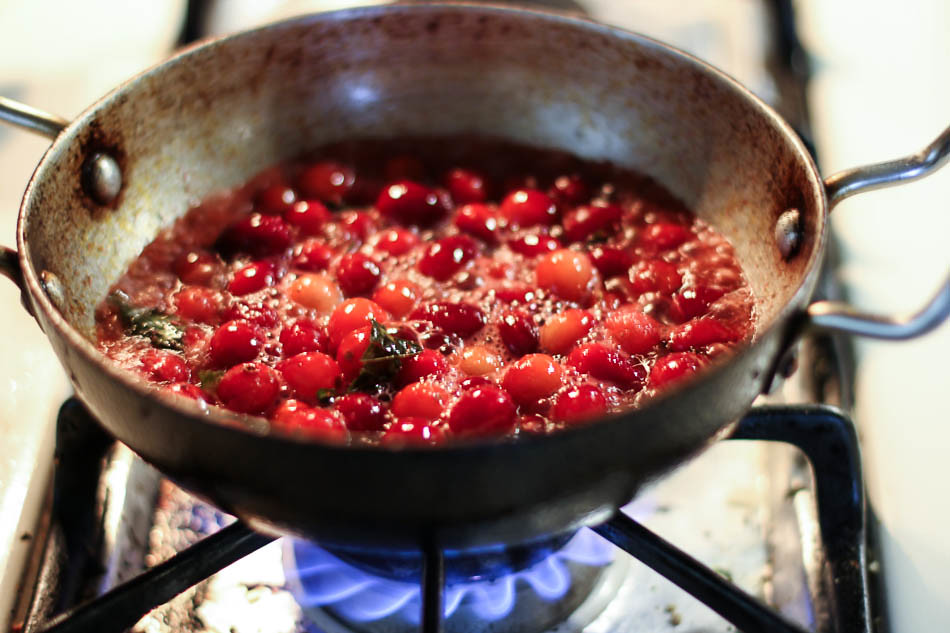
Reduce the flame and add the fresh cranberries. Stir them in to coat all the spices. Cook till they pop and begin to reduce in volume. Using the back of spatula, gently mash them. Add in salt to taste and stir continuously until the cranberries soften, reduce in volume, and begin to lump, and the oil begins to separate.

Remove from heat and allow to cool completely. Store in air tight ceramic or glass containers.

Notes:

* You can add a tablespoon of jaggery to balance the tart incase you do not like the sour taste of the thokku.
* Fenugreek powder is bitter on its own, however when fried in oil it imparts a lovely flavor to the dish. It's the heart of this thokku and hence do not skip this ingredient.
* If you plan to store this over the counter for couple of days, its important you do not skip the amount of oil suggested. However, incase you plan to make a smaller quantity that will be consumed in a day or two, you can reduce the oil content. Oil helps in longer shelf life of any pickle.
* If you don't like heat, reduce the amount of chilli powder. We love our pickles spicy, so you may find the red chilli powder on slightly higher side. The heat of the chillies is also dependent on the kind of chilli powder you use. Hence use it judiciously.

The western world has been calling that the spring has sprung in, oh though finally. But for us here in Bangalore, even calling the beckoning summer as summertime is nothing short of an understatement. With the mercury touching an all high of 38-40 degrees C by the day, and not getting any better by the nights, adding the woes of humidity in air, our sweat glands at their mechanical best, what feels like is an hour’s workout at gym even in our fan-sped, well ventilated, curtain drawn indoors. The whirling fans do no good, neither the chill of cold icy water and ice creams right out of the fridge. The much esteemed task of domestic grind has taken a swift backseat and I rather enjoy the lethargy of laying lazily like a couch potato, gazing endlessly at the spinning fan, as and when time and my toddler permit. Honestly, I’ve never known what Bangalore summers are like, because of all those glorious 14 years spent here, Bangalore never had a summer, or the real scorching Indian summers that I am talking about. But finally, they come.


Heck this summer, the rising temperatures and its woes that creeps in several uncanny thoughts in fists of laziness.

Pleasant as the weathers used to be, once upon a time, the drastic weather change, the tangential increase in vehicular pollution, the infiltrating population, depleting water tables, the perpetually increasing carbon footprint and the reducing green covers that we’ve always been famous for (well, some day that may remain just a history) have been a few direct promoters to the current state of weather affairs. I am cynical to the educated crowd in craze of the luring mall culture, the fast food takeaways amounting to corpus non degradable wastes, the lazy bums who need a car for singles and the little consideration they care for the exhausting fossil fuels, those loosers who fail to carry a bag along because they can do away with the plastic ones at dirt cheap price of few rupees, all at the cost of our environment. Equally pathetic have been our rainwater harvesting and waste management techniques, a rare to find garbage segregation, or may I say none at all. I am not against these odd commons, but urge being responsibly mindful.


My husband and I have been making constant attempts to create an awareness, more often being ridiculed to be annoying than anything. Like, we plunge into awkward situations when a guest visits us and looks around for a waste bin to discard rubbish. We persuade them to hand it over to us, so we can discard them appropriately. We don’t blurt out why, but will be more than glad if they handed it over to us for disposal. Then there are some smart chaps who insist they’ll throw, because they’ve been taught to be mannered. So we accompany them, fingering them to the right bin. Amused to a point we don’t get it, they often burst into fits of laughter on learning we do effective 'waste management'. Many can’t see why, because they assert that in the end all goes to a single landfill, which isn’t entirely true. It gets hard on us to explain, but we try. We’ve come to a point where we’ve stopped giving answers to many, because they deliberately argue. So we silently follow the practice between ourselves.


Then on another anecdote, we were on an overnight train along with big group of families travelling collectively, our co-passengers for this journey. The head of that group, a physics professor to a college picked up casual conversations with us as we exchanged smiles, little talks and shared food with him and his family. And like it usually happens with most Indian families on a train journey, exchange of home cooked food become the pot-boilers to fuel conversations and controversies, this journey wasn’t any different. What although was nastily upsetting was that all through the course of this journey, this learned gentleman, his wife and their grown up teens, callously flung stuffs off the train window; the food, peels, plastics and all that at regular intervals. In midst of our talks, deliberating them to refrain from doing so, and giving them a dose of science behind the whys in idioms that the professor’s nasty brain could understand, couple of more garbage flew out in seconds! At the heights of it, well at the end of our meal, we pulled out our home-brought reusable polythene covers to pump in the wastes and dispose off sensibly later. As we were about to shove them into our bags, this smart gentleman in his wrecked wits grabbed our wastes and flung them off the windows, leaving us painfully distressed! Between his naughty grins, the supposedly science professor told us bluntly that all we had spoken were noble to preach and not to follow in reality. So we were in loss of words.


Awareness is elementary. But then, that’s not where the issue is. Most of us know consciously the value of nature and the repercussions we may face if we continue to exploit the resources this way. My uneducated house help is equally aware that wasting water is sinful since she purchases tankers of them for her survival. I wonder if she’s cautious at her place to care for every little drop that she pays for. Yet, when at work, it seems easier to let the tap flowing while cleaning vessels, because it saves her time and energy, and it costs no penny. Likewise, despite our several attempts to convey waste segregation messages within our apartment association, we’ve been least successful in getting most of the cultured folks in our vicinity to even make a beginning.

I second the fact that the reckless rate at which we are speeding up technologically is alarming. I feel like a perpetrator myself on several occasions. The cell phone era that we can’t do without, every ring, every call I make alarms me of their signal posts towering sky high at couple of foot steps and their carcinogenic radiations that we have to live with. Those Bluetooth, wireless, infra-reds and microwaves have become an indispensable part of our lives that we’ll be severely hampered without. The humongous bore wells being dug every single day, the failing rains and battling water problems in city that have made the bare essentials a commodity of sale, a free right the nature gave us, but with a responsibility that we’ve failed severely at.

The truth is I feel so unprepared for the future I see for my daughter. I see myself swinging on odd ends of balances. Blame it on motherhood, aging or the PMS, but I’ve been thinking a lot for a long time, of the ugly carbon footprint, my daughter, her future and all of that. I am left with cold nerves and numb feet of what holds in couple of decades from now. And if our Hindu discourses said we are in the kali yuga, I can’t help but reflect how right they were in their predictions. They did foresee what devastation human intelligence and greed could do. It’s only a hope we came together collectively and did our bit. For the environment. To save the future. And to let the future generation live. For our children and for theirs to come. And for our own old age.

All said with heavy thoughts, I wouldn’t want to leave you without a recipe of this salad that's apt for this summer, a recipe that’s simple and least complicated as my contemplations are. I leave you with a hope that you’ll ponder. And be the one who’ll resort to a positive change that will prolong the deleterious impact, hopefully. Hope you have a great weekend!


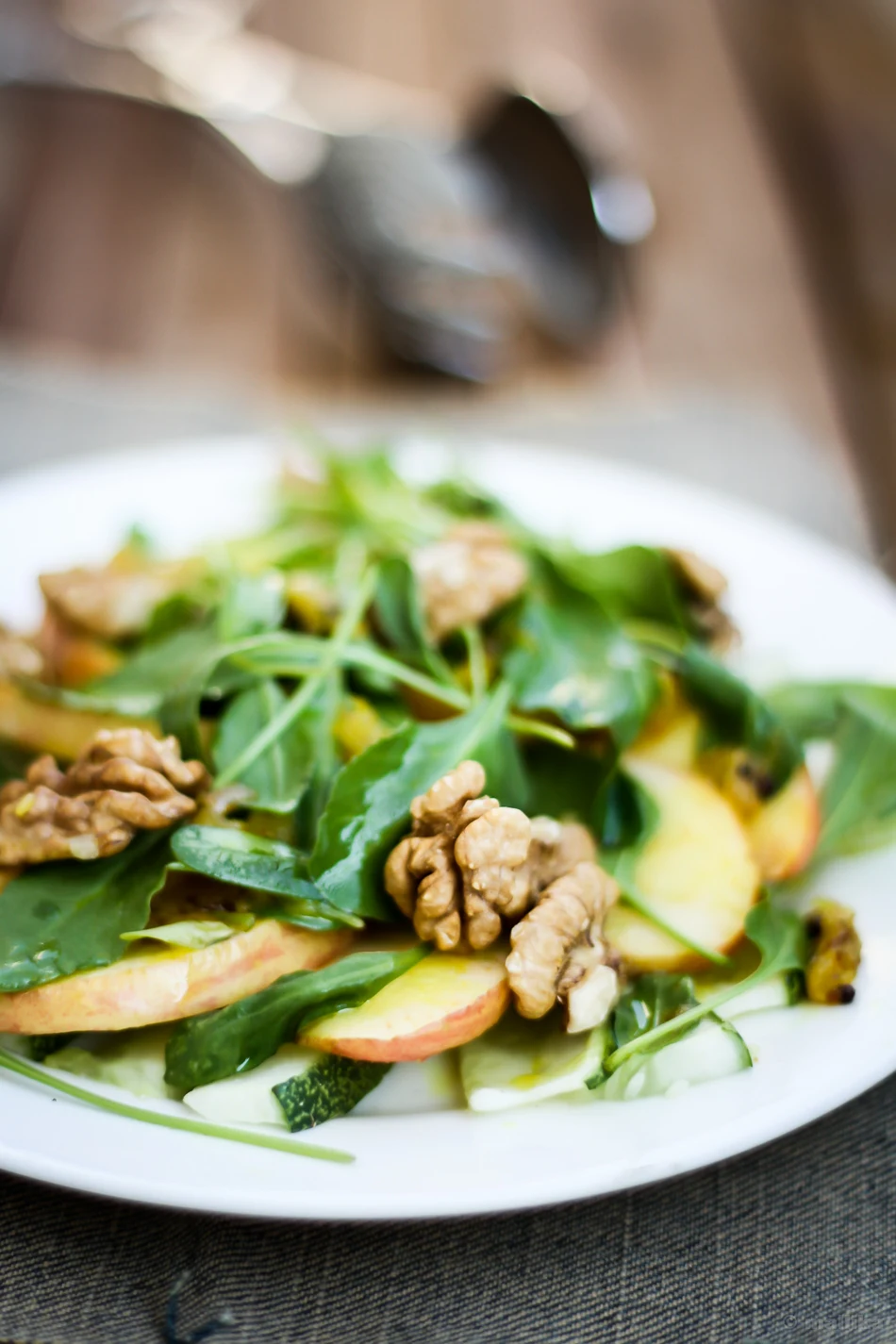
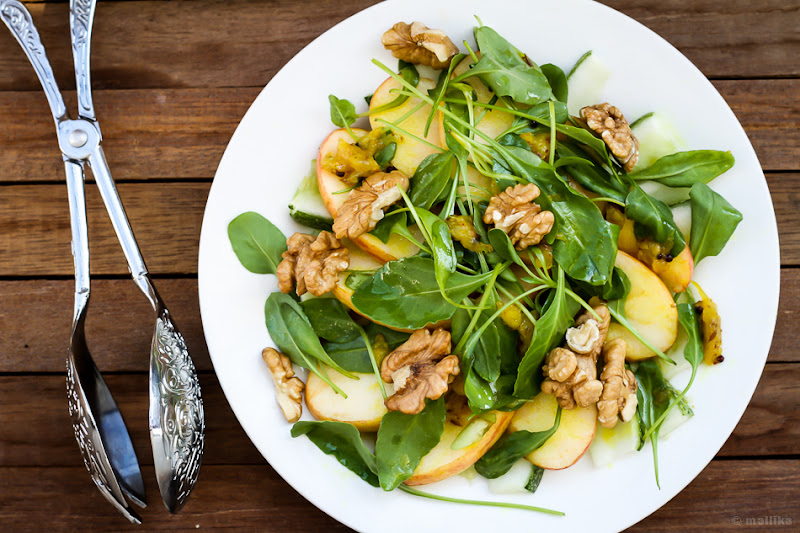
Baby Spinach, Apple & Walnut Salad with Raw Mango Dressing

INGREDIENTS

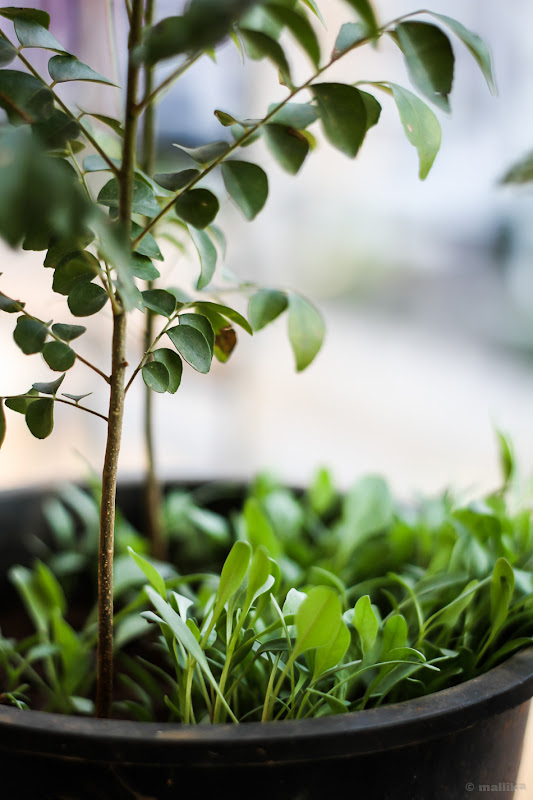
A bunch of baby spinach (from our home garden)
1 cucumber, cut to thin slices
1 Apple sliced to thin wedges
Couple of walnuts

For the Raw Mango Dressing:

1/2 cup grated raw mango
1 tbsp. oil
1 tsp. mustard seeds
1 tsp. turmeric powder
1 tsp. red chilli powder
Salt to taste

DIRECTIONS

Layer the cucumbers, followed by the apple slices and the baby spinach. Strew a couple of walnuts.

In a pan, heat the vegetable oil along with the mustard seeds. As the seeds begin to splutter, add the grated raw mango along with turmeric powder and sauté till it wilts and cooks through. This will take a couple of minutes. Add the red chilli powder and salt to taste. If you plan to store this dressing for a couple of days, then use more oil to cook mangoes. The oil needs to coat and cover them well. This simple mango chutney goes very well with rice and rotis.

Toss the salad with this prepared mango dressing or serve as a side along with this relish.


Pesto, need I say what it means to me? Having been a lover for Italian food, I'm sure there should be no second thought that I love pesto. But strangely that wasn't how it started a few years ago when we first tasted it. Well, it was a love hate relationship that we started with. We did not really give into liking it till recently we acquired a taste for the famed pesto.


For a while we despised pesto or even the word of it. Probably, because I never made it the authentic way. My experiments with dill, coriander and other greens, except basil were not received well. I gave up for a while, feeling incredibly guilty about not tackling it and getting such a simple straight forward recipe right. So I stuck by other pasta recipes that were appealing our palate. Then recently we had it at our coveted Italian restaurant, Toscano and that's really when we took liking to it. The pesto sauce served with an assortment of breads had us a convert. It's chunky texture, mild flavour, fresh and oh-so-delicious when we smeared it on bread and even paired them with spaghetti had us love it thoroughly.


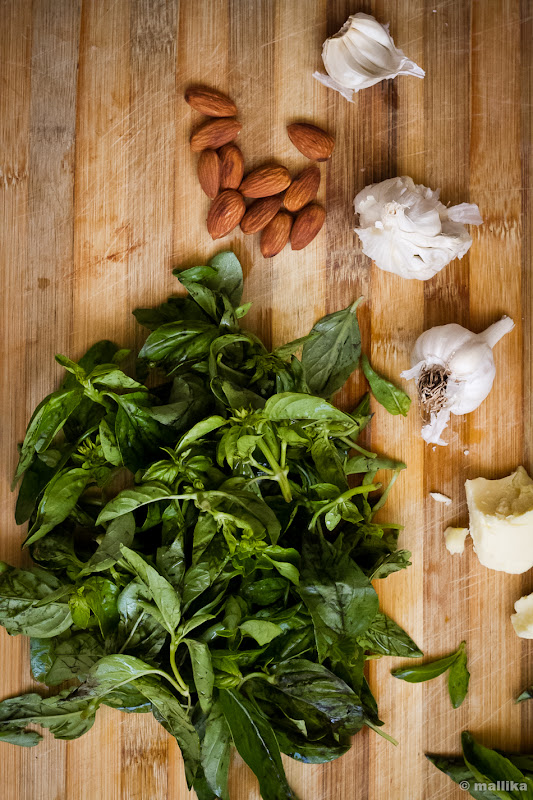
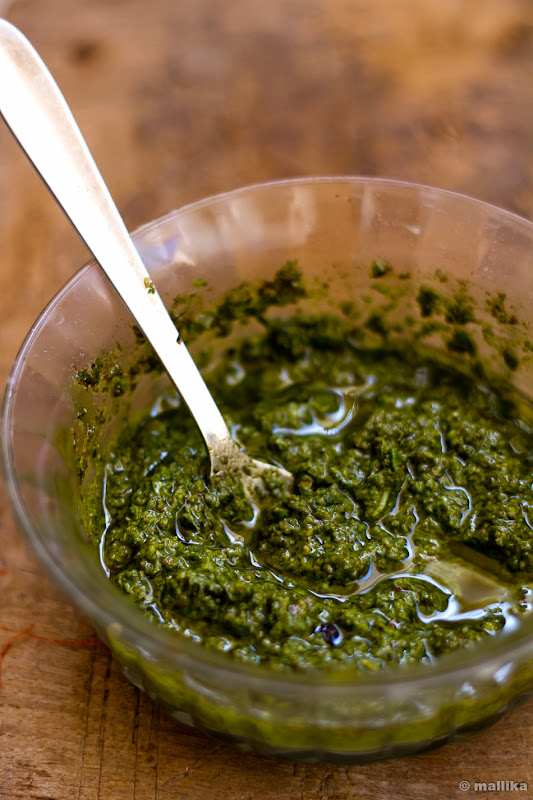
The core ingredients that make up a good pesto sauce are basil, pine nuts, garlic and olive oil. These days, getting basil in a supermarket here is not a worry, but then they are not always fresh. Hence the basil I used here are home grown in a pot, so that makes this recipe fresh and all the more appealing. Pine nuts are something I have never seen or tasted. A quick google search said walnuts or almonds make an equally good substitute. Far from fetching pine nuts here, I settled for almonds as an alternative, something that I always have a stock of. So, these were made, we relished it with simple garlic spaghetti and they tasted close to the original stuff we had the week earlier.


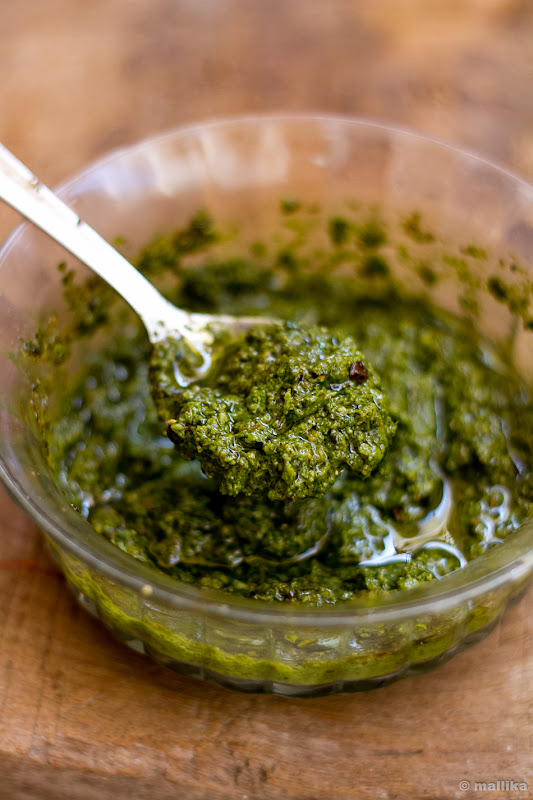
Basil Almond Pesto

Inspired by BBC GoodFood Magazine

INGREDIENTS

50g roasted almonds
A large bunch of basil
50g Parmesan (I used mozarella instead)
150 ml olive oil, plus extra if storing
2 garlic cloves

METHOD

Put all the above mentioned ingredients into a food processor and process until slightly chunky. Season liberally with salt and pepper. Pour the pesto into a jar and cover with a little extra oil, then seal and store in the fridge. It's known that the pesto will keep well in fridge for up to two weeks, although I recommend using them fresh.


Vegan version:

To make the recipe vegan, use vegan cheese or skip cheese altogether.


I made this quite a while ago but I don't know why I had been procrastinating on this one. It just sat in the corner of my drafts and though every time I thought of posting it other recipes caught my attention. I finally decided to put this recipe here, least I forget and it goes into hiding.

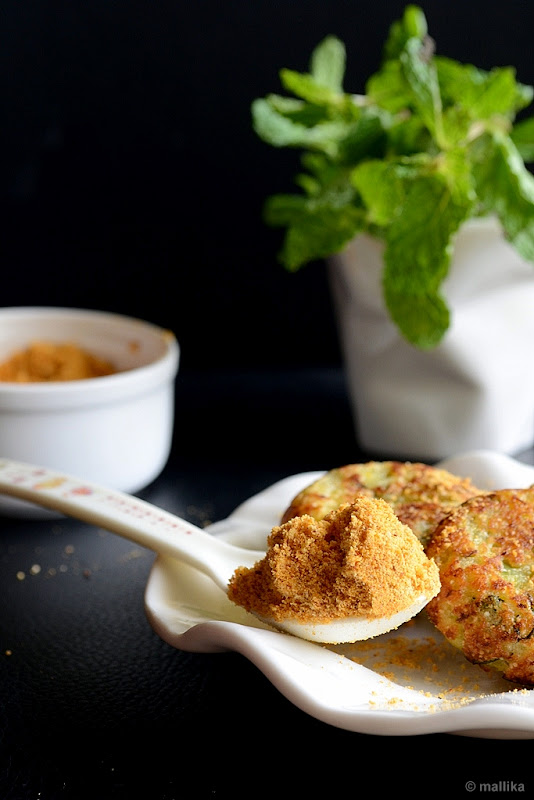
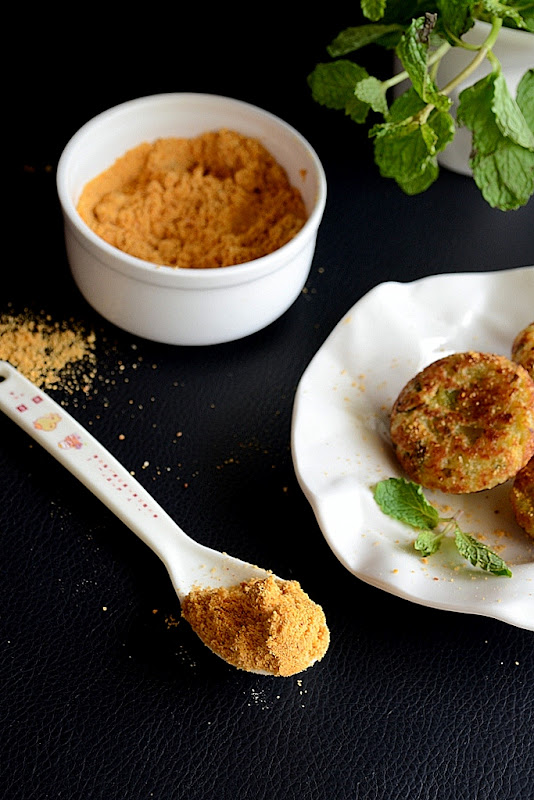
A while ago I had posted the recipe for a quick instant evening snack, Corn & Mint GuLiappa along with which I served this lip smacking peanut chutney powder. I promised then that I would share this recipe with you in the following post, but that didn't happen. So here it comes. This recipe is quite simple and comes from my mom and hope you too love it the way we do. It goes well with dosas, idlis and other breakfast dishes, as well pairs well with steaming hot rice and dollop of ghee.


Peanut Chutney Powder

INGREDIENTS

1 cup peanuts
2 tsp. red chilli powder
3-4 cloves of garlic
1 tiny piece of tamarind
Salt to taste

DIRECTIONS

Dry roast the peanuts along with cloves of garlic on a medium low flame till the skin turns to a darker color and the garlic is dry (has no moisture left). Let it to cool for a few minutes. Using the palms of your hand or placing peanuts between two towels, rub them to remove the skin. Grind the roasted peanuts, the roasted garlic along with chilli powder, tamarind and salt to taste till its powdered. You can leave tiny flecks of peanuts in there if you want a slight crunch. I prefer to grind it to a fine powder and serve it with a dollop of fresh ghee. Use as is or serve with ghee or dahi.


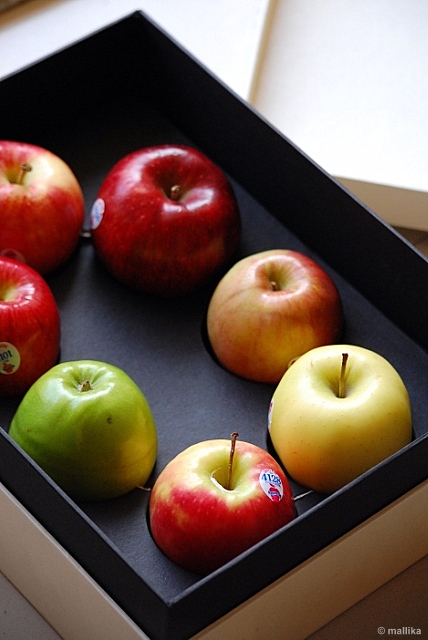
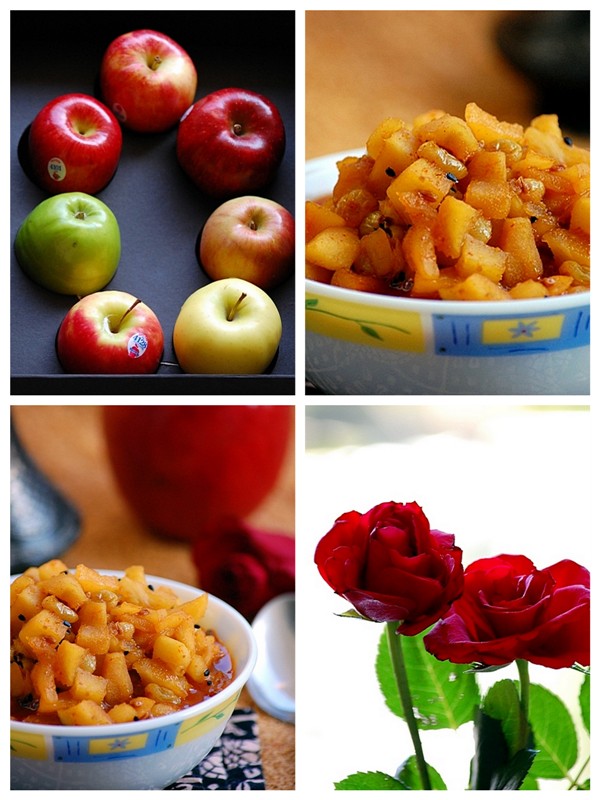
The SCS group contacted me recently to dispatch a pack of Apple goodies. The courier arrived last month a day before I went into labor. I have to apologize SCS for this delayed post. As I eagerly unwrapped the sturdy, sexily packaged box, beneath it held beautiful plum red and green Washington apples, each unique in its variety, kind, color and character. As I unpacked the box, I could appreciate the sweet tart essence wafting from these apples. We could barely resist these.

The box came with an information pamphlet and about 7 varieties of apples: Red Delicious, Granny Smith, Gala, Braeburn, Golden Delicious, Fuji, Honeycrisp. It spoke about the significance and characteristic feature of each apple. A few tart ones, making them perfect for bakes, crisps and cooking and few sweet ones to snack on anytime. You can find the same information on their website 'Washington Apples'.


Recently on a television show, it was shown that most of the imported apples come dipped in a polymer chemical solution which prolongs the life and gives it that glossy healthy shine, also posing a health hazard. These apples did have a glossy shine on them, however I am unable to comment if they went through the same process. Since I did not want to risk, I peeled their skin for the recipe.

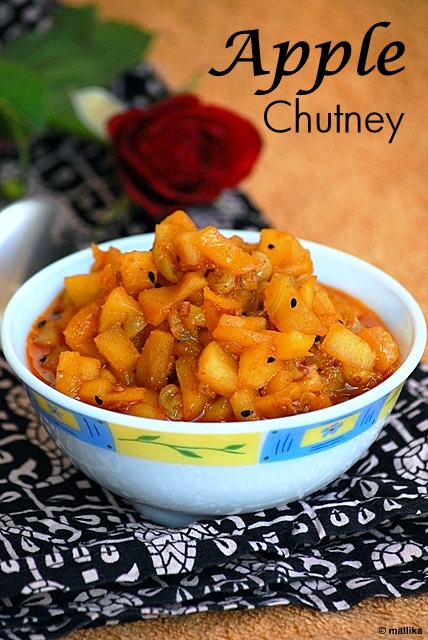
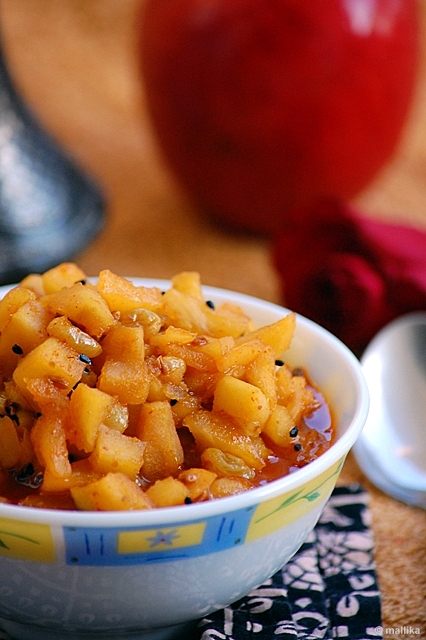
We enjoyed most of these. The tart ones were well used in a few recipes to suit our meal and they were well appreciated. The idea came from my mom as she has attempted the same chutney a couple of times with the Indian rural apples which are smaller and tart too. I made an appetizing, tongue-tickling chutney from the Granny Smith Apple which had a good amount of tartness, making it perfect for this lip smacking chutney.


Apple Chutney

INGREDIENTS

1 Granny Smith apple
1 tbsp vegetable oil
1 tsp nigella seeds (kalonji)
1 tsp fenugreek seeds (methi seeds)
1 tsp fennel seeds (saunf)
1 tsp cumin powder (jeera powder)
1 tsp coriander powder (dhaniya powder)
1 tsp asafeotida (hing)
1 tsp chilli powder
1 tbsp jaggery/brown sugar
Juice squeezed from 1/2 a lime
Salt to taste


DIRECTIONS

Clean and core the apple. Peel the skin if required. Dice it to small chunks or bite sized pieces. Marinate with salt and lemon juice and keep them aside till we use them for cooking. This will prevent them from darkening.

Heat a tbsp of vegetable oil in a kadai/frying pan. Add a teaspoon each of nigella seeds, fenugreek seeds and fennel seeds and fry briefly till you get a nice aroma from them. If the oil is very hot, it takes about 15-20 seconds. Turn off the flame and quickly stir in the dry powders, the asafeotida, cumin powder, coriander powder and chilli powder. As you do this an amazing aroma from these spices will hit you. Turn off the flame to avoid the spices from burning.

Add in the chopped apple pieces and stir well to coat all spices. Switch on the flame and cook the apples covered on medium low heat for about 15 minutes or till the apples are soft. Add the jaggery/brown sugar to taste. Mash a few pieces so that you get a thick chutney. Cook further for another 5-10 mins. Adjust the salt to taste. You may serve this warm or at room temperature.


You may grate the apples for a finer chutney. We loved those bites from fruit chunks in our chutney. This sweet and tangy chutney goes well with rotis and rice too. It complimented our lunch well and we enjoyed this apple treat. One can hardly identify that this dish is made from a fruit. Thanks to the SCS group for this wonderful gift. We enjoyed the varieties and look forward to more of these in Indian markets.


Amaranth greens, also called the Chinese spinach is a common leafy vegetable available in India. It's popularly known as dantina soppu or harive soppu in Kannada and is more commonly used in South Indian cuisine. They come in two varieties, the green leaves and the reddish tint leaves. Amaranth leaves are coarser and denser than spinach and fenugreek leaves when cooked.

There aren't many recipes that I make with amaranth leaves, neither do I get them home as often as spinach or fenugreek leaves. If you have any recipe for these leaves, do share with me. I am always on the lookout for new recipes which make our lunch different from the usual. My recipe here is using the red amaranth leaves.

These leaves are an excellent source of vitamins and minerals, however due to considerably higher content of oxalic acid in them, it interferes in the absorption of calcium and zinc in the body. Hence, it is also suggested that people with kidney disorders, gout or arthritis, should consume it in smaller quantities. Reheating of cooked amaranth greens is also discouraged, due to nitrate conversion in the leaves. One of the best methods to consume these leaves without having to recook them is in form of this chutney and we love it this way.

This Chutney is very simple and takes a matter of hardly few minutes to prepare. It is extremely tasty and easy to make. What's best is it requires no coconut, hence reducing your job too!


Amaranth/Dantina Soppu Chutney

INGREDIENTS:

1 bunch Amaranth leaves
3 green chillies
2 tsp tamarind pulp
1/2 tsp jaggery (optional)
Salt to taste
1 tsp oil

Seasoning:

1 tsp oil
Mustard seeds-1 tsp
Urad dal- 2 tsp
Red chillies- 2-3
Hing-a pinch

DIRECTIONS

Wash the Amaranth leaves a couple of times in running water and keep them aside. In a kadai/pan, pour little oil and fry green chillies for a few seconds. Once the green chillies have blisters on then, add the cut amaranth leaves and fry them for 2-3 mins till the leaves get wilted and cooked. Turn off the flame and allow it to cool down.

Once cooled, add the tamarind pulp, jaggery (optional) and salt to taste. Grind this coarsely with little or no water.

To season this chutney, heat little oil in a pan. Add in the mustard seeds, urad dal, hing and broken red chillies. Fry them till the mustard begins to splutter. I love the aromas that rise from the seasoning, they are heavenly! Add this seasoning to the chutney and mix well. Serve with hot rice or rotis.
Another variation to this chutney is to exclude urad dal and add crushed garlic cloves instead to the seasoning. They add a lot of flavor and health factor. The oil that is released from the red chillies while frying them for seasoning adds an amazing aroma to this dish, making this chutney extremely tasty and flavorsome. This tangy amaranth chutney not only tastes yummy, but goes very well with hot rice, rotis or even dosa.


I am just back from a short holiday and it was so much relaxing to take this leave as we desperately needed a break from work. We needed this break badly as it's been a year since we hadn't taken any. I am back to work in high spirits!

As a continuation to my previous post for Khaman Dhokla, I am posting the recipe for Khatti Meethi Chutney with tamarind and dates. Amma makes this often at home and I am inspired to learn from her. This is one of the simplest and the easiest methods to make and can be used in many other savories, like chats and dips. It calls for no fuss, no cook recipe and can be done in minutes.

I prefer the use of dates due to it's natural sweetness instead of sugar. Dates have a great taste and sweetness that can be easily substituted for sugar. Apart from that, it's also to derive the health benefits from it as it is rich in iron content. This fruit is affluent in natural fibers, sugar, proteins as well as many essential vitamins. So here it goes.

Khatti Meethi Chutney

INGREDIENTS

1/2 cup of dates
1/4 cup thick tamarind pulp
1/2 tsp garam masala
1 tsp chilly powder
Salt to taste
A little water


For tempering:

1 tsp oil
1 tsp mustard seeds
1 tsp cumin seeds
Few broken red chillies
A sprig of curry leaves

DIRECTIONS

Just put all the ingredients to a mixer and pulse them till they become a thick paste. Add water to adjust the consistency. It's good enough to consume this way, but tempering would enhance the flavors further. So heat some oil in a pan, add mustard, cumin seeds, broken red chillies and curry leaves. Fry them for a min and then add to the prepared chutney/dip. It's ready to serve!

The ones that are commonly used in chats or in street foods are made by heating tamarind pulp with sugar and spices till it comes to a slightly thick consistency. It stays for a longer duration. However, as I mentioned this is a quicker and healthier version, this one has a shorter life span and needs to be consumed in a day or two. It will also require refrigeration if it is not consumed in a day.

Maavinkai gojju is another Havyaka dish prepared often at home. In the past, a lot of our families used to farm with agriculture being the predominant occupation. Although this culture is now diminishing and people mostly prefer to have a salaried jobs, the traditional cuisines still carry on at most homes. So summers would mean farm fresh mangoes. Before the summers would set in, raw mangoes are collected and variety of recipes are made from them. They are used in paanaka, pickles and in form of chutneys. Maavinkai gojju or raw mango chutney is made from raw mangoes instead of tamarind.

Maavinkai Gojju

INGREDIENTS

1/2 raw mango
2 green chillies
1 cup grated fresh coconut
Salt to taste
Water to consistency

For seasoning, we need:

1 tsp Oil
1 tsp Mustard seeds
1/4 tsp Asafeotida / Hing
A sprig of curry leaves

DIRECTIONS

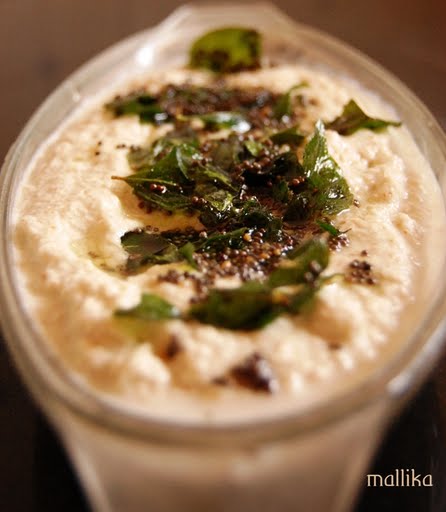
Grind finely the raw mangoes, grated fresh coconut, green chillies and salt. Add water as per required consistency. Heat oil. Add mustard seeds, asafeotida and curry leaves. Temper the chutney by heating some oil in a pan. As it heats, add mustard, hing and curry leaves. Allow them to splutter. Add this to the prepared chutney. Serve with dosa, rotis or as side dish with rice.


Last night, I made a typical Kannada household dish, Nucchinunde with Onion chutney (Eerulli Gojju) accompanied by Majjige Huli. It came out excellent. Gojjus have always been a part of our everday cooking. I have always relished onion chutney to an extent that I can eat them as it is! Fried onion gives a kind of unique sweetness to any recipe when added. Although I detest the smell and taste of raw onions I am equally affectionate when it comes to the cooked form. This one is so quick and easy.

Onion Chutney / Eerulli Gojju

INGREDIENTS

2-3 large onions roughly chopped
1 tbsp Oil
1 tsp Bengal gram / channa dal
1 tsp urad dal / split black gram
6-7 Dried Red Chillies
A sprig of curry leaves
Tamarind, quarter the lemon size
1 tsp mustard seeds
Salt as per taste

DIRECTIONS

Heat oil and add Bengal gram, split black gram, dry red chillies and chopped onions. Fry for few minutes till the raw smell of onion is lost. Cool and grind this to a fine paste along with tamarind. Add salt. Temper with mustard seeds and curry leaves. Ready to be served with rice, idli, dosa, nucchinunde, akki roti, etc.