Showing posts with label Havyaka. Show all posts


So what do you think is life like for a toddler mom food blogger? Fun, thrilling, stressful, exciting, uncertain, adventurous, tough, entertaining, or may be all of these??? Interesting! Let me give you a glimpse of me as a food blogger.

Just about 2 days ago I decided Sankranthi, the festival for harvest is here and I need to have a post signifying it for the 14th. I rustle up my calculations and cross upon Huggi, a traditional Havyaka household dish, and an apt one that can make it right for the day and the festival. Perfect, I think.

So to be able to post it a day in advance that will benefit my readers, I decide I will cook the recipe a day before, photograph them and publish here. I almost put things together, when I simply get a feeling that I am cheating. Would that justify me celebrating the festival? It made more sense to cook them the first thing in the morning of the festival while my family is around, finish the pooja, offer God and relish them fresh. So I push the entire thought of cooking Huggi for the day of Sankranthi, in a hope I will be able to quickly grab some clicks and post them here, hopefully the same morning. Hopelessly, that rarely happens!


The morning of Sankranthi dawns and the baths are over. I head over to the kitchen to make both versions of Huggi, the sweet and the spicy one, both equally delicious and my favourites too. My cooking is done on time, pooja is over, little one is to be fed and I am to decide if the oggarne/tadka needs to be added then or saved for the photographs. A tic-tac-toe and I add a part of the oggarne/tadka, saving some of it for the grace. I almost finish feeding my hungry toddler, put her to play in my kitchen and keep a keen check on her from the corner of my eye. Often she hangs around me for my attention, so a huge effort goes into distracting her with piles of kitchen utensils and cutleries to amuse her. By now my kitchen is in a huge mess with utensils, dolls and toys lying on the floor and on counters too. Adding to this, hazaar utensils lay around to be cleared and washed. I clear a part of these to make some space for the props to be fitted into the existing clutter, as obvious to make my dish look a little appealing. By now my little toddler begins to get anxious, seeking my consideration to play with her, so she's up on the kitchen counter, least I can keep her busy with my constant talks and her plays. I begin to place up my props, lay the dishes, top the garnishes, neat my background, foot the tripod and almost begin to shoot when a tiny hand hovers over to dish, pulling the props, the background and at times the camera lens too! Again, in an attempt to distract, I hand over unforeseen kitchen items for her to play. Her hands go deep into the jar of my precious ghee, the onion and garlics are off their peels, things helter-skelter and a glass or two ends up cracking on the floor. Though by now she is bored and there comes the shrill cry, more mess and my woe! Then there are agony moments when my garnish ends up in a mess, spoons are thrown into the dish, splattering on to the table cloth and I throw up my hands in anguish! Did I say life of a blogger mom was stressful? Phew!


I come back to square one of laying things on the dining table instead, let her on her foot to play, hand over a spoon and bag of chickpeas for her to fiddle with, foot the tripod and almost begin to shoot a photograph or two when my little one spills over all the chickpeas, gives up on them instantly and hovers over to tripod, attempts a climb, almost tumbling over it. I tip toe over the scattered chickpeas, just managing to balance the falling camera on a single foot and my toddler on another! Again, I give up, shove aside the tripod and shoot by hand with a few shaky shots and some good angles. Did I say life of a blogger mom was adventurous? True!

Okay, so by now I somehow manage a few shots here and there and then sit down to processing the files, generally when my baby is off to her sleep. And today she decides not to sleep. I sit her till the noon, simply hoping I can make through this post today! She's off to sleep and I sit to blog about it, my thoughts are totally empty. Heck! Where do I start? Every blogger's foe, that blogger's block! I try to start, then just let it go. Instead I manage to do my processing and editing. Of the hazaar photos I click randomly I short-list to the chosen few. By then my little one is awake. Here I go off again, almost being sure this will have to wait another day, may be next year too...??? Yeah, I did say life of a blogger mom was uncertain.

With all that said and done, I finally have my post here, though not exactly on time as I would have preferred it earlier in the day. I sat at a stretch, almost 3 hours and managed to crack a good long write up too! And as it gets published, its fun and exciting. As the comments pour in, it gets entertaining too :) That's life being a food blogger and toddler's mom too!


Sihi Huggi

INGREDIENTS

1/2 cup moong daal
1 cup rice
3 cups milk
1 cup water
2 tbsp. clarified butter / ghee
1 1/2 - 2 cups sugar or jaggery (adjust as per taste)
1-2 cardamom pods, crushed
A handful cashew nuts & raisins
A pinch of saffron

DIRECTIONS

Wash and clean the moong daal and rice and keep it aside for about 10 minutes. In a pressure cooker, add the moong daal, the washed rice. Cook them in 2 cups of milk and 1 cup of water to 3 whistles. If you do not have a pressure cooker at hand, use a regular cooking pan and cook the daal and rice till they turn soft and mushy. Once cooled, lightly mash them using the back of the ladle once cooked. Add the sugar to taste and adjust the thickness of the huggi by adding remaining milk, if necessary. Add in the saffron and stir well. Heat it till it comes to a boil. I've used sugar here since I ran out of jaggery, but I suggest you try the jaggery version as it tastes great too!

Next, heat three tbsp. of ghee in a wide mouthed pan. Add cashews and fry till they turn golden brown. Switch of the flame and quickly toss in the raisins and cardamoms. Allow them to plump in the heat. Garnish the prepared sihi huggi with the fried cashews and raisins and serve hot.


Khara Huggi

INGREDIENTS

1/2 cup moong daal
1 cup rice
2 tbsp. clarified butter / ghee
1 tsp. turmeric powder
1 tsp. cumin seeds
1 tsp. chopped ginger
2 chopped green chillies
1 tsp. whole & broken peppercorns
A sprig of curry leaves
Salt to taste
A handful cashew nuts

DIRECTIONS

Wash and clean the moong daal and rice and keep it aside for about 10 minutes. In a pressure cooker, add the moong daal, the washed rice along with chopped ginger and green chillies. Cook them in sufficient water (about twice to three times the quantity of rice and dal) to 3 whistles. If you do not have a pressure cooker at hand, use a regular cooking pan and cook the daal and rice till they turn soft and mushy. Once cooled, lightly mash them using the back of the ladle once cooked. Add turmeric and salt to taste. Adjust water to your desired thickness as necessary.

Next, for the oggarne, heat three tbsp. of ghee in a kadai. Add the cumin seeds. When the cumin seeds turn fragrant, add torn curry leaves, the whole and broken pepper and cashew in the ghee till the cashews turn golden brown. Garnish the prepared huggi with this oggarne and top with more roasted cashews before serving.

Wishing you all a Happy Sankranthi this season!
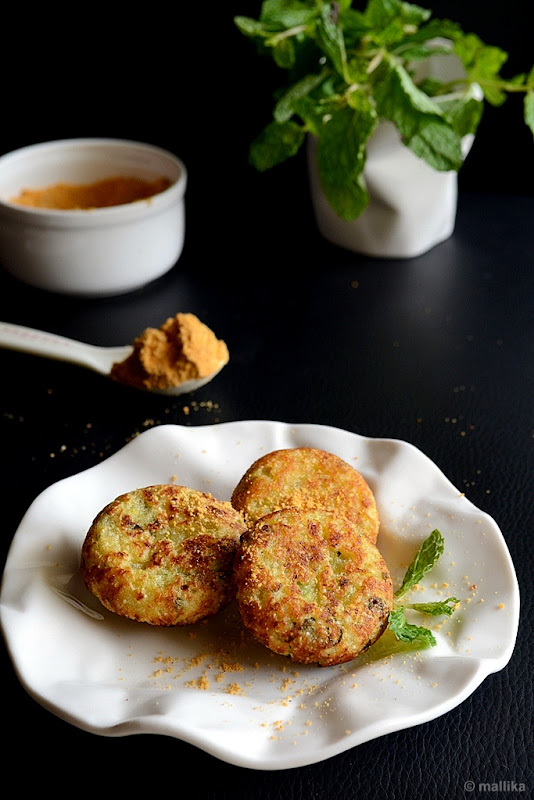
Last week I almost felt like the awesomeness of December winter was in the air. That’s when the bizarre North East cyclonic storms gave us an iconic threat with gusts of wind blowing hard and our toes went curling numb. It had been long time since Bangalore saw such rains, winds and chillness, a much desired respite from battling water problems in our city. Rain Gods heard our prayers, loud and clear. Misty Bangalore sky cried all day long and so through the night, bringing along with it biting cold, good drizzle and much shower we needed earnestly. We rushed home from work drenched in rain to stay indoors, sipped on piping hot adrakwali chai, snacked on spicy corn nuggets, enjoyed the melody of raindrops dripping onto our balcony shades, relished simple warm dinner and enveloped ourselves in the coziness of duvets pouncing on us, doing all that pleases one’s senses to stay cosy on a lovely rainy day like this one.


The splendid weather reminded me how much I love rains and winters. Though these rains really irk the hell out of me and have never done much good to my health or my sinuses, inhaling the aroma of the wet soil and indulging in some sizzling, spicy food can ignite happy mood and evoke nice feelings. It’s a perfect time you sit on the porch observing dark gloomy skies, while relishing some fresh hot pakodas, or sip hot, spicy masala chai and enjoy the showers outside in disposition to elevate the blissful moments.

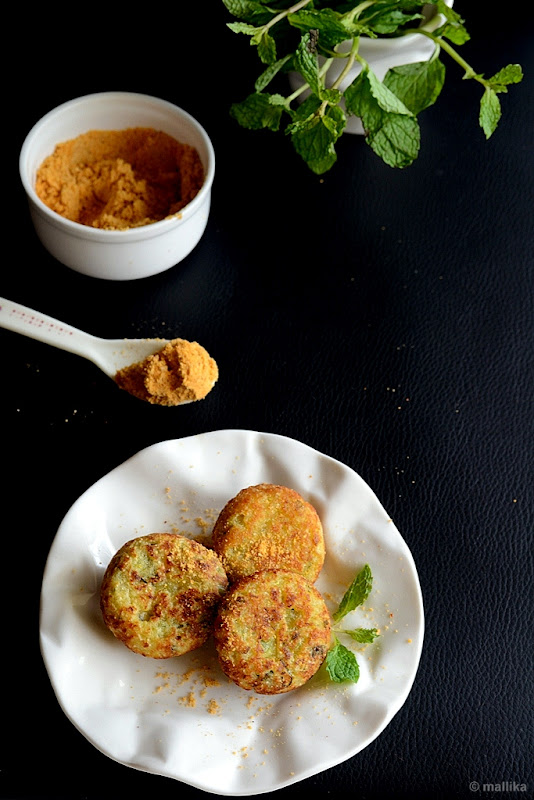
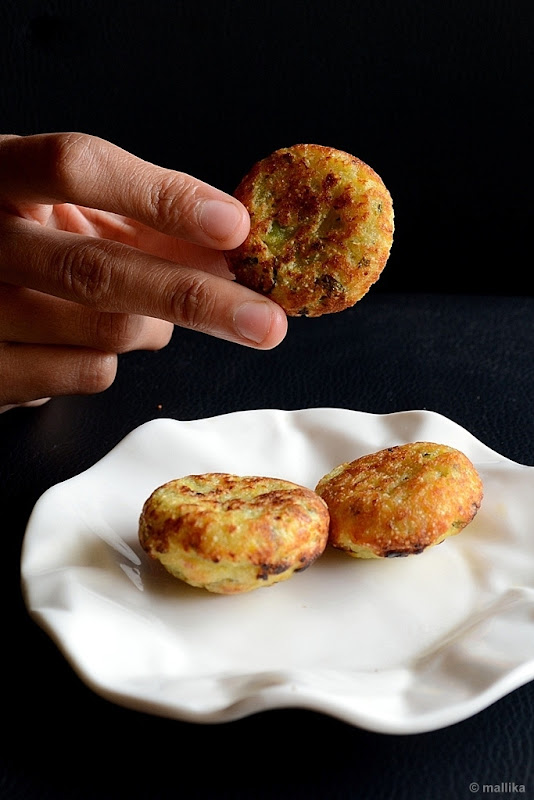
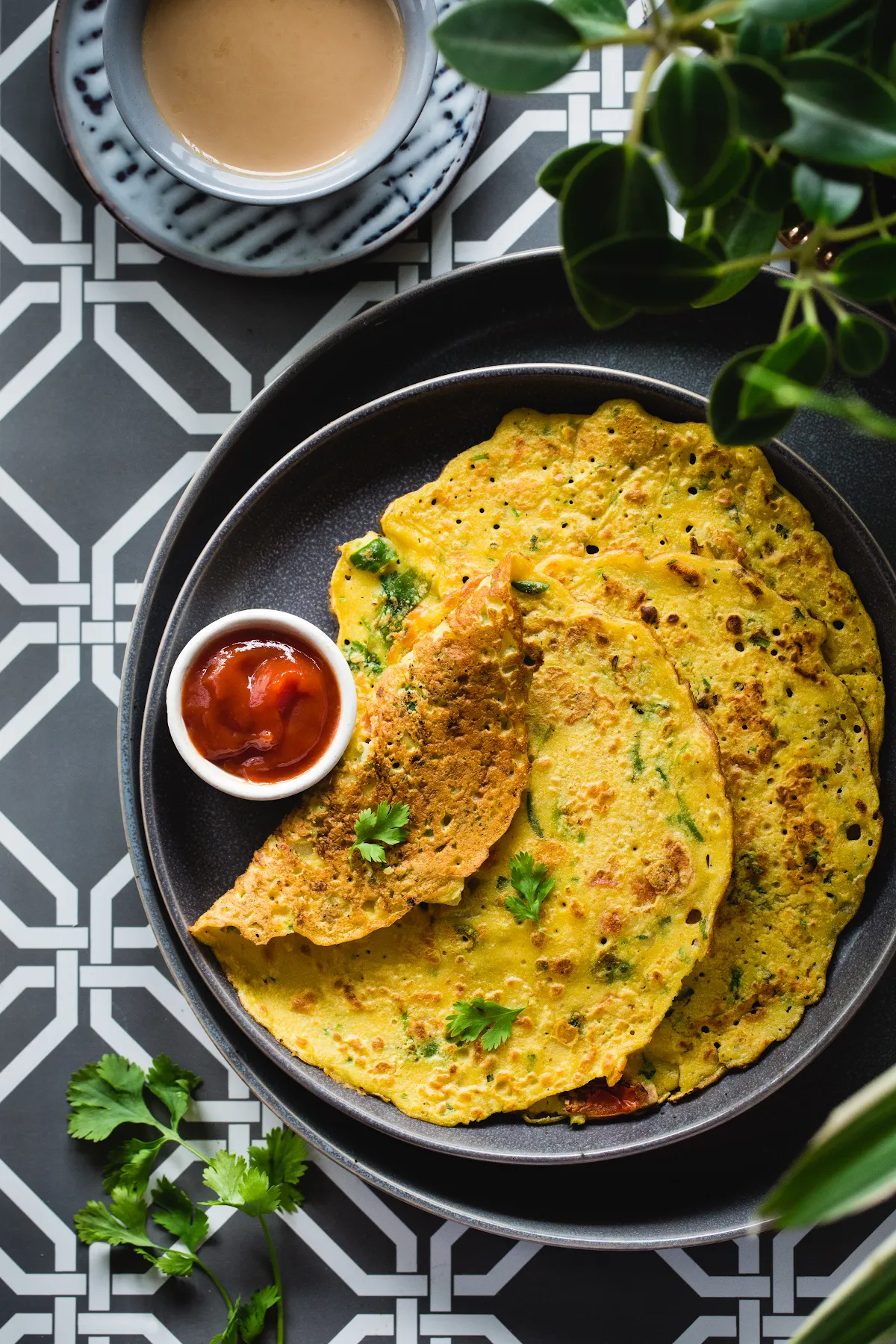
But then to break the traditional monotony of snacking on pakodas and bajjis, to keep it healthy in lure of my health and to deem it ideal for my little toddler too, I whipped up these quick guLiappams, flavoured them with grated sweet corn, freshly chopped mint and seasoned them with green chillies. GuLiappams are traditionally South Indian breakfast dish made using fermented lentil batter, often spiced mildly, authentically made in cast iron appam mould (a slotted pan where the batter is filled) and cooked on a gas top. The ones I made are quick, instant and spicy too, making them ideal for breakfast. I paired them with some spicy peanut chutney powder I made in the day and they made up for an excellent evening snack we craved for the rainy day.


Corn and Mint Appams

INGREDIENTS

1/2 cup semolina (sooji rava)
1/2 cup rice flour
1 sweet corn, grated
Couple of mint leaves, chopped
1/2 cup regular yogurt or more (not the Greek/thick yogurt kinds)
1-2 green chillies, chopped to fine pieces
1 tsp. baking soda
Salt to taste

DIRECTIONS

Grate the sweet corn and mix in semolina and rice flour to it. Add in regular yogurt little by little till it comes to thick batter consistency. Sweet corn as some water content in it, so judge the amount of yogurt required to make a batter as thick as cake batter or dropping consistency. Add the chopped mint leaves and green chillies and adjust salt to taste. Whisk well. Finally add in the baking soda, give the entire batter a quick, good whisk.

Oil the appam pan well and bring it to heat. Using a spoon, scoop out the batter and drop into each appam mould. Fill all the moulds with the batter and allow to cook on medium low heat. Carefully flip the appams upside down and allow them to crisp well on both the sides. Serve hot with some fresh coconut chutney or chutney powder like I did.


Pick up one, take a bite, its savoury, spicy and bold. The Peanut chutney powder I made earlier in the day added further to the spice, making it delightfully right for that evening. I shall share the recipe for Peanut chutney powder in my forthcoming posts. Till then, make merry, enjoy life and celebrate Diwali in full fun and masti!
How to make Kashaya, Kashaya recipe
Yesterday marked the beginning of Navratri, a festival celebrated over nine nights and ten days, each day signifying the form of Devi or Shakti, followed by Vijayadashami or "Dussehra" celebrated on the 10th day. For many it may mean fasting, for others like me, it calls for feasting. Almost every year I look forward to this festival, for the delicacies my mom makes in bounty at home. Devi happens to be our moola mane devaru (ancestral home Goddess), so our ancestral Goddess is also offered with Pooja, flowers and variety of delicacies over all 10 days. Guests flood home, glass bangles offered to young girls and traditional food in varieties is home cooked by ladies and offered to the Goddess during the Pooja and then served on leaf to all the guests for lunch.


Despite settling in a metro city like Mumbai, the rituals were followed religiously at my paternal ancestral home, and they still continue to do so. While my mother's side were put up in a more rustic village home, where the village temple offered live tableau, cultural activities, traditional Poojas during Navratri time. During the time when the village went out of power, the light from mashaals and aarati brightened up the streets and the bhajans sung by devotees rang music to our ears. It was a common sight to watch tattiraayas (humans dressed in 7ft. puppets) and huLivesha (men dressed in tiger costumes) dance to the rhythms of dhols that brought life to the otherwise silent streets. When the lights from the aarati lit up the far end of the streets and faint hearing of dhols and bhajans pecked our ears we would run out on streets to be a part of that ceremony and dance along till it reached our home. By then the elders and ladies wait outside their house, holding a thali, often decorated with flowers, coconut, kumkum and diya for the Pooja. The poojari would patiently collect each thali, offer to the Goddess, break the coconuts and return them back to the ladies. Everyone on street flocked around the returned thali to take their quota of blessings. We never felt the need for any other form of entertainment as the vibrant culture and the simple pomp of village life kept us occupied.

Both the sides of my family were different in many ways. Never the less, the joy of celebrating the festival was the same in both my maternal and paternal ancestral homes and I surely miss them now.


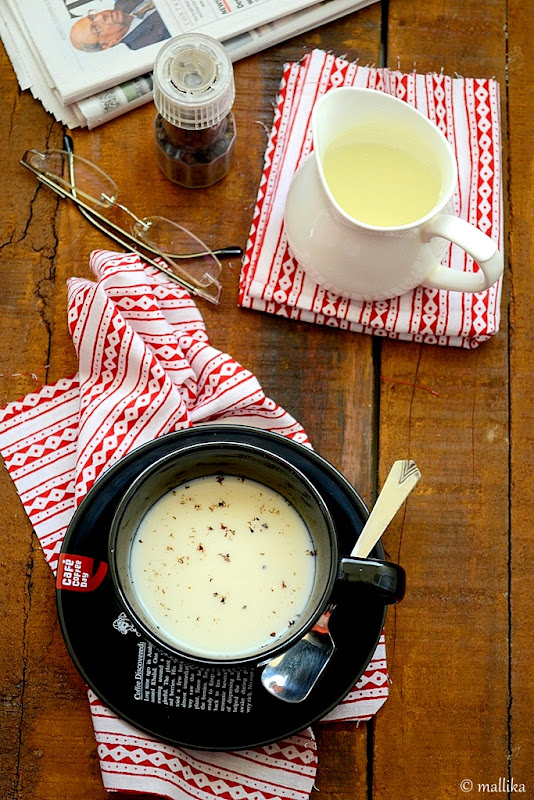
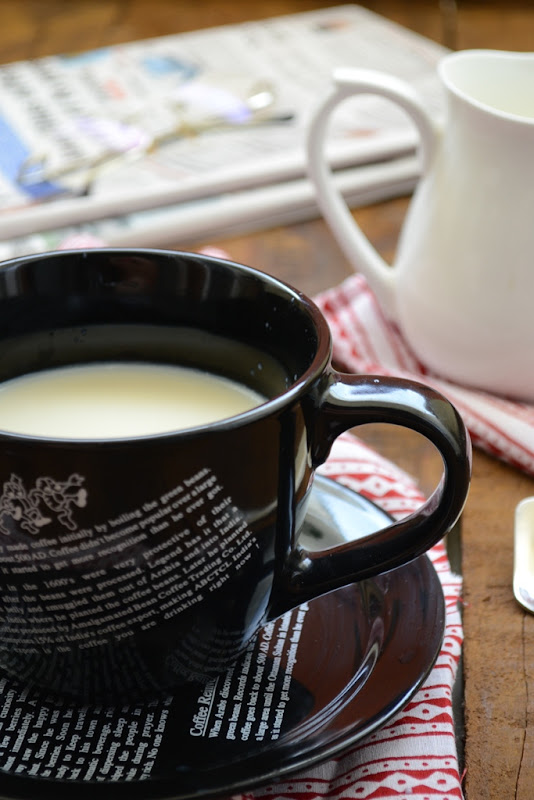
One thing that almost seemed similar on both the sides of my family was this Kashaya, a herbal drink usually served instead of tea or coffee. Kashaya is a very popular drink in the South and considered a coolant in summer heat. I remember clearly the only time we had Kashaya was when we visited our relatives in villages or grandparent's home. Because it was healthy, soothing and loved by all. It had characteristic sweet and spicy flavors from jaggery and pepper. At times when we had bouts of cold or cough, my ammamma would spice it up with loads of ginger that could soothe the scratching throat. Not that kids liked it much, but yet we gulped it down with less choice as elders relished it. When we visited our relatives or they flocked home, Kashaya made it's warm presence felt. In between talks and summer heat, minus the fans or electricity, Kashaya gave a warm soothing relief which most elders enjoyed.

I do hope you will try the recipe I share and enjoy at home. Bring back your old memories and live them.


Kashaaya: Indian Herbal Brew

INGREDIENTS

For the powder:

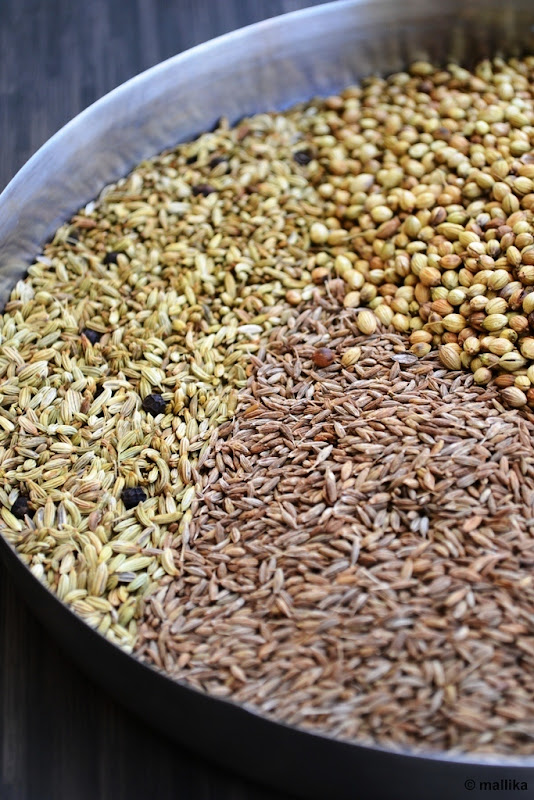
2 cups coriander seeds
1 cup cumin seeds
1/2 cup fennel seeds
2 tbsp. black pepper

For kashaya:

1/2 cup water
1/2 cup milk
1 tbsp. jaggery
1 tsp. fresh grated ginger or ginger powder (optional)
1 tsp kashaya powder

DIRECTIONS

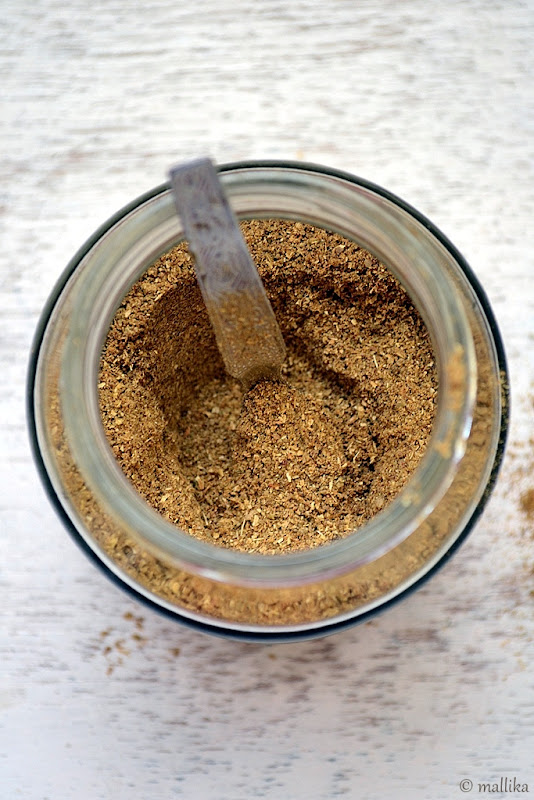
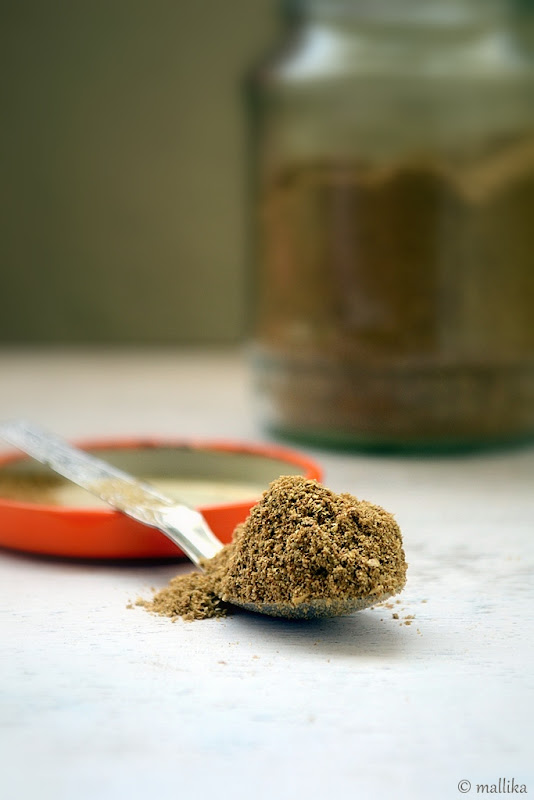
Dry roast all the ingredients in low flame till mildly fragrant. Allow it to cool completely. Grind it into a fine powder. Store in an airtight container.

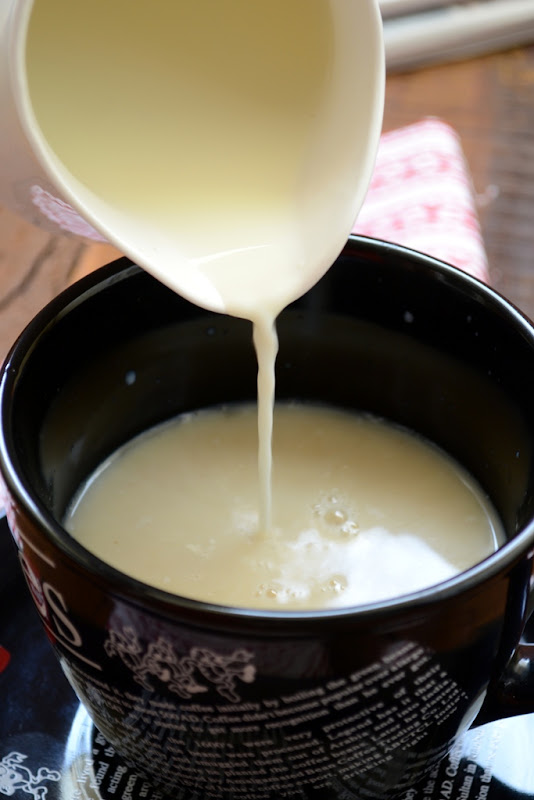
To prepare Kashaya, heat water along with the Kashaya powder, jaggery and ginger (optional) till it comes to a rolling boil. Allow it to boil for 2 minutes. Turn off the flame and add hot milk. Stir well. Strain through a muslin cloth and serve hot.


If you thought why there were no updates here or if I went missing, let me tell you I was in my hometown recently. A nice long weekend spilling over Monday ensured another trip down to Mangalore. Long weekend spent in Mangalore during the Independence day followed by Eid gave us a well deserved break and good respite from daily chores of work and home. Adding to it, the fantastic coastal weather in Monsoons added a feather in the cap. If you've been down South visiting the coastal parts of Kerala and Karnataka during the monsoon you'll be smitten by the beauty of nature and vast greenery the rains bring in.

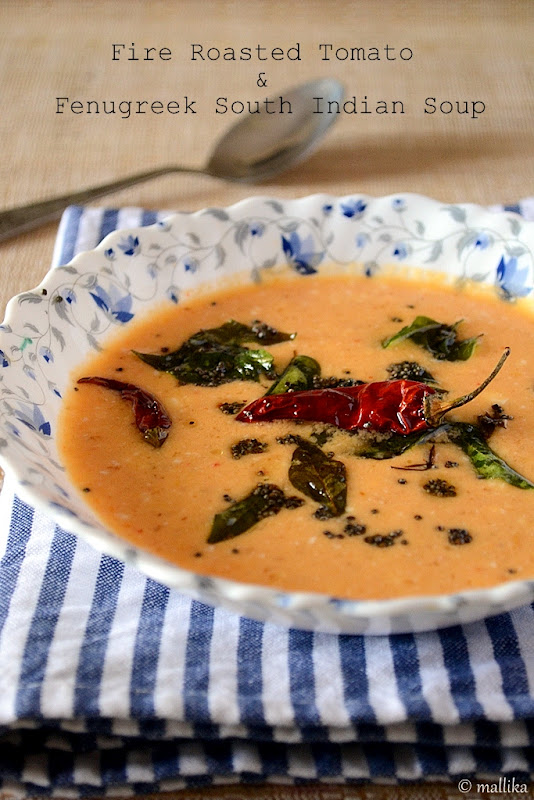
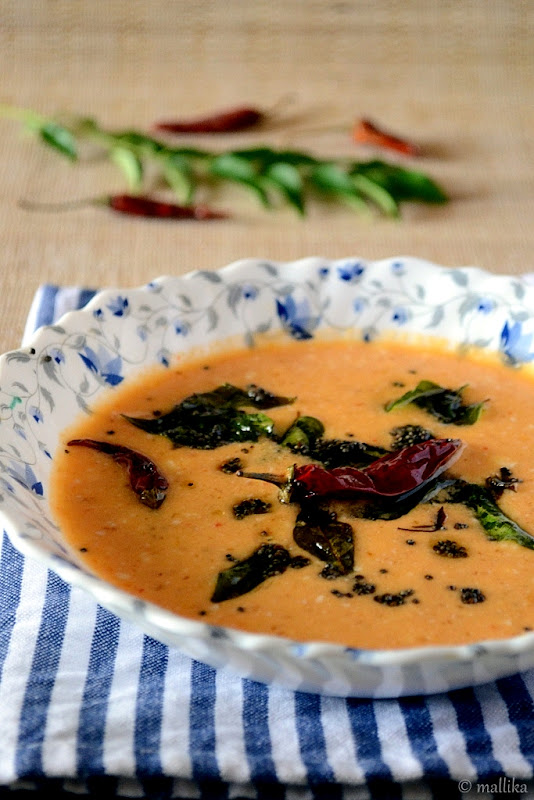
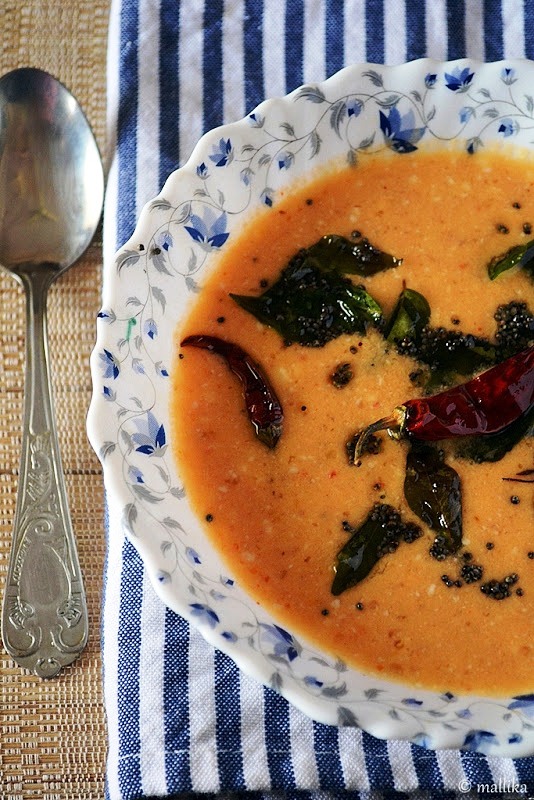
While in Mangalore, we often binge on dishes made with coconuts. Coconuts form an integral part of coastal cuisine since they grow in plenty in this region. With no doubts you can be assured that the juiciest and sweetest coconuts can be fetched from these coastal regions of our country. I have often shared my love and immense fondness for Tamblis in the past on my blog. I don't think I need to even stress saying that this particular soup / Tambli does list as one of my favorites. Pair it with a generous helping of rice, a papad or pickle to go with and you have the most humble meal for a warm afternoon.


Tambli: Fire Roasted Tomato and Fenugreek South Indian Soup

INGREDIENTS

1 large tomato
1 tsp fenugreek seeds
1 tsp cumin seeds
1 tsp oil
1 tbsp fresh/frozen coconut
1 cup yogurt
3 red chillies
Salt to taste

For Tempering:

1 tsp. Oil
1 tsp. mustard seeds
1-2 whole red chillies
1 sprig of curry leaves

DIRECTIONS

Lightly oil the tomato and fire roast it on an open flame till the skin turns brown. Allow it to cool down. The skin will wilt as it cools, hence you should be able to peel them easily. Lightly roast the fenugreek seeds, cumin seeds and red chillies till you get the roasted aroma from them. Don't let them brown a lot as they will turn bitter and lose the taste. It takes about a min or two. Cool and grind them along with the roasted tomatoes and coconut. Lightly beat the yogurt and this paste to it. Tamblis are usually thin and a little runny in consistency. So adjust by adding extra water if required to bring it to thinner consistency. Add salt to taste.

Temper the Tambli by seasoning it well. Heat a tsp of oil in a kadai. Add mustard seeds. As they begin to pop, add in the red chillies and curry leaves. Let the curry leaves fry for half a minute or less. Pour this seasoning over the Tambli. Serve it cold over steaming hot rice.


Almost at the end of January and I am surprised how fast the month of January passed by. Wasn't it hardly a few days ago that we spent a gala holiday time partying for the New year? And boy, we've already crossed a month! Personally for me, this month has been packed with lots of surprises and challenges. On professional front, I am excited as my career graph moves a step ahead and am looking forward to the new learning and challenges it poses. Fortunately, the strong support from my family ties keep me enthusiastic and passionate about my work.

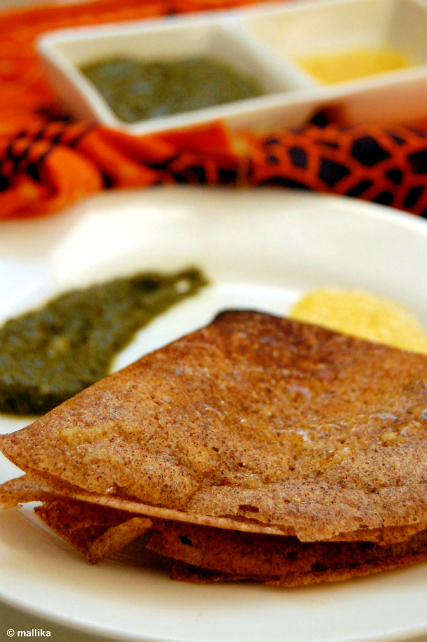
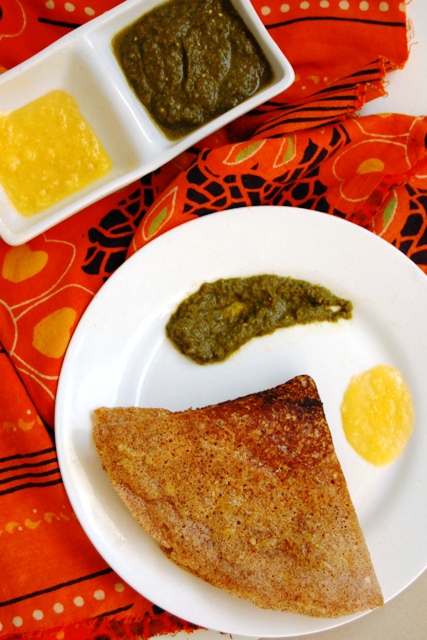
A lending hand does come from my parents, especially my mom. And with their relentless support I have been able to manage home smoothly. At times, when I am back home exhausted from a long day at work, mom resues me with her ready to cook batters, instant powders and spice mixes. Even her freshly chopped vegetables or picked and cleaned greens give me a helping hand that make our life much simpler. Preparing the batter or chopping vegetables may look less of an effort, but honestly it's one of those kitchen jobs I always detest to do. Like this simple Ragi dosa that doesn't require much of an effort, but a good amount of time for soaking and grinding. Looks extremely simple and hardly an effort, yet not so! While I generally get Ragi dosa batter from my mom, this weekend I pursued to make them myself so that my litte one could relish them too. This also happens to be my husband's favorites and he prefers this over the plain urad dosa.


Ragi Dosa

INGREDIENTS

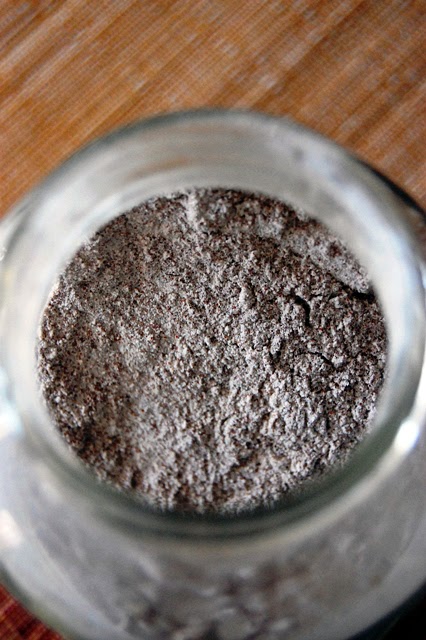
1 and 1/2 cup ragi flour
1 cup urad dal
1 cup raw rice
1-2 tsp methi seeds
Salt to taste

DIRECTIONS

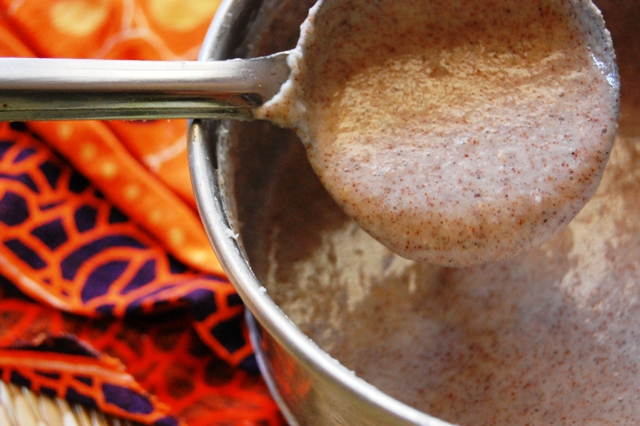
Wash and soak urad dal, rice and methi seeds in ample amount of water for atleast 3-4 hours. Discard the soaked water. Grind them together to a smooth paste using less than half a cup of water. Finally add in the ragi flour and stir the batter very well. The batter should be thick, not runny. Transfer this batter to a large vessel which can accommodate double the volume. Place in a warm dry place, like that of a pre-heated oven. Allow the batter to ferment overnight or atleast 8 hours. By then the batter will rise due to fermentation. Beat the batter well before preparing the dosa.

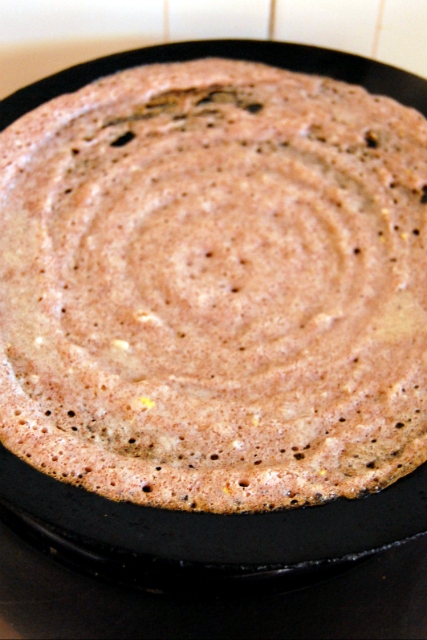
Oil an iron griddle and heat it. If using a non stick pan, oiling is not required, but I suggest you use an iron griddle for best thin and crisp dosas. Take a laddle full of batter and spread them on the griddle gently using the back of the laddle. If you find the batter too thick and not spreadable, then add little extra water, beat well and make dosas. Serve hot with fresh chutney.


Ragi or finger millet is extremely healthy, gluten-free and rich in iron and vitamins. You can make thin or thick dosas depending on your taste. We prefer thin and crisp dosas, sometimes paper-thin too and they go very well with ghee and chutney. On occasions when I am short of time to make chutneys, I serve these with a dollop of ghee-honey mix. As kids we've loved that combination and I can eat almost anything that way... breads, rotis, dosas, idlis... I guess almost anything. It's one of those traditional tricks my grandma used to lure kids to enjoy our breakfast. Simply mix equal quantites of ghee and honey and serve a dollop of this with the dosa. They taste yum!


We celebrated Makar Sankranthi on the 15th Jan at home in a small way. Nothing much really, except when it comes to food I wouldn't want to miss any kind of celebration. Since it's my daughter's first Sankranthi, keeping in mind the festive mood, I made two versions of Pongal, the sweet and the spicy version. Gud Pongal or Sihi Pongal, (sihi meaning sweet) is made of jaggery and is one of the easy and healthiest desserts that I have ever learnt to make. Though I don't often make this, Sankranthi gives me the best occasion to make and share this simple and easy recipe.


It also happens to be one of my husband's favorites... he often tells me that during Pongal festival, their neighbors would often send them both sweet and spicy pongal and as kids they would go raring over it and relish it unendingly. I rarely find him asking me to make something specific, but when these reminiscences of childhood bring back fond memories and he insisted I make some of this for him I couldn't refuse. This happens to be a common dish in most Tamilian homes during this festival.


Sihi Pongal

INGREDIENTS

3/4th cup moong dal
1 cup rice
1 cup milk
2 1/2 cups jaggery
1 tsp freshly pound cardamom powder
Handful of raisins and cashewnuts
3 tbsp of clarified butter / ghee
1/2 cup freshly grated coconut


DIRECTIONS

Wash, clean and pressure cook the dal and rice with 4 cups of water for 3-5 whistles. Alternatively cook them in a vessel till they are well done and mushy. Once cooked, add a cup of milk and jaggery and bring it to a gentle boil. Gently mash them using a spatula.

In a separate pan, heat 3 tbsp of ghee. Fry the cashewnuts and raisins and add to the pongal. Add the powdered cardamoms finally in the end. Mix well and serve hot.


Be sure to serve this with a massive dollop of ghee. Every morsel of this sweet pongal is heavenly and that dollop of ghee only elevates this experience. Rice and dal have starch which make this sticky on tongue if no fat is added. Adding ghee will balance the starch and enhance the flavors. Our fussy daughter is too choosy about food and variety. While she shuns the regular dal-chaawal combo, she happily enjoyed this Pongal and that gave me immense satisfaction.


I have been meaning to do this post since long. Somehow I have been procrastinating and what was meant to be posted two months ago is coming up now. This is meant to be a baby food, but in due course I have taken keen liking to this and have made it my meal too.

For almost 5 months, we did not introduce any external food to my daughter and she was fed on milk alone. However, since her 5th month, we introduced light foods like juice and mashed bananas. I had to get back to work, which meant feeding her in my absence was a challenge. We put her on external semi solids in her 6th month, with our baby growing from an infant to a toddler, only milk would not suffice for her growth.

My mom often teases me that I had strong affinity toward food since my birth. While most babies easily fuss about food and expect variety in terms of colors and flavors, I would happily take what ever was fed to me.

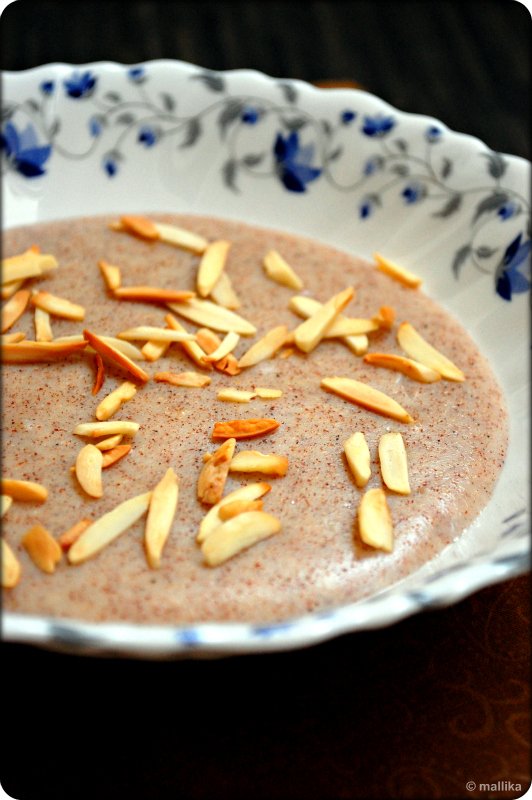
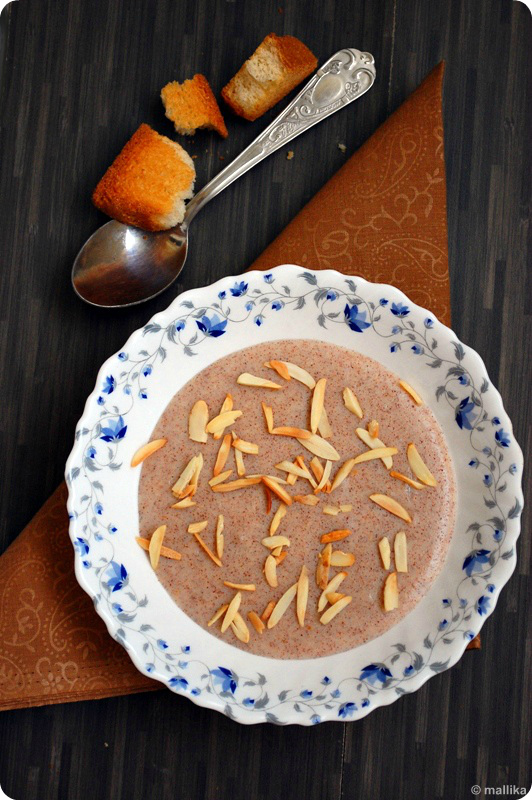
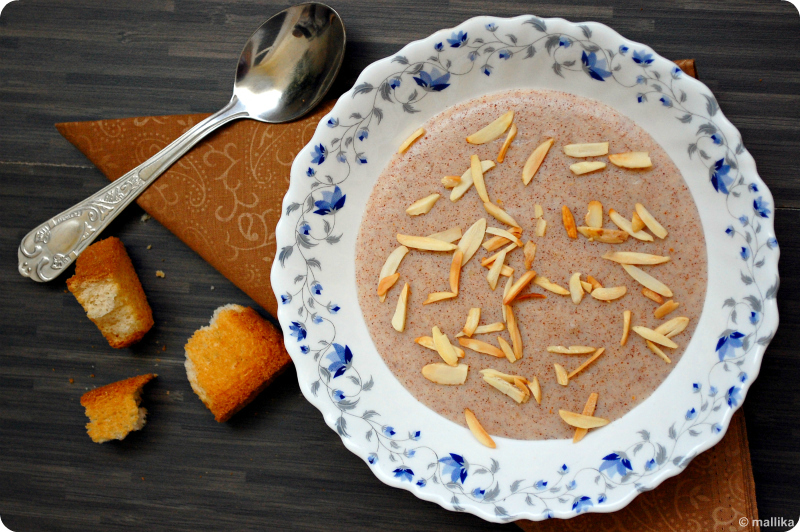
One of the most common baby foods made with utmost care and regard is this Ragi Manni which simply translates to Finger Millet Pudding. Finger Millet, called as Ragi in Kannada is very nutritious as it's gluten-free and high in proteins, minerals, calcium and fibre. Ragi Manni is one of the best food you can begin to feed your baby with. It has a semi solid consistency and a texture similar to pudding.


It took me deal of an effort to make this brown slush look presentable. I mean how good can a porridge look otherwise? Left undisturbed for a few minutes, you know there's an ugly layer that forms on top making it totally unpresentable.

Ragi Manni

INGREDIENTS

Ragi - 1/2 kg
Handful of Almonds

DIRECTIONS

Wash and soak ragi millet for 8-10 hours or overnight. Drain the water out completely. Tie the soaked ragi in a thin cotton cloth like that of muslin and hang them in a cool, dry place to germinate. Within next day or two you should see the millet sprout. Once sprouted, spread them on a clean plate and allow to dry in shade.

Soak almonds for a couple of hours. Drain the water and skin them. Allow the almonds to dry along with the millet.

Heat up an iron pan to medium low flame and gently roast the sprouted millet and almonds till it pops. Since this is a baby food, be careful not to let them burn. It may take some time, but be patient. Once roasted, allow them to cool down completely. Using a heavy duty grinder, grind it into fine powder. Store this powder in a clean, dry, airtight container.


Prepare the baby food:

There are two ways we make this. Sweet and Salt version. My daughter has less of sweet tooth and enjoys the salt version better.

Dissolve 1 teaspoon of ragi powder in milk ensuring there are no lumps. Heat this on a low flame till ragi is cooked and it thickens. Heat through well stirring constantly. Once completely cooked, add in sugar or jaggery to taste. I use sugar since the jaggery often has dust and many impurities. Allow to cool and serve to your baby.

For salty version, dissolve 1 teaspoon of ragi powder in 1/2 cup of water. Bring this to a boil, stirring on a low flame. Once thickened and completely cooked add salt to taste. Allow to come to room temperature. Add in yogurt to this prepared ragi, whisk well and serve to your baby.

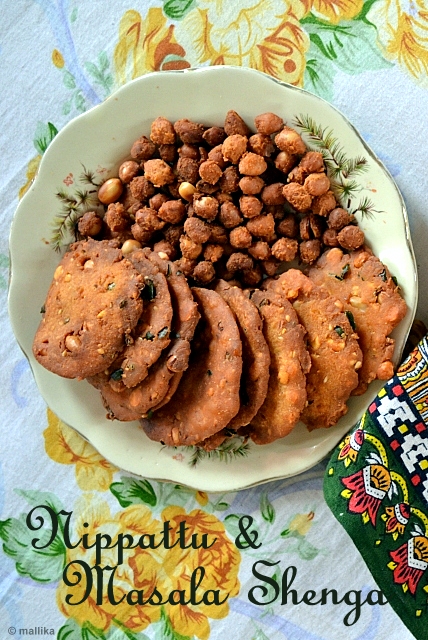
Nippattu & Masala Shenga

Easy Nippattu Recipe | Easy Masala Shenga Recipe
I am very fond of Ganesha, the God of wisdom and prosperity and invoke him everyday. I believe in God, the strength prayers bring and the rituals performed for well being of our family and society. They bestow peace to my mind, an orientation in life which is of utmost importance for a healthy life.

This year Ganesha brought bounty happiness to our home and family. This Chaturthi had to be special for all of us. I fondly love to call my little one as Bal Ganesh and of course with due respect to my Lord, she has been named after him. She's prosperity for us, just as her name suggests. For the festival, our entire family came together for prayers and offerings, followed by a good spread of lunch and we felt pretty well soaked in the festive disposition.

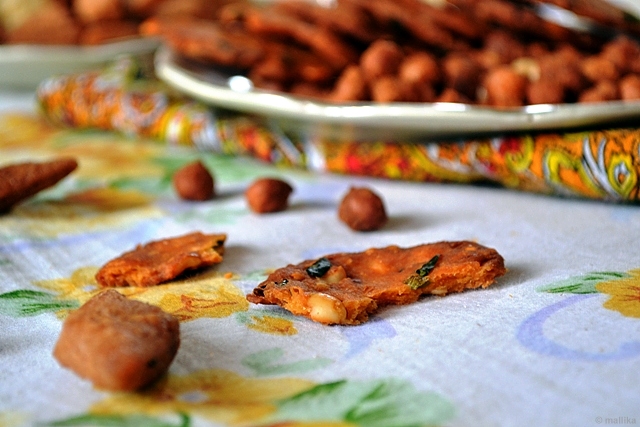
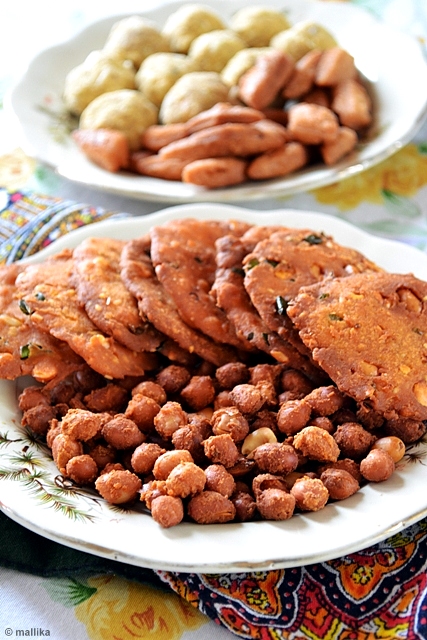
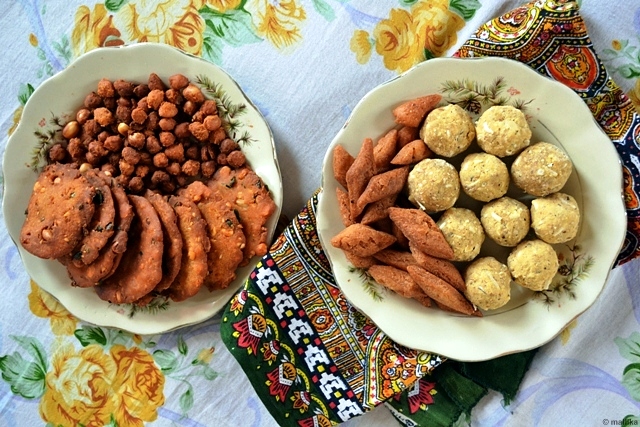
A day before the festival, my mom and I came together to make both sweets and savories for the festival. While Modaka, Shankarpali and Tambittu were sweets made to offer our Ganesha, for savories we had Nippattus and Masala Shenga. Masala Shenga/Peanuts were not exactly for the offerings, but surely to serve the guests who came over to greet us.

Nippattu


Nippattu

INGREDIENTS

2 cups rice flour
1 cup maida (all purpose flour)
1/2 cup besan (chickpea flour)
1 tsp hing (asafoetida powder)
2 green chillies
3 strings chopped curry leaves
2 tbsp coarsely ground peanuts
2 tbsp hurigadale (roasted bengal gram)
2 tbsp chilli powder
2 tsp white sesame seeds
Salt to taste
2 tbsp cooking oil
Water to knead
Oil for deep frying

Nippattu & Masala Shenga_1


DIRECTIONS

Mix in all the flours, i.e. the rice flour, maida and besan. Add the hing, green chillies, finely chopped curry leaves, coarsely ground peanuts, roasted bengal gram, chilli powder, sesame seeds and salt to taste. Drizzle about 2 tbsp of oil. Using water little by little, knead gently into a soft dough.

Pinch lemon sized balls from the dough and roll out on an oiled surface. You can either use a granite stone or use a butter paper to pat the nippattu. An inverted and oiled steel plate will also do.

Heat oil in a fry pan. Gently drop the rolled nippattu and fry them on a medium low flame till they turn golden brown. Remove them and drain on a kitchen paper. Store them in air tight containers and they are good to go for a month long, well if you can resist not eating them so long!

Nippattu & Masala Shenga_2


Masala Shenga (Spiced Peanuts)

INGREDIENTS

For the Spice mix

1 cup gram flour (besan)
1/2 cup rice flour
1/2 tsp turmeric
1 tsp red chilli powder
Salt to taste

Other Ingredients:

3 cups roasted peanuts
Water as needed to bind the spices and flour
Oil to fry

DIRECTIONS

Mix all the spice mix ingredients mentioned above together in a large bowl. Add water in small quantities to the spices and flour. The quantity should be sufficient to ensure the spices coat the peanuts uniformly.

Heat the oil in a kadhai or fry pan on medium heat. Oil your hands a little as it will help in dropping the peanuts into the oil. Drop the peanuts in batches ensuring they are separated while frying. Fry the peanuts till they cook evenly and turn golden brown in color. Drain the peanuts on a kitchen paper to absorb the extra oil. Spread them out and allow them to cool down to room temperature.

Nippattu & Masala Shenga_3


Store the Masala Peanuts in an air-tight container and these are good for a month long. Again, these go very well as tea-time snack. Pack it up for travel treats or picnic munch-ons.

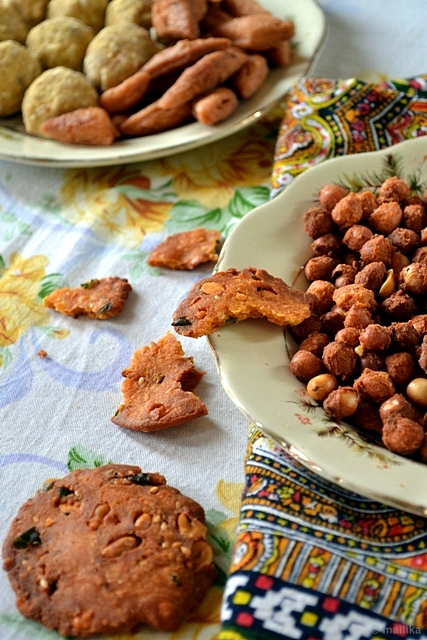
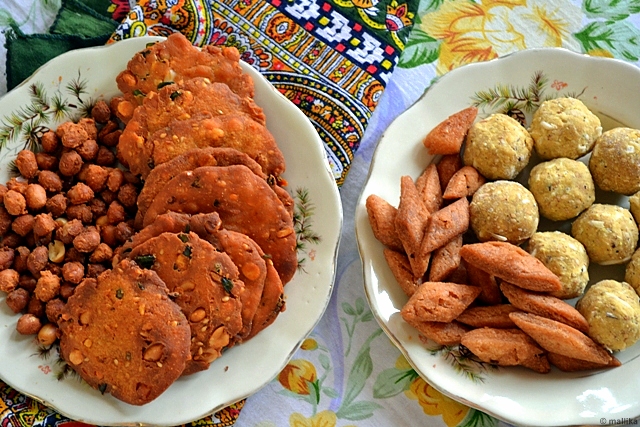
Both these spicy treats make great travel accompaniments and are excellent tea time snacks. Nipattu is another traditional dish from Karnataka cuisine and is commonly served as a snack in many Karnataka households. So the next time you have guests at home, greet them with these spicy Nippattus and Masala peanuts. Be promised, these spicy treats are sure to let their taste-buds lingering with it's spices.

Shankarpali and Tambittu

How to make Shankarpali | Tambittu Recipe
Wishing all my readers a very Happy Ganesh Chaturthi. Even before I have recovered from the heavy feasting we had on Krishna Janmasthami, we already have Ganesh Chaturthi here. More festivals to follow and I am looking forward to them eagerly. Festive season is here again and with good things happening in our life this year, I am all the more determined to celebrate our festivals with grandeur.

Ganesh Chaturthi is the festival I never miss to celebrate. The festival marks the birth of Lord Ganesha. Just like many, Ganesha happens to be my favorite God too. Our childhood did revolve around listening to mythological stories woven beautifully by my paternal grandma during our bed-time.

Larger than life-like clay models of Lord Ganesha have been making rounds in market, weeks before the festival. That's good enough an hint that the festival is just round the corner. Public celebrations of the festival, tableau and processions are hugely popular with streets laced with rice bulbs, music and heavily decorated pandals that host the God for 10 odd days.

Lord Ganesh is often associated with food and is known for his fondness for sweets like modaks, laddus, karjikai and savories like chakklis, kadabu and kodbale. Every Chaturthi, we have a ritual at home of waking up early for the bath, followed by puja. An array of dishes, both sweet and savory made at home by my mom a day before the festival are offered to Lord Ganesha on this day. The celebration goes on for 11 days, hence the sweets and savories are made in large quantities so that can last long. Like every year, Modaks will be made to offer the Lord this year too. Apart from this, we have Shankarpali, Nippattu, Huri Shenga, Tambittu and Panchakajjaya to offer our Ganesha this year. Fortunately, I have my mom close by, so it's been a combined effort. I shall share the recipes for Shankarpali and Tambittu today. Nippattu shall be on another post.

Shankarpali and Tambittu


Shankarpali

INGREDIENTS

3 cups all-purpose flour
1 cup sugar
1/2 cup milk
1/4 cup ghee
Pinch of salt
Oil or Ghee for deep-frying

DIRECTIONS

Mix the milk, sugar and ghee in a kadhai and heat to a boil. When it is warm enough to touch add the salt followed by flour and stir well. Add the flour till it comes to a kneading consistency, good enough to form a soft dough.

Using a rolling pin, roll out the dough flat to a centimeter thick. Using a pizza-cutter cut into diamond shapes. Deep fry them in hot oil/ghee till they turn golden brown. Fry on medium low heat. High heat will result in dark brown crust on the outsides and under cooked beneath. Remove and drain on a kitchen paper.

Shankarpali and Tambittu


The amount of sugar mentioned above is the right amount of sweetness we like. If you prefer it more sweeter, you may increase the amount of sugar as per your taste. The amount of flour mentioned above is an approximate number. While preparing the Shankarpalis, add in flour till it comes together to form a soft dough.

Spicy version of Shankarpali can also be made by replacing sugar with 2-3 teaspoons of chilli powder and omitting the cardamom powder. Shankarpali is a popular sweet all across the country. It's called Shakkarpare in the north while it's Shankarpali in the south. The names may differ, but the recipe is almost similar. It's pretty popular in Maharashtra and Karnataka and is often made on festivals in large quantities to offer the Lord and distribute among family and friends.

Tambittu

INGREDIENTS

1 cup rice flour
1/4 cup hurigadale hittu (roasted bengal gram powder)
1/4 cup coarsely ground roasted peanuts
1 1/2 cup grated dry coconut
1 cup grated jaggery
1/4 cup ghee (clarified butter)
2 tsp sesame seeds

Shankarpali and Tambittu


DIRECTIONS

Dry roast rice in a hot pan till it turns golden. Allow it cool. Grind it with roasted chickpeas to a fine powder.

Dry roast the grated dry coconut and sesame seeds till brown and set aside.

Take ghee in a fry pan/kadai and heat it till it's hot (not smoking). Dissolve the grated jaggery in hot ghee and stir well till the jaggery melts completely and the liquid just comes to a boil.

Mix together the coarsely powdered peanuts, sesame seeds and grated coconut. Add this to the boiling jaggery ghee mixture. Add the rice and roasted chickpea powder and keep stirring till the mixture becomes like a dough to make balls. Mix well to prevent the formation of lumps. Switch off the stove. Close and keep till it cools down. Grease your hands and roll balls to make tambittu.

Shankarpali and Tambittu


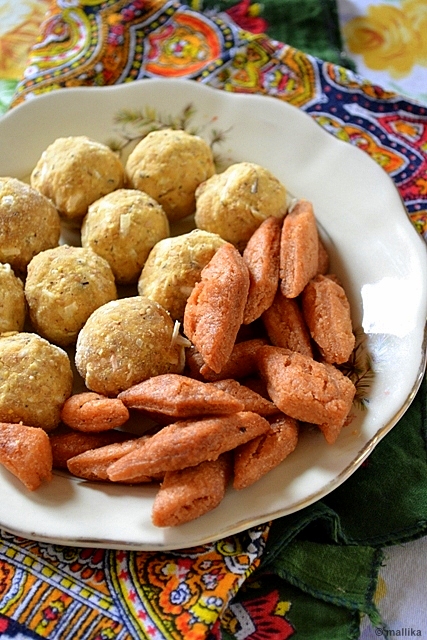
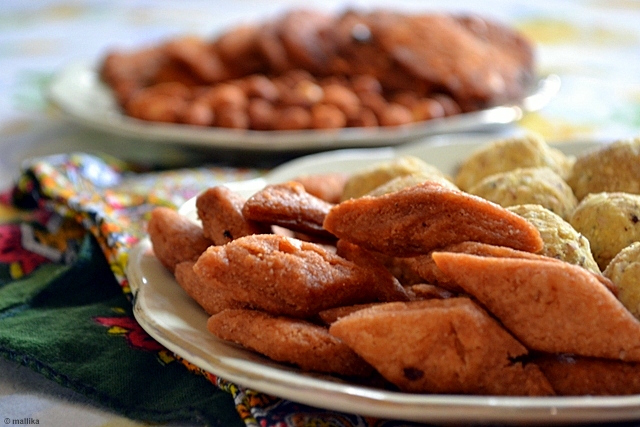
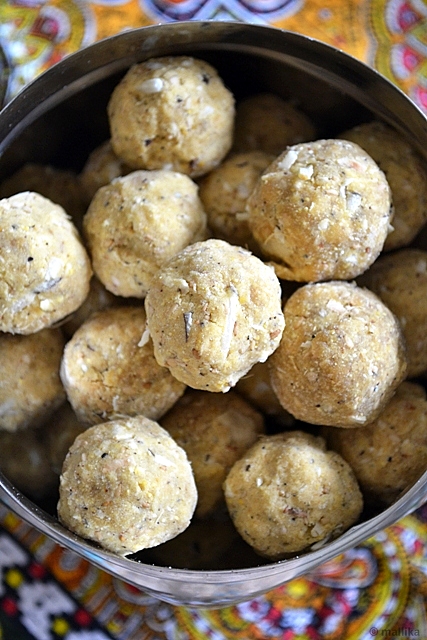
A little tedious it may sound, but isn't that effort required to impress your God? Tambittu is a traditional sweet dish commonly made in Karnataka household, often made to offer God during festivals. Again, these laddus stay well for a couple of weeks, so store them well in air-tight containers and they are good to go for your evening chai. You can see above we made a big batch to go for a few days.

As everyone celebrates Ganesh Chaturthi today with religious fervor, here's me wishing our Ganapati a very Happy Birthday. May Lord Ganesha shower you with success in all your endeavours. Hope this Ganesh Chaturthi brings home all the happiness, prosperity & fortune.

Jai Shri Siddhi Vinayaka

Shankarpali and Tambittu


"May the festival of lights enlighten your home and heart with peace and serenity. Wishing you all loads of joy and happiness on Diwali." Hope you guys are having a blast with your family and friends this Diwali season. Wishing you all a Happy Diwali and a fabulous year ahead. Do hope you indulged in those special and traditional sweets and savories!

Our Diwali was safe and environmental friendly with no cracker burst. Of course the traditional affair of waking up early for the ritual oil bath, followed by drawing rangoli in front of our house, prayers, distributing sweets to family and friends, lighting of diyas in the evening, followed by puja and prayers made our day totally festive. Our lunch was heavy so were snacks and the dinner. After all that festivity, we had to settle for a simple breakfast the next day to escape from the heavy treats we enjoyed the previous day. This rice semiya upma is my perfect solution to an easy, simple breakfast. It's quick and requires bare minimum ingredients. Also being wholesome and healthy, yet it is completely satisfying. I make semiya upma often in different ways, but this method is easy and one of our favorites, especially with my DH.


Simple Rice Semiya Upma

INGREDIENTS

1 cup rice semiya
1 tbsp oil
1 tsp mustard seeds
1 tsp urad dal
1 tsp channa dal
Few curry leaves
1-2 green chillies, slit vertically
Few roasted peanuts
Salt to taste
1 tsp lemon juice


DIRECTIONS

Cook the rice semiya as per the instructions on the pack. I like to use Dragon Rice Semiya since it retains good texture even after steaming. Traditionally making rice vermicelli was a tedious task, which involved making it from scratch. The cooked dough would be run through the semiya press device and then strands of steamed rice semiya are tempered. Thankfully, life is now easy with ready to cook packets. Cook the semiya in water till just done. Drain the water completely and cover it so that it cooks further in its own steam.

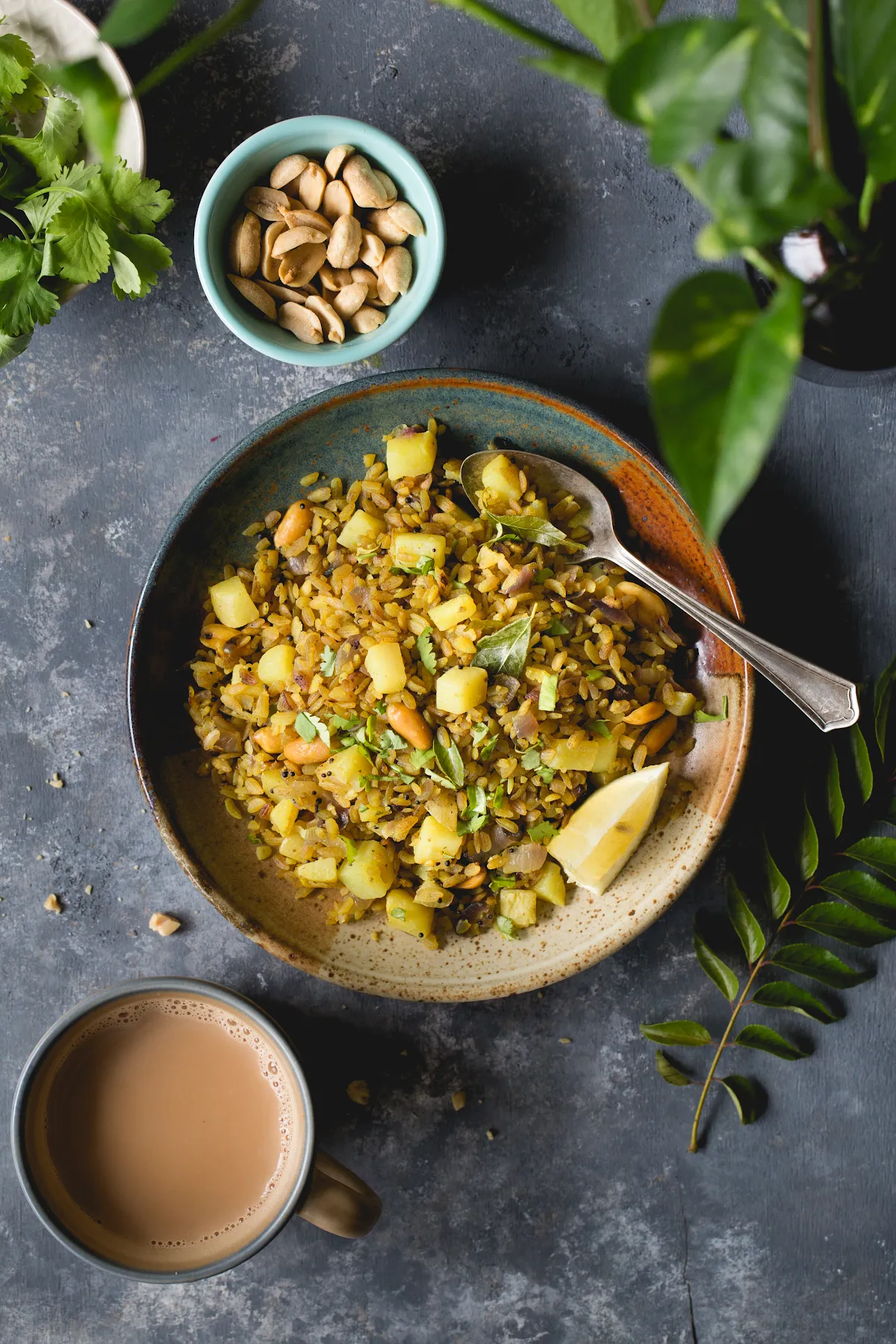
Heat a tbsp of oil. Add mustard seeds, urad dal and channa dal. Fry it on medium high till the dals turn golden brown. Next add in the curry leaves, the roasted peanuts and green chillies and stir fry. Add the cooked rice semiya and cook for another 5 minutes till all the spices are mixed well. Adjust the salt to taste. Turn off the flame and add the lemon juice in the end. Mix well and serve hot. Simple Rice Semiya Upma is ready to serve.

This dish is not just good for breakfast, but makes for an evening snack too. This upma is spiced with simple flavors. Lemon adds to the tanginess against the spice from green chillies.

Posting a sweet dish would have been apt for Diwali, but with most blogs hosting sweets and desserts for this season, I decided to post something different. Hop on to see and make terrific sweet preparations this festive season. You make like to try these Indian sweets to brighten up your Diwali. Hope you have a bright and prosperous Diwali.


I have almost recovered from my flu and weakness and I am in much better health today. I was a weak child, in sense of catching cold and flu virus since childhood. Running nose was so common with me, almost all the time. That followed with fever, blocked nose and continuous sneezes that would make me look no better than a circus clown with a naturally inflamed red nose! It was a nightmare that always made me feel guilty.

If someone sneezed meters away, I would have probably caught the virus within minutes. No joke! At a point, even my high school teachers, college lectures and friends had a tough tough time with me. One of my college lectures found it so disturbing in his classes, that my mother was summoned for complaints regarding my condition and proper introspection. Poor mom of mine had been dealing with all this for long. Blood tests said nothing, just high eosinophil count, a condition of allergy. And that allergy meant negativity towards almost everything. Changing weather, summers or winters, humidity, dust, rains, loud noise, headlights, sleep, food, etc, etc, etc. Allopathic medicines only gave temporary relief. In my opinion, no relief at all, just a suppression. Amphetamines, antihistamines yielded no solution. How much could one deal with it?

For times when I would often fall sick with common cold or fever, my mom would patiently extend herself to make treatments at home. She opinionated that conditions with common cold or fever could be dealt at home with care and did not require extensive allopathic medications. She always jokes "Allopathy medicines would take just a week to cure, while home remedy would take 7 long days to cure." We hardly went to doctors for such conditions. She would prepare different types of Kashayas, Fire roasted ginger roots, Jeshtmaddu roots and several other home remedies for cure. She took immense care on food too. Food on those days were light, focussed on easily digestible ones. Rasam, Saar, Tambli were very common with over cooked mushy rice, again to aid for ease in digestion.

Even today, she continues to follow the same principles and it works wonders. You bet, I can't be as efficient as her when it comes to remedies, but I make a sincere attempt to follow her during my bouts of common colds, flu and fever. Even as I am recovering now, I have been careful with food I am cooking. This TiLi Saar is one of my favorites and it makes presence on my dining table very often. Not just when I am sick and low, but for those days when simple home food can be the most comforting.


TiLi Saar

INGREDIENTS

1/2 cup pigeon lentil/toor dal, well cooked and mushy
2 cups water
1 tbsp tamarind pulp
1 tbsp sambar/rasam powder
1/2 tsp compounded asafeotida
1 tsp turmeric powder
Salt to taste

Tempering:

1 tsp clarified butter/pure ghee (replace it for coconut oil for a vegan version)
1 tsp mustard seeds
A sprig of curry leaves
2 red chillies

Garnish:

Chopped coriander leaves

DIRECTIONS

Pressure cook the toor dal with water and turmeric powder for 15 min. Ensure the pigeon lentil/toor dal is over cooked so that it can be mashed well. Once cooked, mash the lentils, add the tamarind paste, sambar/rasam powder, 2 cups of water and the compounded asafeotida (hing). Bring this to a gentle boil. Add more water to make it thin.

Heat some clarified butter / oil in a pan. Add a tsp of mustard seeds, a sprig of curry leaves and 2 red chillies. Fry till the mustard begins to splutter. Remove from heat and temper the prepared TiLi saar. Serve hot over steaming rice.


TiLi means light or runny, in sense watery. TiLi saar is basically similar to rasam and is popular in coastal parts of Karnataka. You can substitute half the tamarind to tomato puree and make Tomato saar. Tempering can be changed to add garlic flavors with pepper and cumin. Eaten commonly with a generous dollop of homemade ghee (clarified butter) over ganji, over cooked mushy rice, they can be the most comforting home food I can ask for.