Showing posts with label Indian. Show all posts

Thandai

How to make Thandai | Easy Thandai Recipe
Holi is just around the corner and I have been dreaming of all the lovely Indian sweets and treats I can make and bring over here to refresh this space. Holi, the Indian festival of colors, marks the end of winter and commencement of spring. No Holi is complete without bright and vibrant colors, balloons bursting with colored water, the lavish thandais, mouthful of gujiyas and some good lyrical Hindi Bollywood numbers to tap your feet to as you get soaked in a concoction of colours.

I stayed away from partaking in this festival for most part of my life. My earliest memories of Holi dates back to the early years spent in Mumbai where the morning of the festival saw friends and neighbors from the colony flocking in the common areas of the building, smeared in psychedelic colors, throwing water baloons and smudging gulal at everyone in sight. Spirits high, air misty and hued, voices high pitched in celebration, it was a frightening sight for an eight year old. As a kid I stayed holed up under my mom's old sewing machine for most part of the day, quite terrified at the sight and sounds of those faces smeared in boisterous colors. It wasn't my kind of celebration.

Years have passed since the little girl who was once petrified of Holi now enjoys the sight of colors. Over years, I've let go my inhibitions and participated in it's celebrations during to my stay here in the US. Miles away from home, the need to connect and bond with Indian community is strong and comforting. Indian festivals give that opportunity. People, food and celebrations bring joy and positivity.

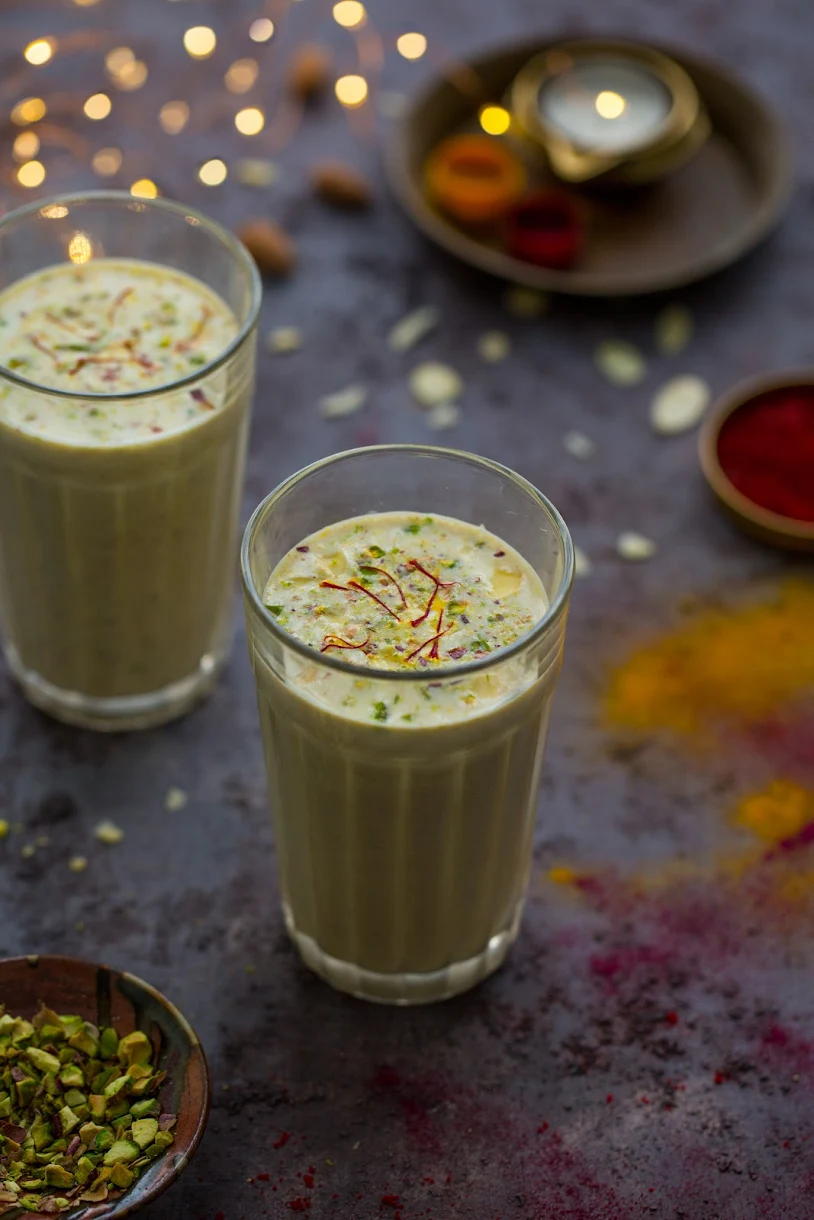
Sumptuous food and drinks is an integral part of Holi celebrations. No Holi is complete without a tall glass of Thandai, the fragrant spiced milk drink, made with amalgamation of ingredients like milk, saffron, nuts and spices. Come on over and let's make some soul-satiating drink that is delicious, cooling and an excellent thirst-quencher.
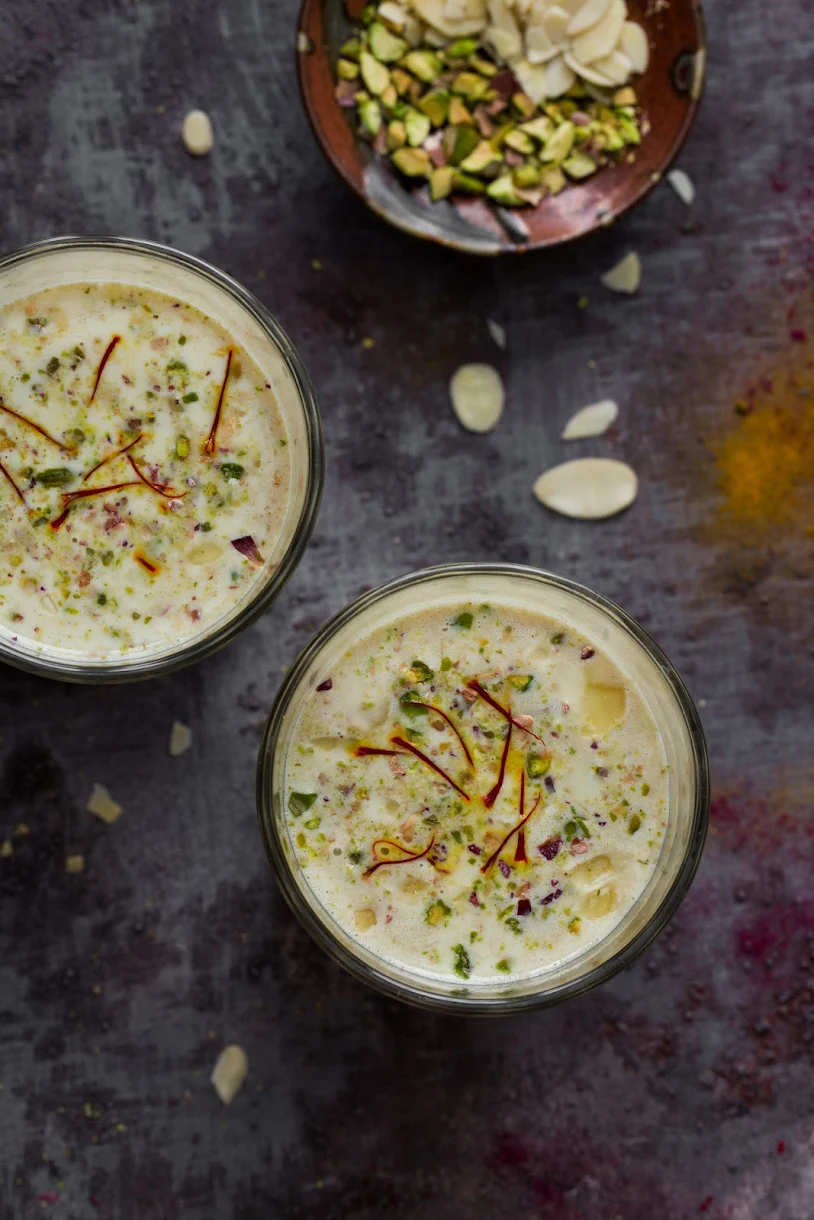
Thandai


Thandai

INGREDIENTS

1 tablespoon fennel seeds
1 tablespoon poppy seeds
1 tablespoon melon seeds (optional)
1 teaspoon peppercorns
Pods from 6 green cardamoms
10 almonds
10 cashews
1/2 teaspoon rose water
1 cup warm water
1 litre milk (replace by soy milk / oat milk / almond milk for vegan version)
Sugar (as per taste)

DIRECTIONS

Soak the fennel seeds, poppy seeds, melon seeds, peppercorns, cardamom pods, almonds and cashewnuts in a cup of warm water for 30 minutes. Then grind the soaked ingredients into a fine paste and keep aside.

In another small bowl, soak the saffron strands in warm milk and set it aside for 30 mins.

Next, in a pan bring milk to boil. Add sugar to your preference, stir well and simmer till the sugar melts in the milk. Add the ground thandai paste to the milk. Mix well and simmer for 2 to 3 minutes. Turn off the heat, add the rose water and let it sit covered till it comes to room temperature. Then refrigerate it to chill for atleast 2 to 3 hours or preferably overnight. Garnish with some crushed rose petals, saffron strands and chopped almonds and pistachios. Serve chilled!

Note: I mention melon seeds as optional since they are not easily available where I stay. However traditionally Thandai uses melon seeds. Though it doesn't affect the flavor much incase you skip it.
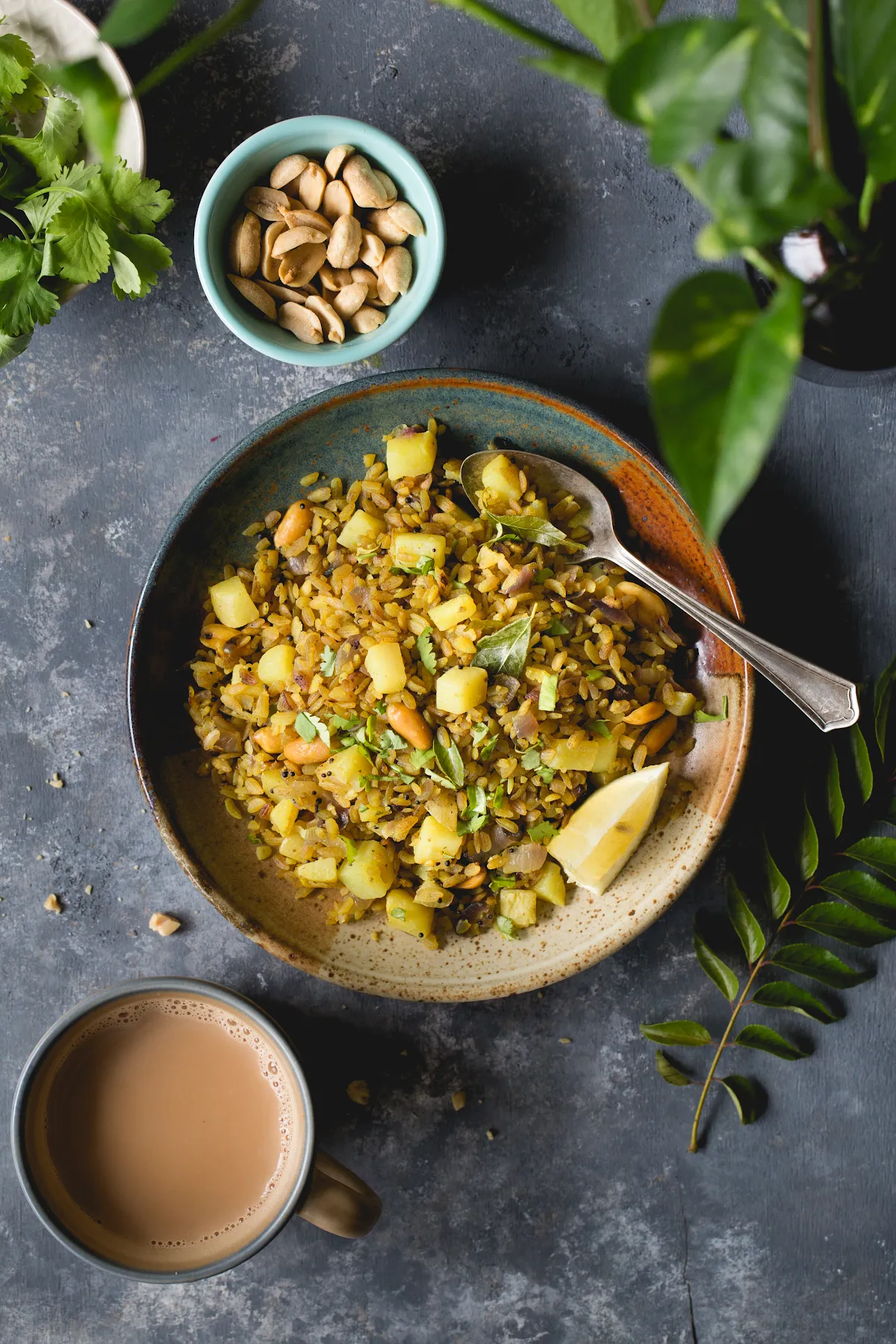
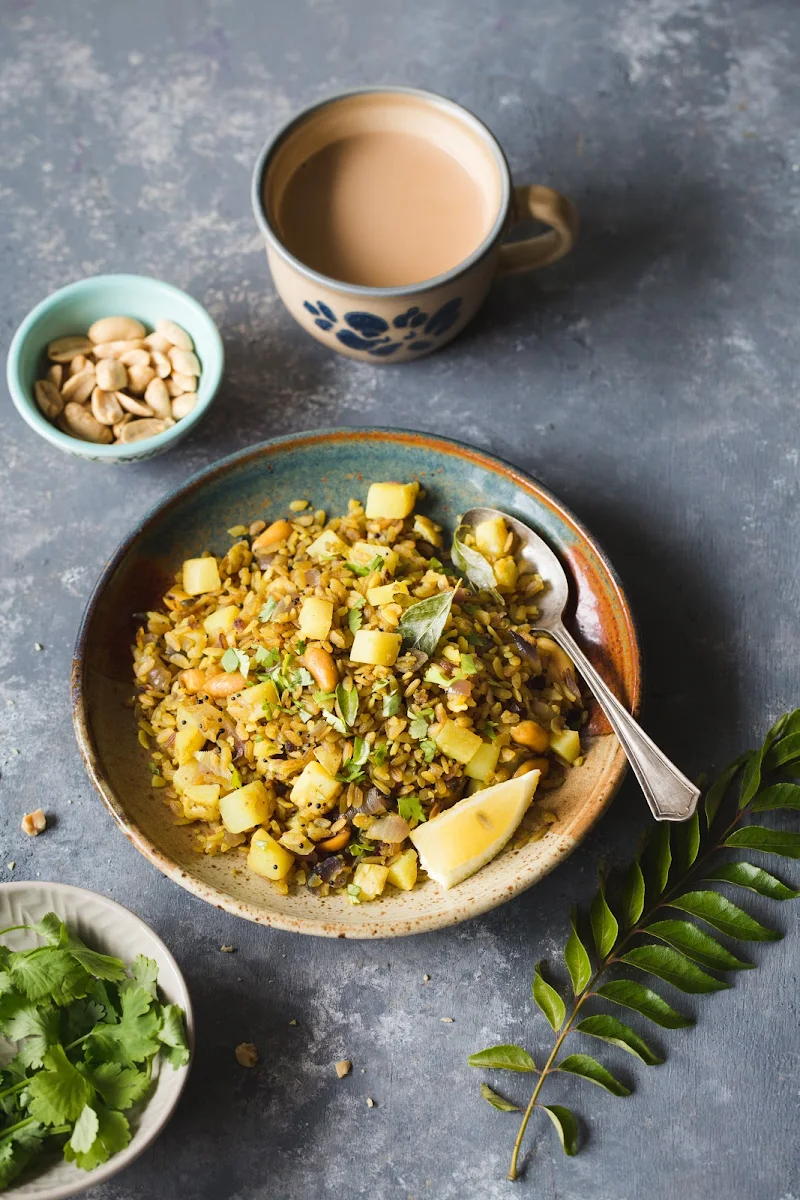
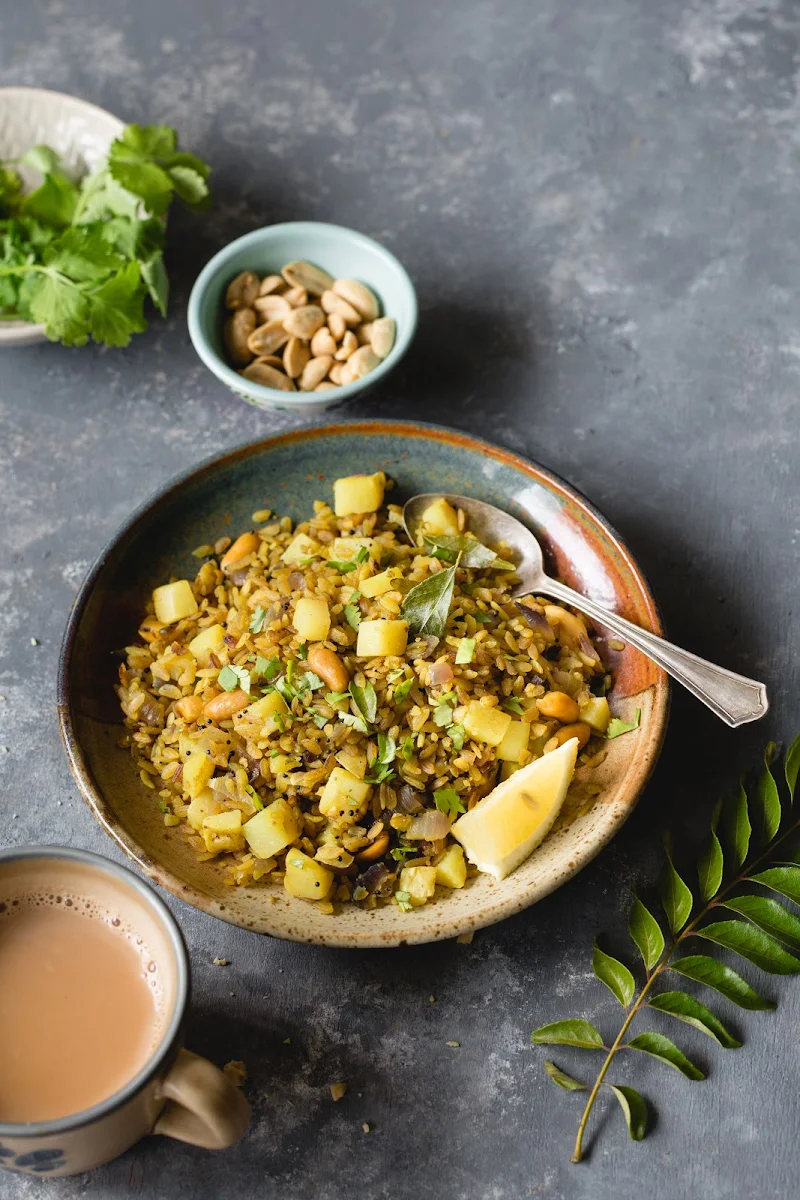
Batata Poha

How to make Aloo Poha | Batata Poha Recipe
Batata Poha is a very popular breakfast dish from Maharashtra made with onions, potatoes (batata) and beaten rice (poha). Poha is a common breakfast dish made across India, with each state having its own subtle variation and names. There are numerous recipes for making poha, the recipes varying from one family to another, each with their own way of preparing it.
Kanda Poha and Batata Poha were made regularly at home. Karnataka has it's own variation called Avalakkibath which is quite similar to Kanda Poha, but has the addition of urad dal and channa dal in it, with garnishes of fresh grated coconut. Batata Poha though was always called as Batata Poha, and never Avalakki. Mornings with plate full of Poha, tall glass of warm milk and off we went to school full and nourished till noon.

This was also a breakfast made when we had guests over, or on days when mom was running out of time to prepare breakfast. Potato, in general is a loved ingredient by many, so that meant less fuss. I now make this Maharashtrian-styled Aloo Poha / Batata Poha regularly at my home and my family enjoys it well as much as I do.

Batata Poha


Batata Poha | Aloo Poha

INGREDIENTS

2 medium sized potatoes, peeled, chopped and diced
2 cups poha/beaten rice (thick variety)
2 tbsp oil
1 tsp turmeric powder
1 tsp mustard seeds
1 sprig curry leaves
2 green chillies, finely chopped
1/2 cup chopped onion
1 tbsp roasted peanuts
Salt to taste
1 tsp sugar
Juice squeezed from 1 lime
Fresh coriander leaves to garnish

DIRECTIONS

Wash the beaten rice thoroughly and drain the water. Add turmeric powder and salt, mix well and keep aside. While the poha blooms, proceed to prep the rest of the ingredients such a chopping potatoes and onions.

Heat oil in a fry pan, add in the mustard seed and let it splutter. Add the chopped onions and stir fry for 30 seconds till they are transclucent in color. Next add the diced potatoes, torn curry leaves and green chillies. Stir fry for a couple of minutes till the potatoes are cooked, yet have a bite. Add in the soaked poha/beaten rice. Turn heat to medium low and gently mix all the ingredients. Cover and cook for atleast 5 mins. Once cooked, remove from heat, add sugar and squeeze juice from 1 lime. Garnish with roasted peanuts and chopped coriander leaves.

You can cut down the cooking time by using boiled potatoes before hand. You can add the potatoes into the tempering oil, stir-fry well and allow it to cook. That way the potatoes get a slight crunch. This however takes a longer time and consumes more oil, hence I avoid this version. The one that I make is a quick, healthy and less time consuming since the potatoes are pre-boiled and need no further cooking. Addition of a teaspoon of sugar and lime is optional, but this really adds an edgy flavor, which is typical to Maharastrian cuisine.

An alternate version of this called Kanda Poha, where onions are used instead of potatoes is quite a common breakfast. This breakfast is not just simple and healthy, but also filling to keep you going for long.

Kanda Batata Poha


*This post was updated and republished recently.*

Mushroom Makhani

How to make Mushroom Makhani | Easy Mushroom Makhani Recipe
It was in brief period of time, sometime in June last year when spring was fading out unhurriedly, giving itself into the summer warmth, and the temperatures were just about steadily poised in their pleasant 60s, that I felt a sudden urge, an unfounded obsession over mushrooms. I had no idea what triggered it. I must have been under the weather, or must be the sight of damp mulch springing off paunchy shoots while the mist shroud in, or may be the birthday party I attended late spring where stuffed baked mushroom caps was all I ate because it was beyond delicious and I could barely take it off my mind for several days after the party. I'd go out for walks and randomly sight odd pairs of mushrooms sprung on peat soil and tree trunks, watch them in awe, and strike a sudden temptation to cuddle my hands around a bowl of warm mushroom soup. In my strong desire to savor them, I toyed the idea of cooking them for all three meals a day, crooning over mushrooms on toast for breakfast, mushroom biryani for lunch and this mushroom makhani for dinner. I had the fortune of sparing my family to bear this marathon brunt of mine as they were summer vacationing back in India, visiting relatives and friends and enjoying the glorious ripe seasonal mangoes in kilos, while I boggled silly over these fungi. Insane you may have called me, had you sneaked into my lunch box, or my dinner plate that week, that, my meals were inadvertently smeared with mushrooms in their ensemble. I would visualize them in my shopping for groceries - the buttons, shiitakes, oysters, portobellos everywhere. Umbrella caps in supple tones of milk and tans - some pumped up, some stout, others squat, and shaggy, unkempt in their mannerisms, their piggy stems ballooned underneath, their tender skins crust with dirt and mire that needed gentle strokes in water bath to glisten their starkness, leaving their glamorous gills unhurt on the underside of their caps. None the less glorious in all forms.
Mushrooms


After marking a day on calendar and striking it off with meals rigged with mushrooms, I was out and about that obsession for a while, staying away from aisles at grocery stores, thinking beyond its capacity. I relieved this obsession, so glad at it; its yearning so deep and willingly conspiring, much like echoing phrases from Paulo Coelho's The Alchemist, "When you want something, all the universe conspires in helping you to achieve it." I conspired it. I achieved it.
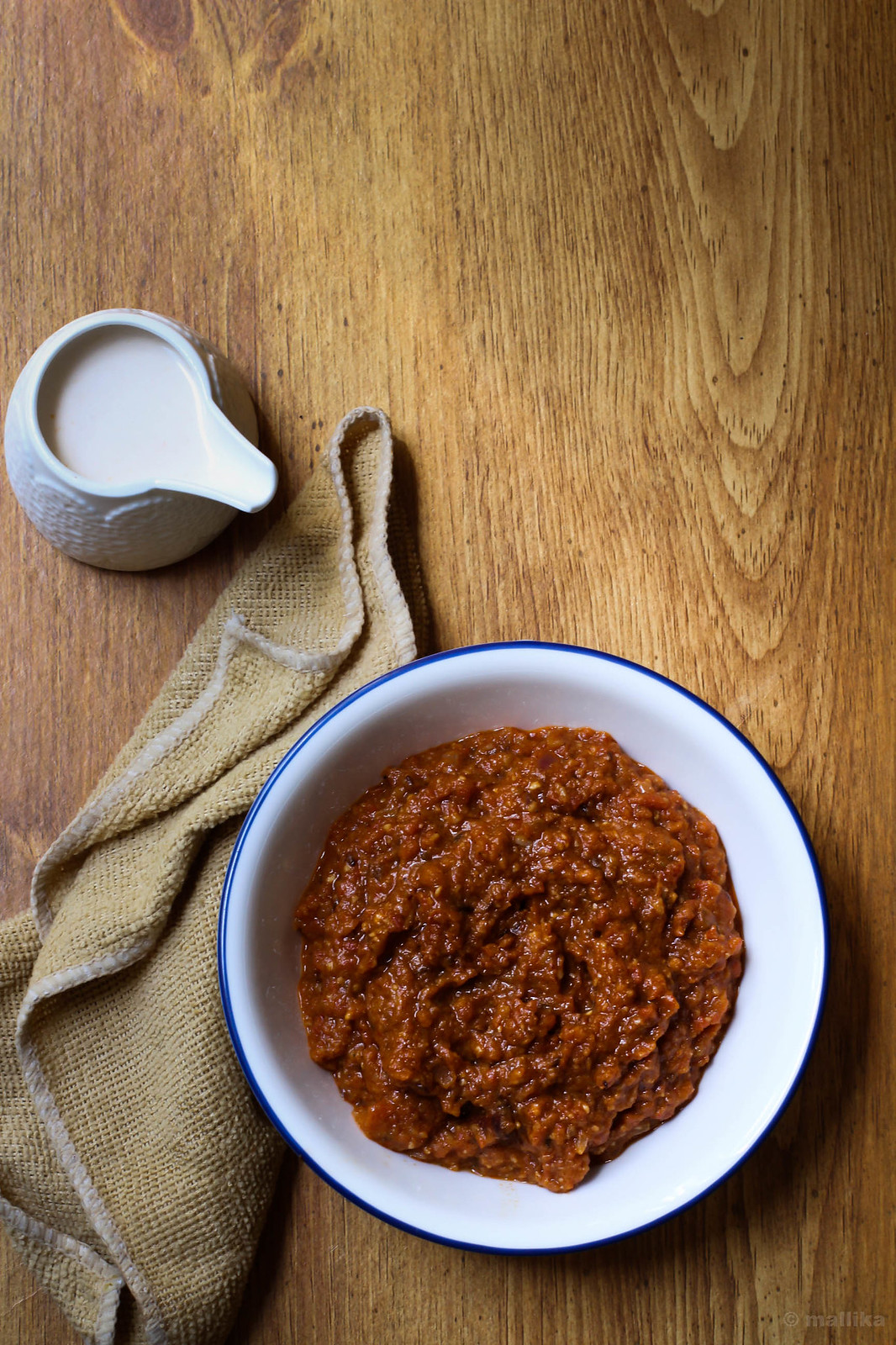
Makhani Masala


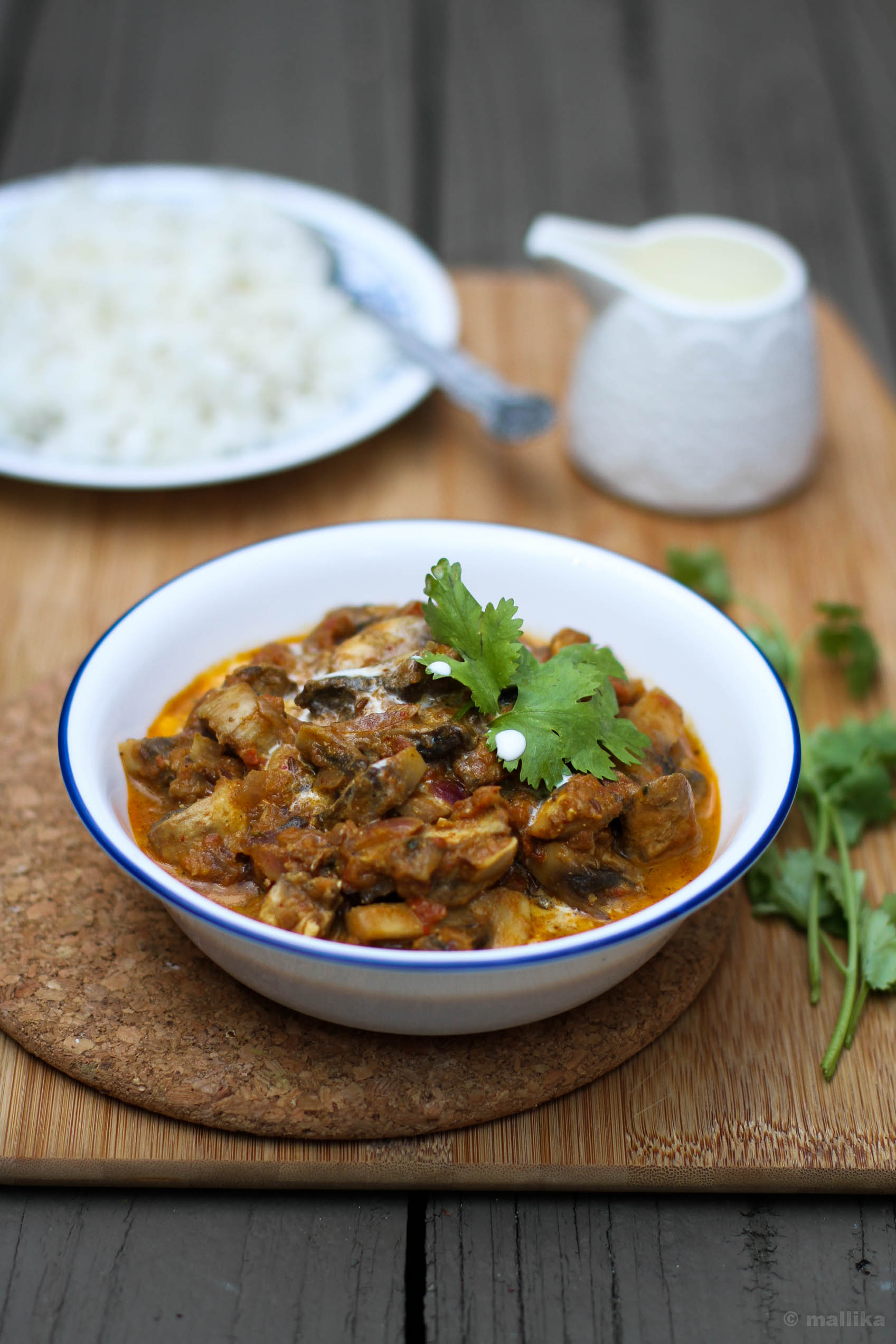
Much of this recipe I share today is a remake of my recipe for Paneer Makhani, so you make the makhani gravy ahead of time and prepare the actual curry just before serving. The makhani gravy is sinfully delicious on it own, but when you throw in mushrooms, they take on a new level of deliciousness. The meaty texture of mushrooms complement the creamy gravy, giving it depth of flavors. This rich dish is fit for parties and celebratory occasions, but if you want to give yourself a break from mundane home cooking and serve up some exoticism on weekends for your family, then this be it.

Mushroom Makhani


Mushroom Makhani

INGREDIENTS

1 cup of prepared Makhani Masala (refer here)
200 grams button mushrooms
1/4 cup cream (adjust to your taste)
1/2 tsp. of kasuri methi or dried fenugreek leaves
Fresh coriander, cream for garnish

DIRECTIONS

Prepare the Makhani masala as in recipe mentioned here. It should yield approximately about a cup of thick gravy.

In case you are using refrigerated or frozen gravy, remove from the fridge and allow it to come to room temperature. Add 1/2 cup water and bring it to a simmer.

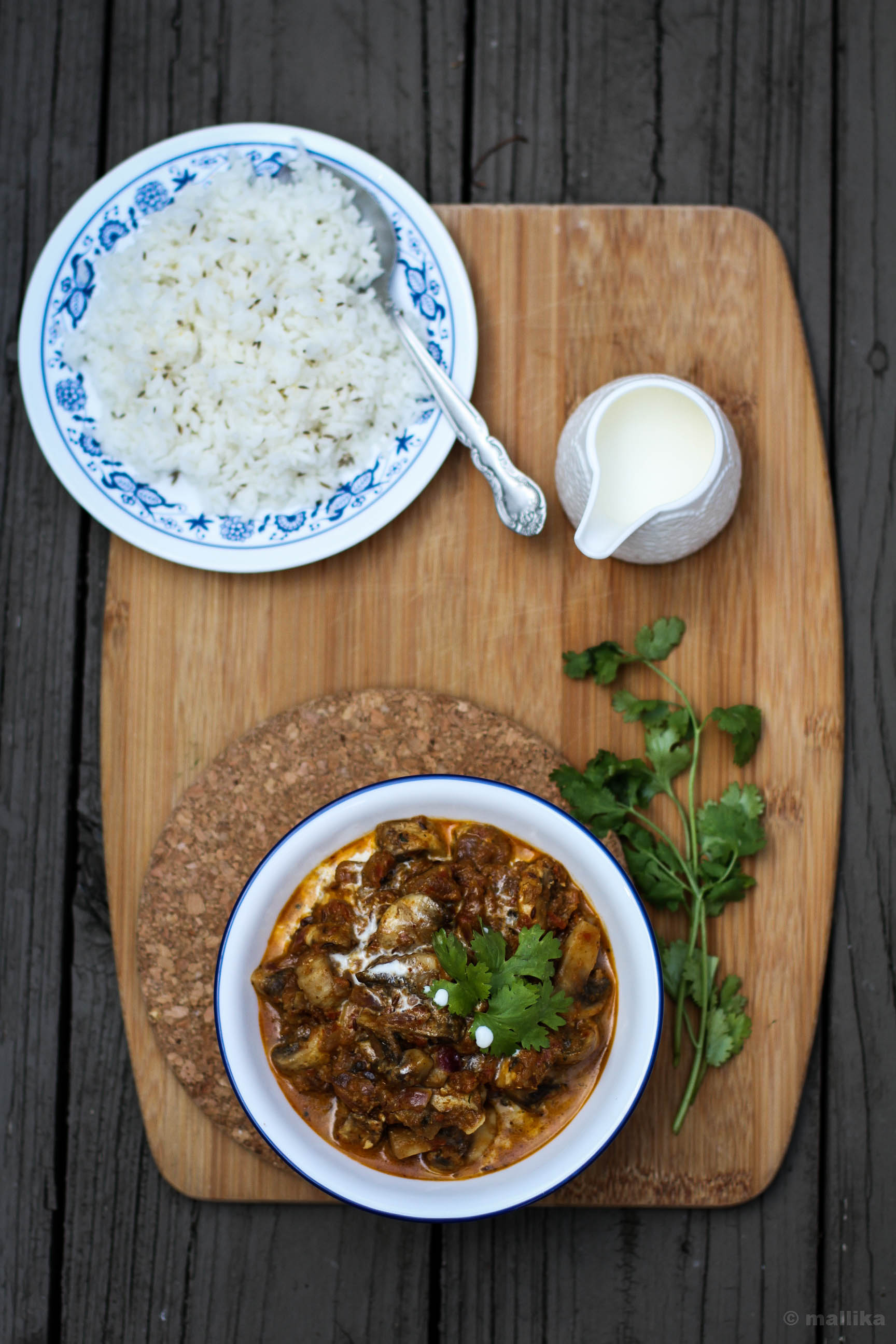
If you have prepared the gravy masala fresh, then to the simmering gravy, add 1/2 cup of water and diced mushrooms and bring it to a boil. Stir and cook covered for 10 minutes. Once the mushrooms are cooked, add the cream and simmer for 2 minutes. Transfer the Mushroom Makhani to a serving bowl and garnish with more fresh cream, ginger juliannes and coriander leaves. Serve hot with rotis, naans or kulchas.

Mushroom Makhani

Carrot Soup

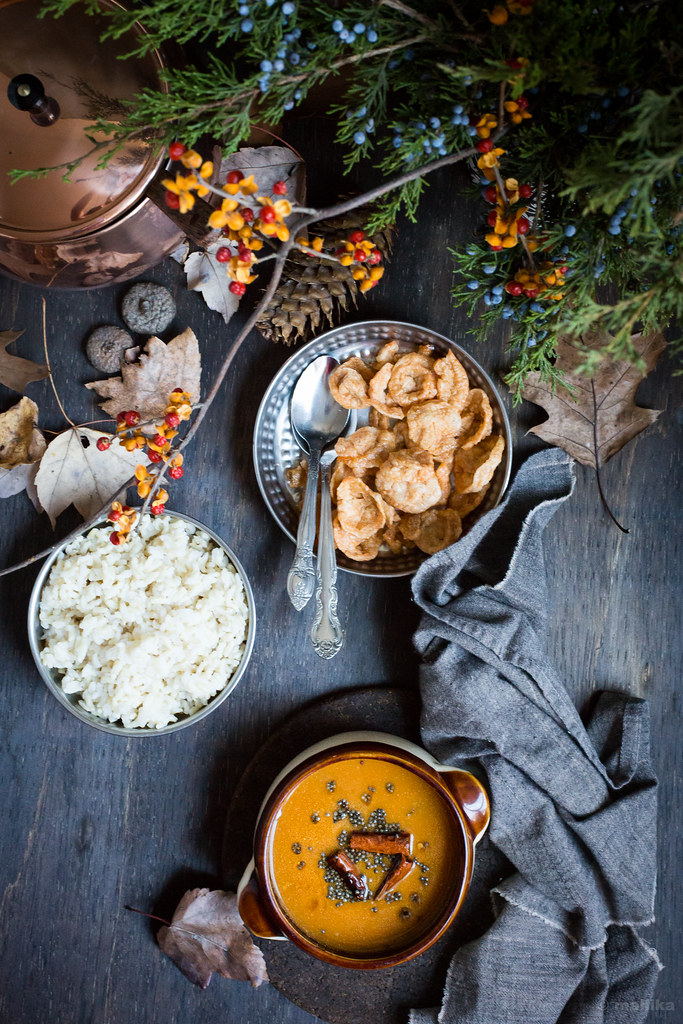
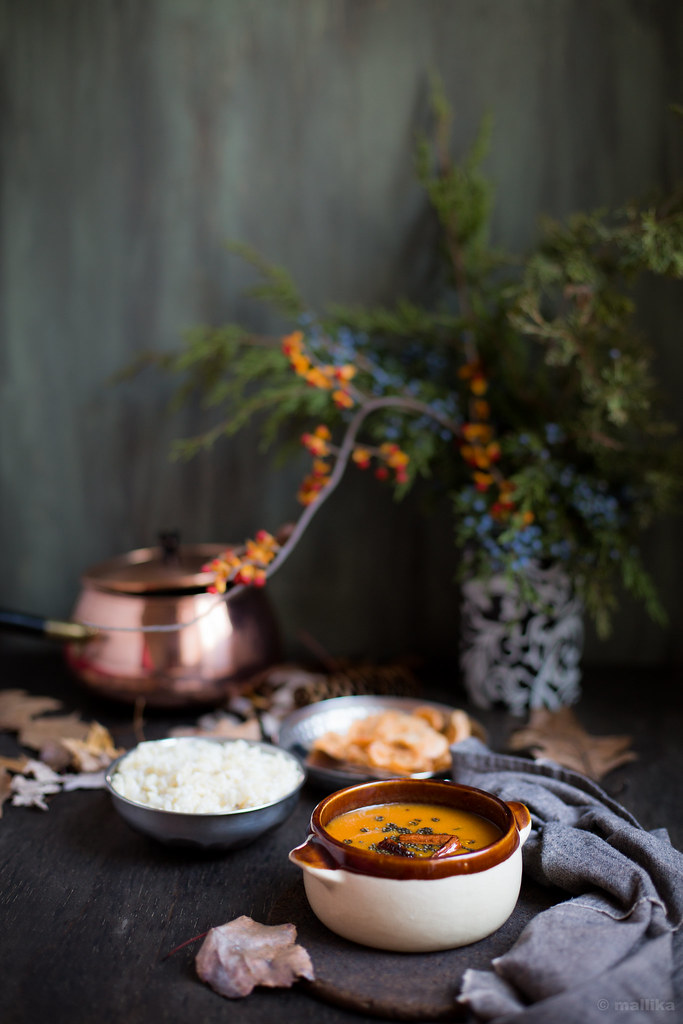
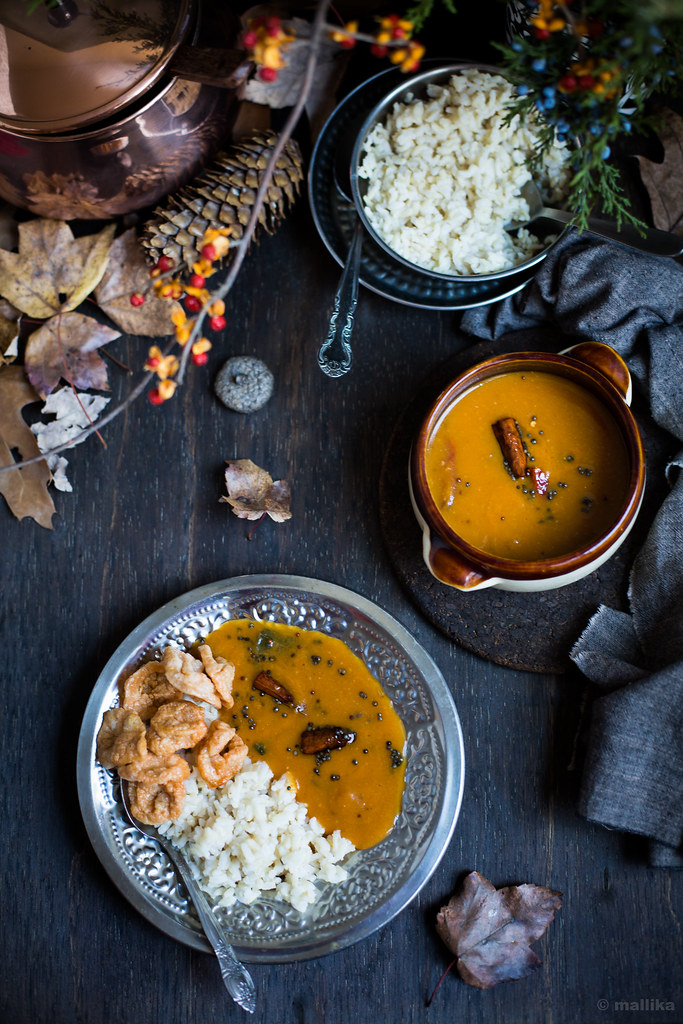
How to make Easy Carrot Saaru, Easy Carrot Soup
All through the fall, I stocked pumpkins at home in sheer keenness to make a good pumpkin soup that I could share with you all. I was amused, delighted beyond words to watch pumpkins everywhere, on market stands and home fronts, in malls and on window sills, on blog feeds and in ad mailers. Our favorite grocery stores smelled warm from pumpkin spices and its produce. Our office had spice infused fresheners in the lobby to welcome guests. The coffee was not spared either, flavored with pumpkin spice in it too! Tell me, who wouldn't be lured? So each time we stepped out grocery shopping, along came a pumpkin or its sibling in form a squash, that made its way into our shopping cart, judiciously sized to suit two meals for us as a family.

On a seasonal high note, I did make soups and stews, and plenty at that, laboriously skinning the peels, slicing and dicing them, and boiling them to pulp over pot of stock. I choose not to bake, rather simmer over a pot on stove, as that's a task I like to leave for days far less busier than weekdays, when I don't have the time to worry about our over-sensitive fire alarm screeching off at the slightest variation of warm air emanating from the oven. That's another story to say. The soups though did turn out creamy, and deliciously vegan, not necessarily warranting any fat or cream in regard to heighten the flavors or their sumptuousness. But they got gulped down faster than I expected, hot and steaming, ladles after ladles, cold fingers wrapped around the warm bowl for comfort, either dunked by toasted garlic bread or tossed along with piping hot rice, savored snugly in our warm dining area while the leaves were busy shedding under the seasonal transition.

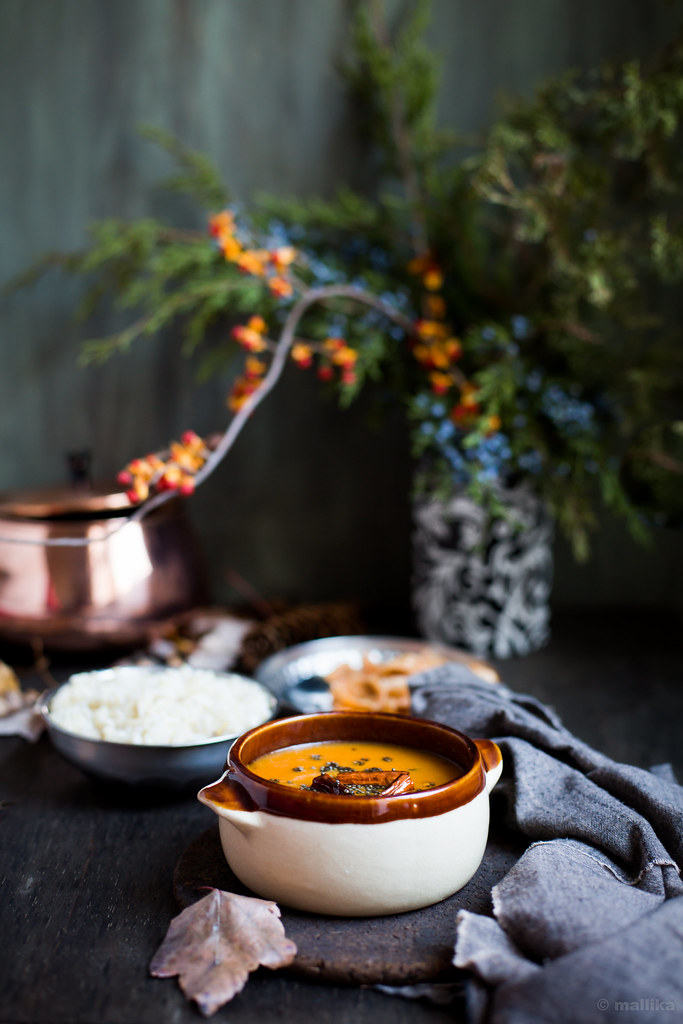
Carrot Saaru


It happened so, that each time I planned a soup, I was swooned by the dire beauty of the squash and pumpkins, that I shot several preps of them much ahead of sunset in the noon. By the time the squash was sliced and diced, cooked, pureed and boiled to perfection, finally seasoned to be served, it was time sun called his day and the darkness overcast the late noons in its thick black bile. I finally gave up on presenting my super-creamy-vegan-butternut-squash-soup here, instead, the year end holiday baking mania took over the house bringing more cheer to otherwise gloomy noons.

We've step foot into the new year, and I've welcomed it with my arms wide open. I have no resolutions that pound my mind hard, so there's none really to make. But I realize this blog is devoid of soups and I want to fill that space. I need to make a beginning, and here's one that fills the bill so well. Apt in time, a recipe for a good Indian soup in the beginning of a new year. It can't get better than this.

I pray this year croons high hopes, brings truck loads of good luck, fab health and immense happiness, and heaps of enthusiasm to live the year ahead positively. I should have been rolling in trays of sweets or brought a dessert along here, commemorating the new year and reminiscing 'oh whatta year 2016 was for me!', because it was gratifying in good sense, and worthily etched into our memory with a fair balance of highs and lows, but instead, I have come along with bowls of warm and comforting homemade carrot soup that clamors itself so South Indian. This is what makes me the happiest - simplicity in a bowl. It defines what I would love my year to look like - simple, clean, uncluttered and subtle in my living and approach.

Carrot Rasam


Carrot Saaru | Carrot Rasam | Indian Carrot Soup

Prep Time: 15 mins | Cooking Time: 15 mins | Serves 4

INGREDIENTS

2 carrots, chopped
2 cups water
1 tbsp. tamarind paste
1 tsp. sambhar powder
1/2 tsp. turmeric powder
Salt to taste

For Tempering:

2 tsp. oil
1 tsp. mustard seeds
1/2 tsp. asafoetida powder
1 sprig of curry leaf
1-2 whole red chillies torn

DIRECTIONS

Boil the chopped carrots along with 2 cups of water and turmeric powder until they are fork tender. I pressure cook them on 2 whistles as its quicker to do so. You can pan boil it if you do not have a pressure cooker. Once done, allow it to cool and blend it to a puree in a mixer.

Transfer the carrot puree into a thick bottom pan. Stir in the tamarind paste, salt and sambhar powder. Add additional water to adjust the consistency of the saaru / soup. I like to have this saaru slightly thicker than our traditional rasams as it brings out the texture and flavor of carrots well. Bring the saaru to a rolling boil and then simmer for about 2-3 minutes. Turn off the flame and set aside to temper.

To temper, heat oil in a small pan. Add mustard seeds and allow it to splutter. Add the asafoetida powder, torn red chillies and curry leaves and fry briefly for few seconds. Turn off the flame and add this to the prepared saaru. Serve hot with steamed rice or drink them steaming hot right out of soup bowls.

Carrot Soup


Cranberry Tokku

How to make Cranberry Tokku, Easy Cranberry Pickle, Cranberry Relish
I started blogging in a time when the internet world had taken to blogs burgeoning everywhere like little mushrooms enticed by rains. There was an unfaltering gush of novel, unexplored cuisines, recipes, ingredients and more, all brimming on various sites with their evocative photographs and stories, each compelling and competing by themselves to make a mark on the space. I'd viciously eye those berries and stone fruits that would pop up randomly every now and then, in seasons and festivities, their crimson reds, navy blues and sunlit ambers marrying blissfully into butter, sugar and flour to settle into marvelous looking desserts - desserts that could trigger hunger at odd hours of the day and post hefty meals; leaving me much in envy of being unable to get my hands on them back in time, while the world around rejoiced in celebration with such food.

That said, what did not make much of an appearance on the web space were fresh, glossy, scarlet red cranberries. There were several recipes out there that had them in scones, breads and cakes, mostly used in dried form, the kind of ones that are drowned in sugar and shriveled to douse the tart flavor. For a while, now that these are easily accessible in India, I too made my convenience with using the dried varieties in our favorite mincemeat recipe that sat bathing, cramped up with other dry fruits and weighed down by nuts in a heady spiced rum concoction for months before being brought out to be baked into Christmas Fruit Cake.


I had never seen fresh cranberries in the past till I came to the US. With dried cranberries available on ease, it was what it was known to me. For several years till lately, I was tricked into assuming that cranberries were akin to karonda, or karvanda (as known in Kannada), the tart-sweet Indian berries commonly used erstwhile in Indian pickles. I was excited about cranberries being karvanda, for two reasons.

One, I had never seen a karvanda bush, nor tasted its fruit in ripe, however I grew up hearing my dad often commend his love for these extinct pickling fruits, reminiscing how he missed watching his mother and grandmother collect the tart green berries off the bushes that grew in their backyard while the summer set in, of how they let them mature in brine for weeks, hand pounded the fresh spices and amalgamated them for months in sun to be pickled. Those were his memories, far and few, raved and deemed. For me, in rare times that I met a marinated young karvanda berry eye to eye, it was always camouflaged, heavily absorbed in red spices, and tart from being infused with bite sized mangoes pieces, served as delicious pickles alongside other dishes in odd occasions of weddings or family gatherings. Hardly an acquaintance to delineate something about.

Yet, those who grew up in the North of India may spin you tales of their childhood spent twiddling around the karonda (as they call it) bushes in the backyard of their aunt's, grandma's or friend's home, plucking them and popping it to their mouths with puckered face; karonda being more popular in the North of India than in the South where I grew up.


For second, Karavanda wasn't popular in generation of our times by any means; at least, it wasn't regarded high as the imported peers were. No one told us how good they were, no magazines or food channels professed it high, nor did our Sunday markets run its produce, probably because a lot of our Indian population was either disinterested to honor it or the ones like me, had hardly known it by trait. For a long time I did not know what it was called in English, or if it did exist in the lexicons of English circles. On the other hand, we had newspapers and magazines that constantly spoke of how fab cranberries were in beating the beast out of cancers and UTIs, tipping off cranberries to be our very Indian karavanda, and how our long forgotten fruit had captured attention in the West and that it may be touted as a superfood, pronto. Internet added to that fad with burst of knowledge.

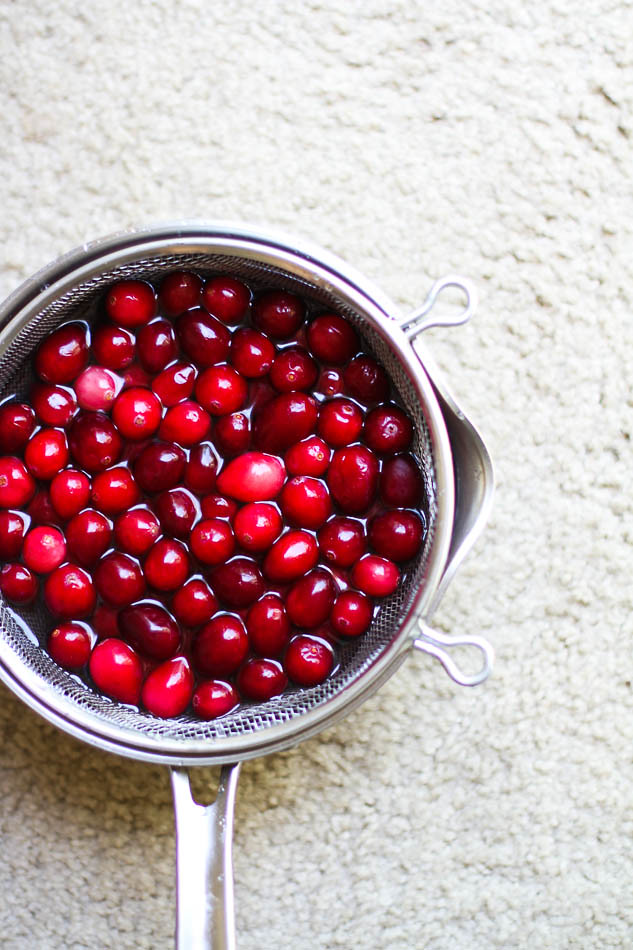
My assumptions may have been misleading me, but thankfully I know today that karonda is karonda and cranberry is cranberry. Both live in separate worlds, with different identities, in their own identities that can't be swapped. It took me a trip to Nantucket in summer to realize this. That's where I saw the process of cranberries being grown and harvested, much unlike the trees that my grandmother harvested from, but bog flooded and cragged from vines. I came back home with a bag full of organic cranberries to turn them into a desi relish!


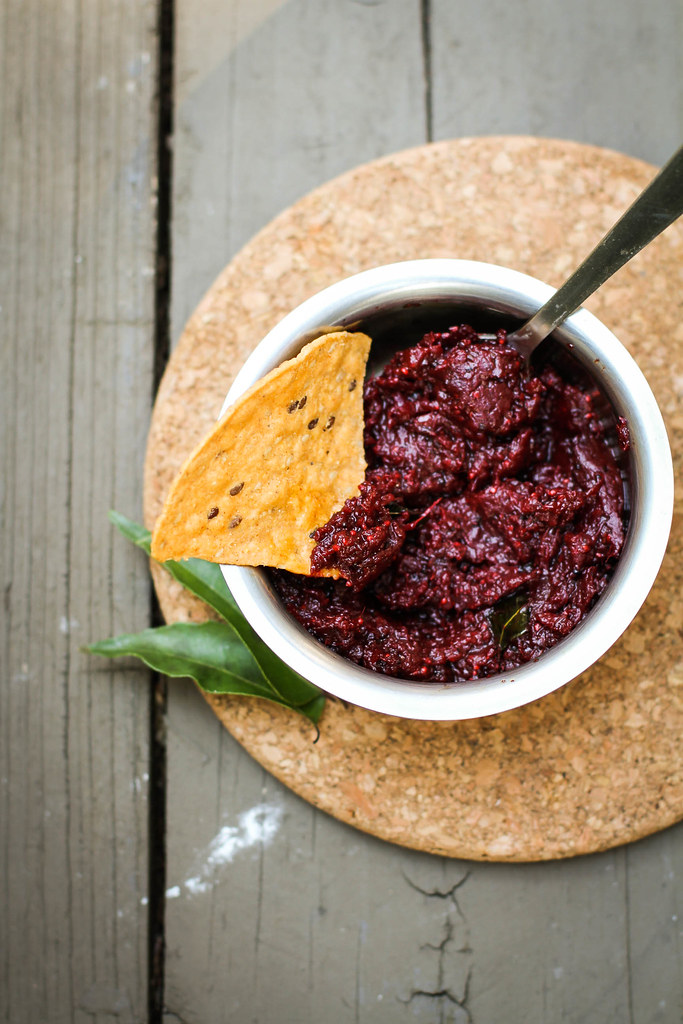
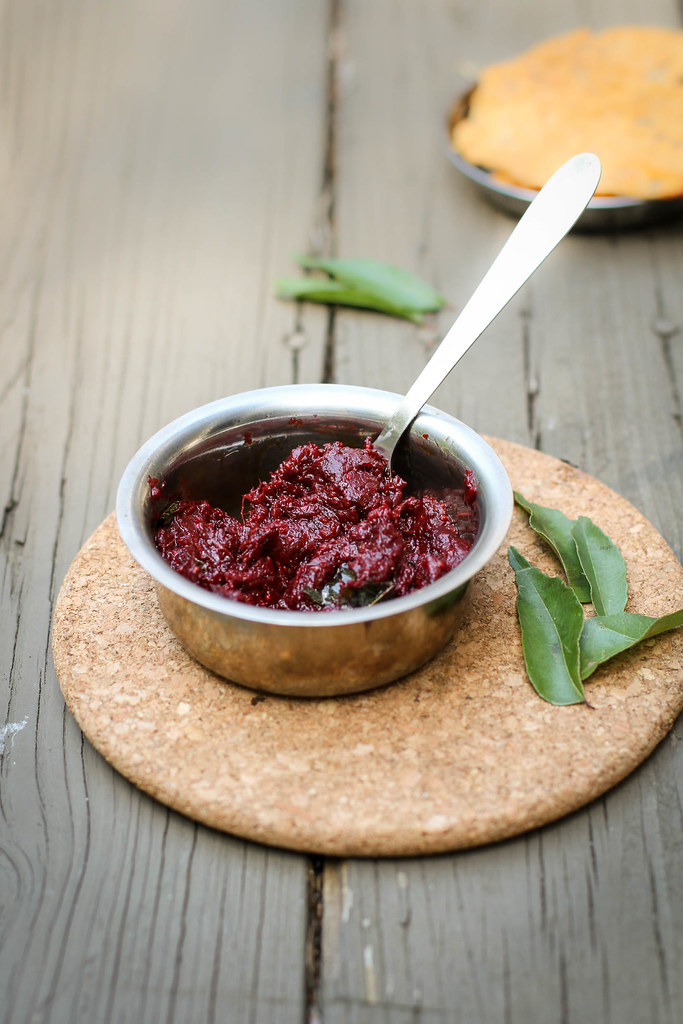
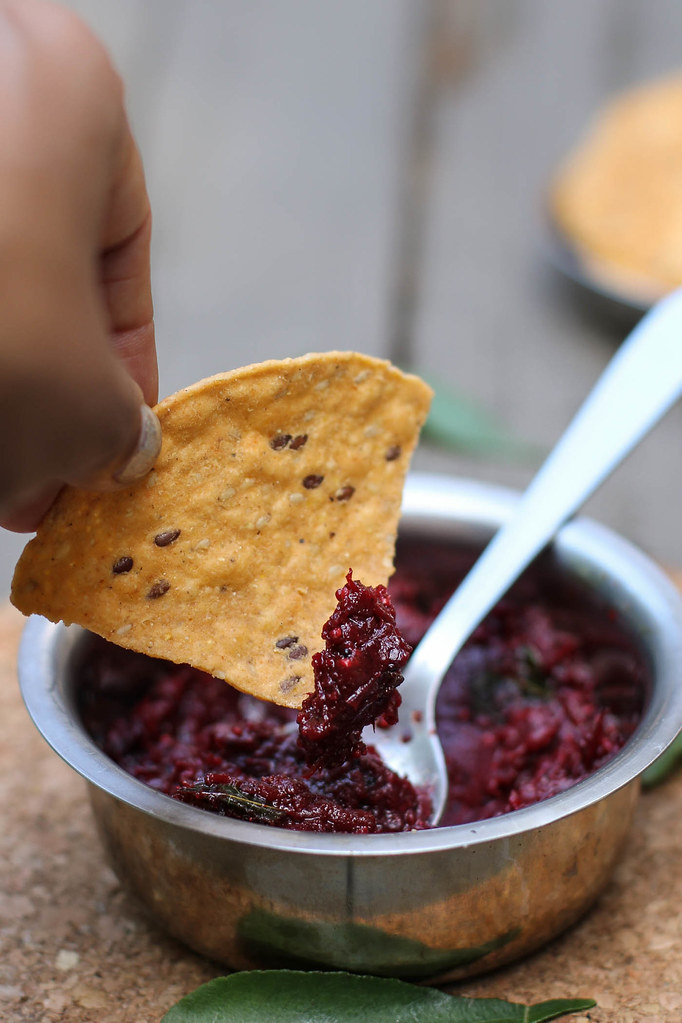
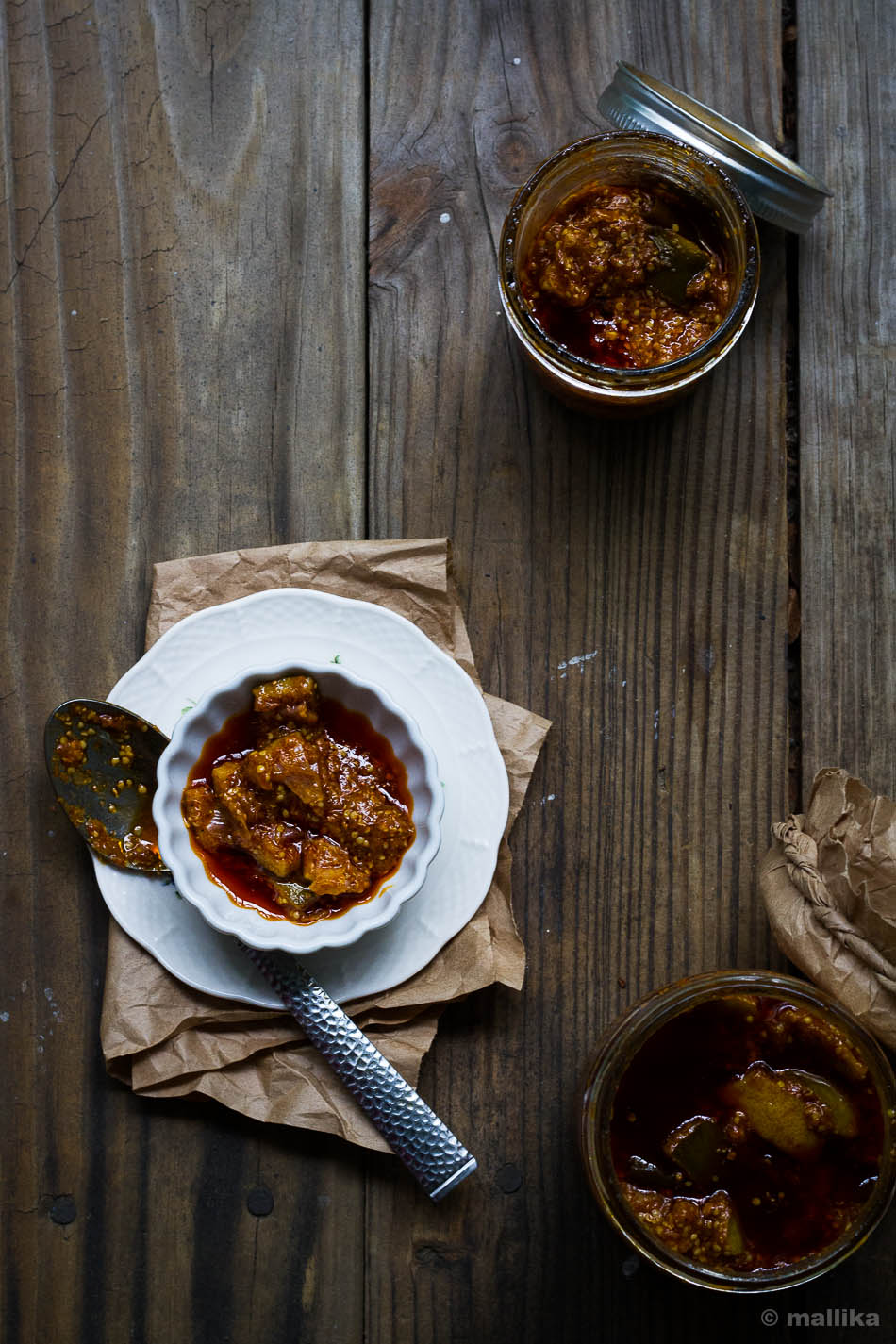
That brings me to this interesting recipe I have to share with you today. A mod-western ingredient with a traditional twist. The east meets west kinds. An old wine in a new bottle. This cranberry chutney, a dip, or more traditionally a thokku. Its very Indian at heart, its spices and the flavor - piquant, tart and delicious in a tiny blob on the side to any dish. You drag a lump of it with your fingers and mix along with steaming hot rice or simply scoop a small portion with your roti or dosa and relish it. Its makes a kicking dip to tortilla chips or even khakras, and that's exactly how I've zinged up over the past couple of evenings alongside my tea.

Cranberry Tokku

INGREDIENTS

2 cups fresh cranberries
5 tbsp. vegetable oil
2 tsp. red chilli powder
1 tsp. fenugreek seeds powder
1 tsp. asafoetida (hing)
1 sprig curry leaves
Salt to taste

DIRECTIONS

Heat vegetable oil in a kadai/ wok. Add mustard seeds and fry till it begins to splutter.

Next add the red chilli powder, fenugreek powder and the asafoetida into the oil and fry for 5 seconds. Do not allow spices to burn.

Add the torn curry leaves and fry for few seconds till they turn crisp.

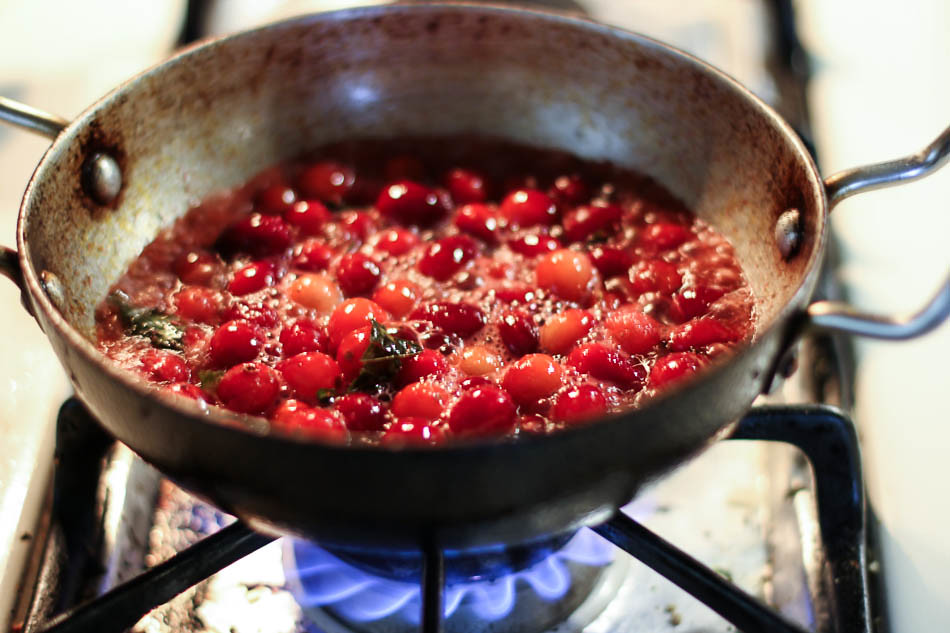
Reduce the flame and add the fresh cranberries. Stir them in to coat all the spices. Cook till they pop and begin to reduce in volume. Using the back of spatula, gently mash them. Add in salt to taste and stir continuously until the cranberries soften, reduce in volume, and begin to lump, and the oil begins to separate.

Remove from heat and allow to cool completely. Store in air tight ceramic or glass containers.

Notes:

* You can add a tablespoon of jaggery to balance the tart incase you do not like the sour taste of the thokku.
* Fenugreek powder is bitter on its own, however when fried in oil it imparts a lovely flavor to the dish. It's the heart of this thokku and hence do not skip this ingredient.
* If you plan to store this over the counter for couple of days, its important you do not skip the amount of oil suggested. However, incase you plan to make a smaller quantity that will be consumed in a day or two, you can reduce the oil content. Oil helps in longer shelf life of any pickle.
* If you don't like heat, reduce the amount of chilli powder. We love our pickles spicy, so you may find the red chilli powder on slightly higher side. The heat of the chillies is also dependent on the kind of chilli powder you use. Hence use it judiciously.

Kodubale

How to make Kodubale | Easy Kodubale Recipe
It's eve of Diwali today, that time of the year I look forward to the most with great yearning and excitement. Its around this time I hit my best stride. I'm the happiest, consumed by thoughts only positive, blurring out all negativity and pessimism, guzzled with happiness, reflection, joy and celebration, irrespective of how high or low the year may have been. I hope yours was a fantastic one and continues to be so in the year ahead. I wish you a wonderful Diwali, and a year filled with good luck, health and prosperity. Wish you all a Happy Diwali and a prosperous New Year!

Kodubale_02


Right now as I write this, I sit on my dining table overlooking our balcony lit with tiny serial bulbs, running end to end, hung over the balcony parapet like wet jeans on cloth liners, its warm LEDs creating a bokeh effect on the hindsight in a very soothing way. Our little girl has been running around the home in sheer excitement of the festive hoopla. I miss the sounds of zameen chakras, rockets and phooljhadi (flower-pots) bursting in the vicinity, that reminds me of home back in India; but in a few minutes from now we'll head out to the local temple about 5 miles from home, where sounds of bursting crackers and rings of temple bells will chime alongside families wishing each other Happy Diwali. There's community get together - with prayer, celebrations, food and musicals to round off the night. Also, with parents around, our home is smelling of kodubales and shankarpalis and that's nothing short of what Diwali has been for us - food and celebration, both in plenty.

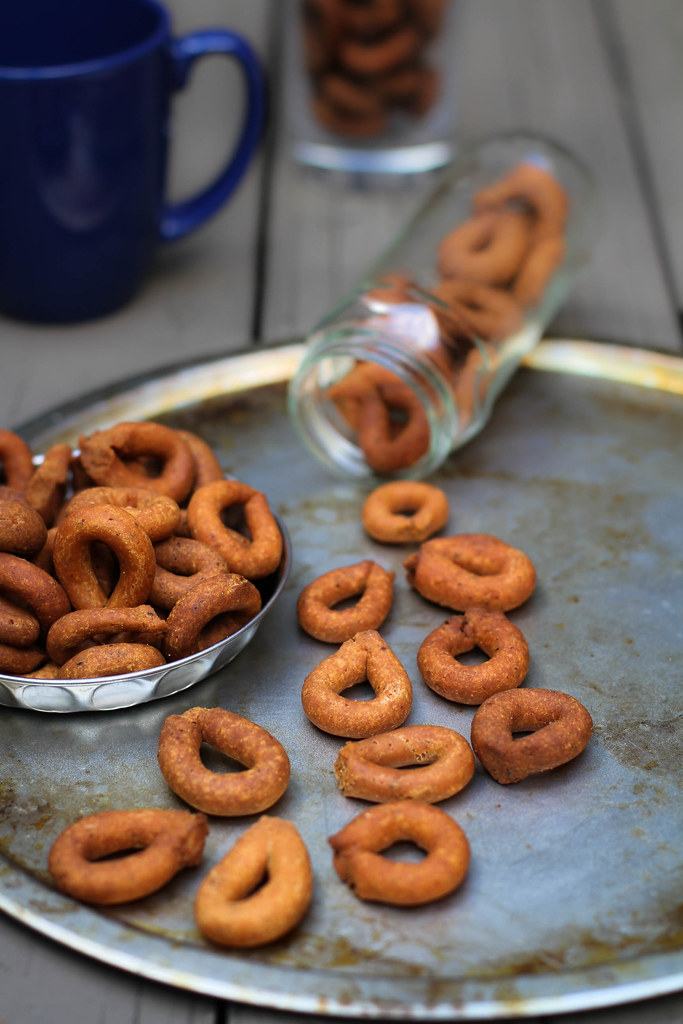
Before I head out, I'll leave you with this recipe for Kodubale, a traditional Indian savory snack that we grew up eating way too often, that there came a point when I hated it by heart. After I moved to Bangalore, I did not eat them for years. And then slowly, there came a time when I went back to eating them on my occasional trips to Mangalore, where they are made in plenty. It wasn't with much fervor though, but I know why so. Kodubales are made plenty in Mangalore - every bakery stocks them, every house stocks them, they are gifted too. They stay fresh for long, so most homes will serve you with a plate of these alongside tea. Women in most households have a recipe of their own, so they either whip up batches and stock by larders or they rush out to the nearest bakery to buy them the moment they hear a guest is about to arrive. My relatives even brought them along to gift whenever they visited us. Eventually it was overdosed and I saw aversion to it.

Of what I remember, these require no occasion to treat upon really. You make them on whim, serve your guests, feast them on festivals, snack on them in evenings with your tea, or simply carry them on your bus rides to munch on when odd hunger pangs strike. They are fried ofcourse, but they won't do much harm as a lot of the rice flour in the recipe is immune to absorbing oil. So you'll have a delicious savory that you can eat guilt free. I highly advise not experimenting these with baking, as they can obviously end disastrous. But if you have courageous nerves that I don't have, and you are successful at baking these, please share your tips with me. I will be overwhelmed to hear from you. On another note, you can control the amount of heat to your liking. I love these spicy, but if you like them low on spice, use a milder chilli powder for the heat. They are delicious I bet!

Kodubale_03


Kodubale

Prep: 30 mins | Cook: 20 min | Makes: 3 dozens

INGREDIENTS

Dry Ingredients:

2 cup rice flour
3/4 cup roasted split bengal gram (huri kadale)
1/2 cup desiccated dry coconut (powdered copra)
1/4 cup maida / plain flour
1 sprig finely chopped curry leaves
1 tsp. red chilli powder (I use a spicier one, such as Guntur chilli powder)
2 tbsp. sesame seeds
1/2 tsp. good quality asafeotida
Salt to taste

Other Ingredients:

2 tbsp. hot ghee
Oil for deep frying

DIRECTIONS

In a mixie, pulse the roasted gram into fine powder and keep it aside. Mix all ingredients mentioned under dry ingredients list along with roasted gram flour and make a well in the center. Add hot ghee and mix into the flour. Add just enough water to knead it into a firm dough.

Pinch out lemon sized balls of the dough and roll them using your palms into a long, 1 cm thick rope. Cut the rope into 7-8 cms long strips. Bring the 2 ends of the strip together and pinch its ends to form a tear drop shape. Alternatively, you can bring the either ends together and pinch them to seal, thus forming a round bangle shaped ring. Prep all of the dough and keep it ready for frying.

Meanwhile, as you prep the dough, heat up oil in a kadhai / wok to medium low heat. Test by dropping a small ball of dough. It should sink first and raise up to the surface. Once heated to this stage, drop the prepared kodubales into the hot oil and fry them in batches on medium low heat till they are golden brown in color. Do not clutter many in each batch as they need to be cooked through well. The temperature of the oil is key in making good kodubales as hotter oil will tend to crisp the kodubales faster, while the centers may still be uncooked. Remove from oil and drain on a kitchen paper. Allow them to cool completely and store them in dry airtight containers. They can be stored and stay fresh for about 2 weeks.

Kodubale_04

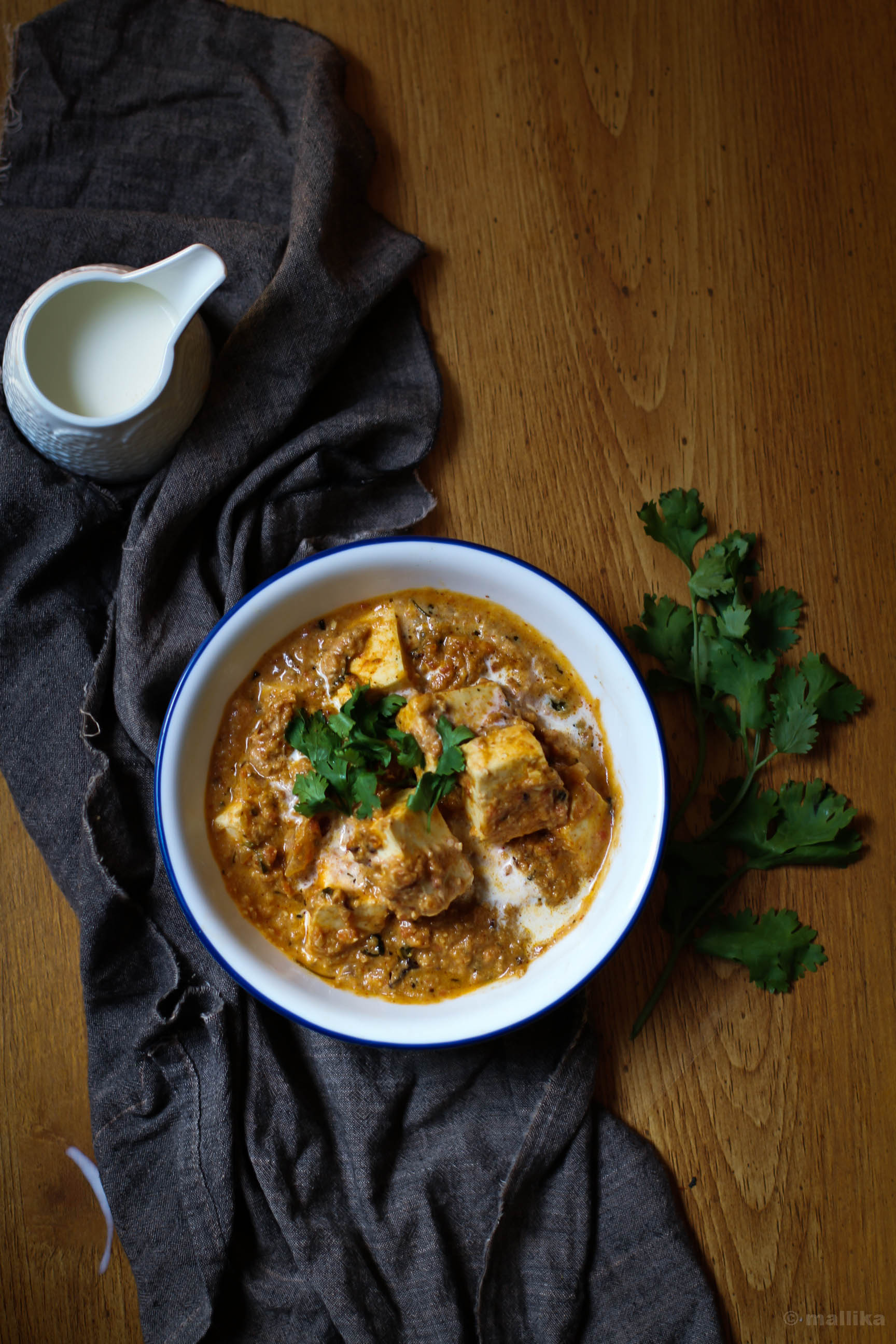
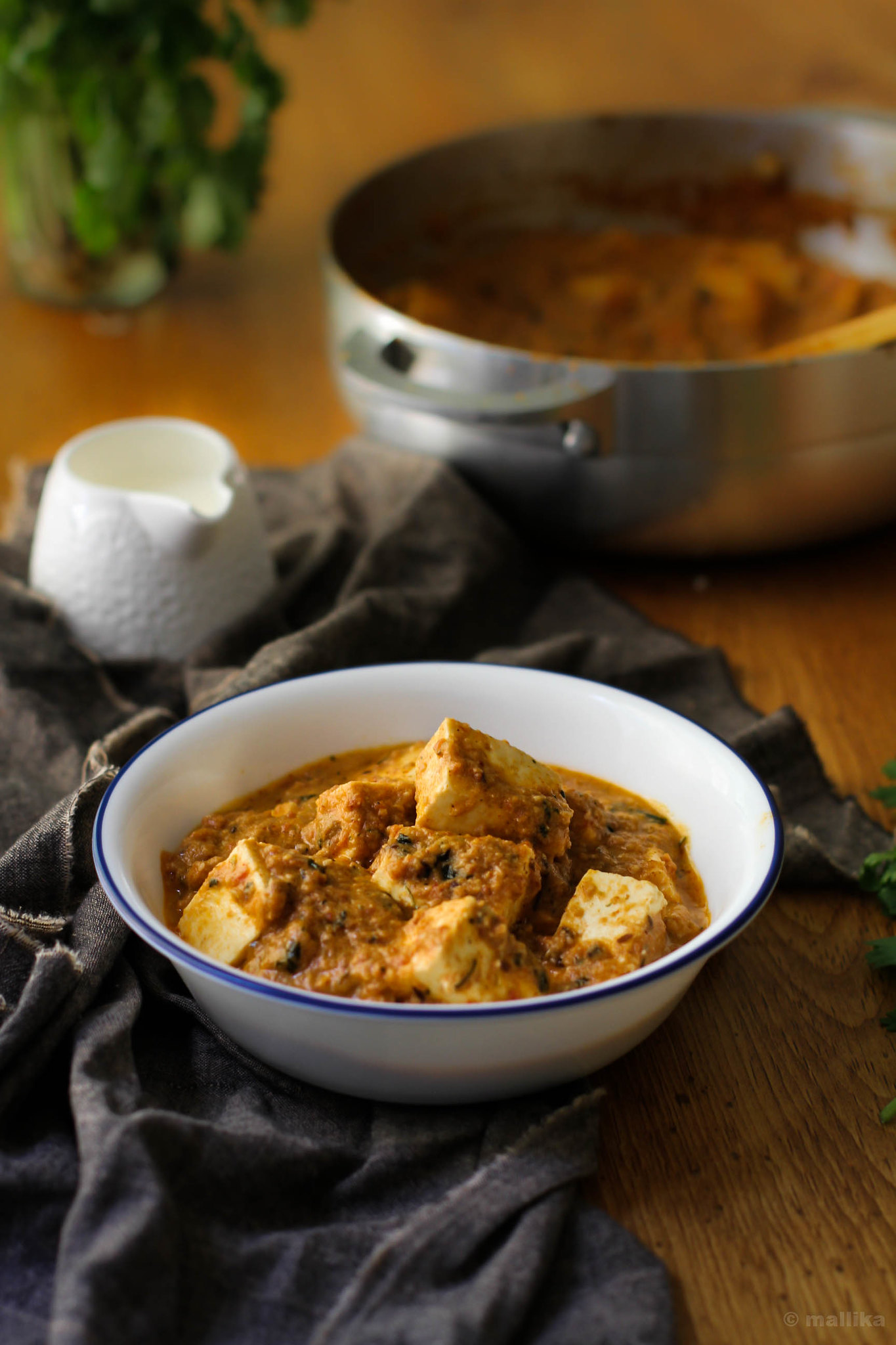
Paneer Makhani

How to make Paneer Makhani| Easy Restaurant Style Paneer Makhani
Back in the 80’s and 90’s, the only kind of restaurants we went out to as kids were the ones that served good North Indian cuisine. A good ambiance and décor was just one factor. A commendable restaurant however, was measured by the North Indian fare it served on its menu. A simple, hot Dal Tadka that had a great smoky flavor; the rich Palak Paneer in its deepest green hues - deeper the green, better the dish - that meant, it was stir fried better, hence it tasted better; Baingan ka Bharta dotted with cooked fresh peas and shreds of ginger juliennes, topped with fresh cream or melting butter, Choles and Rajamas that were spiced liberally and had a good layer of fat floating atop, the ladle going deep to stir it up gently before being served by the waiter; all of this usually formed an integral part of an Indian restaurant menu. This was either served with an assortment of Indian flatbreads like naans and kulchas or flavored rice like Biryanis and Pulaos.

No Indian restaurant menu though was complete without the quintessential assortment of gravies made from either the fragrant butter and cream based tomato sauce, or the white cream and nut sauce. Dal Makhani, Paneer Makhani, Malai Kofta, Veg Makhani, Paneer Butter Masala, Phool Makhani, Navratna Korma, Shahi Paneer and such alike formed the elite part of the menu. They weren’t the usual dishes most moms would cook at homes, hence relishing them at restaurants was a treat we looked forward to. I loosely remember how our palms smelt of makhani masalas after several hours of being back home from savoring the heavy North Indian meal at those restaurants.

Paneer CubedMakhani Masala 2


Though, that was a thing of past. We no longer gauge a restaurant by the standards of Indian food served. There are plenty of global cuisines to explore from, so usually an Indian fare takes the least preference. We love settling to home cooked Indian meals most of the times, replicating restaurant styled dishes at home in the comfort of my kitchen. On a Valentine's Day, when the restaurants are brimming with crowd, here's a better way to cozy up your evening - with good home cooked food and music to make your day memorable with your loved ones.

I have a fantastic recipe for Paneer Makhani for you. It's a keeper for years to come and you may want to thank me for that. The heart of a good Paneer Makhani dish lies in its base, the rich and flavorsome tomato cream sauce that can be made ahead and stored for a couple of weeks in the freezer. Inspired by Soma's post here, I have loosely adapted her recipe for Makhani Masala, tweaked it a bit to get a beautiful recipe that makes an array of dishes with just one basic gravy. This is where you start and can further adapt it to make many more popular recipes that are usually found in Indian restaurants.

So this Valentine's Day, if you are running out of place to dine out or if you've made no fancy plans to spend the evening as you had wished to, whip up this restaurant styled recipe in your kitchen, lay your table, light your candles and surprise them with this dish in the warmth of your own home. And don't forget to tell them how much you love them. Ofcourse, if you don't, this Paneer Makhani will do that for you!

Paneer Makhani 1


Paneer Makhani Restaurant Style

INGREDIENTS

For Makhani Masala

3 tbsp. butter / ghee / oil (more you use, better the flavor, hence do not reduce it)
2 green cardamoms, lightly crushed
1/2 cinnamon stick, broken
1/2 tsp. fenugreek powder (fenugreek seeds will also do)
1 green chilli, slit to half lenghtwise
1 tsp. fresh garlic paste (skip this for satvik version)
1 inch ginger, freshly grated
5 large ripe, red tomatoes, pureed to paste
1 tsp red chilli powder*
1 tsp. garam masala
1 tsp. kasuri methi, gently crushed
Salt to taste

For Paneer Makhani

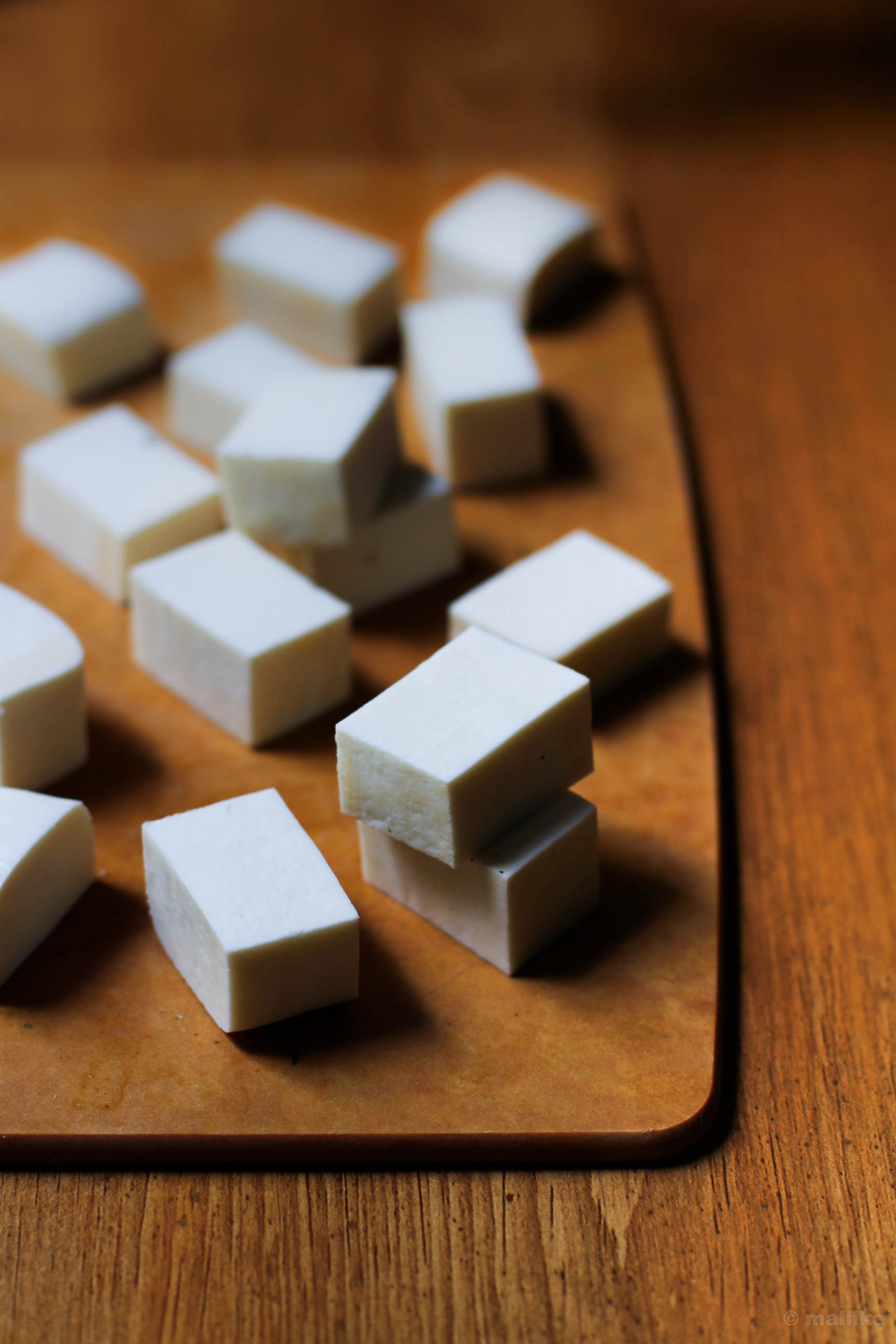
1 block / 200 grams paneer, cut into cubes
1/4 cup cream (adjust to your taste)
Fresh coriander, cream for garnish

DIRECTIONS

To prepare the Makhani Masala:

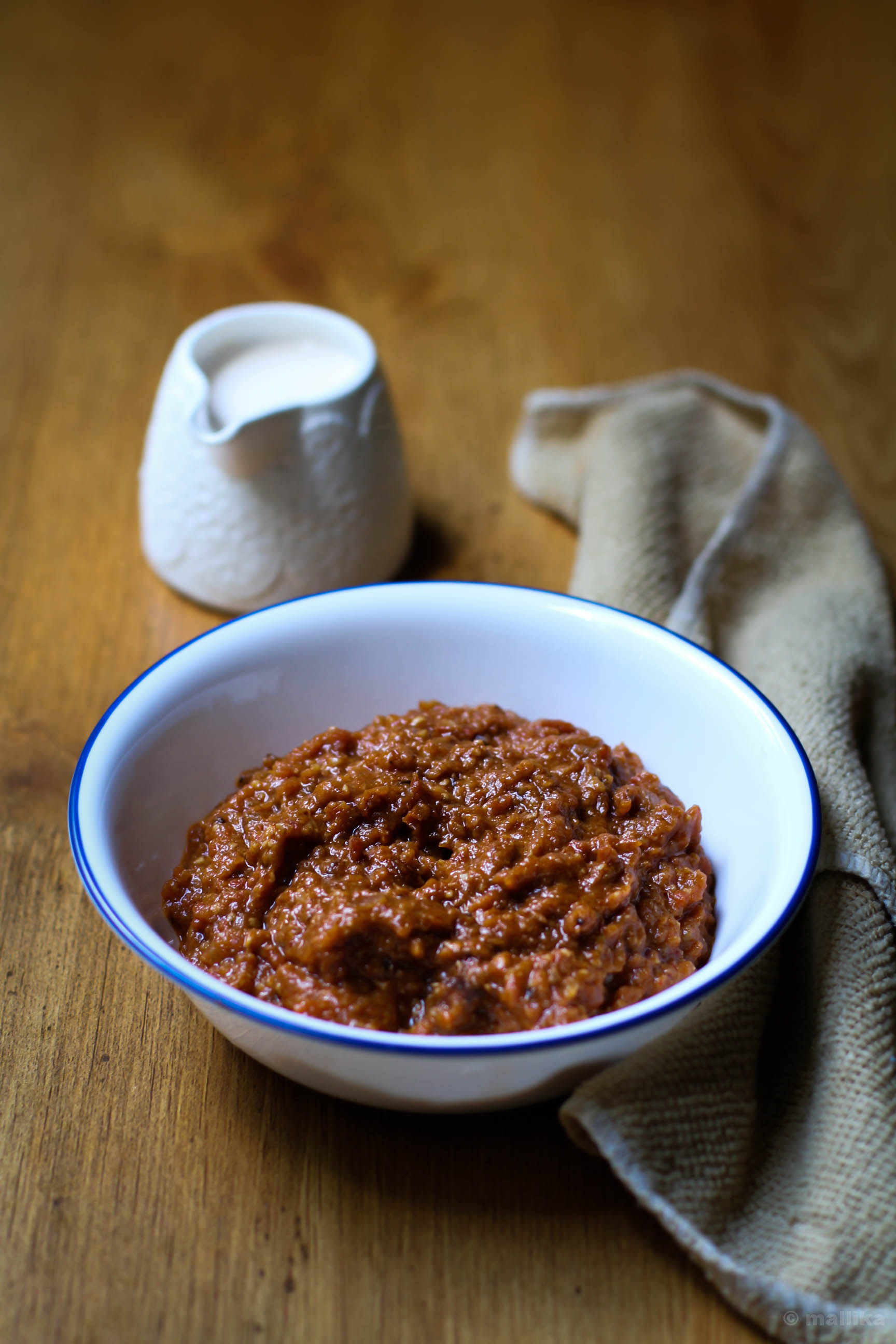
Heat the butter / ghee / oil & add the green cardamoms, cinnamon stick. Fry for 20 seconds. Add the fenugreek powder / seeds and fry for another 10 seconds. Never let the fenugreek burn, else they will turn the dish bitter. Add the grated ginger, the garlic paste and fry them till the raw smell is gone. Next add the tomato paste and cook till it reduces and oil bubbles up from the sides of the pan. Add the red chilli powder, slit green chilli, garam masala, and salt to taste. Finally crush kasuri methi gently between palms and add it to the simmering gravy. At this point you can either turn off the flame, allow the gravy to cool and store the prepared Makhani Masala in air tight container and freeze it for future, or proceed ahead to prepare the Restaurant Styled Paneer Makhani.

To prepare the Paneer Makhani:

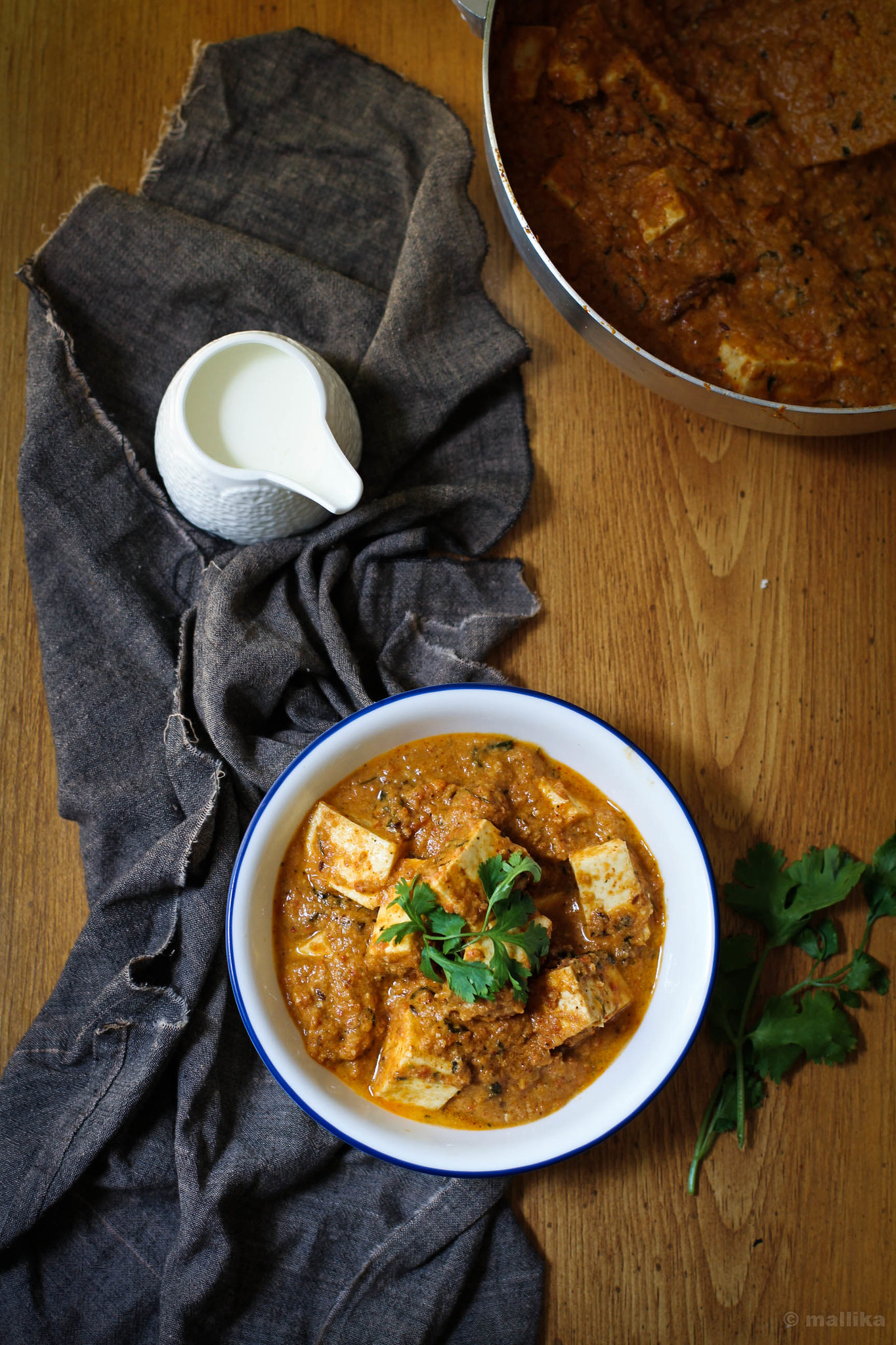
To the above simmering gravy, add 1/2 cup of water and cubed paneer and bring it to a boil. Stir and cook for 3 minutes. Finally add the cream and simmer for 2 minutes. Transfer the Paneer Makhani to a serving bowl and garnish with cream, ginger juliannes and coriander leaves. Serve hot with rotis, naans or kulchas. Pairs well with Jeera rice too.

Paneer Makhani 2


Notes:

- The above quantity of Makhani Masala will suffice for this Paneer Makhani recipe. Should you make in larger quantities, you can easily double up the recipe and store them in the freezer.

- This is a rich dish and is supposed to be made with butter or ghee. If you want it to be healthier use oil instead of butter or ghee. However, you are compromising on the taste.

- The color of the gravy depends on the amount of cream and the red chilli powder being used. If you want a richer red color, use Kashmiri chilli powder. More the cream, lighter the color.

- Kasuri methi leaves are dry fenugreek greens. Its a MUST in this recipe and renders a lovely flavor. However, don't use a lot of it. It can be overpowering.

- In case you plan to make ahead and store the makhani gravy, then I recommend you use half a tsp. of the kasuri methi greens to the gravy. The other half tsp. can be added as you prepare the final dish. This will enhance the flavor of dish and fresh crushed green render amazing flavor to the dish.

- There are no onions used in this recipe. You can avoid the garlic for a satvik version. However do not skip ginger as it gives a lot of flavor to this dish.

How to make Sabudana Vada | Easy Sabudana Vada Recipe
I spent a fairly large part of December living out of my suitcase traveling to Pune for work. Being my first visit ever to Pune as an adult I was looking forward to it. I’m told this is not my first time there. We lived for many years in Maharashtra and had crossed Pune en route on multiple occasions. The last time I was there, I don’t even remember. That must have been moons ago when I was a kid, most of which I can barely recall. And even if I did, it would do no good. Over decades, Pune is known to have seen oceanic wave of change the way Bangalore did. Nevertheless, it was a trip I lived and loved like I owned it.

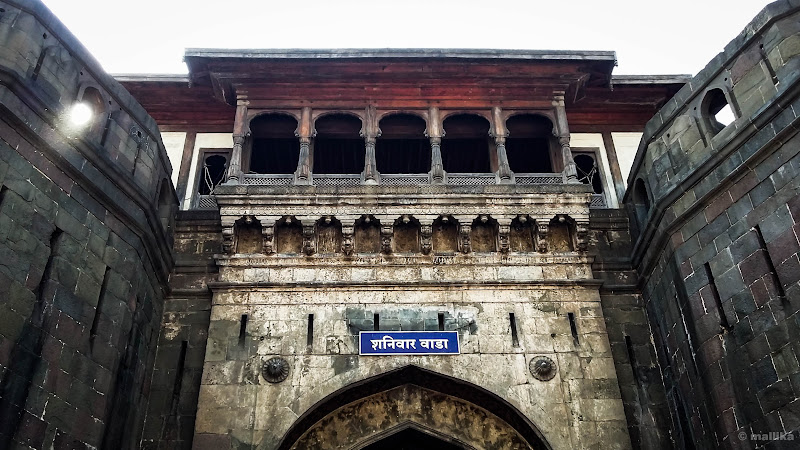
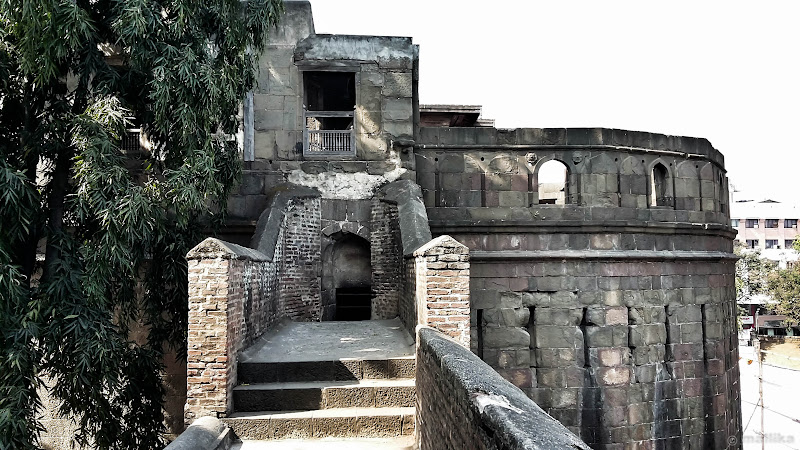
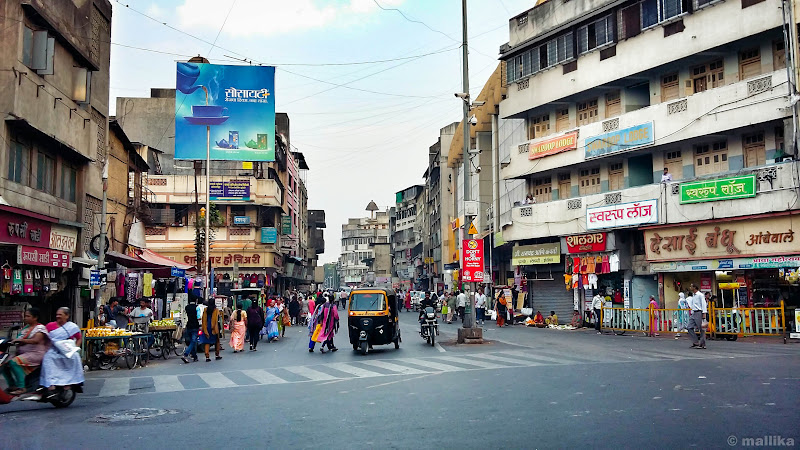
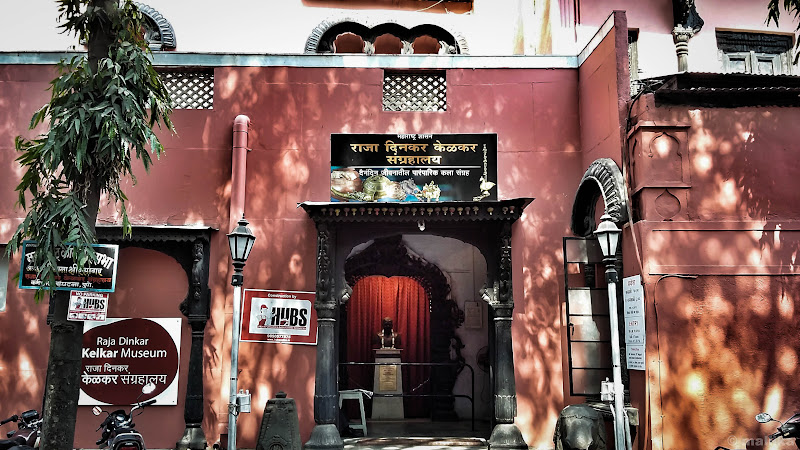
I am taking you on a short walk to Pune through my eyes. Bear with me, these photos do no justice as I was without my real camera. All these captures were shot on my cell phone.


Vivacious and live. Modern, yet heirloom. It’s a city where warriors whisper their manifestation through their wadas in every nook. Where the stony edifices call out in solitude and their empty staircases in splashes of grey monotones make you weep. They take you back to school, to those history classes of 6th standard, leaving you in terrible guilt by reminding you how much you dreaded mugging Shivaji and Bajirao’s valor. Why I ask? Instead why didn’t our schools profess visiting these iconic citadels with their near-collapsing rustic wooden panes and ornate windows, that speak of their crumbling legacy and history entangled in this contemporary city. Echoes of bygones are heard in these architectural splendors. You wonder what lives have lived behind those warped doors. Their ruins and textures speak to you peeking from their pasts - from those granite slabs at the entrance of Shaniwar wada that etch their account, from their colossal wooden doors that weathered the centuries gone by; they once stood as epitome to the bygone Peshwa and Maratha reigns. You hear them whisper through cracks as they frail.

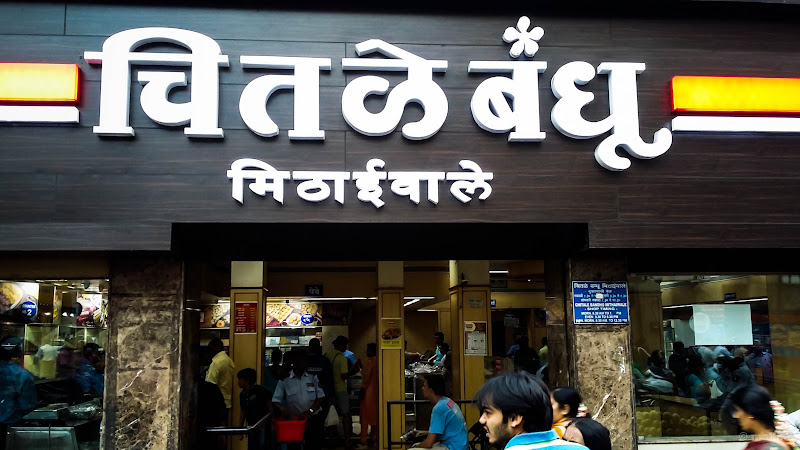
Pune is a sprawling city where urbanization is vastly seen in every spectacle that your eyes go. There are pockets of lanes and by-lanes that speak of their heritage caving their ways into modernization. There are wadas, forts and caves in the heart of city. Women draped in nauvaris haul carts heaped with fruits, weighing their daily sales. Men with kind eyes line the pavements, ride bicycles, and crowd the bazaars in their faded dhotis and topis, heavily dusty and pale from whites to browns. There are beautiful images of the daily Pune life that can't escape your eyes. Like markets crammed with fruit and vegetable vendors calling out to you. Kirana stores dotting the city all over. Wada-pav and sabudana wada bringing bliss to the common man’s appetite. Chitalebandhu and Kayani lending soul to early evenings. Marathi interspersed in sweet high tones; chalā chalā, puḍhē jā, kai jhālē. Sounds and smells of Marathi culture in everything, everywhere. It draws you into their culture, ties you with theirs.


Yet, if you tour the city as a tourist you’ll see a wave of urbanization. Buildings over buildings, like matchboxes stacked over each other, glued together. From a bird’s eye view, they look like cardboard cutouts in varying heights placed randomly. That’s how cities look like, right? Like blueprints in real time? Construction in every area. Flyovers at every stretch. Tall, wide ad banners in every sight, at every turn. You read in Hindi, it sounds like Marathi. A melodious rhythm that leaves you thinking their meanings. There are buildings called IT factories shaped in form of an egg, globe, geometrical structures of triangles, hexagons and pentagons, some lopsided and shapeless too, that seem like the architects’ messed up work. There’s keenness everywhere to cover them with tinted glass panes to hide the lives behind. They see you, you don’t. Instead, they reflect the bustling streets, the women behind carts, the men in faded dhotis, the bike riders, the car goers, the kirana dukaan, the traffic signals, the floating clouds, and the flying sparrows, like holding mirrors to the city. Its visible there for you to see. Like a slap you can’t turn your face away to. People and cultures merge, dissolving like water colors on paper blotched over each other. Some pockets murky, some clear, some overlapping into one another, each color varying in their depth and degrees. Overall it’s a beautiful blend of tradition and modernity, a beautiful picture you can’t ignore.

Pune, you are beautiful, no doubt. But I long to go back in time. To time when it spun back into history. Where the wadas came alive in their full splendor and their now dark staircases were filled with giggles and laughter from women of those times. Where modernity did not nudge the traditions and replace with this blend so quickly. Where the frail walls that stood strong to weather and time, spoke of valor. Where the cracks in cultures merged, the history disentangled itself and the heavens called for legacy to rule again.


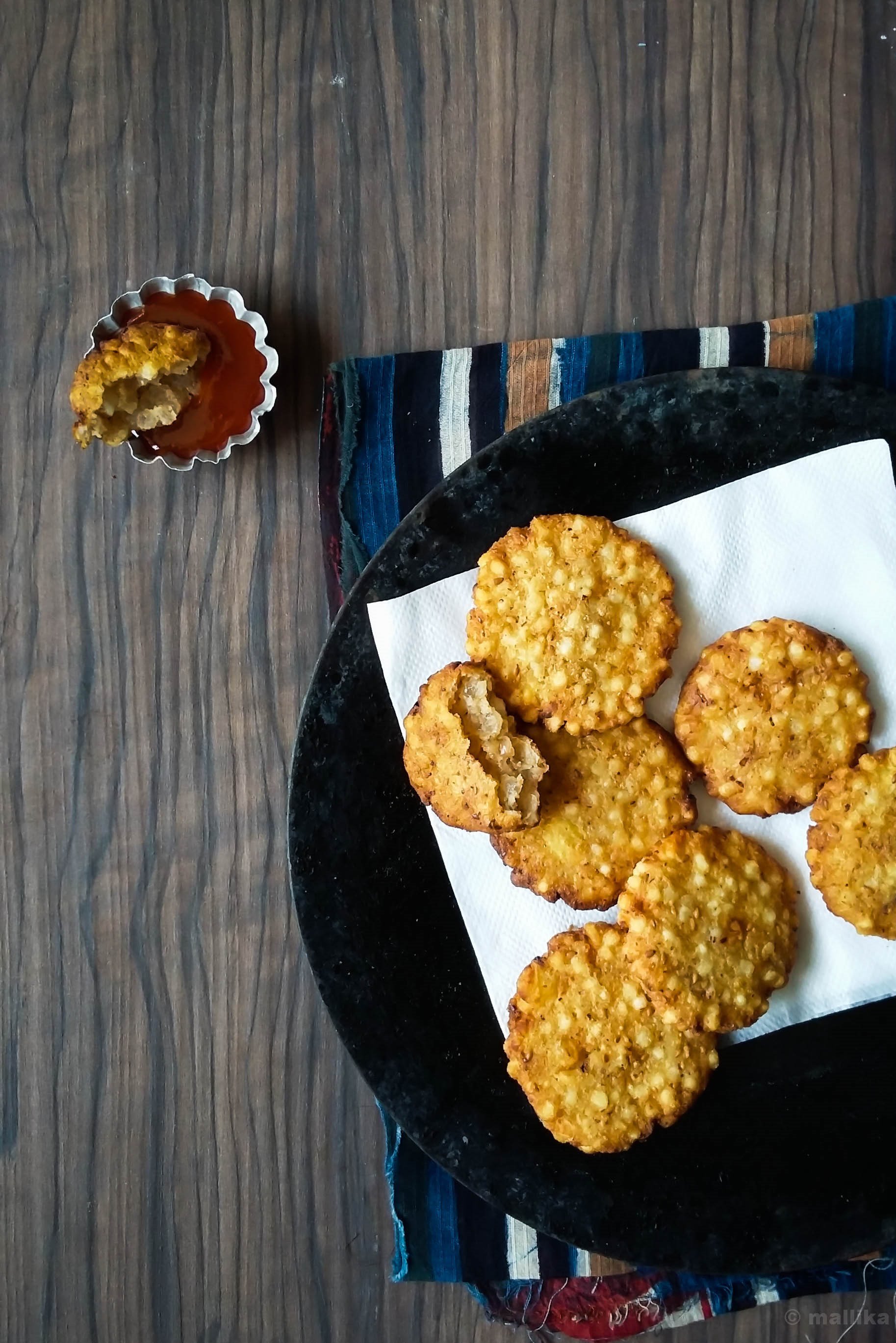
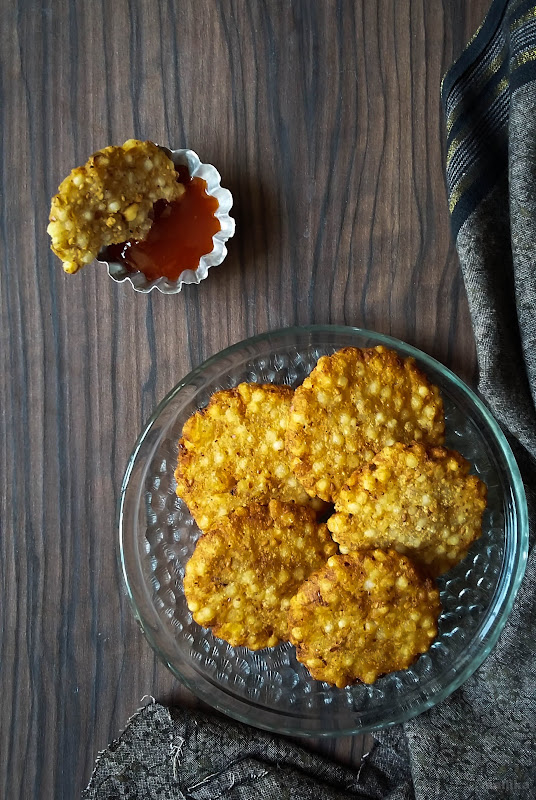
In my ode to Pune, I bring this delicious Sabudana Vada from my kitchen to yours; a classical, traditional Maharastrian dish that I have loved for several years now. I made this in the fond yearning of the time spent there savoring local delicacies, sabudana khichdi, misal pav, vada pav and this sabudana vada. Its flavors sing to you in simplicity, bursting from the golden crisp pops of sago pearls, punctuated with potatoes, peanuts and chillies in each bite, each subtle and well blended. It's a thing you should try, incase you haven't.


Sabudana Vada

INGREDIENTS

1 cup sabudana / sago pearls
2 medium potatoes, boiled and mashed
1/2 cup roasted peanuts, coarsely ground
1 tsp cumin seeds
2-3 green chillies, chopped
2 tbsp. finely chopped coriander leaves
1 tsp. lemon juice
1 tsp. sugar
Salt to taste

DIRECTIONS

Wash the sago and soak it in just enough water to cover the pearls. Soak it for 4-5 hours or preferably overnight. In the morning, the pearls will be plump and doubled in size. For 1 cup of soaked sago, I used 1/3 cup of raw sago, washed and then soaked them in 1/2 cup of water for nearly 5 hours.

Combine all the ingredients in a bowl and mix well. Pinch a lemon sized portion out of the prepared vada mixture and shape it into ball. Gently flatten it with fingers. Prepare all the vadas to fry and keep them aside. Meanwhile, heat the oil in a thick bottom vessel and deep-fry the vadas on a medium flame till they are golden brown in color on either sides. Drain on kitchen paper. Serve hot with green chutney or tomato sauce.

Tawa Pulao 1

How to make Tawa Pulao | Easy Vegetable Tawa Pulao Recipe
Last month, when everyone was busy counting down days for Christmas and gearing up for year end celebrations, I was out in Pune, spending a fair share of December in a city familiarly unfamiliar to me. Familiar, because any Bangalorean can best draw similarities to this city. Its traffic, roads, breadth of the city, the weather, all so similar. Unfamiliar, because this was my first time here. Its language, people and directions, so unfamiliar. I spent weekdays at my desk, busying myself between colleagues, emails and phone calls, and sightseeing the city on weekends. I will give you a glimpse of Pune through my eyes in my next post, and I promise on that; but for today, I have something more to share. Its a bit of what I had been procrastinating for a while because of my wrung out busy life.

Sometime around the first week of December, in an afternoon by the pool side of JW Marriott, sipping some refreshing rose mocktails and exchanging greetings with a couple of bloggers and press folks, a handful of us came together to be a part of Canola Cook-off event hosted by Chef Jolly Surjan Singh. We flocked around the Chef that noon as he spoke about his love for Canola oil and spun his magic around the table, cooking some versatile Indian dishes at the first Canola cook-off sponsored by Canolainfo.org. Mind you, its not a brand they endorse, but an awareness they are trying to create towards understanding Canola oil and creating its identity in Indian cooking. The rest of the evening was spent in chatters, sipping tea as we savored the Khada Desi Palak, Tandoori Broccoli, and many other delicacies that Chef had created to display the versatility of this little known oil.


This isn't my first time with Canola. The first time I saw it, it read C-A-N-O-L-A, and I had assumed it was a brand name. I stared at it for a long time trying to identify where it came from. Coconut? Olive? Groundnut? Sunflower? What breed did it belong to? It glared back at me, its words 'Canola Oil' in its bold black font and that left me worrying its identity. In a new country, a new home, a new kitchen, it sat on the kitchen counter-top in a gleaming plastic bottle, radiating its thin golden liquid, feigning like a silly hypothetical thing. We did not grow up knowing each other. It was as alien as meat is to a born vegetarian like me. I had never heard of it till I traveled out of my country. Nor had I encountered it on the webspace. That's now a thing of past. I read up on it later and soon we were friends shaking hands with every meal I made till the time I was there.

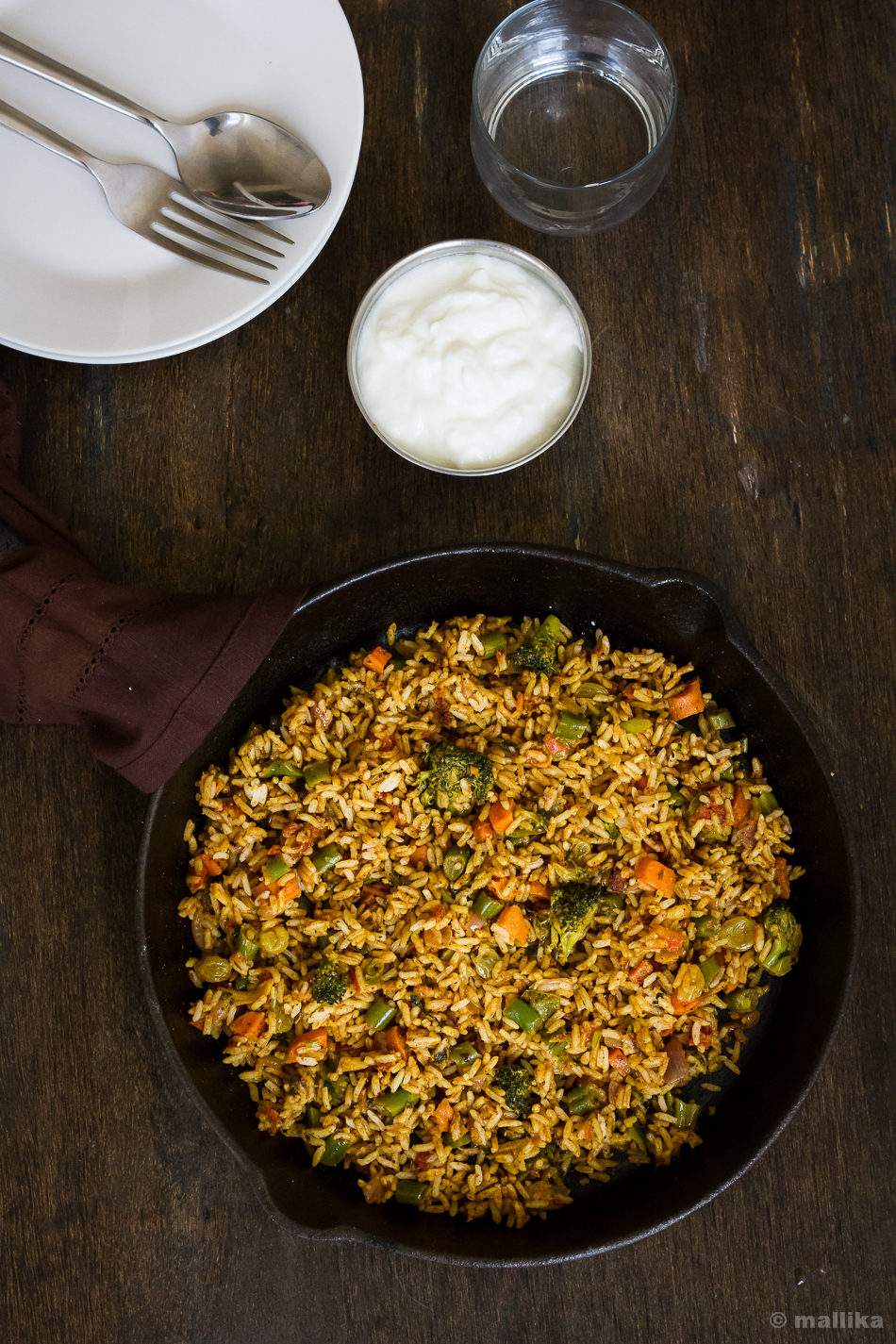
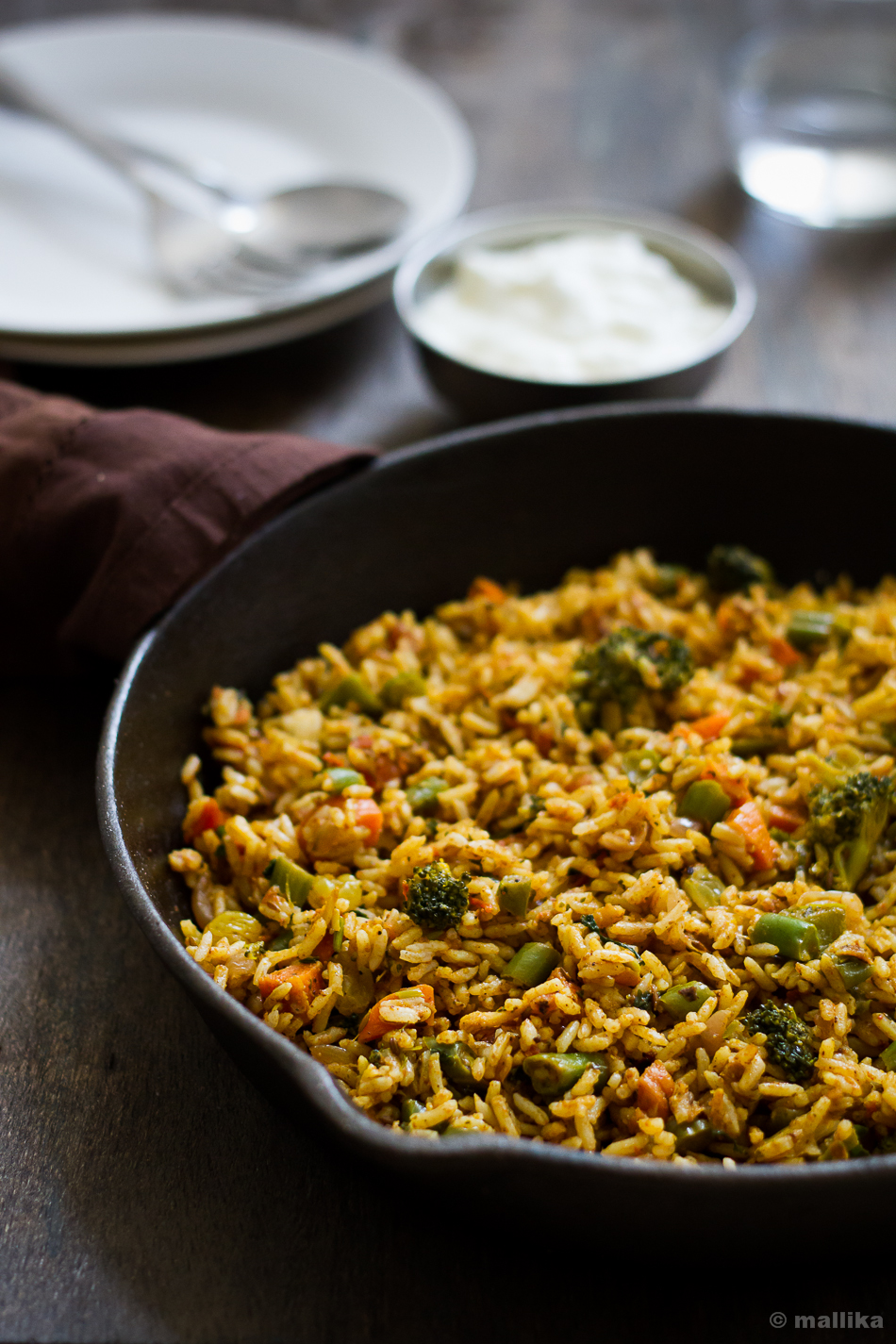
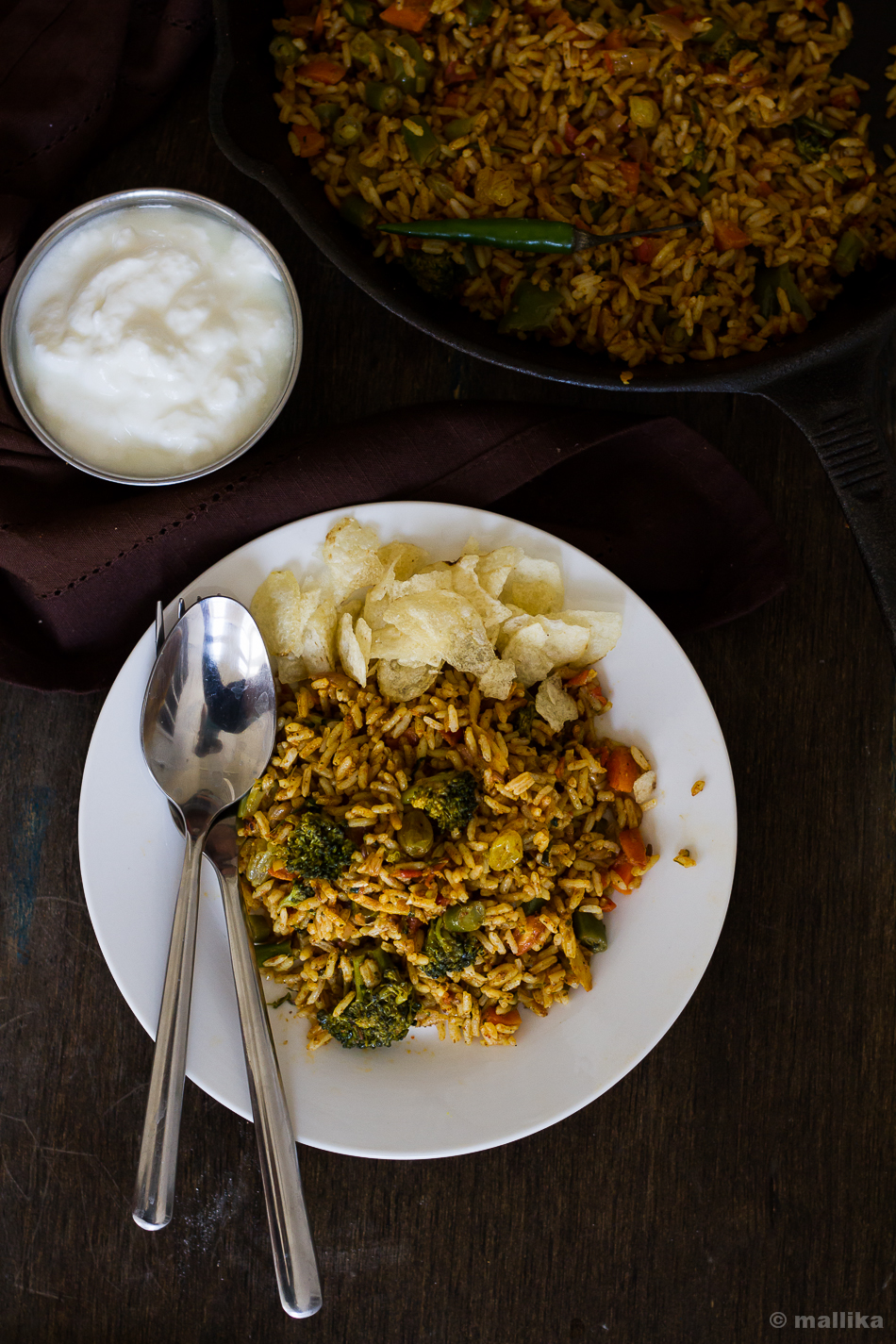
So what's canola oil and why are we Indians not so aware of it? A little known to most of us, it comes from the seeds of the rapeseed plant that is extracted and processed to remove some unfavorable substances. It's a heart friendly oil with less than half the saturated fat of olive (now, do you believe that?) or soybean oil, that gives you more excuses to fry your samosas, bake muffins or use them in tadkas intrepidly. Grown commonly in the West, mainly Canada and US and widely used there, this oil is slowly walking baby footsteps in Indian markets. Having lived in the US and used it in every meal of the day, I know how popular canola oil is back there. Rediscovering canola through this event was like meeting a long lost friend, someone whom you had known a while ago but had faded out of your memory. They appear unexpectedly and brush the rust off the oblivion. A bottle of canola now sits on our kitchen counter, in a prominent spot where the vegetable oil had once reigned that space. We've fried jamoons, roasted chivda, used them in salads, stir fries and pulaos with the same ease as with our regular cooking oil with no change in flavor and additional boast to health. I'm excited to share with you my recipe for Tawa Pulao, made with this golden goodness; a street side food often found on carts and road side eateries in Mumbai. Its quick, delicious and healthy one pot meal made from steamed rice, vegetables and pav bhaji masala. For me, this serves the best way to use up left over rice from the previous meal.

Tawa Pulao_2


Tawa Pulao

INGREDIENTS

2 tbsp canola oil
1 tsp cumin seeds
2 tsp ginger-garlic paste
1 onion, finely chopped
1/4 cup fresh peas
2 tomatoes, finely chopped
1/4 cup each of chopped vegetables like carrots, beans, capsicum, broccoli
1/4 tsp turmeric powder
1 tsp chilli powder
2 tsp pav bhaji masala
3 cups cooked rice
Salt to taste
Juice of 1/2 lemon, squeezed
Finely chopped coriander or fried green chilli, for garnish

DIRECTIONS

Heat oil in a heavy bottom pan and fry cumin seeds till they brown. Add ginger-garlic paste and fry for a few seconds. Then add the onion and sauté till its brown. Add the fresh peas, tomatoes and turmeric powder. Cook till the tomatoes are soft. Next, tip in the chopped carrots, beans, broccoli and capsicum and fry till they are nearly cooked. Add the rice and mix well with the vegetables. Add the salt, red chilli powder with pav bhaji masala. Toss well and cook on high flame for a 2 minutes, till all the masalas coat the rice well. Switch off the flame. Squeeze the lemon juice and mix well. Garnish with coriander leaves and serve with yogurt / raita and fried green chilli, if desired.


Tawa Pulao Plated

Kaju Katli

How to make Kaju Katli | Cashew Burfi | Cashew Fudge Recipe
Sometime in October last year, just ahead of Diwali, we bumped into my husband's close family friend at a mall one evening. After a brief chat, Mr. S and his wife headed to shop in the mall, while his mom and young daughter hung around us, continuing the talk. My mother and I spent nearly an hour chatting with aunty while the kids were engrossed playing in the ball pit. We spoke at length about the upcoming Diwali preparations, the new dress that aunty had sewn on occasion of Diwali for her grand-daughter, the small disparities in our cultures and the celebrations (they being Tamilans), sharing our favorite family recipes that made the festive celebrations more special.

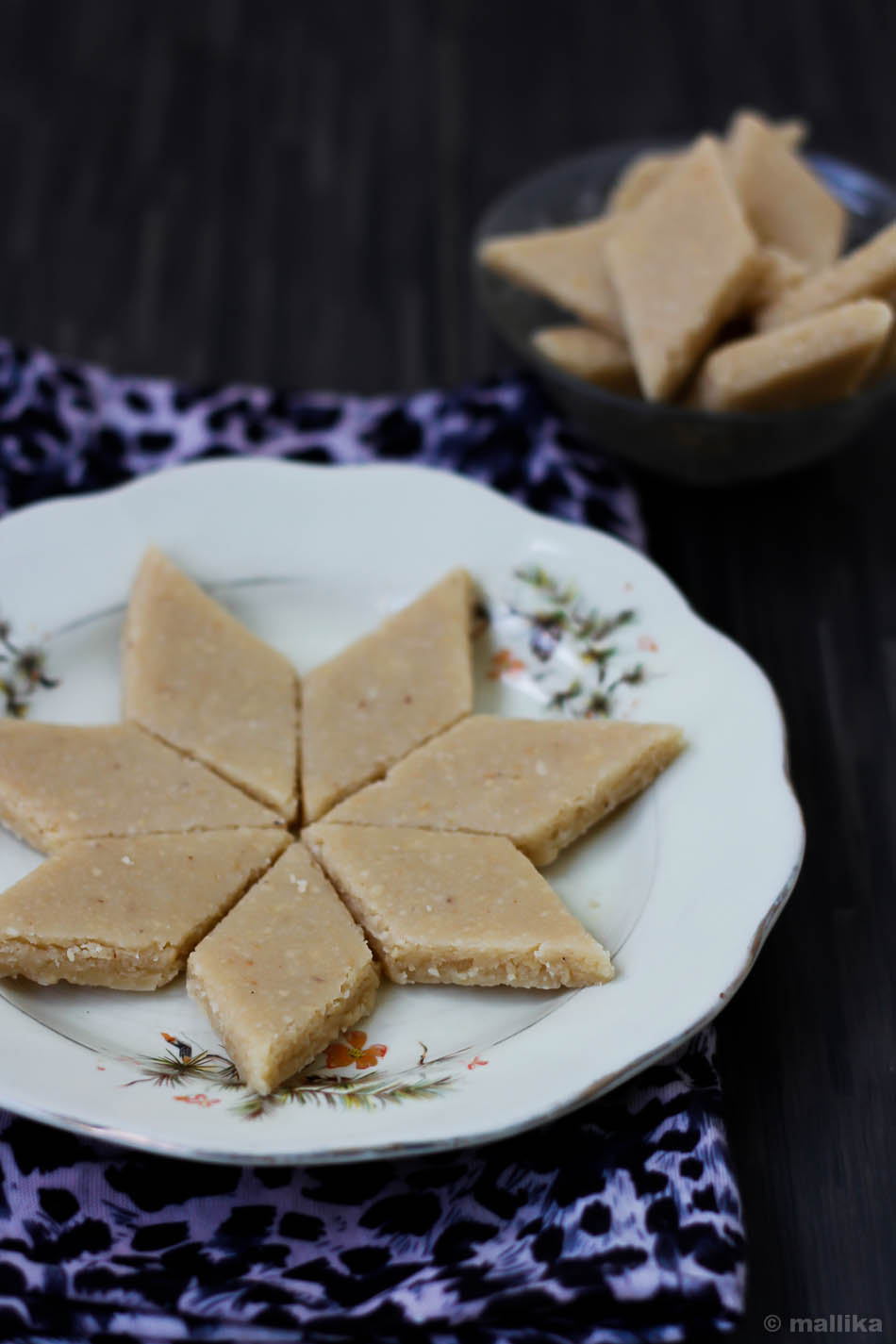
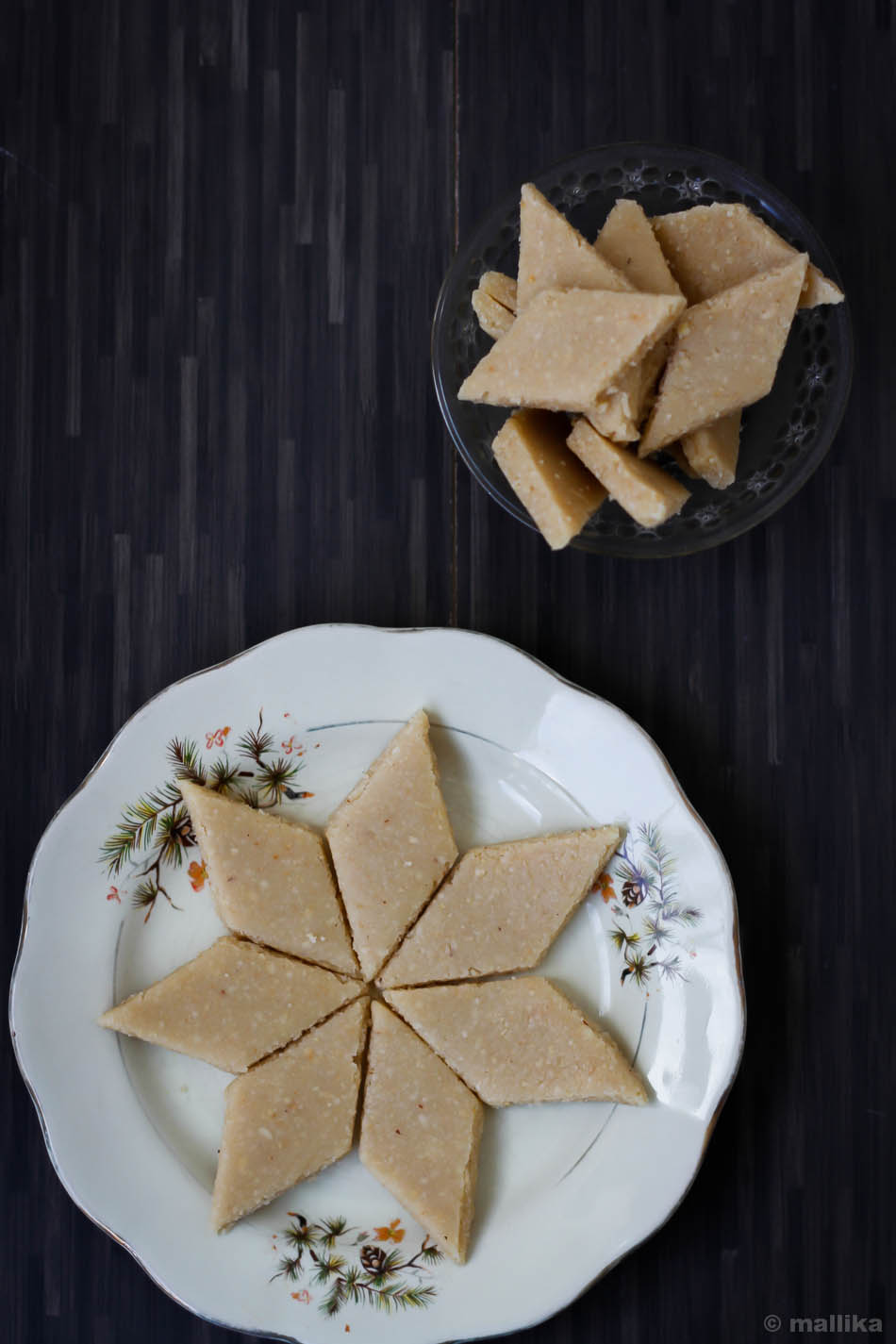
One of the recipes that aunty shared with us that evening was the recipe for this Kaju Katli, a popular cashew based sweet that's a popular family favorite in many homes, especially in the North, where gifting boxes of sweets is customary to their traditions. Although we are past Diwali now, I don't think this requires any occasion for celebration. You can make them at home, at your convenience anytime and feel pleased with this indulgence. If you have a weakness for Kaju Katlis, then I am afraid you may not be able to resist eating just one.

Kaju Katli_1


Making these burfis at home may sound intimidating, but it isn't. This was the first time I attempted making them at home and they came out delicious. I started off nervously even as I measured the amounts suggested by aunty, but she had assured that the recipe would work even for the most novice, immature cook, and that assurance itself wanted me to try this recipe in the first place. The end result ofcourse was smooth, melt-in-mouth goodness of cashew fudges.

There are many ways to prepare this dessert. A common one being where the cashew nuts are soaked in water overnight and ground the next day, then cooked in single-strand sugar syrup till it comes together to form a dough. As an alternate, easier method, you can grind the cashews to a fine powder and mix with sugar syrup, cooking it on a low flame to form a soft dough. The dough is then spread and flattened on a plate and cut into thin diamonds. Commercially sold katlis have a layer to silver wark on them, however, for a home version you can skip them totally. This version of kaju katli is an easier where you do not have to worry about sugar syrup or its accurate consistency. Hence, time saving and easier which gives you the burfis of same quality as bought at a store.

Kaju Katli_2


Kaju Katli | Cashew Fudge

INGREDIENTS

2 cups cashewnuts, heaped
1 cup sugar
1/2 cup water
1 tbsp. ghee (approx. 3 tsp.)

DIRECTIONS

Grind the cashews to a fine powder in a mixie. I used the chutney jar as the whiz option on my mixie helps me control how fine I want the cashews to be powdered. Ensure that the cashews are not powdered to an extent that they begin to leave oils.

Heat the sugar and water in a thick bottomed pan and stir well till all of the sugar is dissolved in the water. Just as it comes to a rolling boil, add the cashew powder and stir well on a low flame.

The cashew mixture will soon come together and begin to thicken. Once it thickens enough to form a mass / sticky dough / lump, add a teaspoon of ghee. Remove the whole of the mixture from the pan.

Transfer the prepared mixture on to an upturned greased plate or a butter paper. I used a marble chakla. Allow it cool a little. When its cool enough to be handled, knead it gently to form a smooth dough. If the dough is too stiff and find it hard to knead, add another teaspoon of ghee. This is optional though.

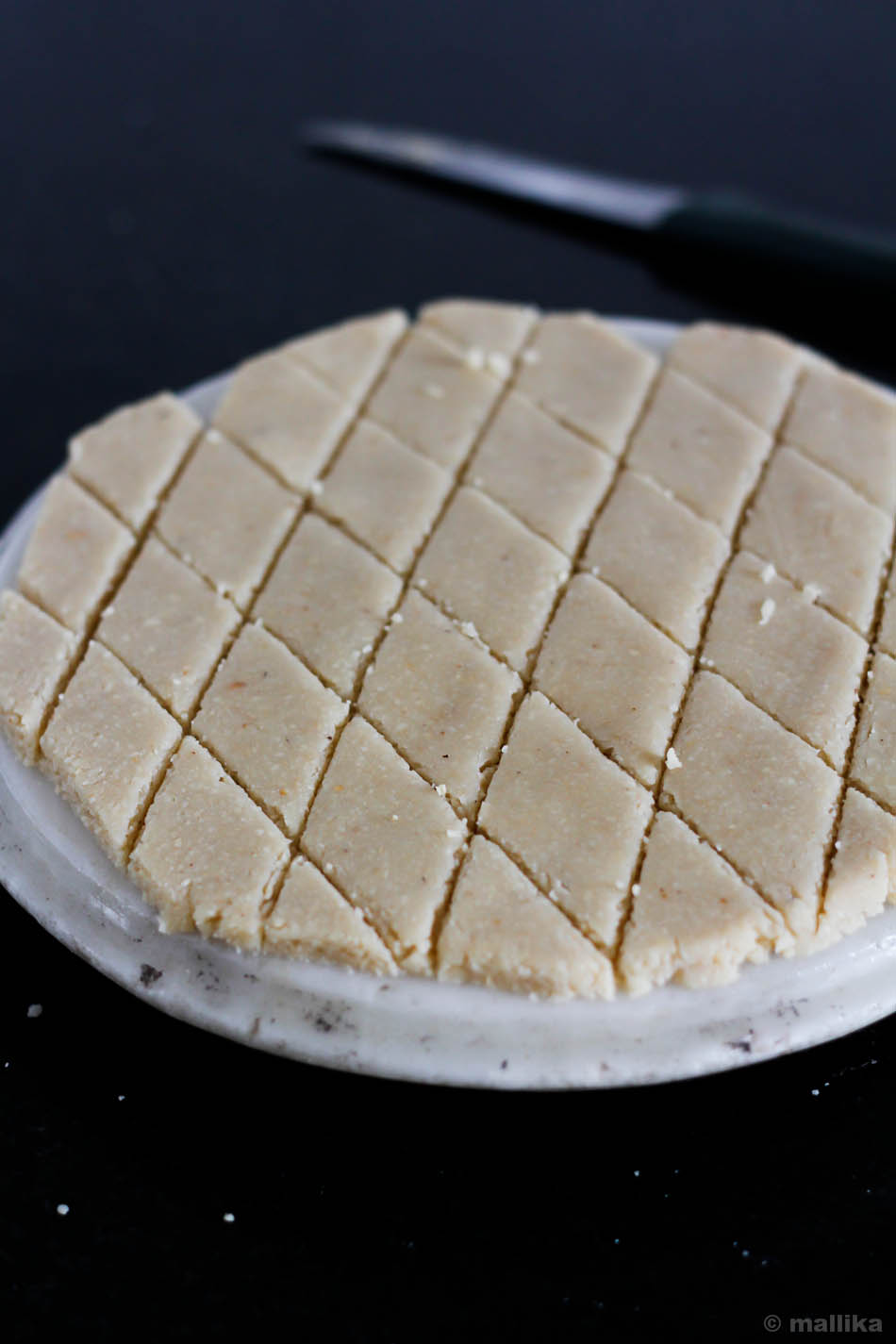
Using a greased rolling pin, roll the dough gently and evenly till its about 4-5 mm thick in height. Allow to cool. When cooled completely, use a sharp knife to cut the cashew fudge into diamond shapes. Gently transfer the kaju katli to serving plate or store in an air tight container.

Methi Mutter Malai Recipe

How to make Methi Mutter Malai Restaurant Style | Methi Mutter Malai Recipe
Around the weekend, my mind scouts with ideas as I leisurely spend the day in the kitchen. The weekdays often go by unnoticed, dissolved in the hectic day at work followed by the madness of traffic and noise of city life. The usual mundanes of flurry and rush that I needn't talk about. As the weekend transpires, I seek an inspiration to cook that usually comes from the morning trip to the grocery store. I enter the store in enthusiasm, more so from the several moments I spend watching crates of fresh vegetables and fruits being loaded off the trucks and piled into carts to be brought in by the storekeepers. It's a sight I cherish with great delight and an absorbing interest.

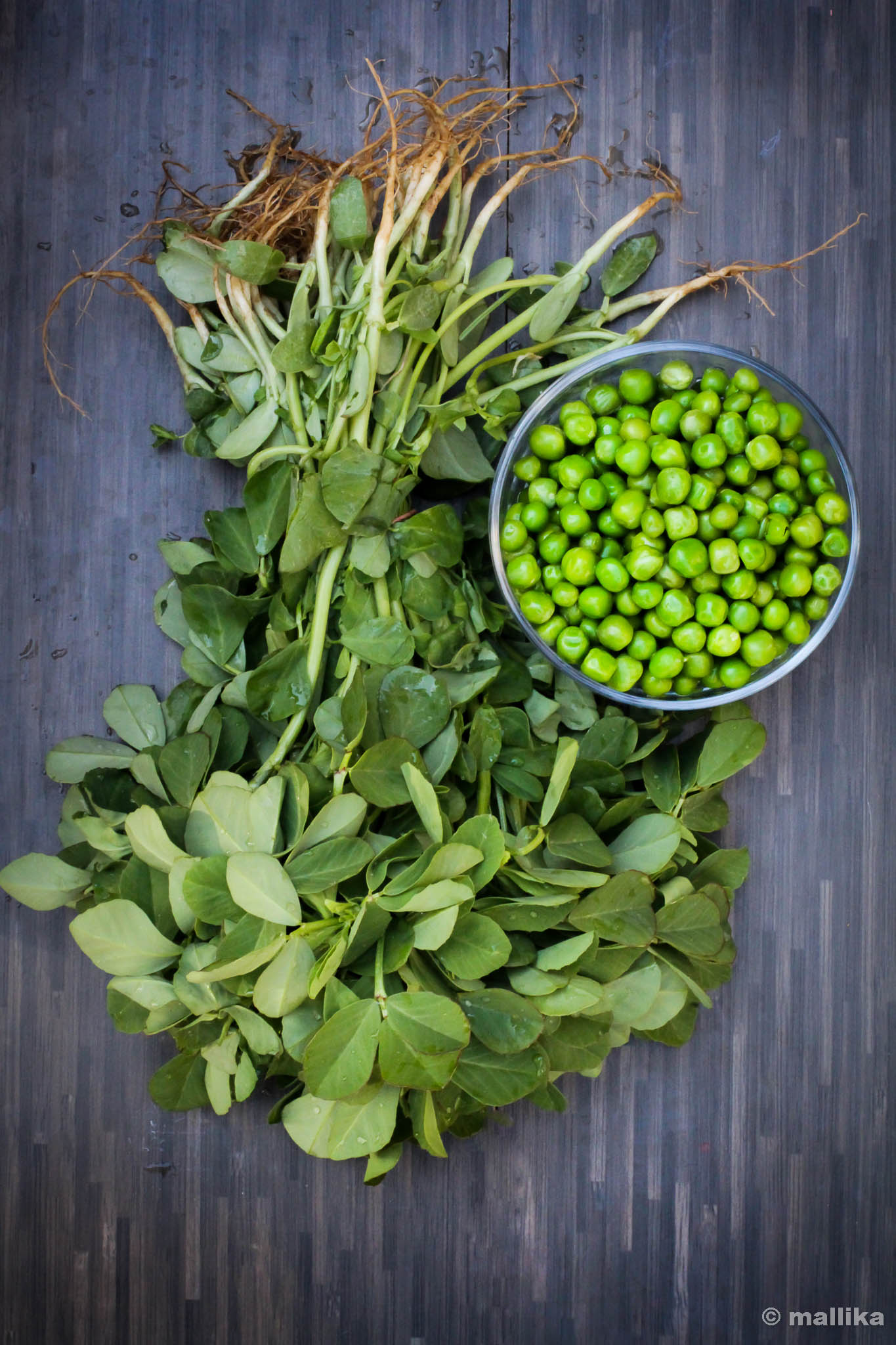
Fenugreek and Peas


The grocery shopping this weekend saw me picking bunch of fresh fenugreek greens that gleamed off from the rest of the greens. For a long long time, my mind has been set on making restaurant styled methi mutter malai well in the comforts of my kitchen. Having had this a couple of times at restaurants in the past, and while seeing a lot of bloggers on web-space make this with ease, my heart was sold as I saw them on the grocery counter. May be it was the fresh leaves with tender stalks or the firm sap greenness that called out to me; quite undeterred I had a couple of healthy bunches carrying back home. You bet, I would probably not spare the roots too, given the chance may be!

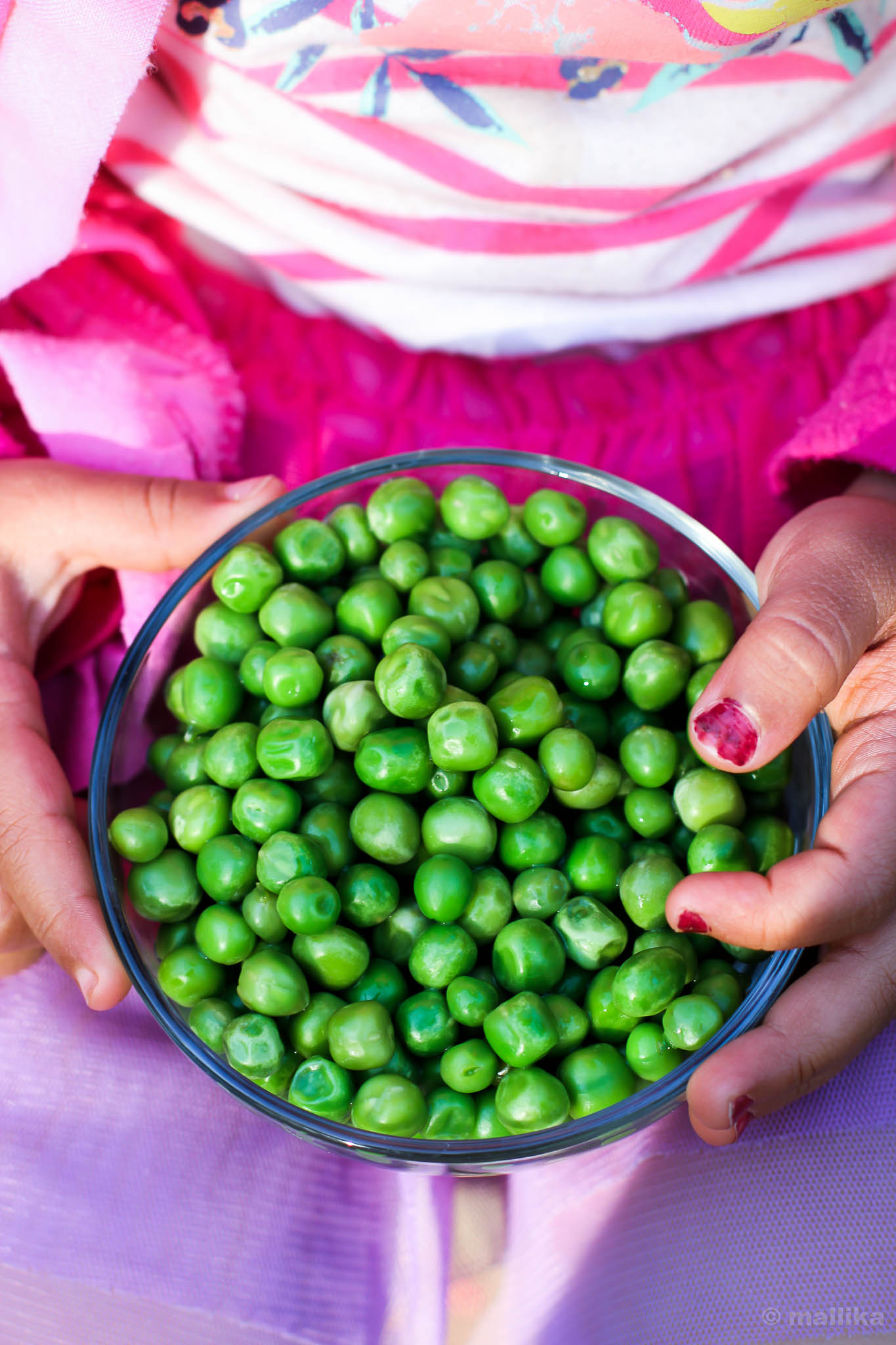
Peas


On another note the start to this weekend went off quite memorable. Late evening on Friday this week, I headed to Aloft to join them in their second MTV Asia Musical awards show where we saw the top five finalists battle out for the winning position. It was a musical night filled with glitzy, glamour, creativity over cocktails and canapes. The bands had it all that brought them up there. Their music, soulful compositions, phenomenal talent with creativity and technical skills - all put together to fill the space with their youthful aura.

So when Saturday came by, my mind was still grooving into the energies of the night before. Saturday, my grocery bag was stocked with all that I needed for a good methi mutter malai. However, I put that aside for the Sunday lunch. Instead, I pulled off the day lazying around and filling myself a light brunch and fruits, skipping dinner. Sunday though, this methi mutter malai and pulao made up for a royal feast.

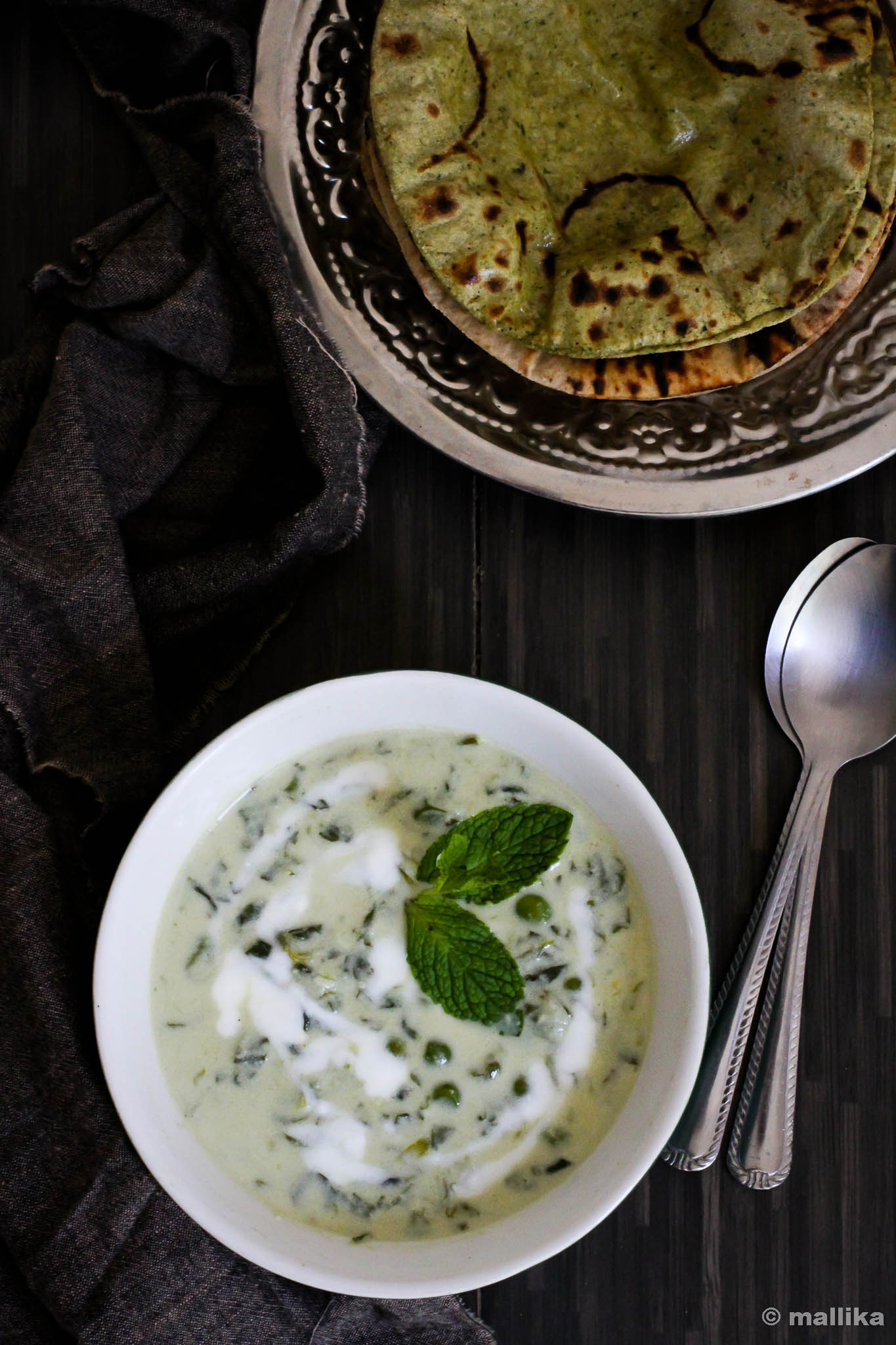
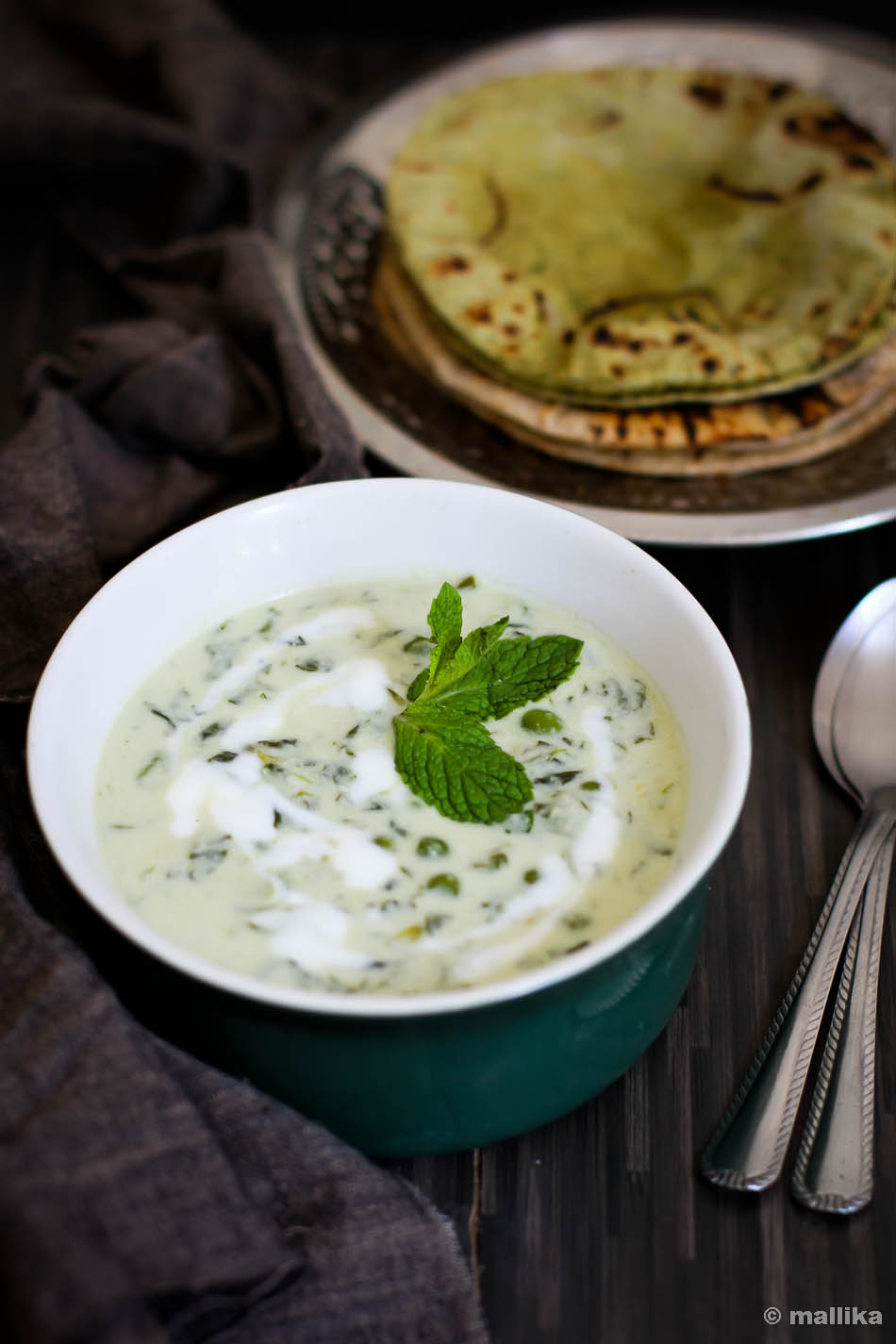
Methi Mutter Malai


Methi Matar Malai needs no introduction to most. Hailing from the Punjabi North Indian cuisine, this dish can be commonly found in the menu card of most North Indian restaurants. The fresh fenugreek leaves and green peas are simmered in a rich, white and creamy gravy base, it's simplicity and richness that will enamor you in the first place. It's great served as a side dish for roti, parathas, naan or pulaos.

It's not a dish one would recommend for a daily indulgence, yet, it never harms when it promises some health through greens that are packed with nutrition. The dish is fragrant and so mildly spiced that its loved by kids too. What I love is the sheer simplicity of this dish, the mild flavors and richness that this recipe offers, quite replicating the Indian restaurant styled methi mutter malai.

Methi Paratha


Methi Matar Malai | Restaurant Style Methi Mutter Malai

INGREDIENTS

2 cups chopped fenugreek / methi leaves
1 cup fresh / frozen green peas
1 tsp cumin seeds
1/2 cup milk
1/4 cup fresh cream
1 tsp sugar
2 tbsp oil
Salt to taste

To be fried and ground into a paste

1 onion
1-2 green chillies
1/2" ginger clove
1-2 garlic cloves
2 cloves
Seeds from 3 cardamom pods
1/4 cup cashewnuts

DIRECTIONS

Soak the cashewnuts in warm water for 20 mins. Drain and set aside to be ground along with other ingredients. In a pan / kadai, heat a tablespoon of oil and fry onion, green chilli and ginger till the onions are transparent. Turn off the flame and allow to cool. In a mixie, grind to paste the fried ingredients along with the soaked cashews with little water. Set aside.

In a pan / wok, saute the chopped fenugreek leaves along with half a teaspoon of salt till they wilt and let out the water. This will take about 5-6 minutes. Switch off the flame and allow it to cool to room temperature. Then, squeeze the water out of the leaves to remove the bitterness from them and set the drained leaves aside.

In another pan / kadai, heat a tablespoon of oil. Fry the cumin seeds. As they sizzle in the oil, add cloves and cardamom seeds, Then add the green peas and fry them briefly for couple of mins till the peas are cooked. Next, add the cooked and drained fenugreek leaves with 1/4 cup water. Add the milk and cream. Simmer on low flame for 5-6 minutes. Add the sugar and salt to taste and mix well. Transfer Methi-Matar Malai to serving dish and drizzle little cream on top if desired. Drizzle some fresh cream on top. Garnish with coriander leaves or mint leaves and serve methi matar malai hot with naan, parathas or phulkas.

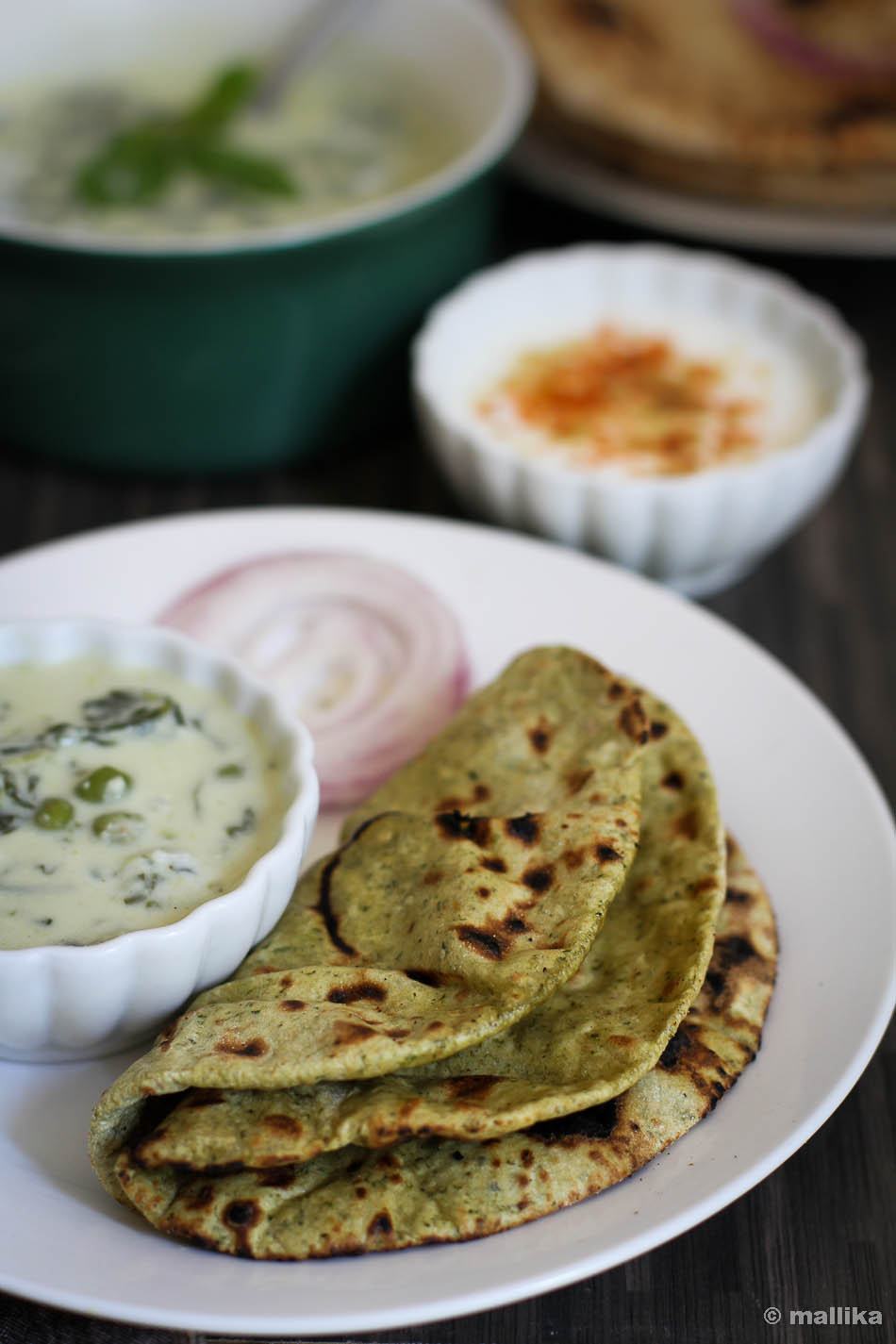
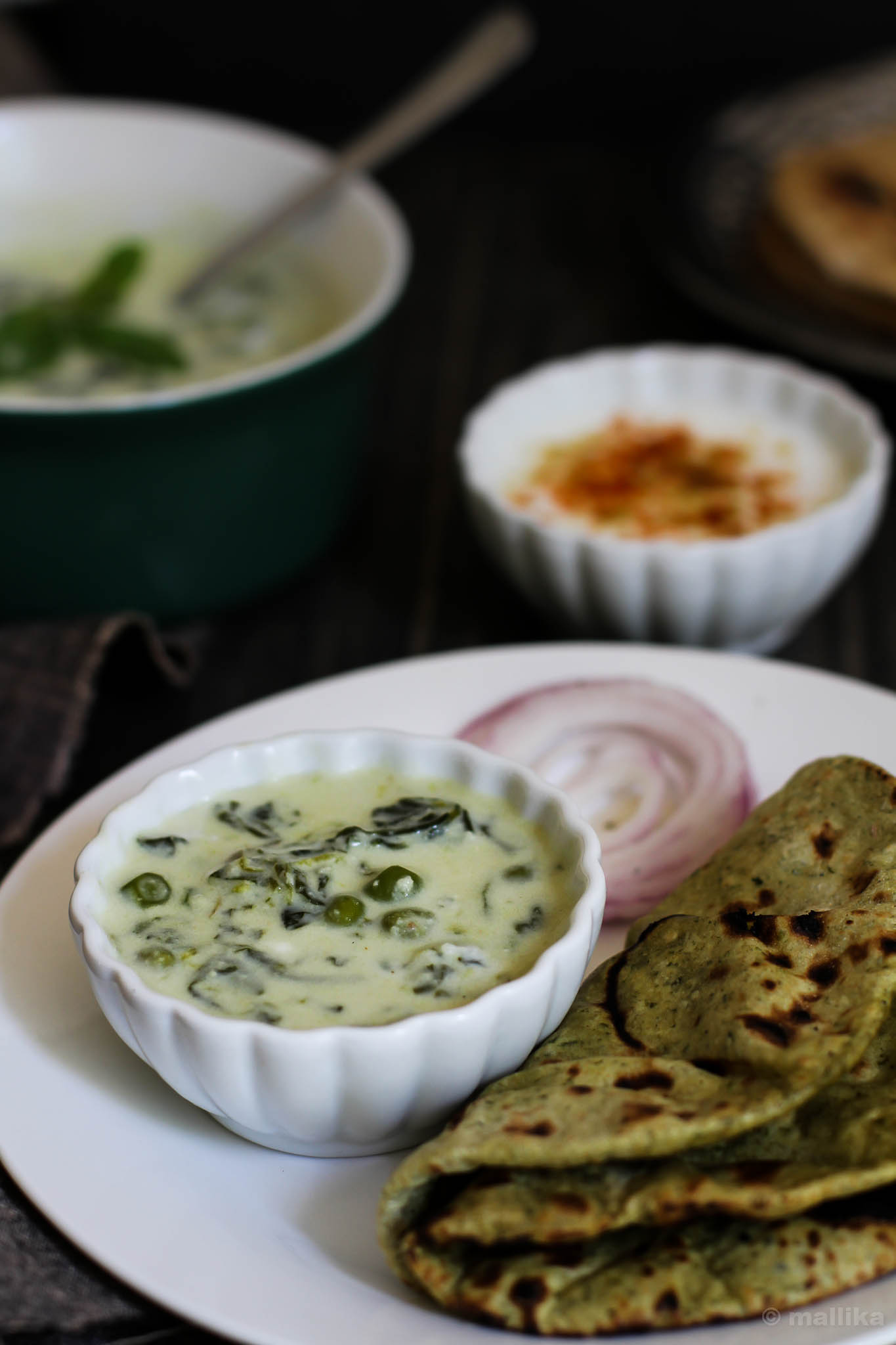
Methi Mutter Malai with Methi Paratha


Notes:

- Its not necessary to saute the fenugreek leaves prior to adding this to the recipe. However, fenugreek greens have some bitterness, and if you wish to avoid this coming through, it would be good to saute them first and then use in the recipe. This also helps in retaining the white color in the gravy.

- The water drained from fenugreek leaves is nutritious and hence instead of throwing it away, you may use them to knead dough and make rotis from these. Infact, my photographs will show some of the rotis I made using the water from the boiled greens. They taste quite like normal rotis and the bitterness is barely known.

- I used the small spicy variety of green chilli in this recipe. It provides the desired heat to the dish and does not affect the color of gravy. Alternatively, you may slit the green chilli lengthwise and fry in oil along with cumin and spices.

- On adding milk and cream, do not boil on high flame. Instead keep the flame on low and allow the gravy to simmer. This will avoid splitting.

- Cashews are important here as they not just lend flavor to this recipe, but the volume and richness to this gravy. You may replace cashews for soaked almonds as well.

- You may skip the milk cream and just use unsweetened evaporated milk / milk powder here. Milk powders usually have added sugar, so watch the quantity used and skip sugar. A heaped tablespoonful should do. The recipes with white gravies are usually mildly sweet. This sweet richness comes from the use of milk, cream and sugar. So don't be surprised. The flavor will vary if cream is substituted and the dish will not be as rich as the cream based.